Jacob Jobin John, John Fletcher G, Monisha Priya T, Veeraraghavan Balaji, Mutreja Ankur
Department of Clinical Microbiology, Christian Medical College, Vellore, India.
Department of Clinical Virology, Christian Medical College, Vellore, India.
Indian J Med Microbiol. 2021 Oct-Dec;39(4):417-422. doi: 10.1016/j.ijmmb.2021.08.001. Epub 2021 Aug 26.
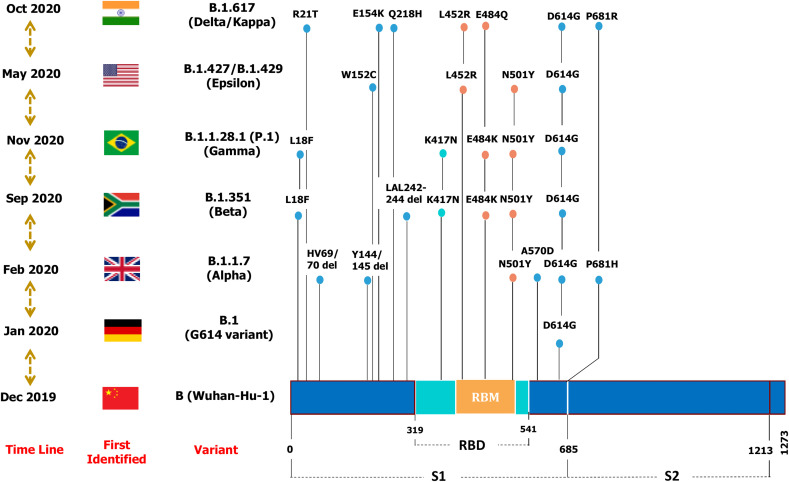
Following a relatively mild first wave of coronavirus disease 2019 (COVID-19) in India, a deadly second wave of the pandemic overwhelmed the healthcare system due to the emergence of fast-transmitting SARS-CoV-2 genetic variants. The emergence and spread of the B.1.617.2/Delta variant considered to be driving the devastating second wave of COVID-19 in India. Currently, the Delta variant has rapidly overtaken the previously circulating variants to become the dominant strain. Critical mutations in the spike/RBD region of these variants have raised serious concerns about the virus's increased transmissibility and decreased vaccine effectiveness. As a result, significant scientific and public concern has been expressed about the impact of virus variants on COVID-19 vaccines.
The purpose of this article is to provide an additional explanation in the context of the evolutionary trajectory of SARS-CoV-2 variants in India, the vaccine-induced immune response to the variants of concern (VOC), and various vaccine deployment strategies to rapidly increase population immunity.
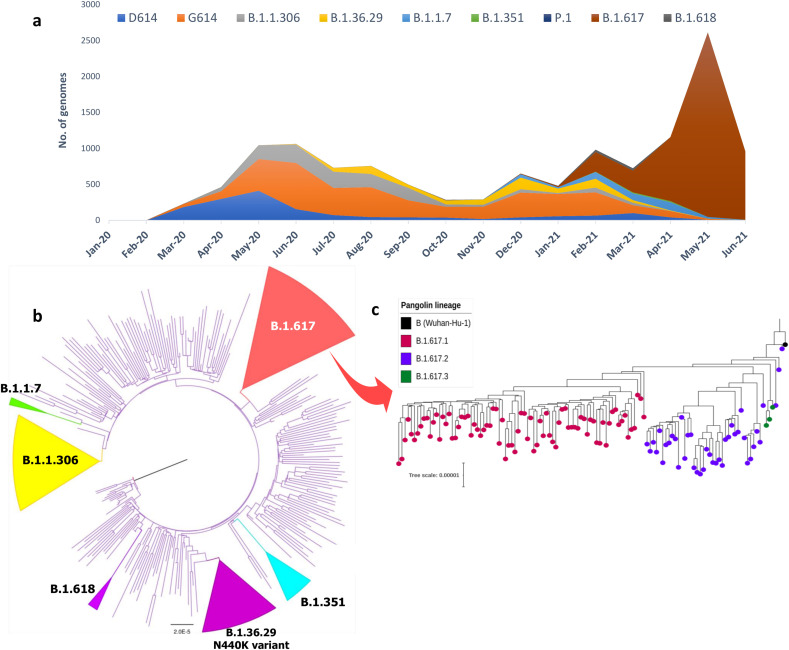
Phylogenetic analysis of SARS-CoV-2 isolates circulating in India suggests the emergence and spread of B.1.617 variant. The immunogenicity of currently approved vaccines indicates that the majority of vaccines elicit an antibody response and some level of protection. According to current data, vaccines in the pre-fusion configuration (2p substitution) have an advantage in terms of nAb titer, but the duration of vaccine-induced immunity, as well as the role of T cells and memory B cells in protection, remain unknown. Since vaccine efficacy on virus variants is one of the major factors to be considered for achieving herd immunity, existing vaccines need to be improved or effective next-generation vaccines should be developed to cover the new variants of the virus.
在印度经历了相对温和的2019冠状病毒病(COVID-19)第一波疫情后,由于快速传播的严重急性呼吸综合征冠状病毒2(SARS-CoV-2)基因变异株的出现,致命的第二波疫情使医疗系统不堪重负。被认为是导致印度COVID-19毁灭性第二波疫情的B.1.617.2/德尔塔变异株的出现和传播。目前,德尔塔变异株已迅速取代先前流行的变异株,成为主要毒株。这些变异株刺突蛋白/受体结合域(RBD)区域的关键突变引发了人们对病毒传播性增加和疫苗效力降低的严重担忧。因此,病毒变异株对COVID-19疫苗的影响引发了重大的科学和公众关注。
本文旨在结合印度SARS-CoV-2变异株的进化轨迹、疫苗诱导的针对关注变异株(VOC)的免疫反应以及各种快速提高人群免疫力的疫苗部署策略,提供进一步的解释。
对在印度流行的SARS-CoV-2分离株进行的系统发育分析表明B.1.617变异株的出现和传播。目前获批疫苗的免疫原性表明,大多数疫苗能引发抗体反应并提供一定程度的保护。根据现有数据,处于预融合构型(2p替代)的疫苗在中和抗体滴度方面具有优势,但疫苗诱导免疫的持续时间以及T细胞和记忆B细胞在保护中的作用仍不清楚。由于疫苗对病毒变异株的效力是实现群体免疫需考虑的主要因素之一,现有疫苗需要改进,或者应研发有效的下一代疫苗以覆盖新的病毒变异株。