Syed Shaheen, Sawant Poonam Ramnath, Spadigam Anita, Dhupar Anita
Goa Dental College & Hospital, Department of Oral and Maxillofacial Pathology, Bambolim, Goa, India.
Autops Case Rep. 2021 Aug 20;11:e2021315. doi: 10.4322/acr.2021.315. eCollection 2021.
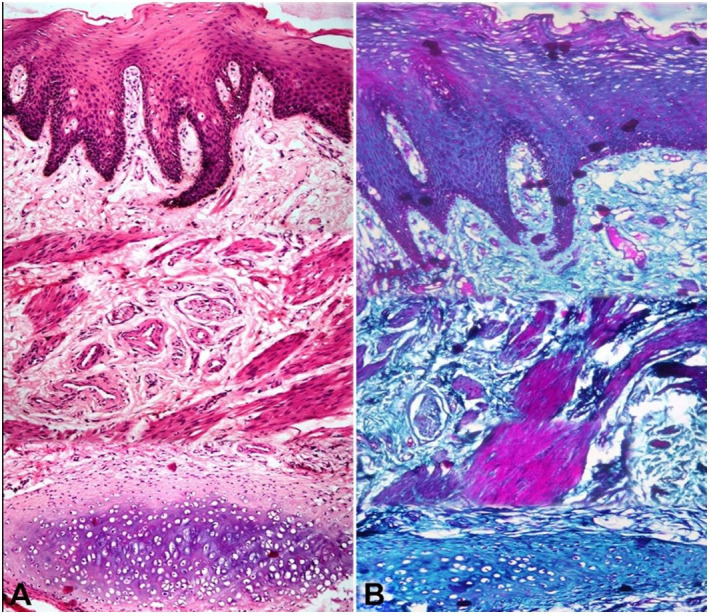
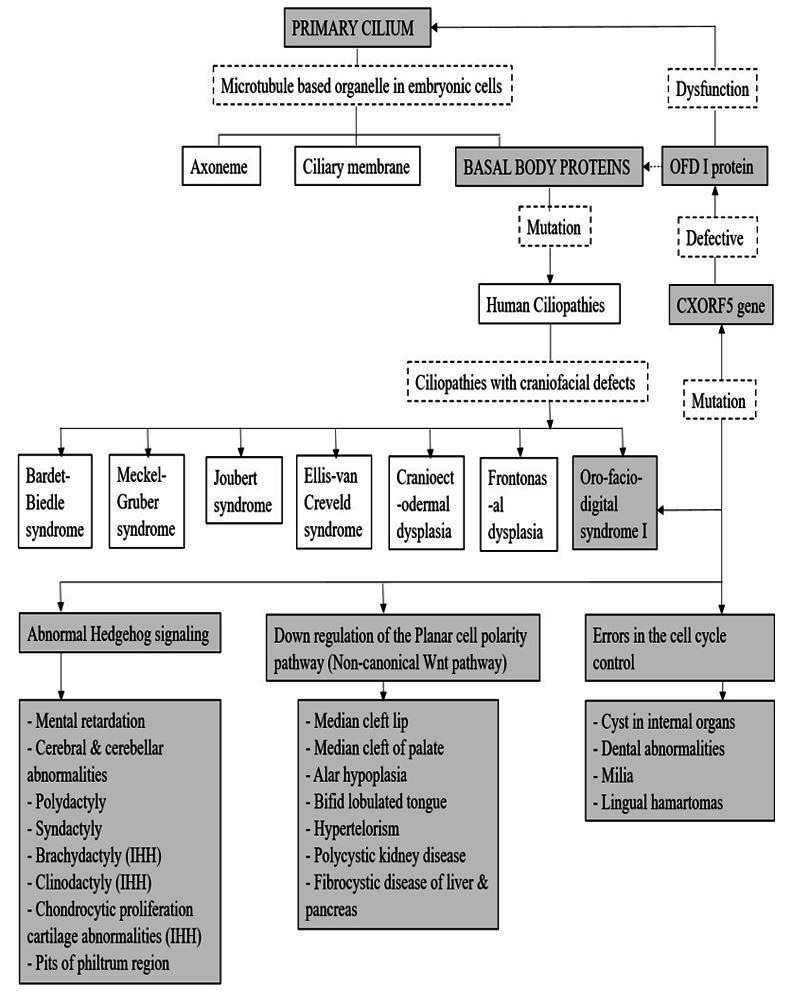
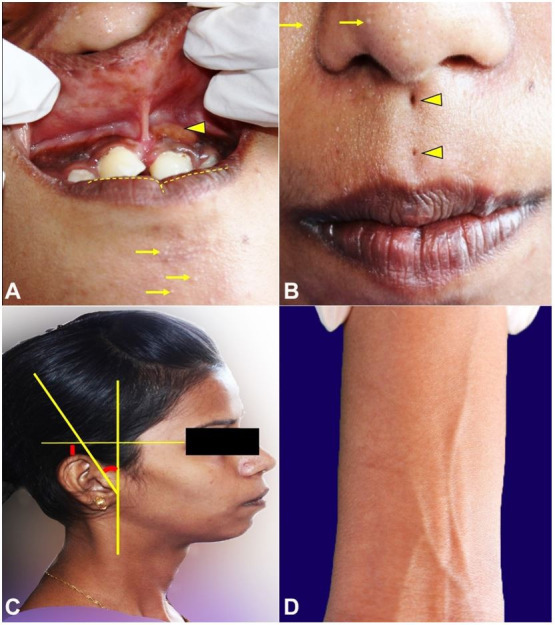
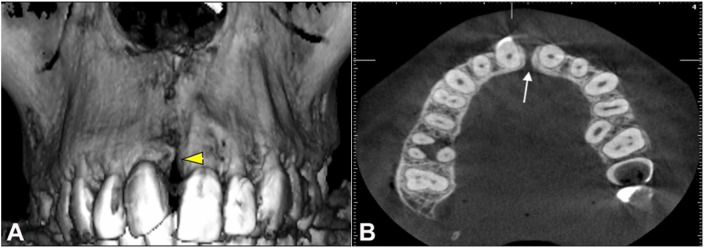
Oro-facial-digital syndrome is a group of rare heterogeneous hereditary disorders characterized by abnormalities of the oral cavity, face and digits, along with varying degrees of mental retardation. Currently, Oro-facial-digital syndrome has been classified into 14 types and two additional unclassified variants have been proposed. Amongst the various variants described, Oro-facial-digital syndrome type I is the most common. We report an interesting subclinical sporadic case of Oro-facial-digital syndrome type I in a 21-year-old female patient. Interestingly, our patient presented with a few novel hitherto unreported clinical findings like midline pits in the philtrum area and a hamartomatous proliferation of tissue in the anterior maxillary alveolar gingival region. This case report highlights the importance of prudent histopathological-clinical correlation, which can direct the flow of clinical investigations leading to the detection and diagnosis of unsuspected conditions as learned in this case. We would also like to emphasize that comprehensive examination of new born for structural abnormalities of the orofacial region is crucial to early diagnosis of syndromes and subsequent referral for further evaluation and management.
口面指综合征是一组罕见的异质性遗传性疾病,其特征为口腔、面部和手指异常,伴有不同程度的智力发育迟缓。目前,口面指综合征已被分为14种类型,另外还提出了两种未分类的变异型。在已描述的各种变异型中,I型口面指综合征最为常见。我们报告了一例21岁女性患者的有趣的亚临床散发性I型口面指综合征病例。有趣的是,我们的患者出现了一些此前未报道过的新的临床发现,如人中区域的中线凹陷以及上颌前牙区牙槽龈组织的错构瘤样增生。本病例报告强调了审慎的组织病理学与临床相关性的重要性,这可以指导临床检查流程,从而发现和诊断如本病例中未被怀疑的疾病。我们还想强调,对新生儿进行口面部区域结构异常的全面检查对于综合征的早期诊断以及随后转诊进行进一步评估和管理至关重要。