Zhang Yuan, Li Yiyuan, Fu Xiaolong, Wang Pengjun, Wang Qin, Meng Wei, Wang Tian, Yang Jianming, Chai Renjie
MOE Key Laboratory for Developmental Genes and Human Disease, Jiangsu Province High-Tech Key Laboratory for Bio-Medical Research, School of Life Sciences and Technology, Southeast University, Nanjing, China.
Department of Otolaryngology Head and Neck, Nanjing Tongren Hospital, School of Medicine, Southeast University, Nanjing, China.
Front Cell Dev Biol. 2021 Aug 11;9:631904. doi: 10.3389/fcell.2021.631904. eCollection 2021.
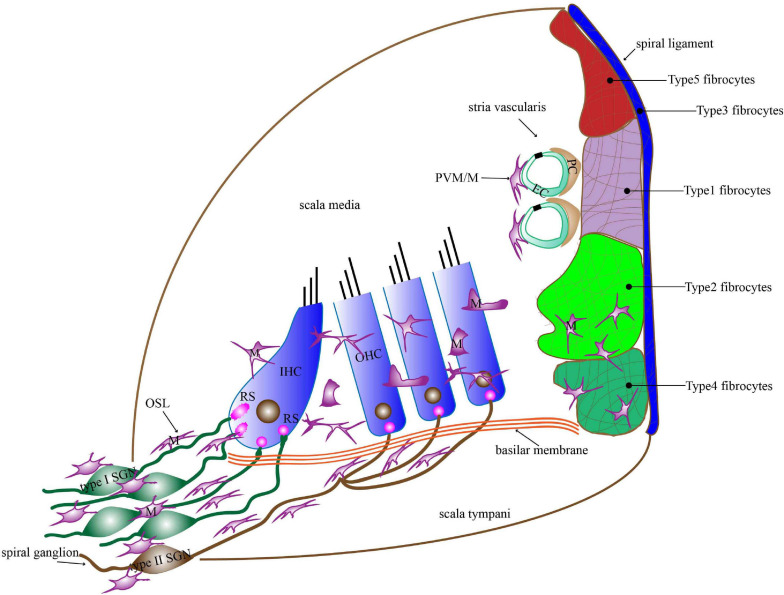
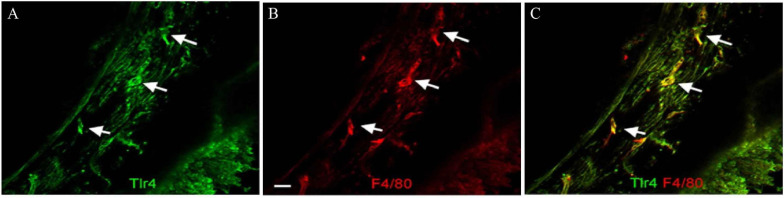
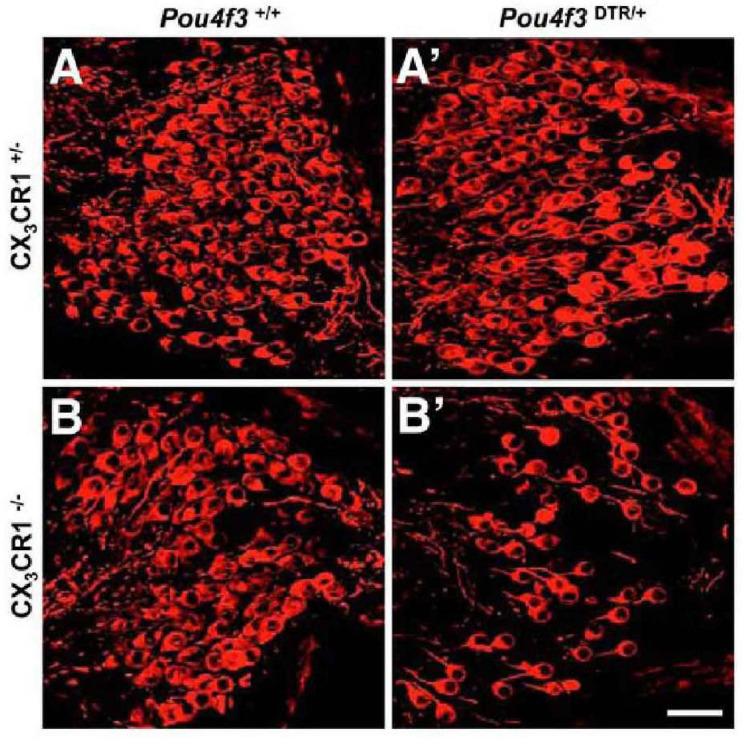
Macrophages are the main intrinsic immune cells in the cochlea; they can be activated and play a complicated role after cochlear injury. Many studies have shown that the number of macrophages and their morphological characteristics within the major cochlear partitions undergo significant changes under various pathological conditions including acoustic trauma, ototoxic drug treatment, age-related cochlear degeneration, selective hair cell (HC) and spiral ganglion neuron (SGN) elimination, and surgery. However, the exact role of these macrophages after cochlear injury is still unclear. Regulating the migration and activity of macrophages may be a therapeutic approach to reduce the risk or magnitude of trauma-induced hearing loss, and this review highlights the role of macrophages on the peripheral auditory structures of the cochlea and elucidate the mechanisms of macrophage injury and the strategies to reduce the injury by regulating macrophage.
巨噬细胞是耳蜗内主要的固有免疫细胞;在耳蜗损伤后,它们可被激活并发挥复杂的作用。许多研究表明,在包括声创伤、耳毒性药物治疗、年龄相关性耳蜗退变、选择性毛细胞(HC)和螺旋神经节神经元(SGN)消除以及手术等各种病理条件下,主要耳蜗分区内巨噬细胞的数量及其形态特征会发生显著变化。然而,这些巨噬细胞在耳蜗损伤后的具体作用仍不清楚。调节巨噬细胞的迁移和活性可能是一种降低创伤性听力损失风险或程度的治疗方法,本综述重点介绍了巨噬细胞在耳蜗外周听觉结构上的作用,并阐明了巨噬细胞损伤的机制以及通过调节巨噬细胞来减轻损伤的策略。