Department of Genetics, Genomics and Informatics, College of Medicine, University of Tennessee Health Science Center, Memphis, Tennessee, USA.
Department of Pharmacology, Addiction Science and Toxicology, College of Medicine, University of Tennessee Health Science Center, Memphis, Tennessee, USA.
Genes Brain Behav. 2021 Nov;20(8):e12770. doi: 10.1111/gbb.12770. Epub 2021 Sep 16.
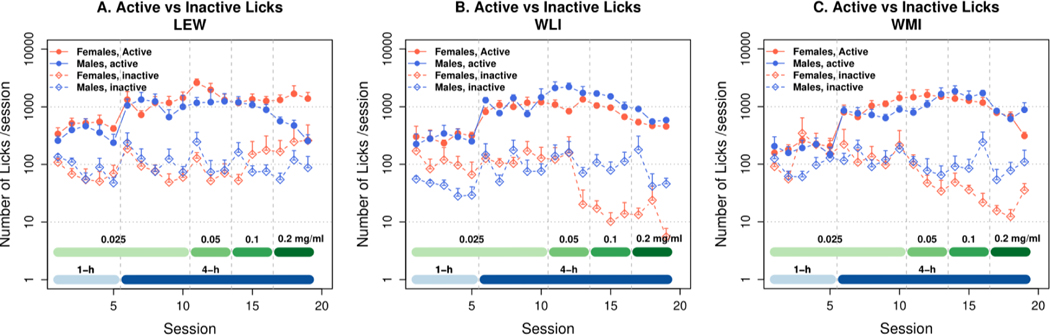
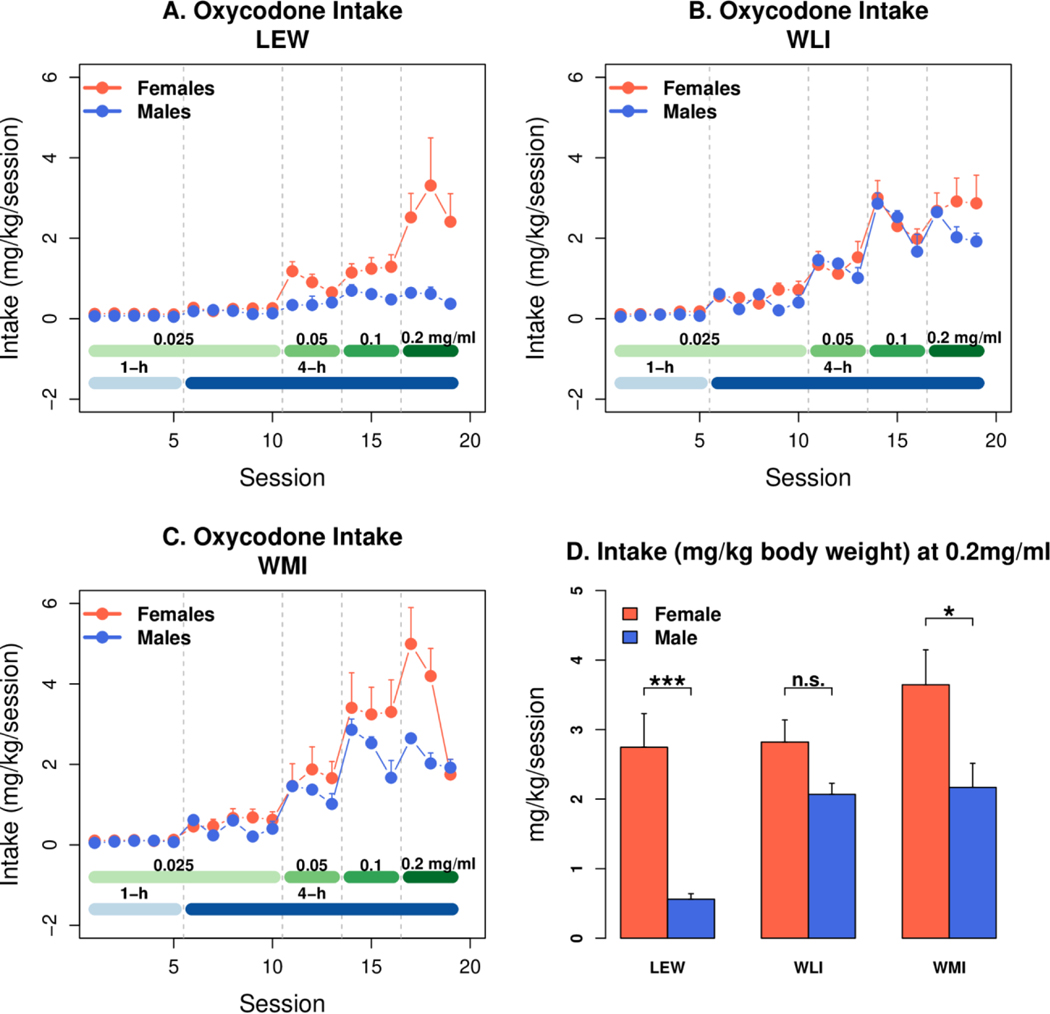
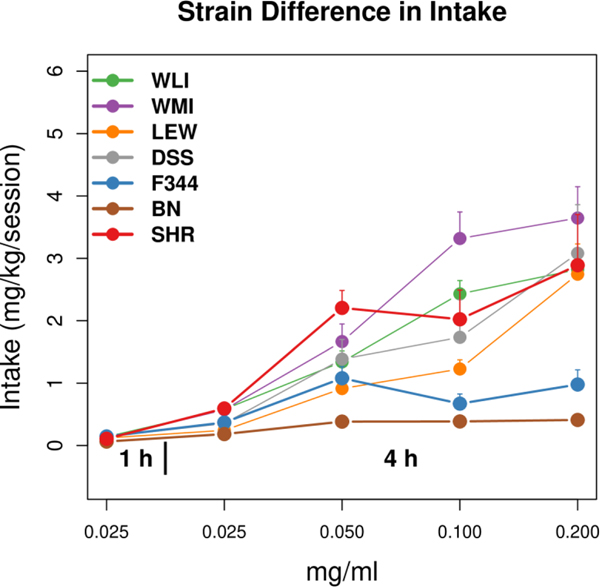
The steady rise in prescription opioids such as oxycodone has led to a virulent epidemic of widespread abuse and deaths in the United States; approximately 80% of affected individuals initiate the habitual use of oxycodone by using prescription oral oxycodone. Given the importance of drug pharmacokinetics in determining abuse potential, we designed an oral operant oxycodone self-administration (SA) procedure in rats to model drug intake by most human users/abusers of oxycodone. Key aspects of the model include limited initial drug intake followed by increasing drug concentrations during extended 4-h sessions on alternating days. Sex and genetic predisposition are major determinants of human opiate abuse. Therefore, we studied females in seven inbred strains (WLI, WMI, LEW, DSS, F344, BN and SHR) and both sexes in three of these strains. All strains increased intake across serially increasing doses (0.025-0.2 mg/ml; p < 0.001): the range of intakes at the final concentration of oxycodone was 0.72 ± 0.17-4.84 ± 1.42 mg/kg (mean ± SEM) - a 6.7-fold difference across strains. In LEW, WLI and WMI strains, oxycodone intake increased significantly across all sessions in both sexes. However, in LEW and WMI male rats but not WLI, daily oxycodone intake was significantly lower across all 4-h sessions than females (p < 0.005). The estimated heritability in oxycodone intake was in the range of 0.21-0.41. In summary, our novel operant oral oxycodone SA model captures the strong abuse potential of oral oxycodone and shows dose, sex and strain-specific drug intake that is significantly dependent on heredity.
阿片类处方药物(如羟考酮)的使用不断增加,导致美国出现了广泛滥用和死亡的恶性流行;大约 80%的受影响个体通过使用处方口服羟考酮开始习惯性使用羟考酮。鉴于药物药代动力学在确定滥用潜力方面的重要性,我们设计了一种大鼠口服操作性羟考酮自我给药(SA)程序,以模拟大多数人类羟考酮使用者/滥用者的药物摄入。该模型的关键方面包括初始药物摄入量有限,然后在连续增加的剂量下延长 4 小时的间隔,药物浓度逐渐增加。性别和遗传易感性是人类阿片类药物滥用的主要决定因素。因此,我们研究了七个近交系(WLI、WMI、LEW、DSS、F344、BN 和 SHR)中的雌性以及其中三个系的雌雄两性。所有品系均在连续增加的剂量(0.025-0.2 mg/ml;p < 0.001)下增加摄入量:在羟考酮的最终浓度下的摄入量范围为 0.72 ± 0.17-4.84 ± 1.42 mg/kg(平均值 ± SEM) - 品系间差异为 6.7 倍。在 LEW、WLI 和 WMI 品系中,羟考酮的摄入量在两性中均在所有阶段显著增加。然而,在 LEW 和 WMI 雄性大鼠中,但不在 WLI 中,雄性大鼠在所有 4 小时的阶段中每天摄入的羟考酮明显低于雌性(p < 0.005)。羟考酮摄入量的遗传力估计值在 0.21-0.41 之间。总之,我们的新型操作性口服羟考酮 SA 模型具有很强的口服羟考酮滥用潜力,并显示出剂量、性别和品系特异性的药物摄入,这些摄入显著依赖于遗传。