Stead Family Department of Pediatrics, University of Iowa Carver College of Medicine, Iowa City, Iowa; Department of Pediatrics, Division of Gastroenterology, Hepatology, and Nutrition, Stanford University School of Medicine & Lucile Packard Children's Hospital, Palo Alto, California.
Department of Internal Medicine, University of Iowa Carver College of Medicine, Iowa City, Iowa.
Surg Obes Relat Dis. 2021 Dec;17(12):1996-2006. doi: 10.1016/j.soard.2021.07.019. Epub 2021 Aug 2.
Toll-like receptor 4 (TLR4) has been suggested as one of the forefront cross-communicators between the intestinal bacteria and the host to regulate inflammatory signals and energy homeostasis. High-fat diet-induced inflammation is mediated by changes in gut microbiota and requires a functional TLR-4, the deficiency of which renders mice resistant to diet-induced obesity and its associated metabolic dysfunction. Furthermore, gut microbiota was suggested to play a key role in the beneficial effects of Roux-en-Y gastric bypass (RYGB), a commonly performed bariatric procedure.
To explore whether TLR4, myeloid differentiation factor 8 (MyD88; 1 of its key downstream signaling regulators) and gut microbiota play an integrative role in RYGB-induced metabolic outcomes.
Animal- based study.
We performed RYGB in TLR4 and MyD88 knock-out (KO) mice and used fecal microbiota transplant (FMT) from RYGB-operated animals to these genetic mouse models to address our questions.
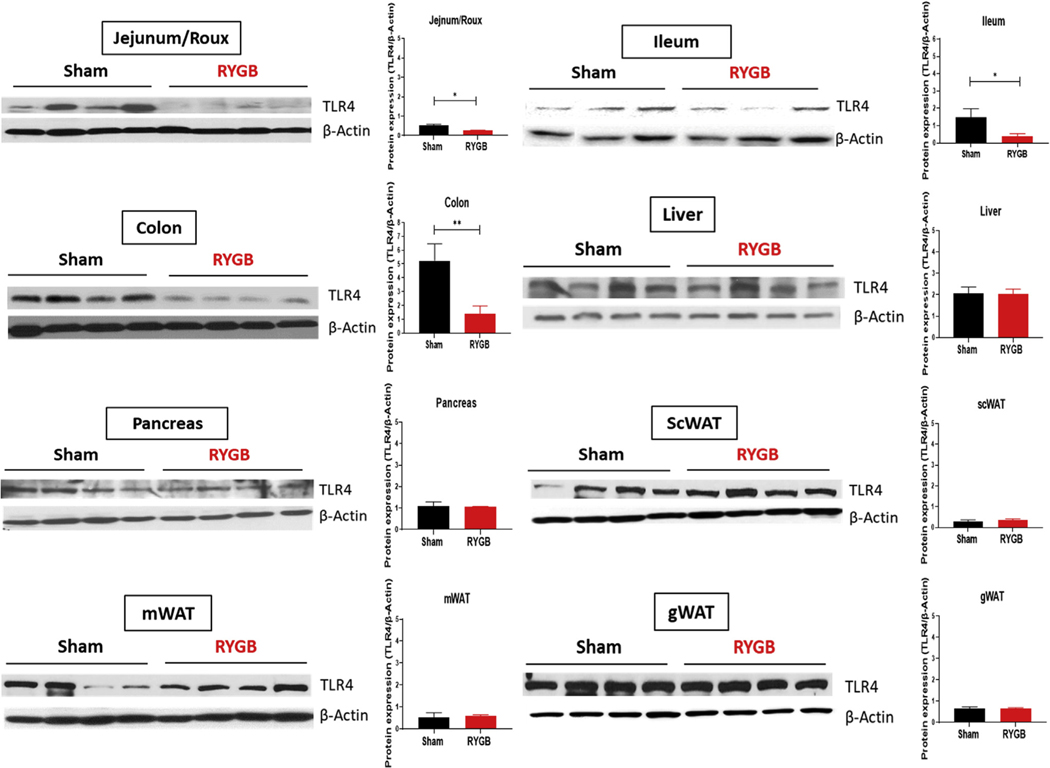
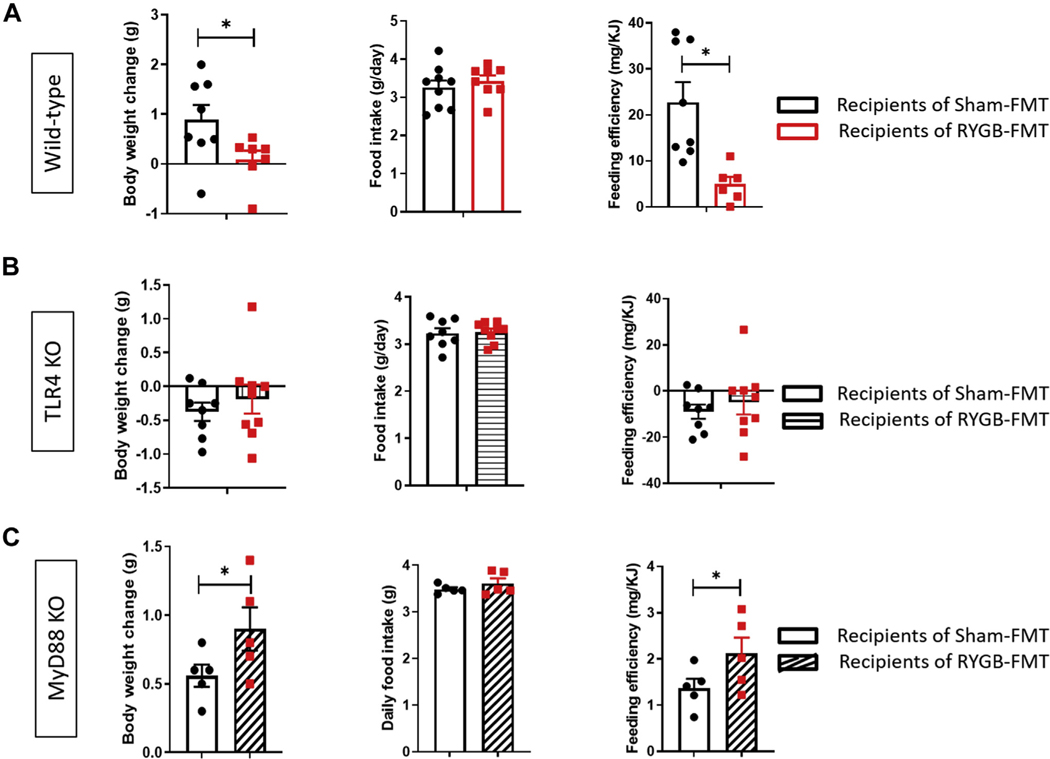
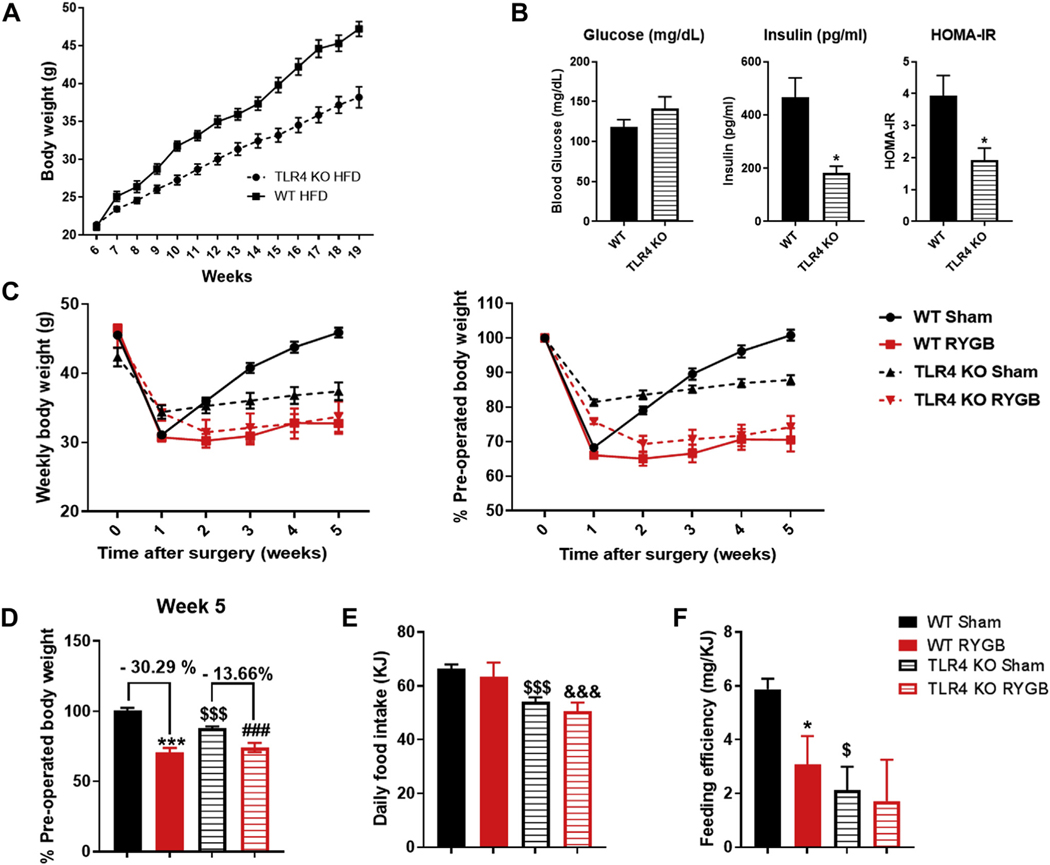
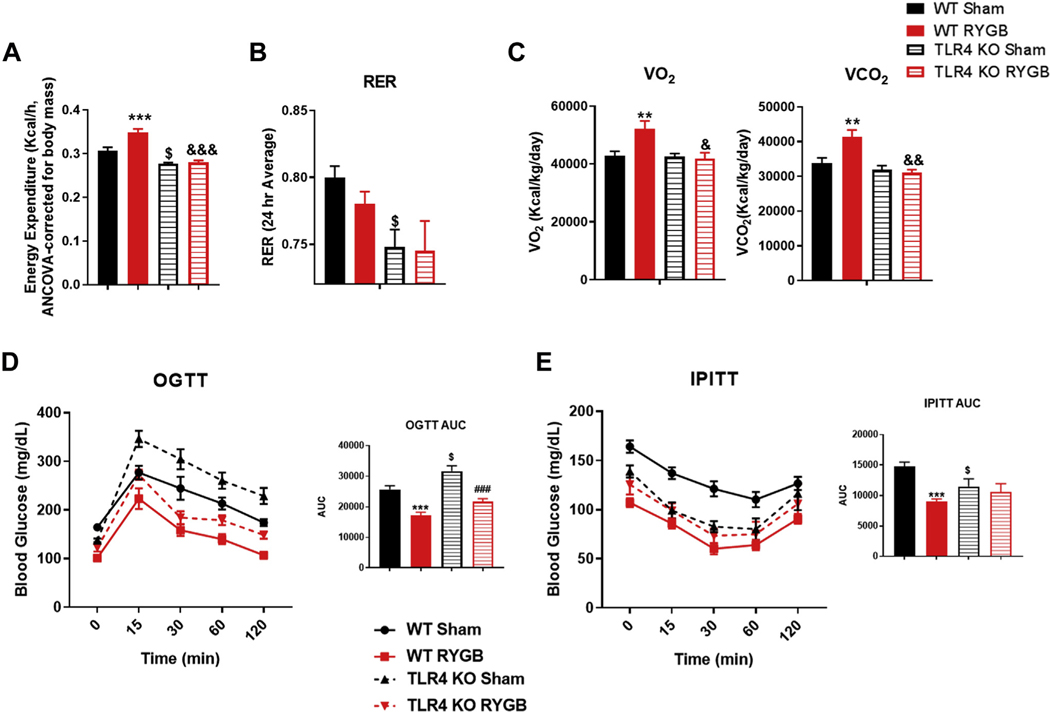
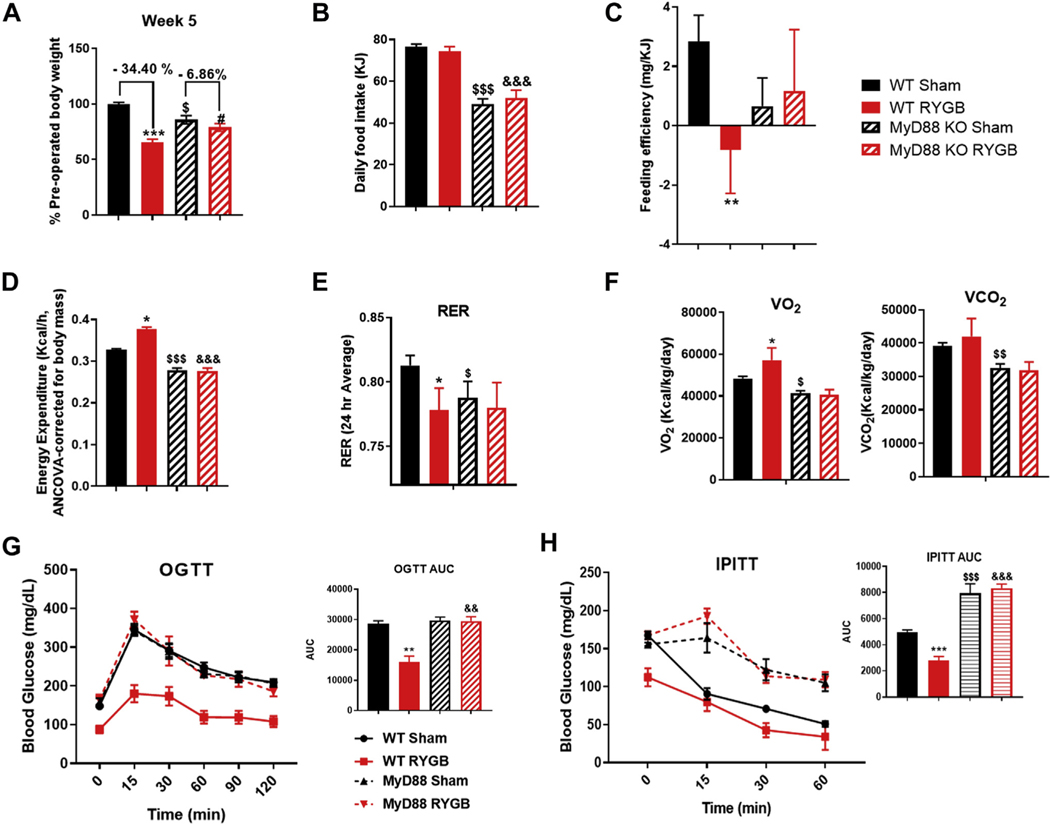
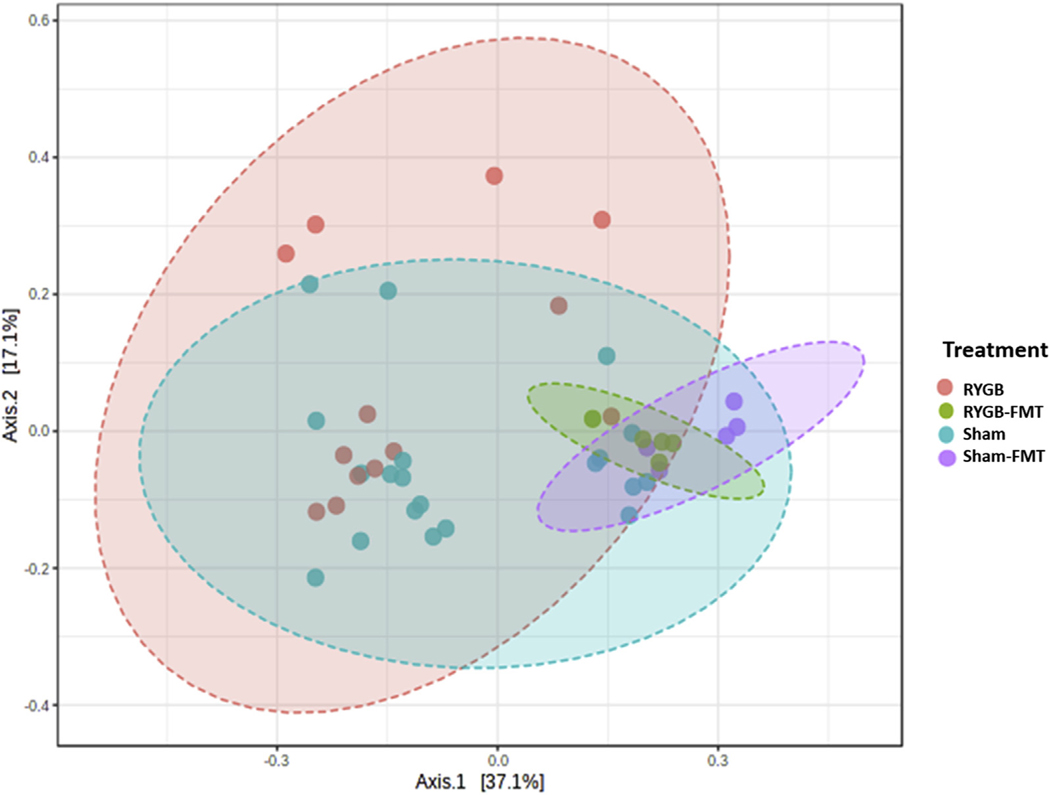
We demonstrate that RYGB reduces TLR4 expression explicitly in the small and large intestine of C57Blc/6J mice. We also show that TLR4 KO mice have an attenuated glucoregulatory response to RYGB. In addition, we reveal that MyD88 KO mice fail to respond to all RYGB-induced metabolic effects. Finally, fecal microbiota transplant from RYGB-operated mice into TLR4 KO and MyD88 KO naïve recipients fails to induce a metabolic phenotype similar to that of the donors, as it does in wild-type recipients.
TLR4 and MyD88 are required for RYGB-induced metabolic response that is likely mediated by gut microbiome.
Toll 样受体 4(TLR4)被认为是肠道细菌与宿主之间进行前沿交流的一种受体,可调节炎症信号和能量平衡。高脂肪饮食诱导的炎症是由肠道微生物群的变化介导的,需要功能性 TLR-4,TLR-4 的缺乏使小鼠对饮食诱导的肥胖及其相关代谢功能障碍具有抗性。此外,肠道微生物群被认为在 Roux-en-Y 胃旁路(RYGB)的有益作用中发挥关键作用,RYGB 是一种常见的减肥手术。
探讨 TLR4、髓样分化因子 8(MyD88;其下游信号转导调节因子之一)和肠道微生物群是否在 RYGB 诱导的代谢结果中发挥综合作用。
基于动物的研究。
我们对 TLR4 和 MyD88 敲除(KO)小鼠进行 RYGB,并使用来自 RYGB 手术动物的粪便微生物群移植(FMT)将其移植到这些遗传小鼠模型中以解决我们的问题。
我们证明 RYGB 可明确降低 C57Blc/6J 小鼠小肠和大肠中的 TLR4 表达。我们还表明,TLR4 KO 小鼠对 RYGB 的糖调节反应减弱。此外,我们发现 MyD88 KO 小鼠对所有 RYGB 诱导的代谢作用均无反应。最后,将来自 RYGB 手术小鼠的粪便微生物群移植到 TLR4 KO 和 MyD88 KO 受体中,无法诱导类似于供体的代谢表型,而在野生型受体中则可以。
TLR4 和 MyD88 是 RYGB 诱导的代谢反应所必需的,而这种反应可能是由肠道微生物群介导的。