• 文献检索
  • 文档翻译
  • 深度研究
  • 学术资讯
  • Suppr Zotero 插件Zotero 插件
  • 邀请有礼
  • 套餐&价格
  • 历史记录
应用&插件
Suppr Zotero 插件Zotero 插件浏览器插件Mac 客户端Windows 客户端微信小程序
定价
高级版会员购买积分包购买API积分包
服务
文献检索文档翻译深度研究API 文档MCP 服务
关于我们
关于 Suppr公司介绍联系我们用户协议隐私条款
关注我们

Suppr 超能文献

核心技术专利:CN118964589B侵权必究
粤ICP备2023148730 号-1Suppr @ 2026

文献检索

告别复杂PubMed语法,用中文像聊天一样搜索,搜遍4000万医学文献。AI智能推荐,让科研检索更轻松。

立即免费搜索

文件翻译

保留排版,准确专业,支持PDF/Word/PPT等文件格式,支持 12+语言互译。

免费翻译文档

深度研究

AI帮你快速写综述,25分钟生成高质量综述,智能提取关键信息,辅助科研写作。

立即免费体验

全球猛禽分布格局及保护地的最优选择,以减少灭绝危机。

Global patterns of raptor distribution and protected areas optimal selection to reduce the extinction crises.

机构信息

Instituto de Ecología, Universidad Nacional Autónoma de México, Ciudad de México 04510, México.

Instituto de Ecología, Universidad Nacional Autónoma de México, Ciudad de México 04510, México

出版信息

Proc Natl Acad Sci U S A. 2021 Sep 14;118(37). doi: 10.1073/pnas.2018203118.

DOI:10.1073/pnas.2018203118
PMID:34462334
原文链接:https://pmc.ncbi.nlm.nih.gov/articles/PMC8449406/
Abstract

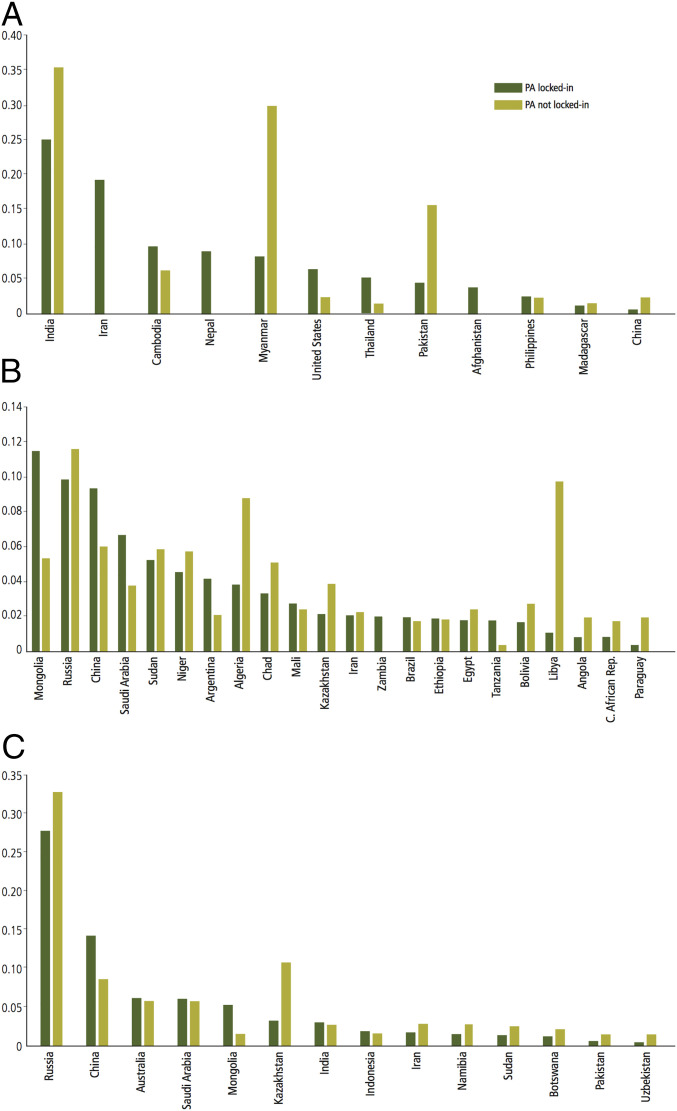
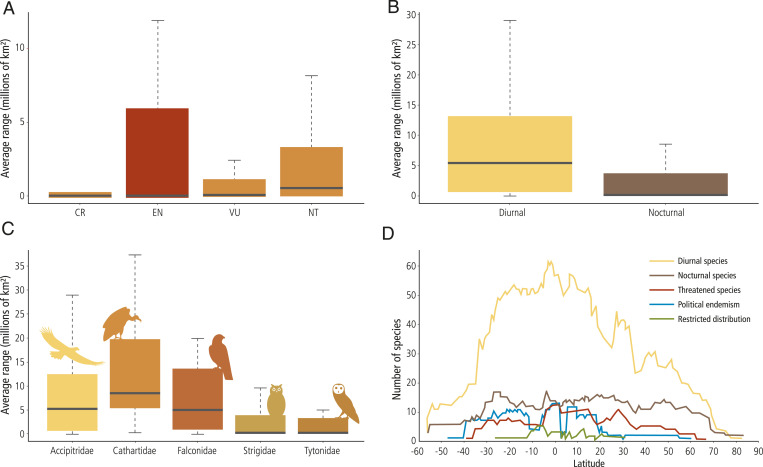
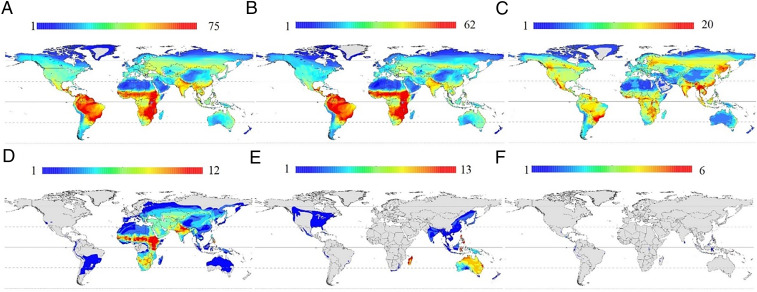
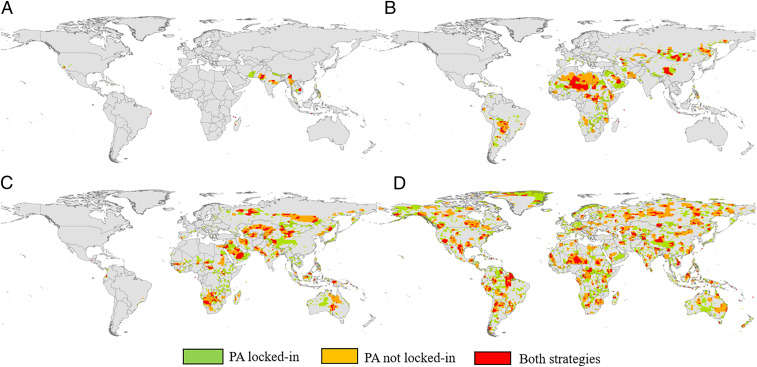
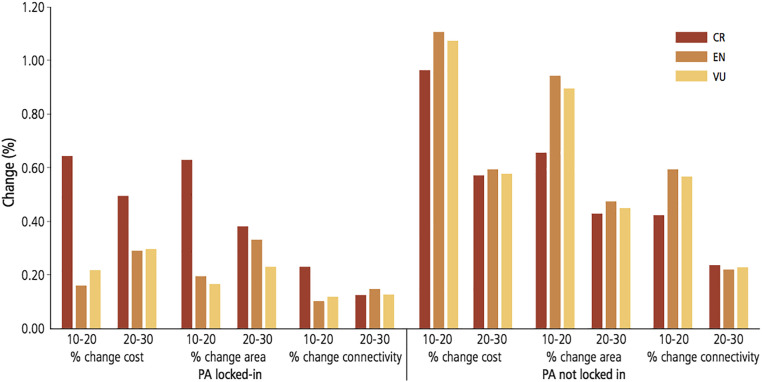
Globally, human-caused environmental impacts, such as habitat loss, have seriously impacted raptor species, with some 50% of species having decreasing populations. We analyzed global patterns of distribution of all 557 raptor species, focusing on richness, endemism, geographic range, conservation status, and population trends. Highest species diversity, endemism, species at risk, or restricted species were concentrated in different regions. Patterns of species distribution greatly differed between nocturnal and diurnal species. To test the efficiency of the global protected areas in conserving raptors, we simulated and compared global reserve systems created with strategies aiming at: 1) constraining the existing system into the final solution; and 2) minimizing the socioeconomic cost of reserve selection. We analyzed three targets of species distribution to be protected (10, 20, 30%). The first strategy was more efficient in meeting targets and less efficient in cost and compactness of reserves. Focusing on actions in the existing protected areas is fundamental to consolidate conservation, and politically and economically more viable than creating new reserves. However, creating new reserves is essential to protect more populations throughout the species' geographic range. Our findings provide a fundamental understanding of reserves to maintain raptor diversity and reduce the global population and species extinction crisis.

摘要

在全球范围内,人类造成的环境影响,如栖息地丧失,严重影响了猛禽物种,约有 50%的物种数量减少。我们分析了全球 557 种猛禽物种的分布模式,重点关注丰富度、特有性、地理范围、保护状况和种群趋势。物种多样性、特有性、受威胁物种或受限制物种最高的地区集中在不同的地区。夜间和白天活动物种的分布模式有很大的不同。为了测试全球保护区保护猛禽的效率,我们模拟并比较了旨在以下列两种策略创建的全球保护区系统:1)将现有系统约束到最终解决方案;2)最小化保护区选择的社会经济成本。我们分析了要保护的三个物种分布目标(10%、20%、30%)。第一种策略在满足目标方面更有效,在成本和储备紧凑性方面效率较低。关注现有保护区的行动对于巩固保护至关重要,在政治和经济上比创建新的保护区更可行。然而,创建新的保护区对于保护物种地理范围内更多的种群是必不可少的。我们的研究结果提供了对保护区的基本了解,以维持猛禽的多样性,并减少全球物种灭绝危机。
https://cdn.ncbi.nlm.nih.gov/pmc/blobs/867a/8449406/3a609c7db86f/pnas.2018203118fig06.jpg
https://cdn.ncbi.nlm.nih.gov/pmc/blobs/867a/8449406/ceb4a267d3d6/pnas.2018203118fig01.jpg
https://cdn.ncbi.nlm.nih.gov/pmc/blobs/867a/8449406/b88c8d86156b/pnas.2018203118fig02.jpg
https://cdn.ncbi.nlm.nih.gov/pmc/blobs/867a/8449406/5f7e1beb5d8e/pnas.2018203118fig03.jpg
https://cdn.ncbi.nlm.nih.gov/pmc/blobs/867a/8449406/fdab166afc93/pnas.2018203118fig04.jpg
https://cdn.ncbi.nlm.nih.gov/pmc/blobs/867a/8449406/d271c7efb0cf/pnas.2018203118fig05.jpg
https://cdn.ncbi.nlm.nih.gov/pmc/blobs/867a/8449406/3a609c7db86f/pnas.2018203118fig06.jpg
https://cdn.ncbi.nlm.nih.gov/pmc/blobs/867a/8449406/ceb4a267d3d6/pnas.2018203118fig01.jpg
https://cdn.ncbi.nlm.nih.gov/pmc/blobs/867a/8449406/b88c8d86156b/pnas.2018203118fig02.jpg
https://cdn.ncbi.nlm.nih.gov/pmc/blobs/867a/8449406/5f7e1beb5d8e/pnas.2018203118fig03.jpg
https://cdn.ncbi.nlm.nih.gov/pmc/blobs/867a/8449406/fdab166afc93/pnas.2018203118fig04.jpg
https://cdn.ncbi.nlm.nih.gov/pmc/blobs/867a/8449406/d271c7efb0cf/pnas.2018203118fig05.jpg
https://cdn.ncbi.nlm.nih.gov/pmc/blobs/867a/8449406/3a609c7db86f/pnas.2018203118fig06.jpg

相似文献

1
Global patterns of raptor distribution and protected areas optimal selection to reduce the extinction crises.全球猛禽分布格局及保护地的最优选择,以减少灭绝危机。
Proc Natl Acad Sci U S A. 2021 Sep 14;118(37). doi: 10.1073/pnas.2018203118.
2
African savanna raptors show evidence of widespread population collapse and a growing dependence on protected areas.非洲热带稀树草原猛禽表现出广泛的种群崩溃迹象,并越来越依赖保护区。
Nat Ecol Evol. 2024 Jan;8(1):45-56. doi: 10.1038/s41559-023-02236-0. Epub 2024 Jan 4.
3
Protected areas and prospects for endangered species conservation in Canada.加拿大濒危物种保护的保护区及前景。
Conserv Biol. 2006 Feb;20(1):48-55. doi: 10.1111/j.1523-1739.2005.00274.x.
4
Value of protected areas to avian persistence across 20 years of climate and land-use change.保护区在 20 年气候和土地利用变化中对鸟类存续的价值。
Conserv Biol. 2019 Apr;33(2):423-433. doi: 10.1111/cobi.13205. Epub 2018 Nov 26.
5
Conservation biogeography of red oaks (Quercus, section Lobatae) in Mexico and Central America.墨西哥和中美洲红栎(栎属,节段 lobatae)的保护生物地理学。
Am J Bot. 2011 Feb;98(2):290-305. doi: 10.3732/ajb.1000218.
6
Protected area coverage of vulnerable regions to conserve functional diversity of birds.保护易危地区以保护鸟类功能多样性的保护区面积。
Conserv Biol. 2023 Dec;37(6):e14131. doi: 10.1111/cobi.14131. Epub 2023 Aug 14.
7
Global distribution and conservation of marine mammals.海洋哺乳动物的全球分布和保护。
Proc Natl Acad Sci U S A. 2011 Aug 16;108(33):13600-5. doi: 10.1073/pnas.1101525108. Epub 2011 Aug 1.
8
Monitoring protected areas from space: A multi-temporal assessment using raptors as biodiversity surrogates.从太空监测保护区:利用猛禽作为生物多样性替代指标的多时期评估
PLoS One. 2017 Jul 24;12(7):e0181769. doi: 10.1371/journal.pone.0181769. eCollection 2017.
9
Range-wide Yangtze freshwater dolphin expedition: The last chance to see Baiji?长江淡水豚类全境考察:最后一次见到白鱀豚的机会?
Environ Sci Pollut Res Int. 2006 Oct;13(6):418-24. doi: 10.1065/espr2006.10.350.
10
Extinction risks and the conservation of Madagascar's reptiles.灭绝风险与马达加斯加爬行动物的保护
PLoS One. 2014 Aug 11;9(8):e100173. doi: 10.1371/journal.pone.0100173. eCollection 2014.

引用本文的文献

1
Exploring the Climatic Niche Evolution of the Genus (Aves: Falconidae) in Europe.探索欧洲隼属(鸟类:隼科)的气候生态位演化
Biology (Basel). 2024 Feb 11;13(2):113. doi: 10.3390/biology13020113.
2
Mapping suitable habitats for globally endangered raptors in Kenya: Integrating climate factors and conservation planning.绘制肯尼亚全球濒危猛禽的适宜栖息地:整合气候因素与保护规划。
Ecol Evol. 2023 Aug 31;13(9):e10443. doi: 10.1002/ece3.10443. eCollection 2023 Sep.
3
Climate Change and Human Activities, the Significant Dynamic Drivers of Himalayan Goral Distribution ().

本文引用的文献

1
Vertebrates on the brink as indicators of biological annihilation and the sixth mass extinction.脊椎动物濒临灭绝,这是生物灭绝和第六次大灭绝的迹象。
Proc Natl Acad Sci U S A. 2020 Jun 16;117(24):13596-13602. doi: 10.1073/pnas.1922686117. Epub 2020 Jun 1.
2
Protected areas and global conservation of migratory birds.保护区与候鸟的全球保护
Science. 2015 Dec 4;350(6265):1255-8. doi: 10.1126/science.aac9180.
3
Accelerated modern human-induced species losses: Entering the sixth mass extinction.现代人类活动加速导致物种丧失:进入第六次大灭绝。
气候变化与人类活动——喜马拉雅斑羚分布的重要动态驱动因素()
Biology (Basel). 2023 Apr 18;12(4):610. doi: 10.3390/biology12040610.
Sci Adv. 2015 Jun 19;1(5):e1400253. doi: 10.1126/sciadv.1400253. eCollection 2015 Jun.
4
Mass extinction in poorly known taxa.鲜为人知的分类群中的大规模灭绝。
Proc Natl Acad Sci U S A. 2015 Jun 23;112(25):7761-6. doi: 10.1073/pnas.1502350112. Epub 2015 Jun 8.
5
Defaunation in the Anthropocene.人类世的去动物化。
Science. 2014 Jul 25;345(6195):401-6. doi: 10.1126/science.1251817.
6
Targeting global protected area expansion for imperiled biodiversity.目标是为濒危生物多样性扩大全球保护区。
PLoS Biol. 2014 Jun 24;12(6):e1001891. doi: 10.1371/journal.pbio.1001891. eCollection 2014 Jun.
7
The biodiversity of species and their rates of extinction, distribution, and protection.物种的生物多样性及其灭绝率、分布和保护。
Science. 2014 May 30;344(6187):1246752. doi: 10.1126/science.1246752.
8
Status and ecological effects of the world's largest carnivores.世界上最大的食肉动物的现状和生态影响。
Science. 2014 Jan 10;343(6167):1241484. doi: 10.1126/science.1241484.
9
Spatial scaling of functional structure in bird and mammal assemblages.鸟类和哺乳动物组合的功能结构的空间尺度。
Am Nat. 2013 Apr;181(4):464-78. doi: 10.1086/669906. Epub 2013 Mar 8.
10
Dropping dead: causes and consequences of vulture population declines worldwide.大量死亡:全球秃鹫数量下降的原因和后果。
Ann N Y Acad Sci. 2012 Feb;1249:57-71. doi: 10.1111/j.1749-6632.2011.06293.x. Epub 2011 Dec 16.