Beijing Hospital of Traditional Chinese Medicine Affiliated to Capital Medical University, Beijing, 100010, China.
Dongzhimen Hospital Affiliated to Beijing University of Chinese Medicine, Beijing, 100700, China.
BMC Complement Med Ther. 2021 Aug 31;21(1):217. doi: 10.1186/s12906-021-03378-z.
Traditional Chinese medicine (TCM) has gained widespread application in treating chronic heart failure (CHF) secondary to coronary heart disease (CHD). However, the sound clinical evidence is still lacking. Corresponding clinical trials vary considerably in the outcome measures assessing the efficacy of TCM, some that showed the improvement of clinical symptoms are not universally acknowledged. Rational outcome measures are the key to evaluate efficacy and safety of each treatment and significant elements of a convincing clinical trial. We aimed to summarize and analyze outcome measures in randomized controlled trials (RCTs) of TCM in treating CHF caused by CHD, subsequently identify the present problems and try to put forward solutions.
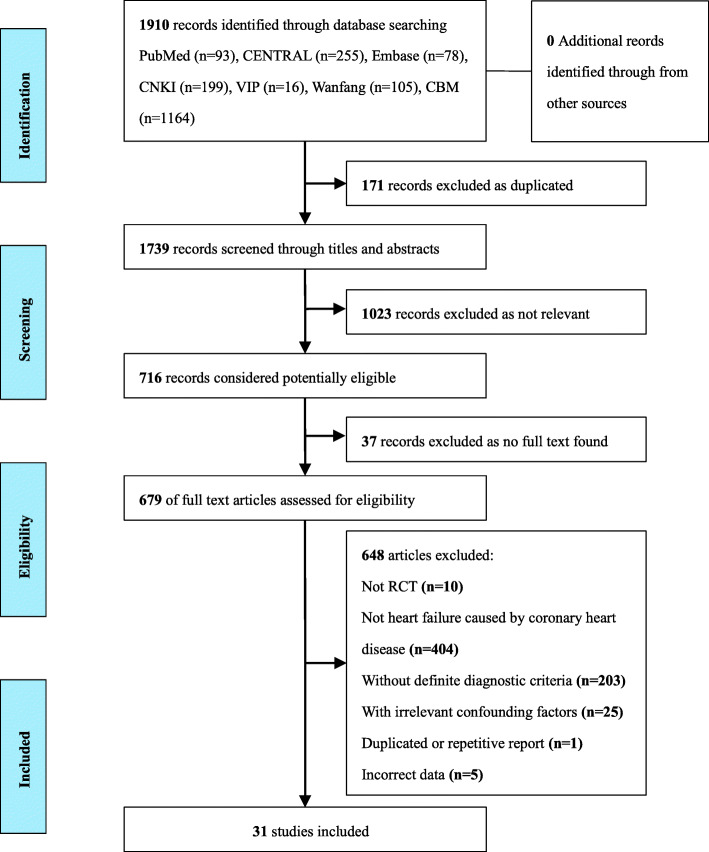
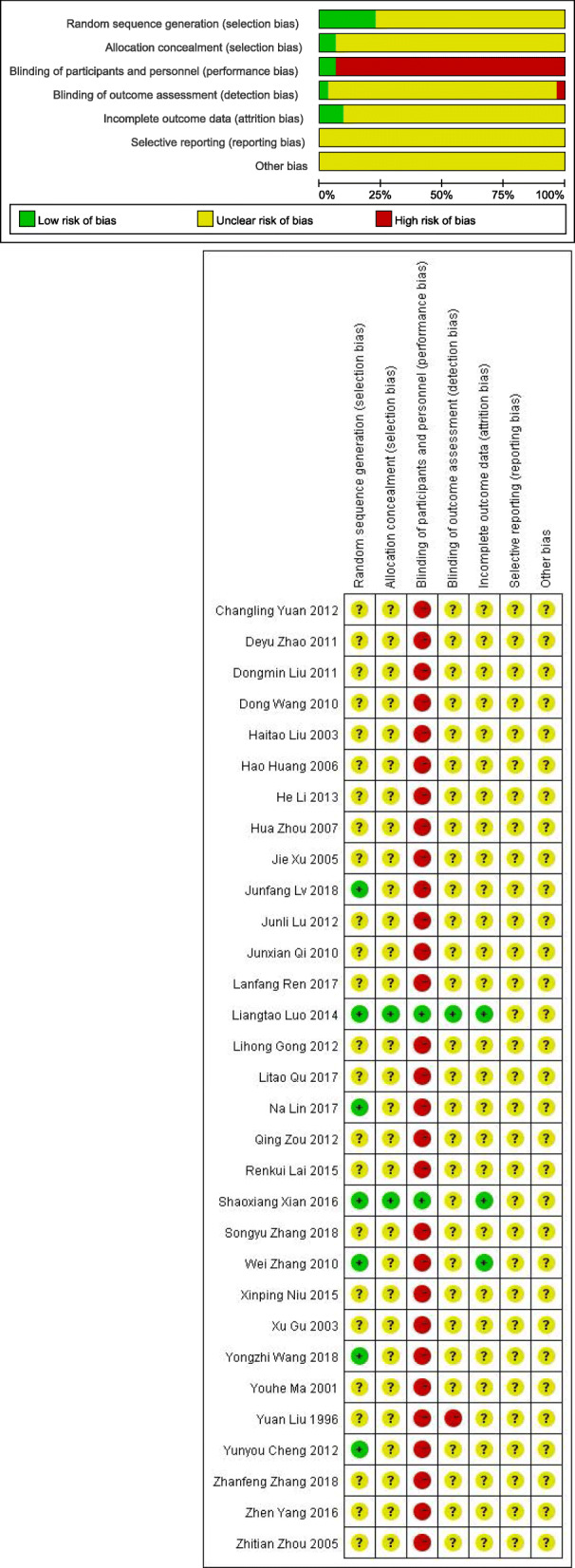
We systematically searched databases including Embase, PubMed, Cochrane Library, CBM, CNKI, VIP and Wanfang from inception to October 8, 2018, to identify eligible RCTs using TCM interventions for treating CHF patients caused by CHD. Cochrane Database of Systematic Reviews (CDSR) was searched to include Cochrane systematic reviews (CSRs) of CHF. Two authors independently assessed the risk of bias of the included RCTs according to the Cochrane Handbook. Outcome measures of each trial were extracted and analyzed those compared with the CSRs. We also evaluated the reporting quality of the outcome measures.
A total of 31 RCTs were included and the methodology quality of the studies was generally low. Outcome measures in these RCTs were mortality, rehospitalization, efficacy of cardiac function, left ventricular ejection fraction (LVEF), 6 min' walk distance (6MWD) and Brain natriuretic peptide (BNP), of which mortality and rehospitalization are clinical end points while the others are surrogate outcomes. The reporting rate of mortality and rehospitalization was 12.90% (4/31), the other included studies reported surrogate outcomes. As safety measure, 54.84% of the studies reported adverse drug reactions. Two trials were evaluated as high in reporting quality of outcomes and that of the other 29 studies was poor due to lack of necessary information for reporting.
The present RCTs of TCM in treating CHF secondary to CHD did not concentrate on the clinical end points of heart failure, which were generally small in size and short in duration. Moreover, these trials lacked adequate safety evaluation, had low quality in reporting outcomes and certain risk of bias in methodology. For objective assessment of the efficacy and safety of TCM in treating CHF secondary to CHD, future research should be rigorous designed, set end points as primary outcome measures and pay more attention to safety evaluation throughout the trial.
中医药在治疗冠心病继发慢性心力衰竭方面得到了广泛应用。然而,目前仍缺乏确凿的临床证据。相应的临床试验在评估中医药疗效的结局指标上差异很大,一些显示临床症状改善的研究结果并不被普遍认可。合理的结局指标是评估每种治疗方法疗效和安全性的关键,也是有说服力的临床试验的重要组成部分。我们旨在总结和分析中医药治疗冠心病继发慢性心力衰竭的随机对照试验(RCT)的结局指标,随后找出存在的问题并尝试提出解决方案。
我们系统地检索了 Embase、PubMed、Cochrane 图书馆、CBM、CNKI、VIP 和万方数据库,从建库至 2018 年 10 月 8 日,以识别使用中医药干预治疗冠心病继发慢性心力衰竭患者的合格 RCT。还检索了 Cochrane 心力衰竭系统评价数据库(CDSR),以纳入 Cochrane 心力衰竭系统评价(CSR)。两名作者根据 Cochrane 手册独立评估纳入 RCT 的偏倚风险。提取每个试验的结局指标并进行分析,与 CSR 进行比较。我们还评估了结局指标的报告质量。
共纳入 31 项 RCT,研究方法质量普遍较低。这些 RCT 的结局指标包括死亡率、再住院率、心功能疗效、左心室射血分数(LVEF)、6 分钟步行距离(6MWD)和脑钠肽(BNP),其中死亡率和再住院率是临床终点,而其他则是替代终点。死亡率和再住院率的报告率为 12.90%(4/31),其他纳入的研究报告了替代终点。作为安全性指标,54.84%的研究报告了药物不良反应。有 2 项试验的结局报告质量较高,而其余 29 项研究的报告质量较差,因为缺乏报告所需的必要信息。
目前中医药治疗冠心病继发慢性心力衰竭的 RCT 并未集中于心力衰竭的临床终点,这些终点通常规模较小且持续时间较短。此外,这些试验缺乏充分的安全性评估,结局报告质量低,方法学上存在一定的偏倚风险。为了客观评估中医药治疗冠心病继发慢性心力衰竭的疗效和安全性,未来的研究应设计严谨,将终点作为主要结局指标,并在整个试验过程中更加关注安全性评估。