Noor Fatima, Saleem Muhammad Hamzah, Aslam Muhammad Farhan, Ahmad Ajaz, Aslam Sidra
Department of Bioinformatics and Biotechnology, Government College University, Allama Iqbal Road, 38000 Faisalabad, Pakistan.
MOA Key Laboratory of Crop Ecophysiology and Farming System in the Middle Reaches of the Yangtze River, College of Plant Science and Technology, Huazhong Agricultural University, Wuhan 430070, China.
Saudi J Biol Sci. 2021 Sep;28(9):4938-4945. doi: 10.1016/j.sjbs.2021.06.079. Epub 2021 Jul 1.
About half-century ago, Immunoglobulin A nephropathy (IgAN) was discovered as a complicated disease with frequent clinical symptoms. Until now, exact mechanism underlying the pathogenesis of IgAN is poorly known. Therefore, current study was aimed to understand the molecular mechanism of IgAN by identifying the key miRNAs and their targeted hub genes. The key miRNAs might contribute to the diagnosis and therapy of IgAN, and could turn out to be a new star in the field of IgAN.
The microarray datasets were downloaded from Gene Expresssion Omnibus (GEO) database and analyzed using R package (LIMMA) in order to obtain differential expressed genes (DEGs). Then, the hub genes were identified using cytoHubba plugin of cytoscpae tool and other bioinformatics approaches including protein-protein interaction (PPI) network analysis, module analysis, and miRNA-hub gene network construction was also performed.
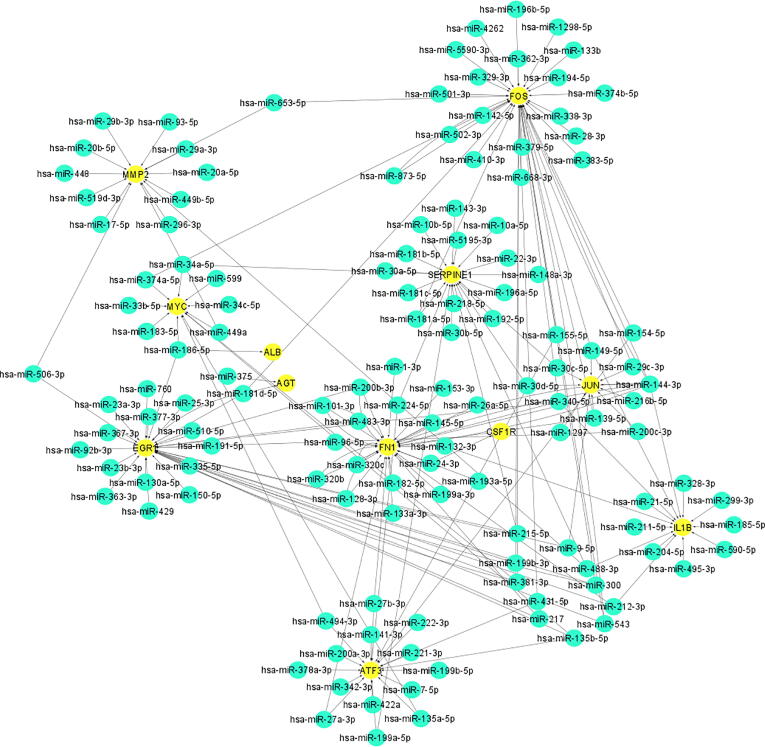
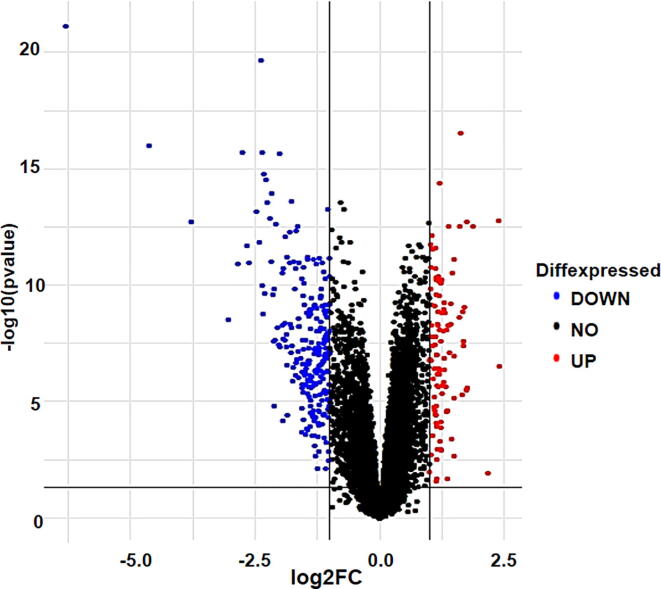
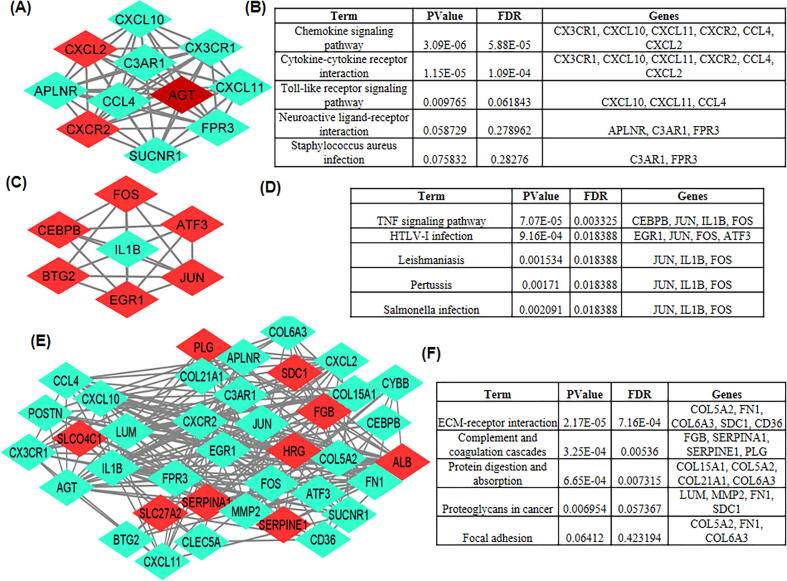
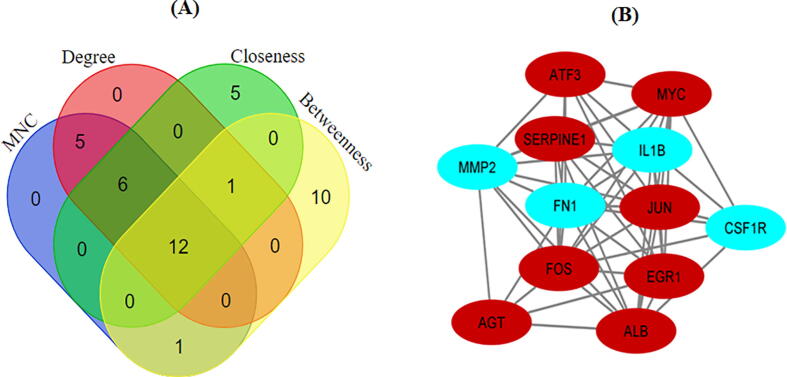
A total of 348 DEGs were identified, of which 107 were upregulated genes and 241 were downregulated genes. Subsequently, the 12 overlapped genes were predicted from cytoHubba, and considered as hub genes. Moreover, a network among miRNA-hub genes was created to explore the correlation between the hub genes and their targeted miRNAs. Network construction ultimately lead to the identification of nine gene named FN1, EGR1, FOS, JUN, SERPINE1, MMP2, ATF3, MYC, and IL1B and one novel key miRNA namely, has-miR-144-3p as biomarker for diagnosis and therapy of IgAN.
This study updates the information and yield a new perspective in context of understanding the pathogenesis and development of IgAN. In future, key miRNAs might be capable of improving the personalized detection and therapies for IgAN. and investigation of miRNAs and pathway interaction is essential to delineate the specific roles of the novel miRNAs, which may help to further reveal the mechanisms underlying IgAN.
大约半个世纪前,免疫球蛋白A肾病(IgAN)被发现是一种具有频繁临床症状的复杂疾病。迄今为止,IgAN发病机制的确切原因仍知之甚少。因此,本研究旨在通过鉴定关键的微小RNA(miRNA)及其靶向的枢纽基因来了解IgAN的分子机制。这些关键的miRNA可能有助于IgAN的诊断和治疗,并可能成为IgAN领域的一颗新星。
从基因表达综合数据库(GEO)下载微阵列数据集,并使用R包(LIMMA)进行分析,以获得差异表达基因(DEG)。然后,使用Cytoscape工具的CytoHubba插件和其他生物信息学方法(包括蛋白质-蛋白质相互作用(PPI)网络分析、模块分析)鉴定枢纽基因,并构建miRNA-枢纽基因网络。
共鉴定出348个DEG,其中107个为上调基因,241个为下调基因。随后,从CytoHubba预测出12个重叠基因,并将其视为枢纽基因。此外,构建了miRNA-枢纽基因网络,以探索枢纽基因与其靶向miRNA之间的相关性。网络构建最终鉴定出9个基因,分别为纤连蛋白1(FN1)、早期生长反应蛋白1(EGR1)、原癌基因FOS、原癌基因JUN、丝氨酸蛋白酶抑制剂E1(SERPINE1)、基质金属蛋白酶2(MMP2)、活化转录因子3(ATF3)、原癌基因MYC和白细胞介素1β(IL1B),以及一个新的关键miRNA,即has-miR-144-3p,作为IgAN诊断和治疗的生物标志物。
本研究更新了信息,并为理解IgAN的发病机制和发展提供了新的视角。未来,关键的miRNA可能能够改善IgAN的个性化检测和治疗。对miRNA及其通路相互作用的研究对于阐明新型miRNA的具体作用至关重要,这可能有助于进一步揭示IgAN的潜在机制。