Samadian Nooshin, Hashemi Mehrdad
Department of Molecular and Cellular Sciences, Islamic Azad University ,Tehran medical sciences branch, Tehran, Iran.
Department of medical biotechnology, Islamic Azad University ,Tehran medical sciences branch, Tehran, Iran.
Galen Med J. 2018 May 19;7:e1008. doi: 10.22086/gmj.v0i0.1008. eCollection 2018.
Diet plays an important role in cancer prevention. Apigenin, a flavonoid with thechemical formula C15H10O5 , is abundantly present in vegetables. Vegetarian foods containing flavonoids are rich sources of bioactive compounds. Flavonoids have been utilized in herbal treatment. Nanogels are drug delivery systems based on polymers and are used in tissue engineering and for drug delivery. This study was conducted to compare the effects of apigenin and a nanodrug on the viability of the K562 cell line of chronic myeloid leukemia at different durations under laboratory conditions.
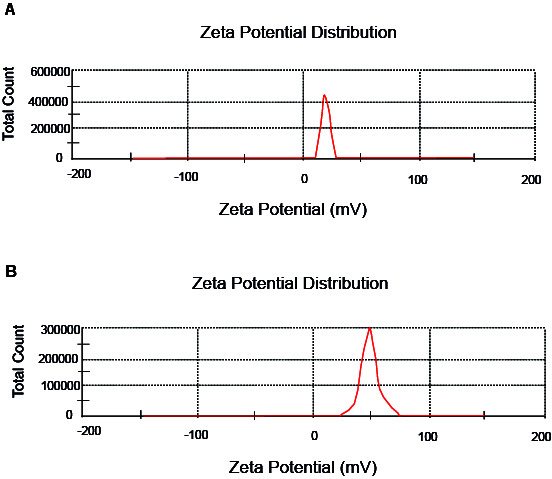
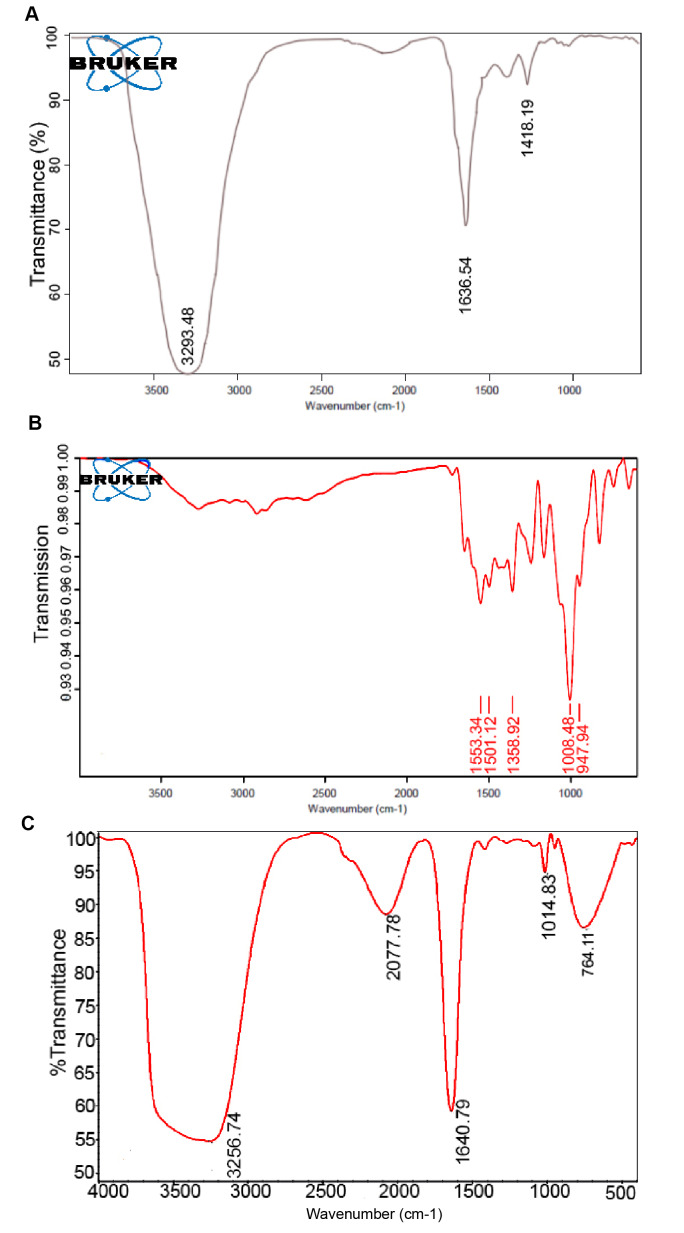
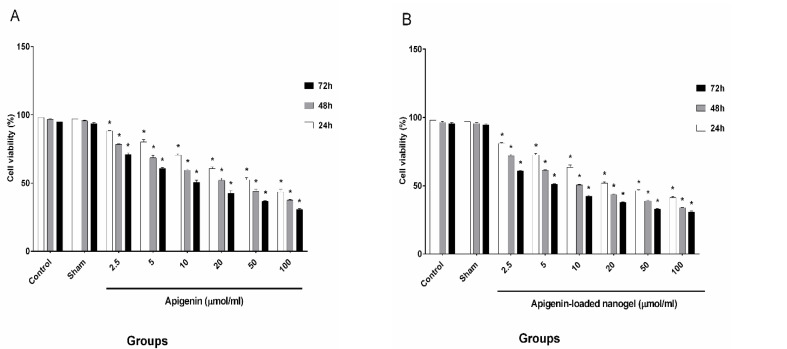
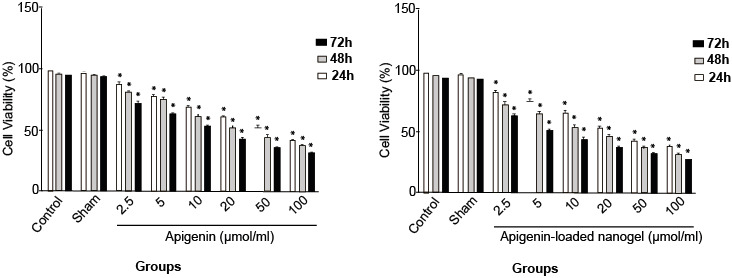
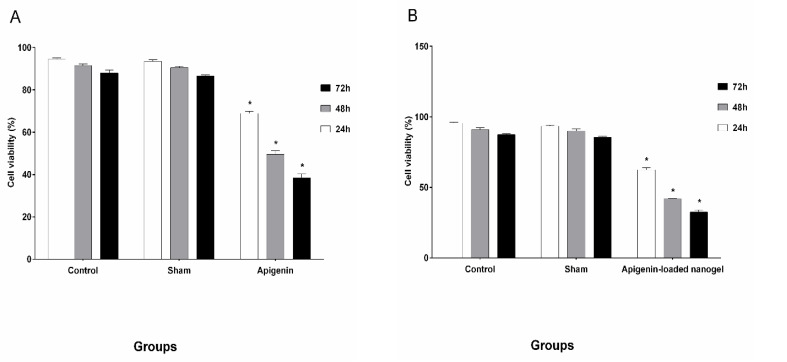
Chitosan was first dissolved in 1% acetic acid, and ethylene dichloride EDC and NHS were added to the solution. Then, the nanodrug was prepared by loading apigenin into stearate-chitosan nanogel (scs nanogel), and its physical and morphological characteristics were evaluated by TEM, DLS, and FTIR. Trypan blue staining, MTT assay, and flow cytometry were used to analyze the effects of various concentrations of apigenin and apigenin-loaded chitosan-stearate nanogel (APG-SCS) at 24, 48, and 72 h after they were applied to the K562 cell line.
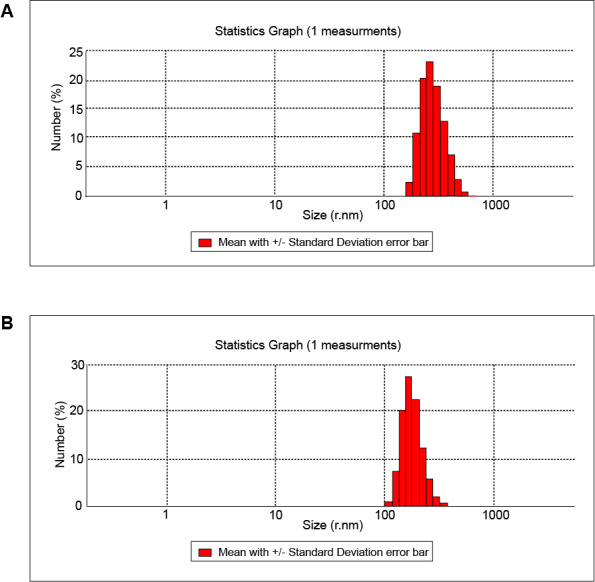
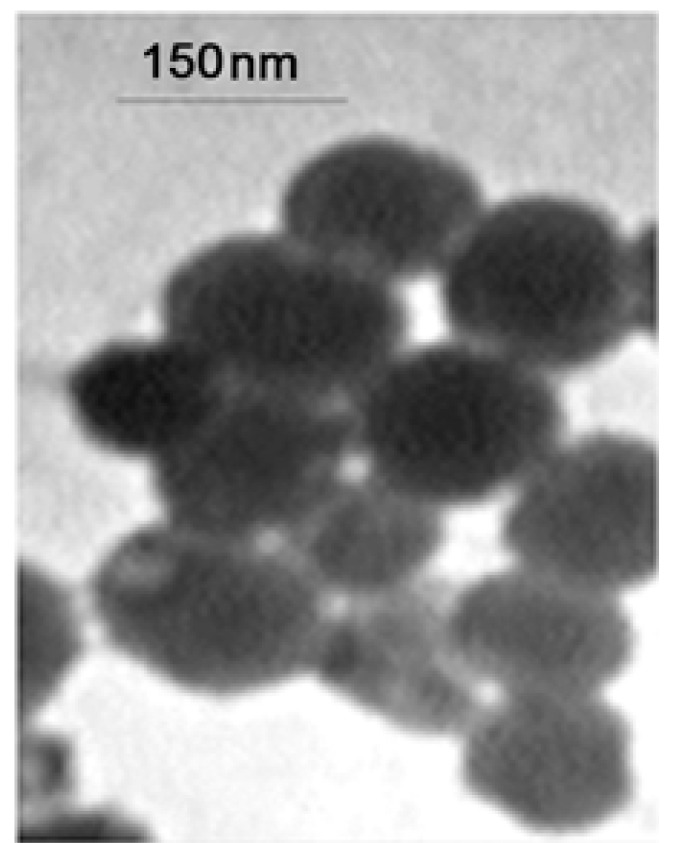
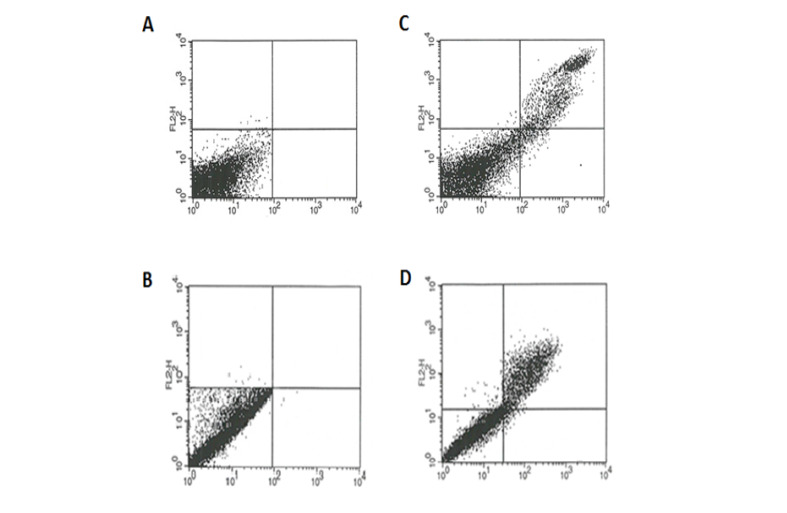
The diameter of the nanodrug particles was measured using DLS and confirmed by TEM. The K562 cells treated with APG-SCS and with apigenin exhibited significant differences compared with the control (P < 0.05). Apoptosis was detected by flow cytometry.
This study showed that the toxic effects of apigenin and the nanodrug improved with increasing concentrations and exposure durations compared to those in the control.The toxic effect of apigenin loaded into the stearate-chitosan nanogel was greater than apigenin, and the toxic effects of both materials were greater compared to the control under laboratory conditions.
饮食在癌症预防中起着重要作用。芹菜素是一种化学式为C15H10O5的黄酮类化合物,大量存在于蔬菜中。含有黄酮类化合物的素食是生物活性化合物的丰富来源。黄酮类化合物已被用于草药治疗。纳米凝胶是基于聚合物的药物递送系统,用于组织工程和药物递送。本研究旨在比较芹菜素和一种纳米药物在实验室条件下不同作用时间对慢性髓性白血病K562细胞系活力的影响。
首先将壳聚糖溶解于1%的乙酸中,然后向溶液中加入二氯乙烷(EDC)和N-羟基琥珀酰亚胺(NHS)。接着,通过将芹菜素负载到硬脂酸-壳聚糖纳米凝胶(scs纳米凝胶)中制备纳米药物,并通过透射电子显微镜(TEM)、动态光散射(DLS)和傅里叶变换红外光谱(FTIR)对其物理和形态特征进行评估。采用台盼蓝染色、MTT法和流式细胞术分析不同浓度的芹菜素和负载芹菜素的壳聚糖-硬脂酸纳米凝胶(APG-SCS)作用于K562细胞系24、48和72小时后的效果。
使用DLS测量纳米药物颗粒的直径,并通过TEM进行确认。与对照组相比,用APG-SCS和芹菜素处理的K562细胞表现出显著差异(P < 0.05)。通过流式细胞术检测到细胞凋亡。
本研究表明,与对照组相比,芹菜素和纳米药物的毒性作用随浓度和暴露时间的增加而增强。负载到硬脂酸-壳聚糖纳米凝胶中的芹菜素的毒性作用大于芹菜素,并且在实验室条件下,这两种物质的毒性作用均大于对照组。