Centre for Healthy Brain Ageing, University of New South Wales, Sydney, NSW, Australia.
The Matilda Centre for Research in Mental Health and Substance Use, The University of Sydney, Sydney, NSW, Australia.
J Child Psychol Psychiatry. 2022 Jul;63(7):734-744. doi: 10.1111/jcpp.13513. Epub 2021 Sep 1.
An emerging body of literature has indicated that broad, transdiagnostic dimensions of psychopathology are associated with alterations in brain structure across the life span. The current study aimed to investigate the relationship between brain structure and broad dimensions of psychopathology in the critical preadolescent period when psychopathology is emerging.
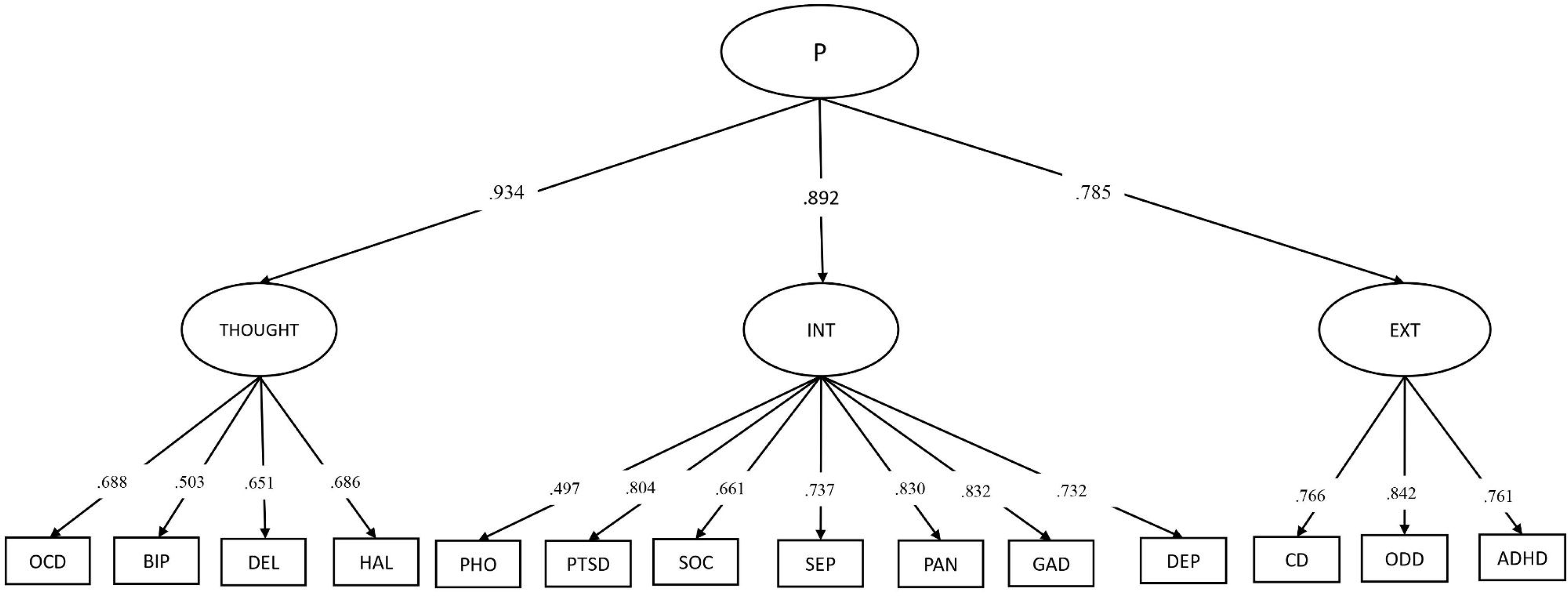
This study included baseline data from the Adolescent Brain and Cognitive Development (ABCD) Study (n = 11,875; age range = 9-10 years; male = 52.2%). General psychopathology, externalizing, internalizing, and thought disorder dimensions were based on a higher-order model of psychopathology and estimated using Bayesian plausible values. Outcome variables included global and regional cortical volume, thickness, and surface area.
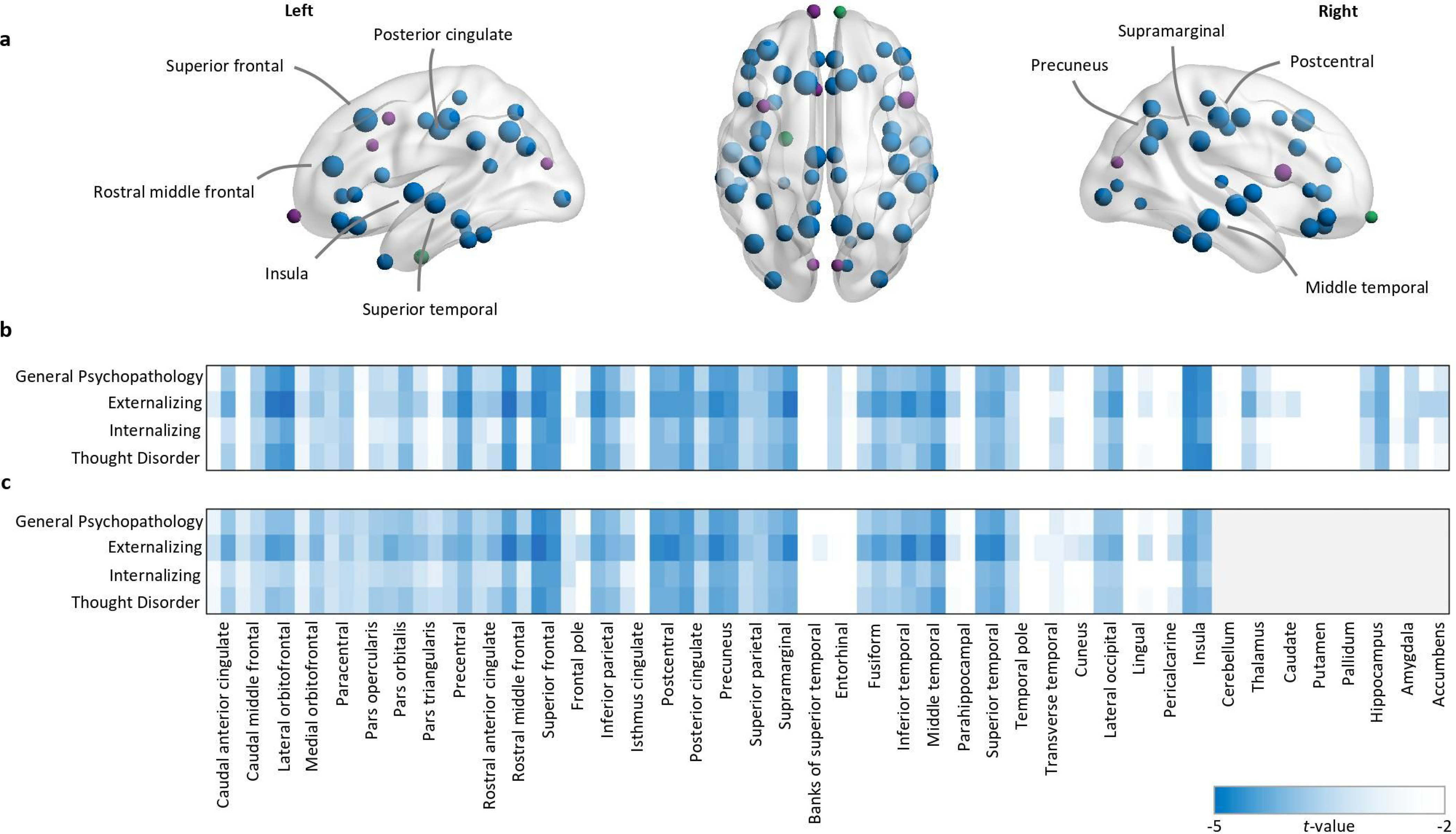
Higher levels of psychopathology across all dimensions were associated with lower volume and surface area globally, as well as widespread and pervasive alterations across the majority of cortical and subcortical regions studied, after adjusting for sex, race/ethnicity, parental education, income, and maternal psychopathology. The relationships between general psychopathology and brain structure were attenuated when adjusting for cognitive functioning. There were no statistically significant relationships between psychopathology and cortical thickness in this sample of preadolescents.
The current study identified lower cortical volume and surface area as transdiagnostic biomarkers for general psychopathology in preadolescence. Future research may focus on whether the widespread and pervasive relationships between general psychopathology and brain structure reflect cognitive dysfunction that is a feature across a range of mental illnesses.
越来越多的文献表明,精神病理学的广泛、跨诊断维度与整个生命周期的大脑结构改变有关。本研究旨在探讨精神病理学出现的关键青春期前阶段大脑结构与广泛精神病理学维度之间的关系。
本研究包括来自青少年大脑与认知发展研究(ABCD 研究)(n=11875;年龄范围=9-10 岁;男性=52.2%)的基线数据。一般精神病理学、外化、内化和思维障碍维度基于精神病理学的高阶模型,并使用贝叶斯似然值进行估计。结果变量包括全脑和区域皮质体积、厚度和表面积。
在调整性别、种族/民族、父母教育、收入和母亲精神病理学后,所有维度的精神病理学水平较高与全脑体积和表面积降低以及研究的大多数皮质和皮质下区域普遍和普遍改变有关。在调整认知功能后,一般精神病理学与大脑结构之间的关系减弱。在这个青春期前的样本中,精神病理学与皮质厚度之间没有统计学上显著的关系。
本研究确定了较低的皮质体积和表面积是青春期前一般精神病理学的跨诊断生物标志物。未来的研究可能集中于一般精神病理学与大脑结构之间的广泛和普遍关系是否反映了认知功能障碍,这是一系列精神疾病的特征。