Department of Cardiology, University Heart and Vascular Center, University Medical Center Hamburg-Eppendorf, Martinistraße 52, 20246 Hamburg, Germany.
German Center of Cardiovascular Research, Partner Site Hamburg/Lübeck/Kiel, Hamburg, Germany.
Europace. 2022 Apr 5;24(4):552-564. doi: 10.1093/europace/euab200.
Treatment patterns were compared between randomized groups in EAST-AFNET 4 to assess whether differences in anticoagulation, therapy of concomitant diseases, or intensity of care can explain the clinical benefit achieved with early rhythm control in EAST-AFNET 4.
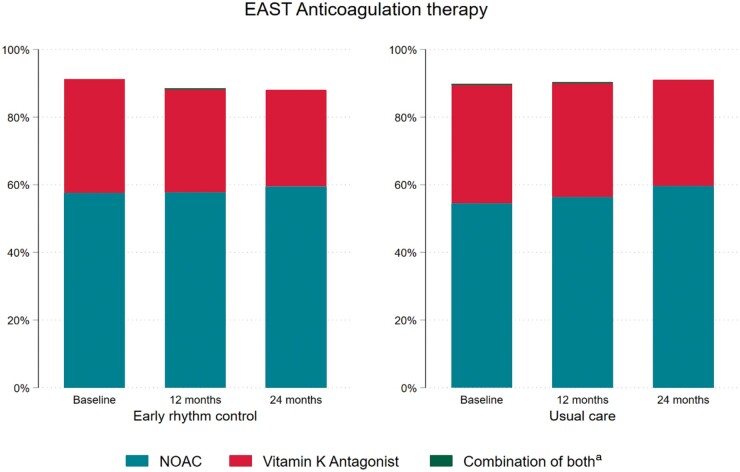
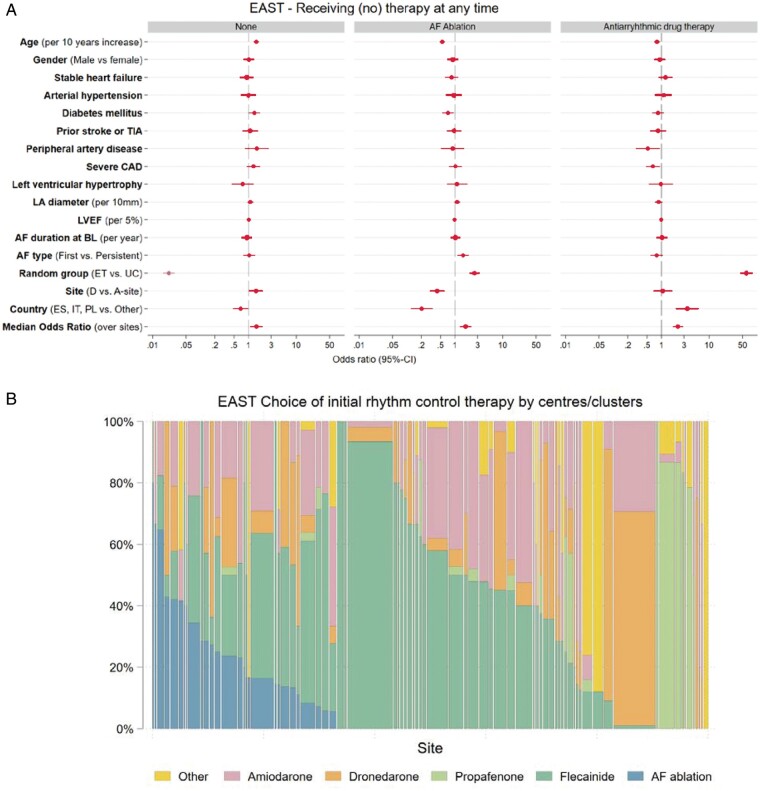
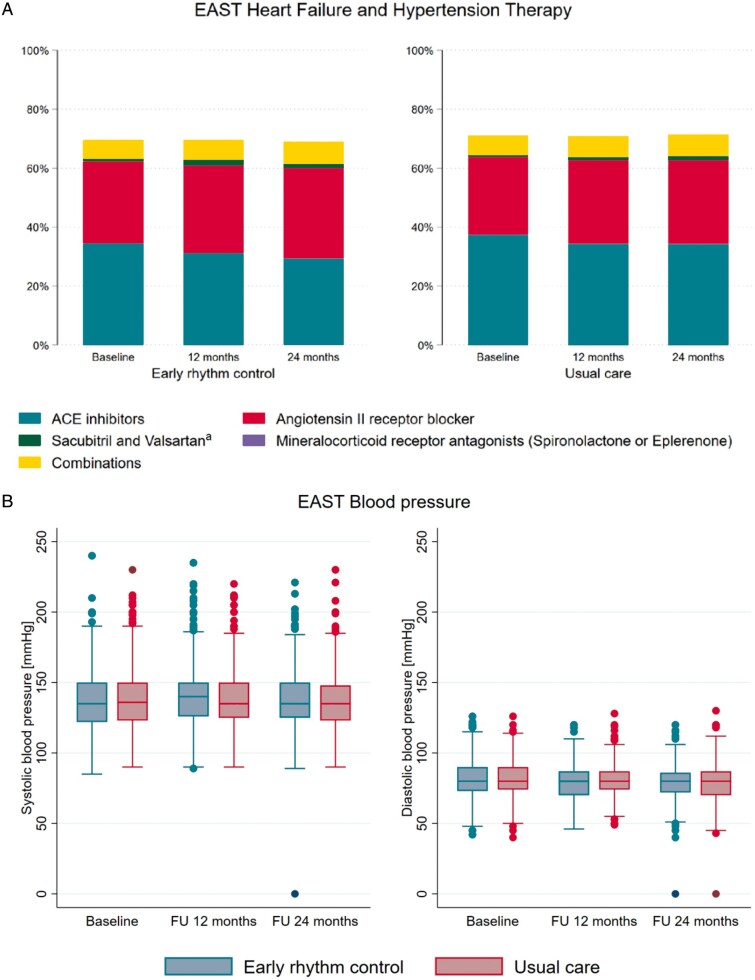
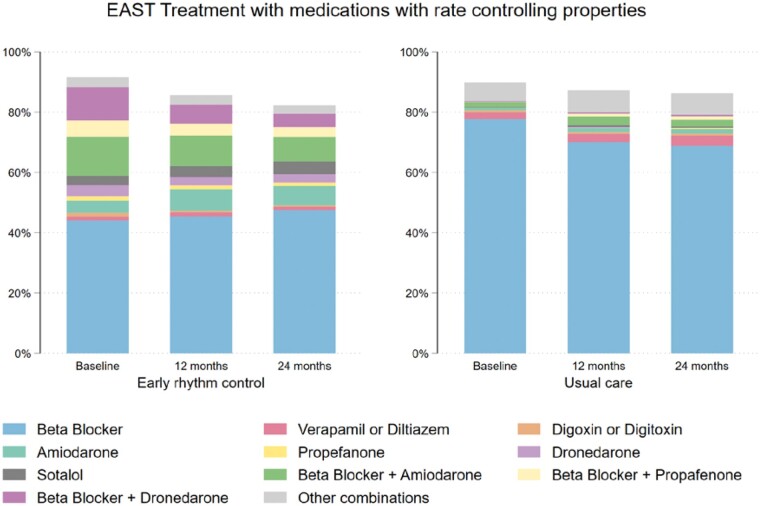
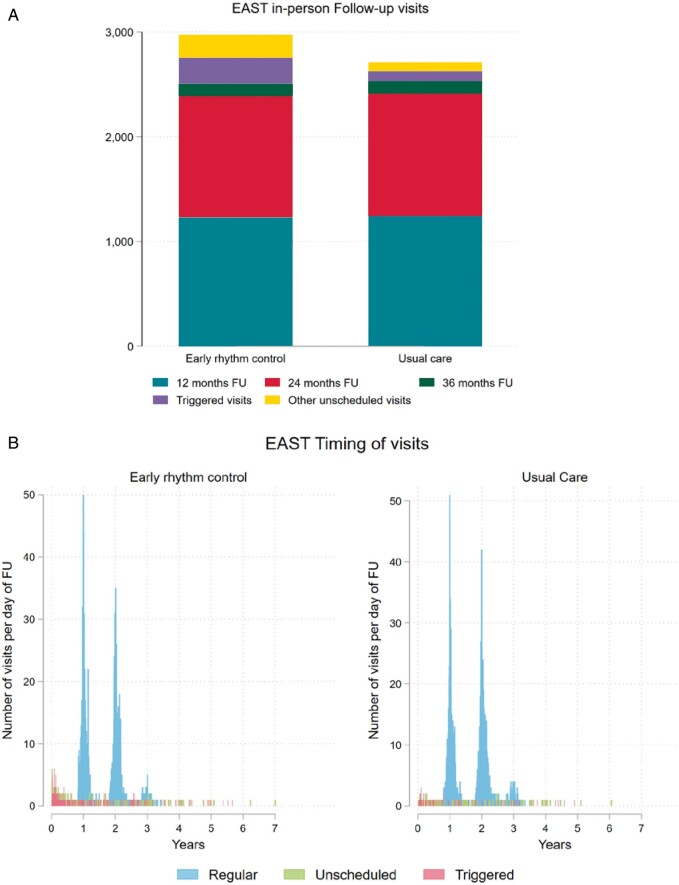
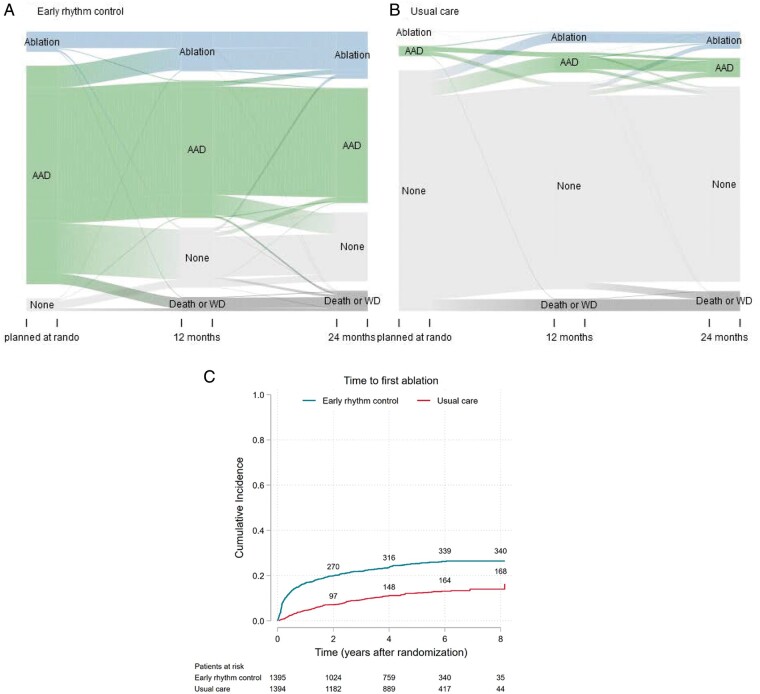
Cardiovascular treatment patterns and number of visits were compared between randomized groups in EAST-AFNET 4. Oral anticoagulation was used in >90% of patients during follow-up without differences between randomized groups. There were no differences in treatment of concomitant conditions between groups. The type of rhythm control varied by country and centre. Over time, antiarrhythmic drugs were given to 1171/1395 (84%) patients in early therapy, and to 202/1394 (14%) in usual care. Atrial fibrillation (AF) ablation was performed in 340/1395 (24%) patients randomized to early therapy, and in 168/1394 (12%) patients randomized to usual care. 97% of rhythm control therapies were within class I and class III recommendations of AF guidelines. Patients randomized to early therapy transmitted 297 166 telemetric electrocardiograms (ECGs) to a core lab. In total, 97 978 abnormal ECGs were sent to study sites. The resulting difference between study visits was low (0.06 visits/patient/year), with slightly more visits in early therapy (usual care 0.39 visits/patient/year; early rhythm control 0.45 visits/patient/year, P < 0.001), mainly due to visits for symptomatic AF recurrences or recurrent AF on telemetric ECGs.
The clinical benefit of early, systematic rhythm control therapy was achieved using variable treatment patterns of antiarrhythmic drugs and AF ablation, applied within guideline recommendations.
通过比较 EAST-AFNET 4 随机分组的治疗模式,评估抗凝、合并症治疗和治疗强度的差异是否可以解释 EAST-AFNET 4 中早期节律控制所带来的临床获益。
比较 EAST-AFNET 4 中随机分组之间的心血管治疗模式和就诊次数。随访期间,超过 90%的患者接受了口服抗凝治疗,且两组之间无差异。组间合并症的治疗无差异。节律控制的类型因国家和中心而异。随着时间的推移,1171/1395(84%)例早期治疗患者和 202/1394(14%)例常规治疗患者接受了抗心律失常药物治疗。340/1395(24%)例早期治疗患者和 168/1394(12%)例常规治疗患者接受了房颤(AF)消融治疗。节律控制治疗的 97%符合 AF 指南 I 类和 III 类推荐。接受早期治疗的患者向核心实验室传输了 297166 份远程心电图(ECG)。共有 97978 份异常 ECG 发送至研究点。研究访问之间的差异较小(每患者每年 0.06 次就诊),早期治疗的就诊次数略多(常规治疗 0.39 次就诊/患者/年;早期节律控制 0.45 次就诊/患者/年,P<0.001),主要是由于症状性 AF 复发或远程 ECG 上的复发性 AF 就诊。
通过应用指南推荐范围内的抗心律失常药物和 AF 消融的可变治疗模式,实现了早期、系统的节律控制治疗的临床获益。