Respiratory Endoscopy Room, Linyi People's Hospital, Linyi, Shandong 276034, P.R. China.
East Medical District Office, Linyi People's Hospital, Linyi, Shandong 276034, P.R. China.
Mol Med Rep. 2021 Nov;24(5). doi: 10.3892/mmr.2021.12393. Epub 2021 Sep 3.
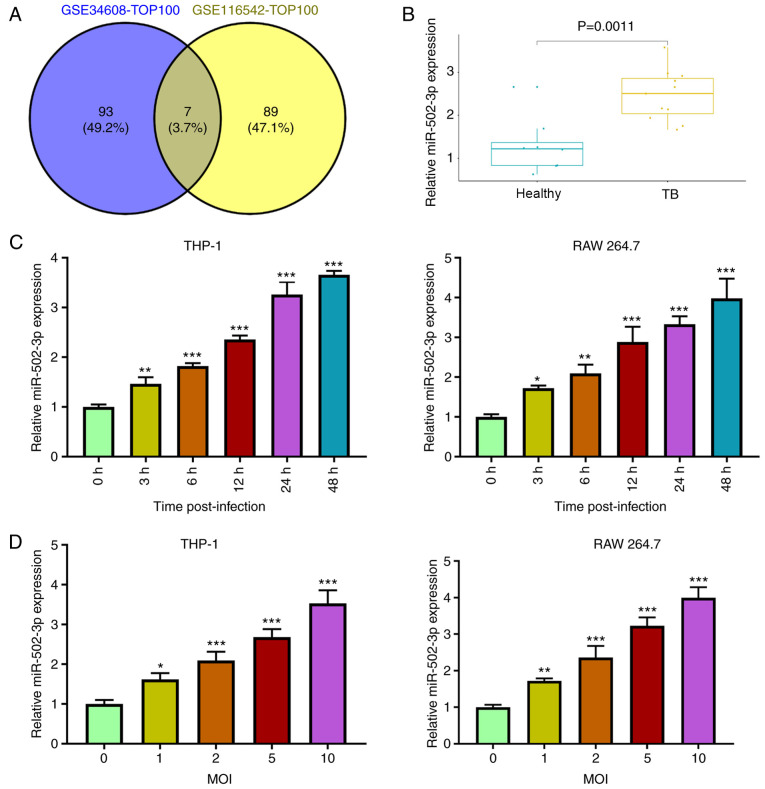
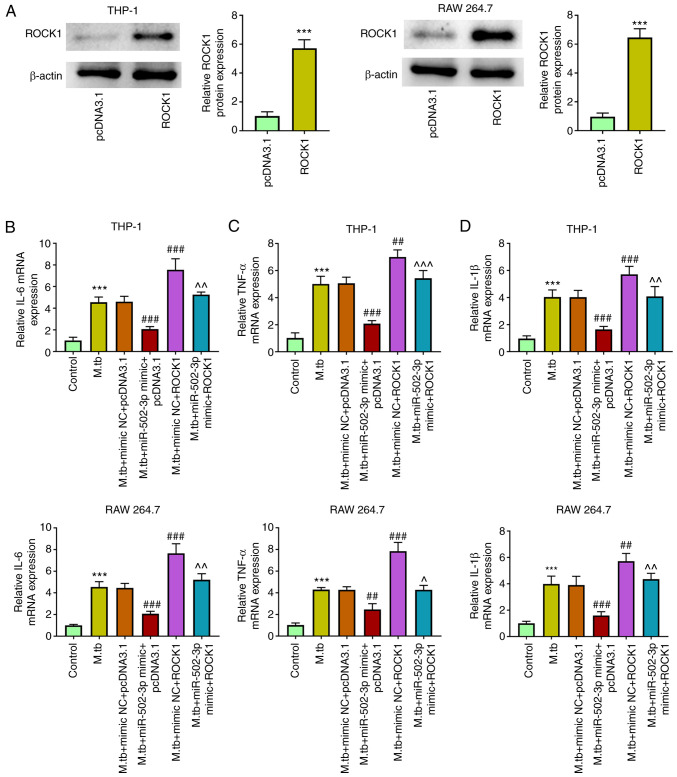
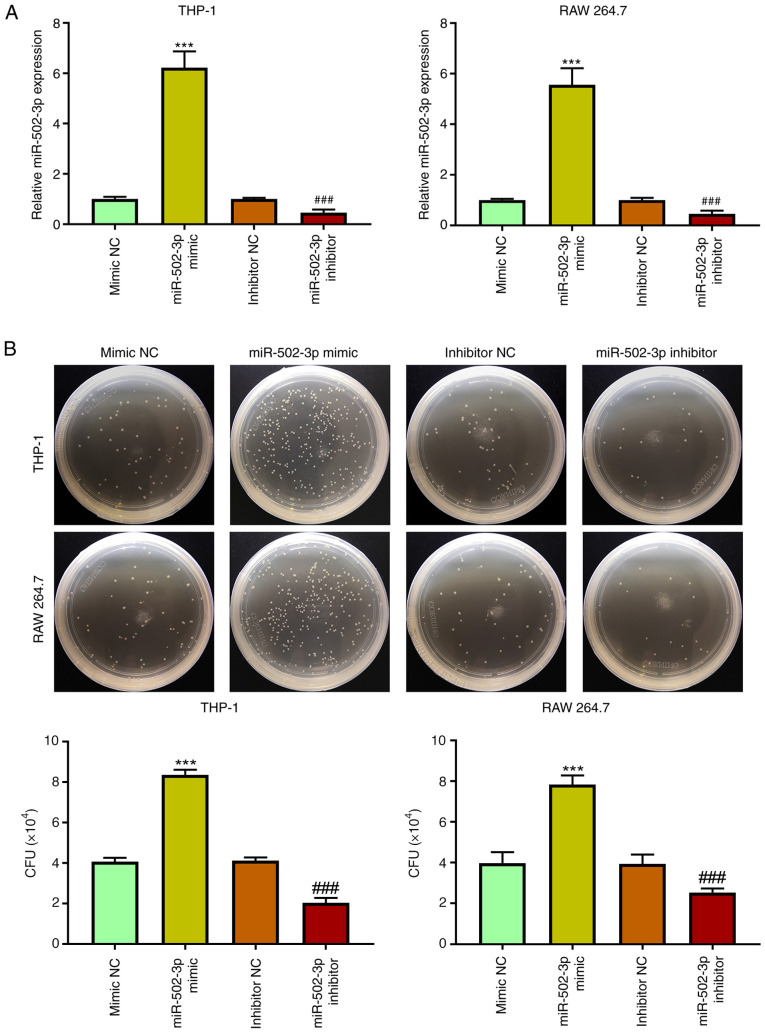
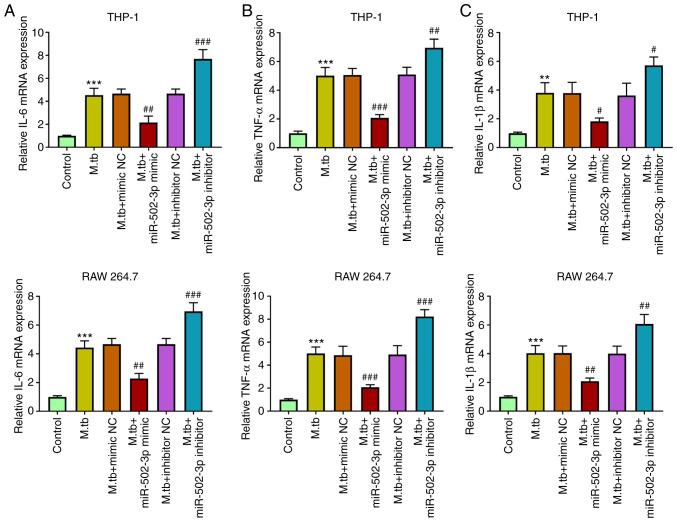
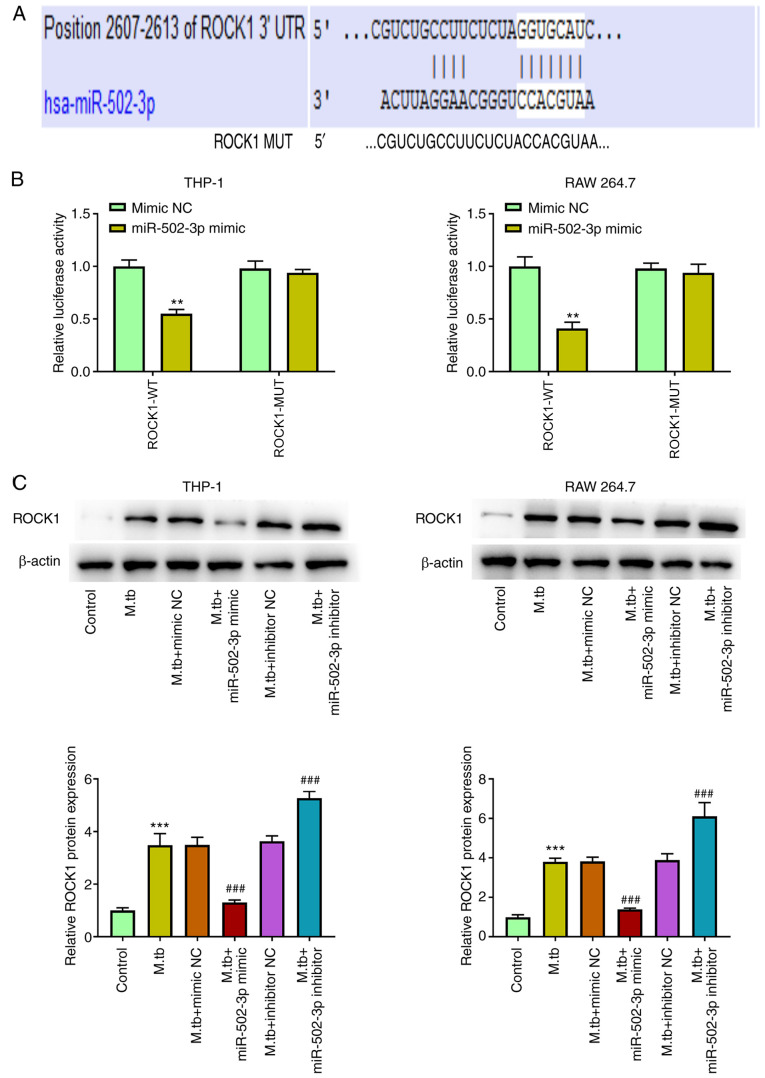
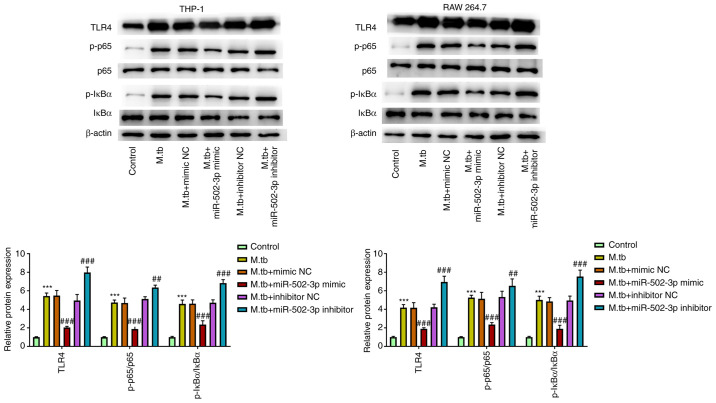
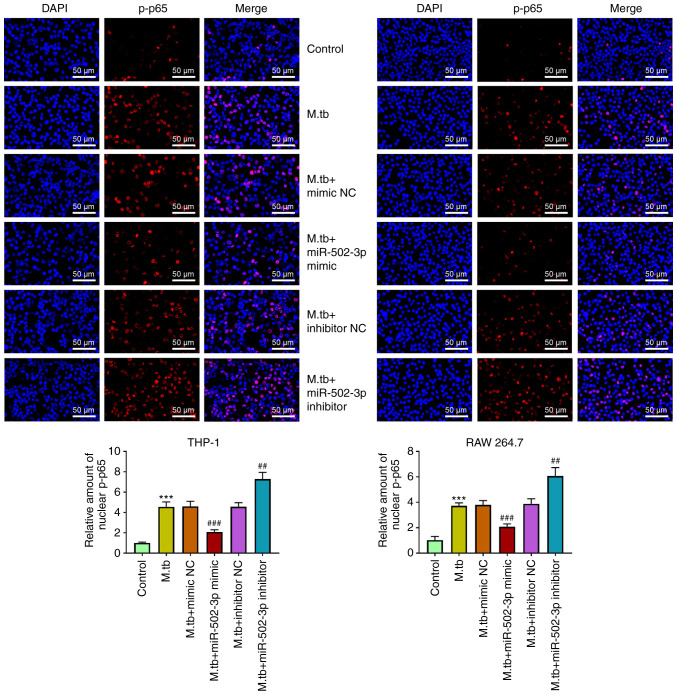
Tuberculosis (TB) is caused by infection and has the highest mortality rate of any single infectious disease worldwide. The aim of the present study was to investigate the function of microRNA (miR)‑502‑3p in ‑infected macrophages. The Gene Expression Omnibus database was used to analyze miR‑502‑3p expression in patients with TB and healthy individuals. THP‑1 and RAW 264.7 cells were transfected with miR‑502‑3p mimic, miR‑502‑3p inhibitor, pcDNA3.1‑ROCK1 or their negative controls. The expression levels of miR‑502‑3p and inflammatory cytokines were evaluated using reverse transcription‑quantitative PCR. The colony‑forming unit assay was performed to assess the survival of in macrophages, and Toll‑like receptor (TLR)4/NF‑κB signaling pathway‑associated protein expression levels were detected by western blotting. The nuclear translocation of NF‑κB p65 was detected via immunocytochemistry. TargetScan was used to predict the binding sites between miR‑502‑3p and ROCK1. The interaction between miR‑502‑3p and Rho‑associated coiled‑coil‑forming protein kinase 1 (ROCK1) was confirmed using a dual‑luciferase reporter assay; ROCK1 was demonstrated to be a direct target gene of miR‑502‑3p. Results from the present study demonstrated that miR‑502‑3p expression was significantly increased during infection in macrophages. Upregulation of miR‑502‑3p expression levels significantly enhanced the survival of intracellular . IL‑6, TNF‑α, and IL‑1β mRNA expression levels were significantly upregulated during infection but were downregulated by miR‑502‑3p overexpression. Moreover, miR‑502‑3p mimics transfection significantly downregulated TLR4/NF‑κB signaling pathway‑associated protein expression and significantly reduced nuclear transcription of NF‑κB in ‑infected macrophages. ROCK1 overexpression reversed the miR‑502‑3p inhibitory effect on cytokine production in ‑infected macrophages. In conclusion, miR‑502‑3p/ROCK1 may serve an anti‑inflammatory role and may improve the survival of within macrophages, which may provide a promising therapeutic target for TB.
肺结核(TB)是由 感染引起的,是全球病死率最高的单一传染病。本研究旨在探讨微小 RNA(miR)-502-3p 在 感染的巨噬细胞中的功能。利用基因表达综合数据库分析 TB 患者和健康个体中 miR-502-3p 的表达。用 miR-502-3p 模拟物、miR-502-3p 抑制剂、pcDNA3.1-ROCK1 或其阴性对照转染 THP-1 和 RAW264.7 细胞。采用逆转录-定量 PCR 评估 miR-502-3p 和炎性细胞因子的表达水平。采用集落形成单位实验评估 感染巨噬细胞中的存活率,采用 Western blot 检测 Toll 样受体 4(TLR)4/核因子-κB 信号通路相关蛋白表达水平。采用免疫细胞化学检测 NF-κB p65 的核转位。采用 TargetScan 预测 miR-502-3p 和 ROCK1 之间的结合位点。采用双荧光素酶报告基因实验证实 miR-502-3p 与 Rho 相关卷曲螺旋形成蛋白激酶 1(ROCK1)之间的相互作用;ROCK1 是 miR-502-3p 的直接靶基因。本研究结果表明,巨噬细胞 感染时 miR-502-3p 的表达显著增加。上调 miR-502-3p 的表达水平可显著增强细胞内 的存活。 感染时 IL-6、TNF-α 和 IL-1β mRNA 的表达水平显著上调,但 miR-502-3p 过表达可下调其表达水平。此外,miR-502-3p 模拟物转染可显著下调 TLR4/NF-κB 信号通路相关蛋白表达,并显著降低 NF-κB 在 感染巨噬细胞中的核转录。ROCK1 过表达可逆转 miR-502-3p 对 感染巨噬细胞中细胞因子产生的抑制作用。综上所述,miR-502-3p/ROCK1 可能发挥抗炎作用,并可改善巨噬细胞内 的存活,这可能为 TB 提供一个有前景的治疗靶点。