Lillehei Heart Institute and Department of Pediatrics, Medical School, University of Minnesota, Cancer and Cardiovascular Research Building, 2231 6th Street SE, Minneapolis, MN, 55455, USA.
Present address: Division of Biological Sciences, University of Missouri, 105 Tucker Hall, Columbia, MO, 65211, USA.
Skelet Muscle. 2021 Sep 4;11(1):22. doi: 10.1186/s13395-021-00277-2.
Although muscle regenerative capacity declines with age, the extent to which this is due to satellite cell-intrinsic changes vs. environmental changes has been controversial. The majority of aging studies have investigated hindlimb locomotory muscles, principally the tibialis anterior, in caged sedentary mice, where those muscles are abnormally under-exercised.
We analyze satellite cell numbers in 8 muscle groups representing locomotory and non-locomotory muscles in young and 2-year-old mice and perform transplantation assays of low numbers of hind limb satellite cells from young and old mice.
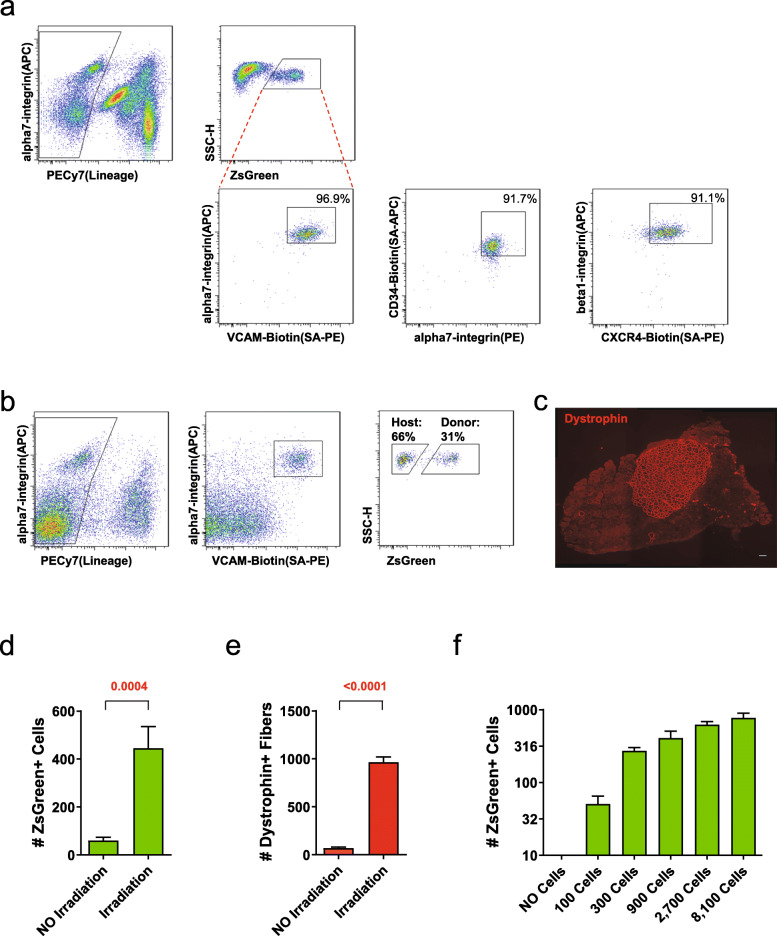
We find that satellite cell density does not decline significantly by 2 years of age in most muscles, and one muscle, the masseter, shows a modest but statistically significant increase in satellite cell density with age. The tibialis anterior and extensor digitorum longus were clear exceptions, showing significant declines. We quantify self-renewal using a transplantation assay. Dose dilution revealed significant non-linearity in self-renewal above a very low threshold, suggestive of competition between satellite cells for space within the pool. Assaying within the linear range, i.e., transplanting fewer than 1000 cells, revealed no evidence of decline in cell-autonomous self-renewal or regenerative potential of 2-year-old murine satellite cells.
These data demonstrate the value of comparative muscle analysis as opposed to overreliance on locomotory muscles, which are not used physiologically in aging sedentary mice, and suggest that self-renewal impairment with age is precipitously acquired at the geriatric stage, rather than being gradual over time, as previously thought.
尽管肌肉的再生能力会随着年龄的增长而下降,但这种下降是由于卫星细胞内在变化还是环境变化引起的,一直存在争议。大多数衰老研究都调查了笼养久坐不动的小鼠后肢运动肌肉,主要是胫骨前肌,在这些肌肉中,它们的运动量异常不足。
我们分析了代表运动和非运动肌肉的 8 个肌肉群中的卫星细胞数量,这些肌肉群来自年轻和 2 岁的小鼠,并对来自年轻和老年小鼠的少量后肢卫星细胞进行了移植实验。
我们发现,大多数肌肉中的卫星细胞密度在 2 岁时并没有显著下降,而一块肌肉——咬肌,其卫星细胞密度随着年龄的增长而适度增加,但具有统计学意义。胫骨前肌和趾长伸肌是明显的例外,它们的卫星细胞密度显著下降。我们使用移植实验来量化自我更新。剂量稀释显示,自我更新存在非常低的阈值之上的显著非线性,表明卫星细胞在池中争夺空间存在竞争。在线性范围内进行检测,即移植少于 1000 个细胞,没有发现 2 岁小鼠卫星细胞的细胞自主自我更新或再生能力下降的证据。
这些数据表明,与过度依赖运动肌肉相比,进行比较肌肉分析具有重要意义,因为运动肌肉在衰老的久坐不动的小鼠中没有进行生理运动,并且表明自我更新能力的损害是在老年阶段急剧获得的,而不是像以前认为的那样随着时间的推移逐渐获得的。