Department of Thoracic Head and Neck Medical Oncology, The University of Texas MD Anderson Cancer Center, Houston, Texas, USA.
Department of Melanoma Medical Oncology, The University of Texas MD Anderson Cancer Center, Houston, Texas, USA.
J Biol Chem. 2021 Nov;297(5):101163. doi: 10.1016/j.jbc.2021.101163. Epub 2021 Sep 3.
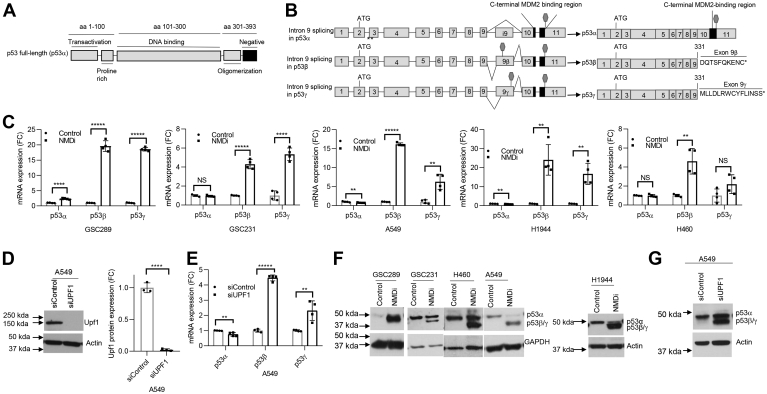
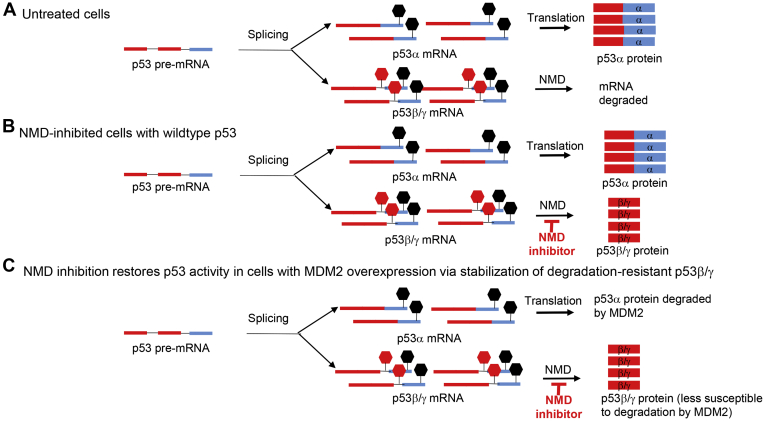
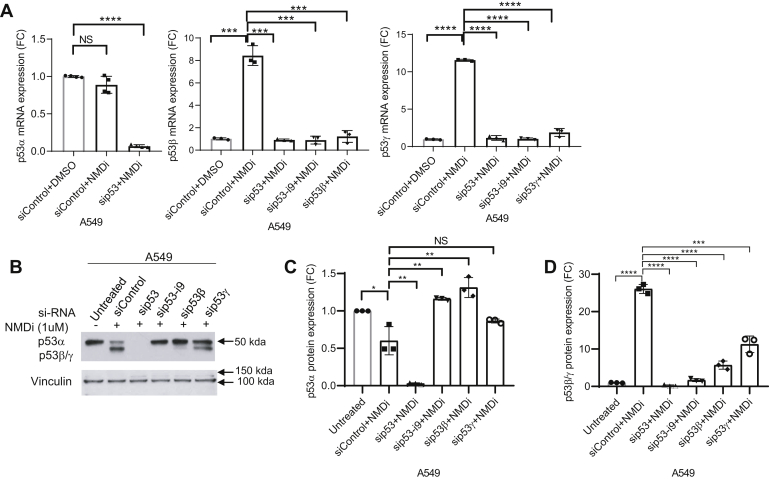
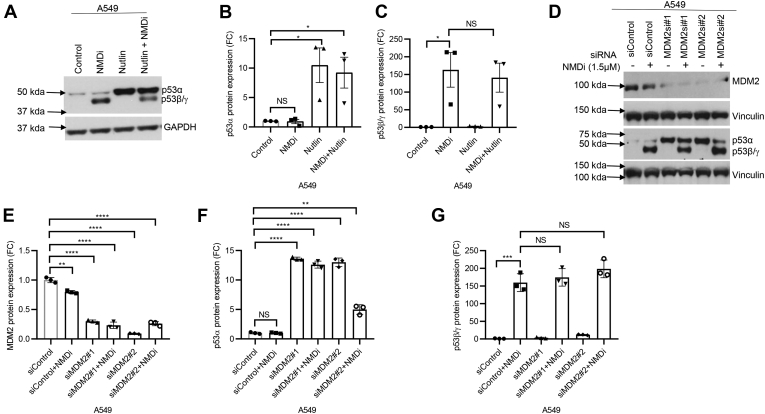
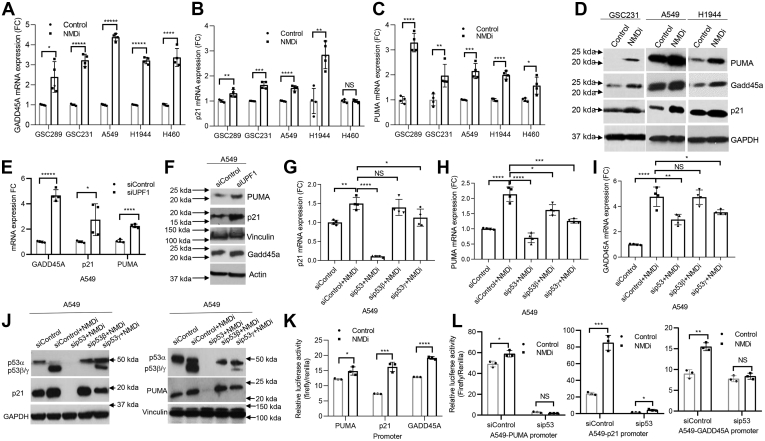
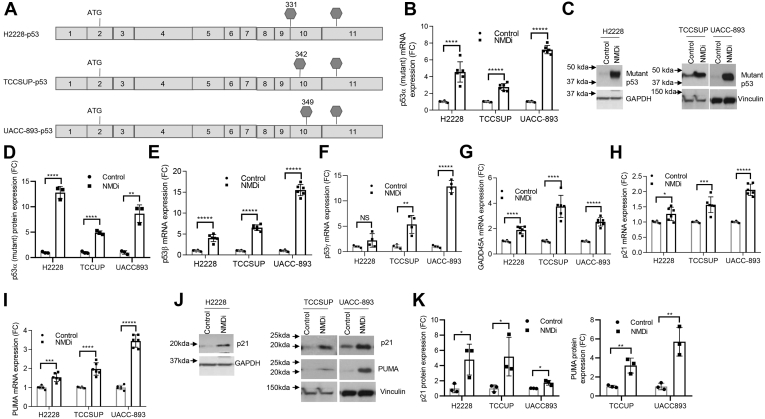
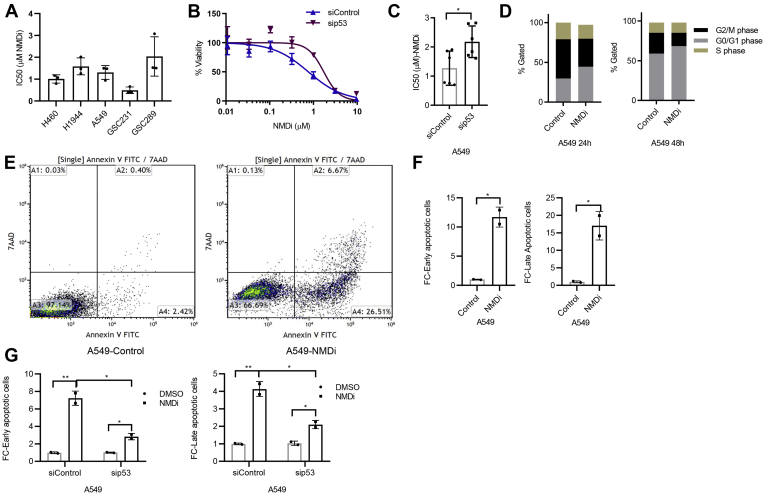
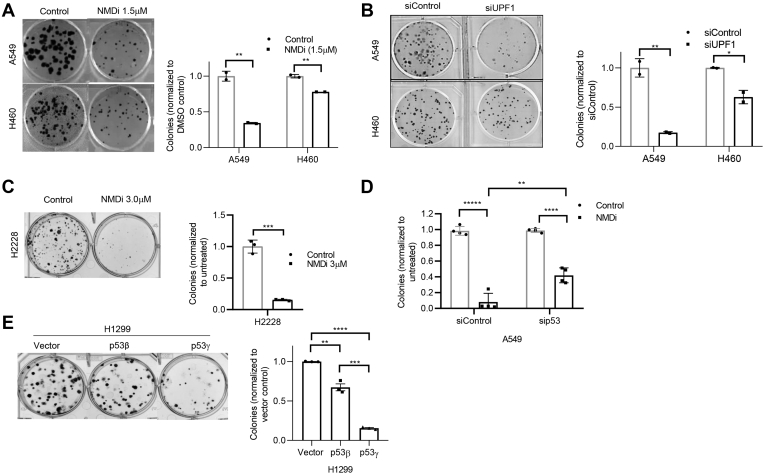
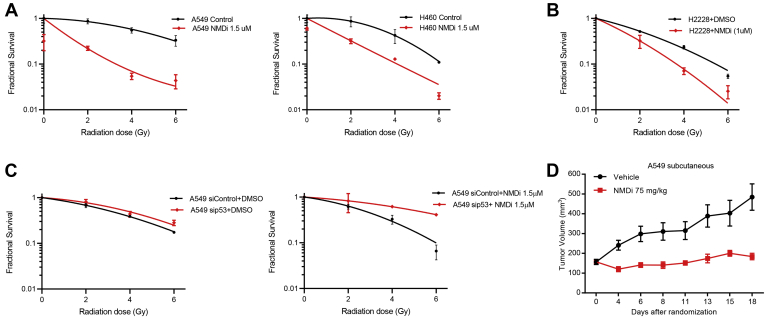
Inactivation of p53 is present in almost every tumor, and hence, p53-reactivation strategies are an important aspect of cancer therapy. Common mechanisms for p53 loss in cancer include expression of p53-negative regulators such as MDM2, which mediate the degradation of wildtype p53 (p53α), and inactivating mutations in the TP53 gene. Currently, approaches to overcome p53 deficiency in these cancers are limited. Here, using non-small cell lung cancer and glioblastoma multiforme cell line models, we show that two alternatively spliced, functional truncated isoforms of p53 (p53β and p53γ, comprising exons 1 to 9β or 9γ, respectively) and that lack the C-terminal MDM2-binding domain have markedly reduced susceptibility to MDM2-mediated degradation but are highly susceptible to nonsense-mediated decay (NMD), a regulator of aberrant mRNA stability. In cancer cells harboring MDM2 overexpression or TP53 mutations downstream of exon 9, NMD inhibition markedly upregulates p53β and p53γ and restores activation of the p53 pathway. Consistent with p53 pathway activation, NMD inhibition induces tumor suppressive activities such as apoptosis, reduced cell viability, and enhanced tumor radiosensitivity, in a relatively p53-dependent manner. In addition, NMD inhibition also inhibits tumor growth in a MDM2-overexpressing xenograft tumor model. These results identify NMD inhibition as a novel therapeutic strategy for restoration of p53 function in p53-deficient tumors bearing MDM2 overexpression or p53 mutations downstream of exon 9, subgroups that comprise approximately 6% of all cancers.
p53 的失活几乎存在于每一种肿瘤中,因此,p53 再激活策略是癌症治疗的一个重要方面。癌症中 p53 丢失的常见机制包括表达 p53 阴性调节剂,如 MDM2,其介导野生型 p53(p53α)的降解,以及 TP53 基因的失活突变。目前,克服这些癌症中 p53 缺陷的方法有限。在这里,我们使用非小细胞肺癌和多形性成胶质细胞瘤细胞系模型,表明两个替代性剪接的、功能性的截断 p53 异构体(p53β和 p53γ,分别包含外显子 1 到 9β或 9γ),并且缺乏 C 末端 MDM2 结合域,对 MDM2 介导的降解具有明显降低的敏感性,但对无意义介导的衰变(NMD)高度敏感,NMD 是一种调节异常 mRNA 稳定性的调节剂。在携带 MDM2 过表达或 TP53 突变的癌症细胞中,下游外显子 9,NMD 抑制显著上调 p53β 和 p53γ,并恢复 p53 途径的激活。与 p53 途径的激活一致,NMD 抑制以相对依赖 p53 的方式诱导肿瘤抑制活性,如凋亡、降低细胞活力和增强肿瘤放射敏感性。此外,NMD 抑制还抑制 MDM2 过表达异种移植肿瘤模型中的肿瘤生长。这些结果表明,NMD 抑制是恢复 MDM2 过表达或下游外显子 9 携带 p53 突变的 p53 缺陷肿瘤中 p53 功能的一种新的治疗策略,这些亚组约占所有癌症的 6%。