Department of Regenerative and Cancer Cell Biology, Albany Medical College 47 New Scotland Ave., Albany, NY, 12208, USA.
Sci Rep. 2017 Dec 13;7(1):17535. doi: 10.1038/s41598-017-17283-4.
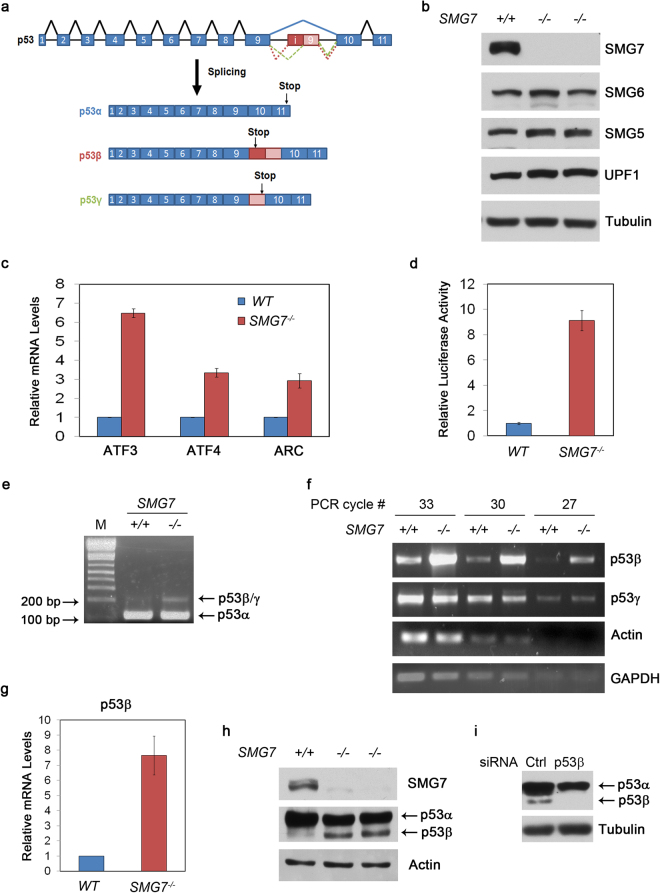
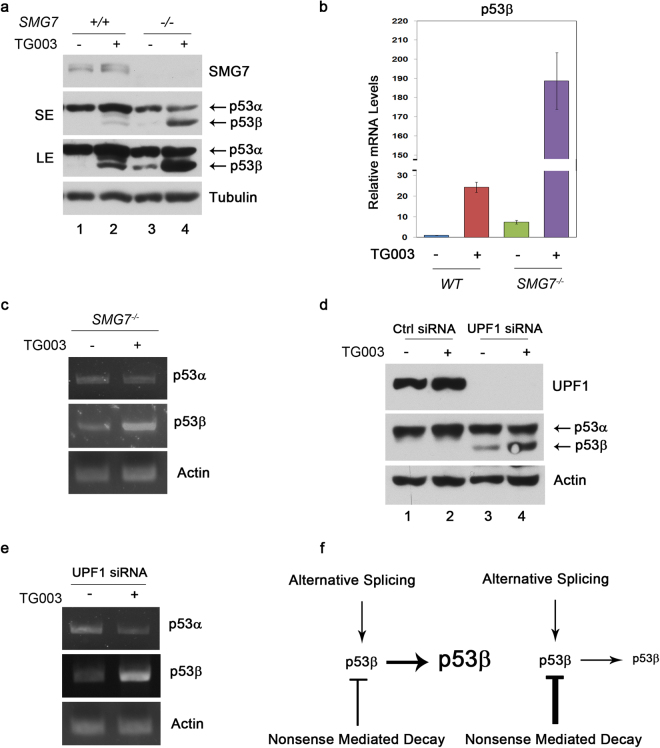
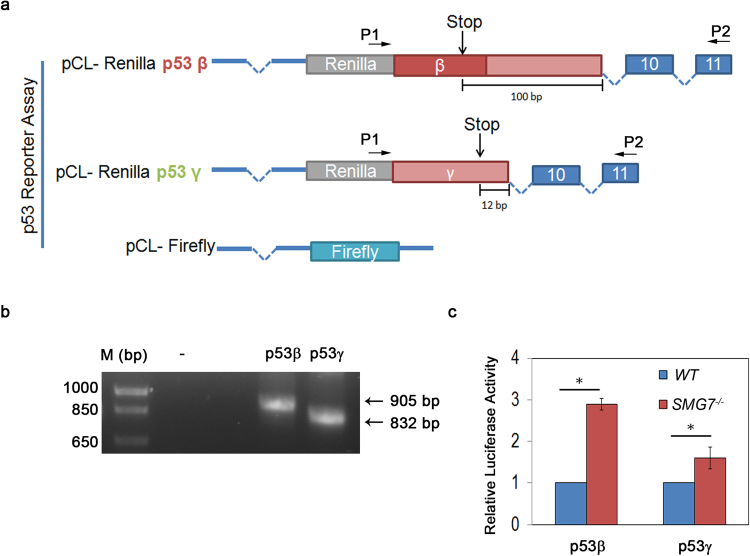
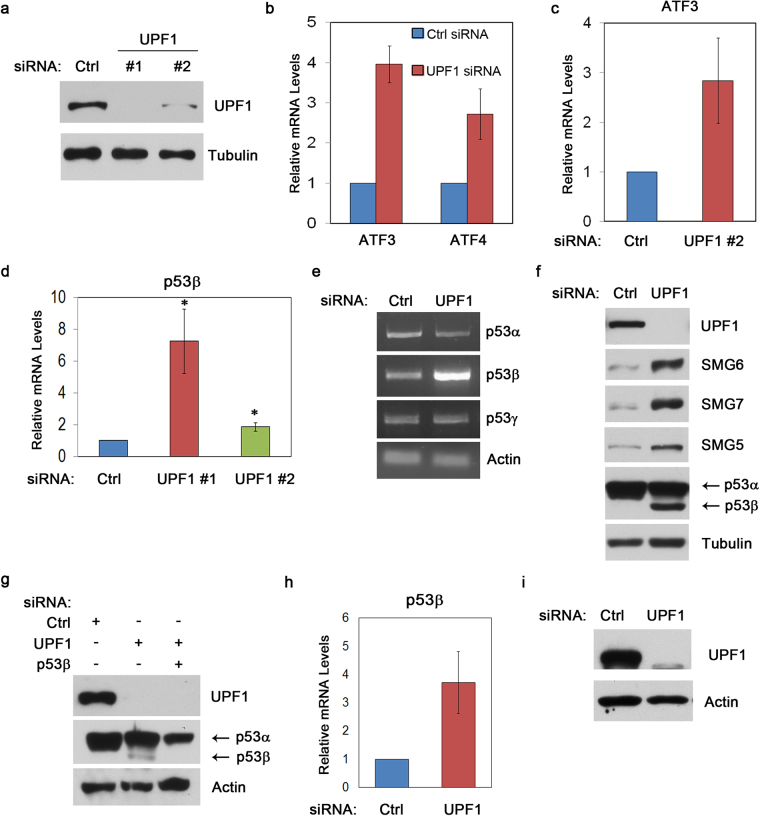
Human TP53 gene encodes the tumor suppressor p53 and, via alternative splicing, the p53β and γ isoforms. Numerous studies have shown that p53β/γ can modulate p53 functions and are critically involved in regulation of cellular response to stress conditions. However, it is not fully understood how the β and γ isoforms are regulated following splicing. Using gene targeting and RNAi, we showed that depletion of the nonsense-mediated mRNA decay (NMD) factor SMG7 or UPF1 significantly induced p53β but had minimal effect on p53γ. Sequence analysis reveals the presence of unique features - key hallmarks of NMD targets in the p53β transcript, which was further confirmed in NMD reporter gene assays. By manipulating splicing components, we found that NMD activities are crucial to control p53β levels under conditions that favor its splicing. Our data demonstrate that the NMD and alternative splicing pathways regulate p53β in a synergistic manner, and NMD plays a critical role in the determination of the p53β following its splicing. As aberrant p53β expression and dysfunctional NMD are both implicated in cancers, our studies may provide a novel insight into the regulation of p53β in tumorigenic settings.
人类 TP53 基因编码肿瘤抑制因子 p53,并通过选择性剪接产生 p53β 和 p53γ 同工型。大量研究表明,p53β/γ 可以调节 p53 功能,并且在细胞对应激条件的反应的调节中起着至关重要的作用。然而,目前尚不完全清楚β和γ同工型在剪接后是如何被调控的。通过基因靶向和 RNAi,我们发现缺失无意义介导的 mRNA 降解(NMD)因子 SMG7 或 UPF1 可显著诱导 p53β,但对 p53γ 的影响最小。序列分析显示,p53β 转录本中存在独特的特征——NMD 靶标的关键标志,在 NMD 报告基因检测中得到了进一步证实。通过操纵剪接成分,我们发现 NMD 活性对于在有利于其剪接的条件下控制 p53β 水平至关重要。我们的数据表明,NMD 和选择性剪接途径以协同方式调节 p53β,并且 NMD 在其剪接后决定 p53β 的水平方面起着关键作用。由于异常的 p53β 表达和功能失调的 NMD 都与癌症有关,我们的研究可能为肿瘤发生环境中 p53β 的调控提供新的见解。