Biology Department, Trent University, Peterborough, Ontario, Canada.
Landscape Science and Technology, Environment and Climate Change Canada, Ottawa, Ontario, Canada.
Mol Ecol. 2021 Dec;30(23):6121-6143. doi: 10.1111/mec.16166. Epub 2021 Sep 17.
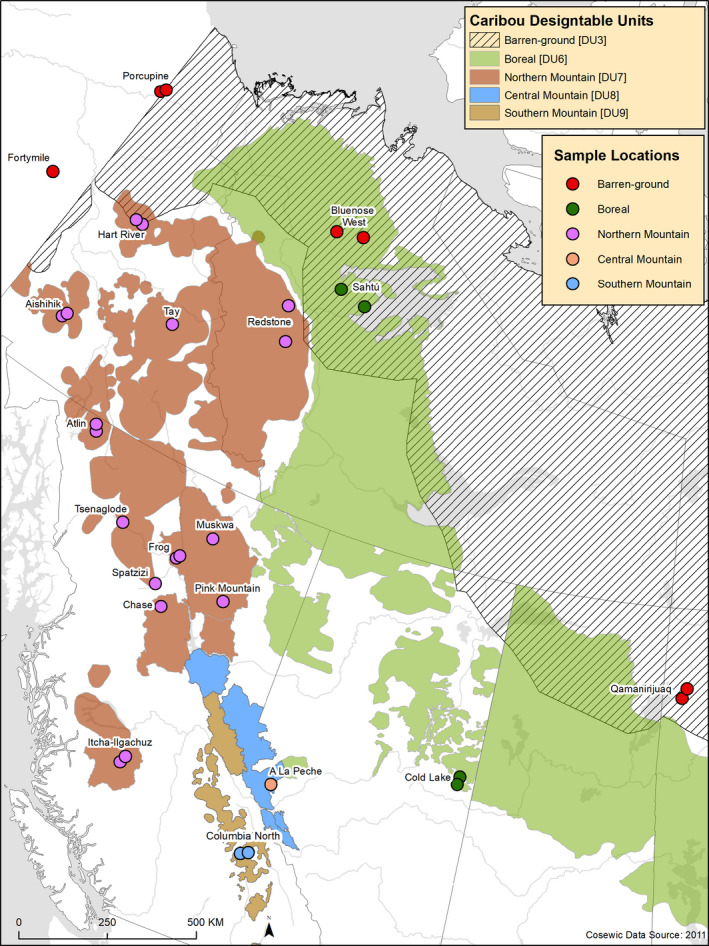
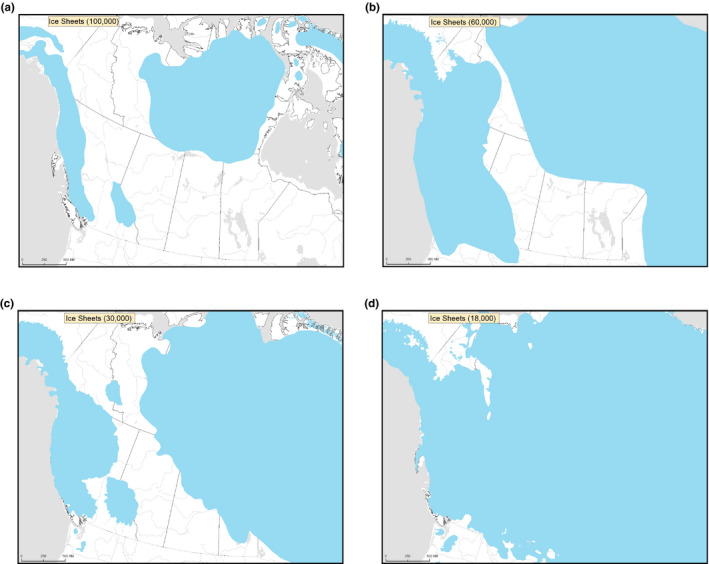
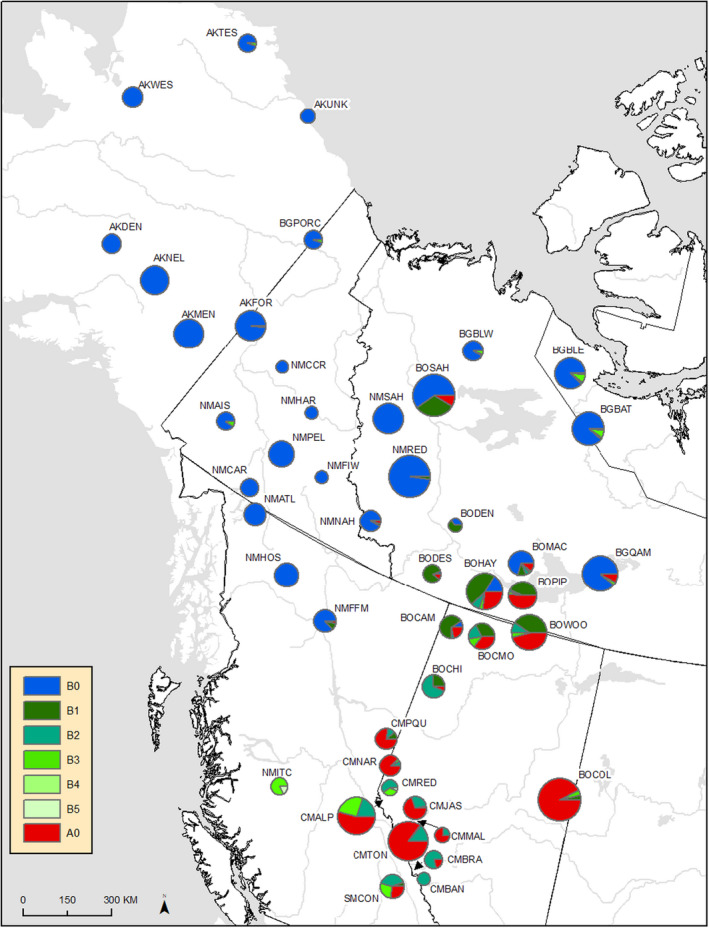
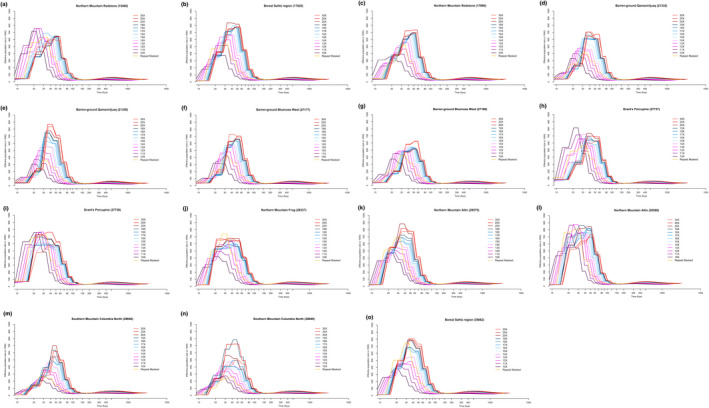
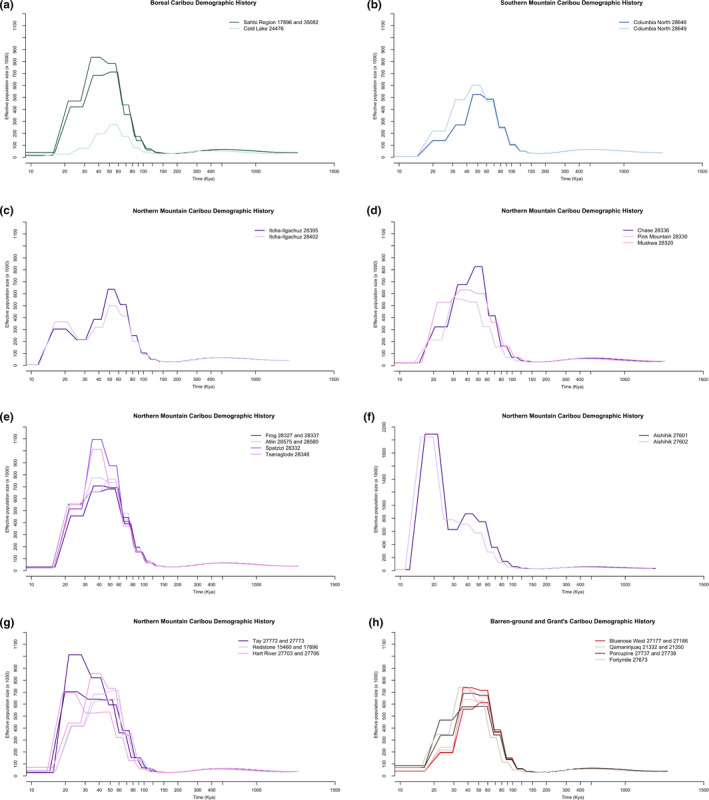
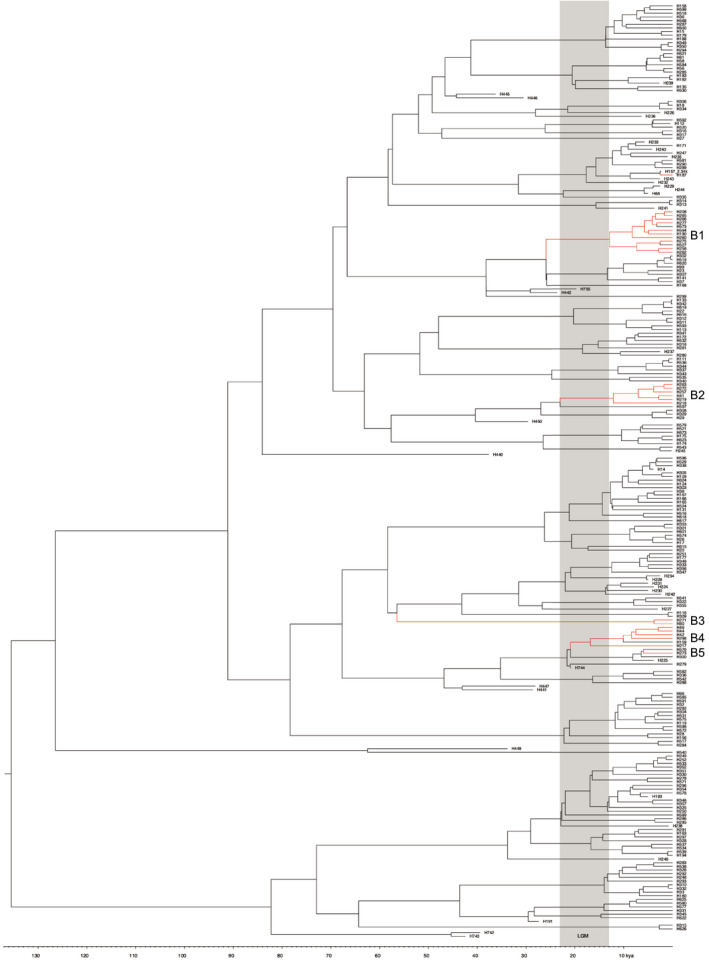
Pleistocene glacial cycles influenced the diversification of high-latitude wildlife species through recurrent periods of range contraction, isolation, divergence, and expansion from refugia and subsequent admixture of refugial populations. We investigate population size changes and the introgressive history of caribou (Rangifer tarandus) in western Canada using 33 whole genome sequences coupled with larger-scale mitochondrial data. We found that a major population expansion of caribou occurred starting around 110,000 years ago (kya), the start of the last glacial period. Additionally, we found effective population sizes of some caribou reaching ~700,000 to 1,000,000 individuals, one of the highest recorded historical effective population sizes for any mammal species thus far. Mitochondrial analyses dated introgression events prior to the LGM dating to 20-30 kya and even more ancient at 60 kya, coinciding with colder periods with extensive ice coverage, further demonstrating the importance of glacial cycles and events prior to the LGM in shaping demographic history. Reconstructing the origins and differential introgressive history has implications for predictions on species responses under climate change. Our results have implications for other whole genome analyses using pairwise sequentially Markovian coalescent (PSMC) analyses, as well as highlighting the need to investigate pre-LGM demographic patterns to fully reconstruct the origin of species diversity, especially for high-latitude species.
更新世冰期通过反复的范围收缩、隔离、分化和扩张来自避难所以及随后的避难所种群混合,影响了高纬度野生动物物种的多样化。我们使用 33 个全基因组序列和更大规模的线粒体数据,研究了加拿大西部驯鹿(Rangifer tarandus)的种群大小变化和渗入历史。我们发现,驯鹿的主要种群扩张始于大约 11 万年前(kya),即末次冰期的开始。此外,我们发现一些驯鹿的有效种群数量达到了 70 万到 100 万之间,这是迄今为止记录到的任何哺乳动物物种中最高的历史有效种群数量之一。线粒体分析将渗入事件的时间追溯到末次冰期之前的 20-30 kya,甚至更早到 60 kya,与广泛的冰盖覆盖的更寒冷时期相吻合,进一步证明了冰期循环和末次冰期之前的事件在塑造种群历史方面的重要性。重建起源和不同的渗入历史对预测物种在气候变化下的反应具有重要意义。我们的研究结果对其他使用成对顺序马尔可夫链聚合酶链反应(PSMC)分析的全基因组分析具有重要意义,同时也强调需要研究末次冰期前的种群模式,以充分重建物种多样性的起源,特别是对高纬度物种。