Cavedon Maria, Neufeld Lalenia, Finnegan Laura, Hervieux Dave, Michalak Anita, Pelletier Agnes, Polfus Jean, Schwantje Helen, Skinner Geoff, Steenweg Robin, Thacker Caeley, Poissant Jocelyn, Musiani Marco
Deparment of Biological Sciences, University of Calgary, Calgary, AB T2N 1N4 Canada.
Jasper National Park of Canada, Parks Canada, Jasper, Canada.
Conserv Genet. 2023;24(6):855-867. doi: 10.1007/s10592-023-01540-3. Epub 2023 Jul 3.
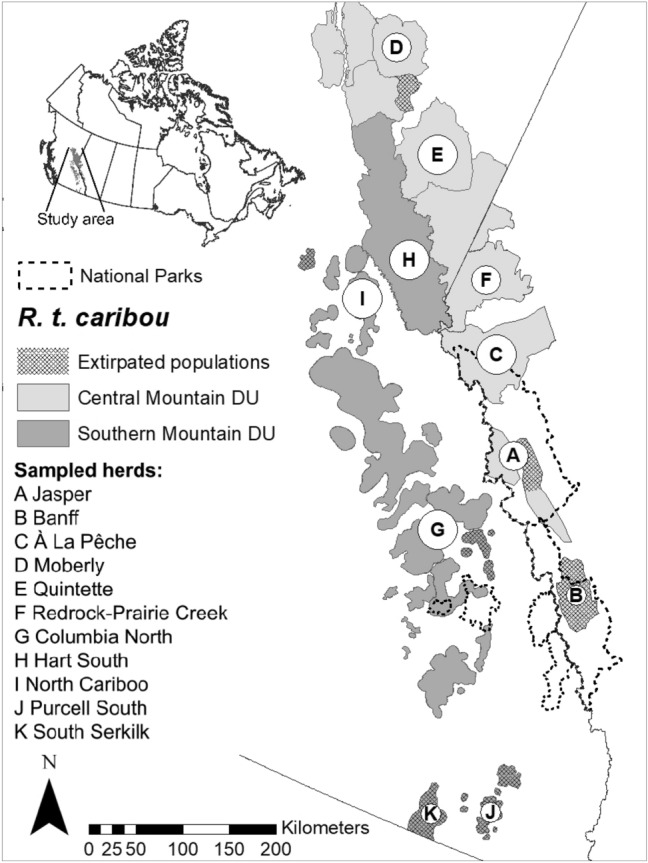
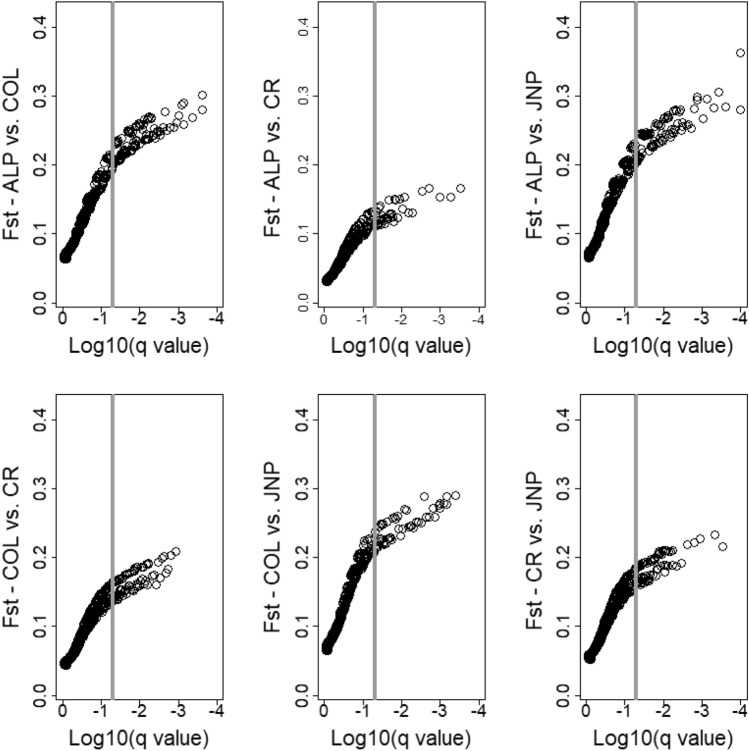
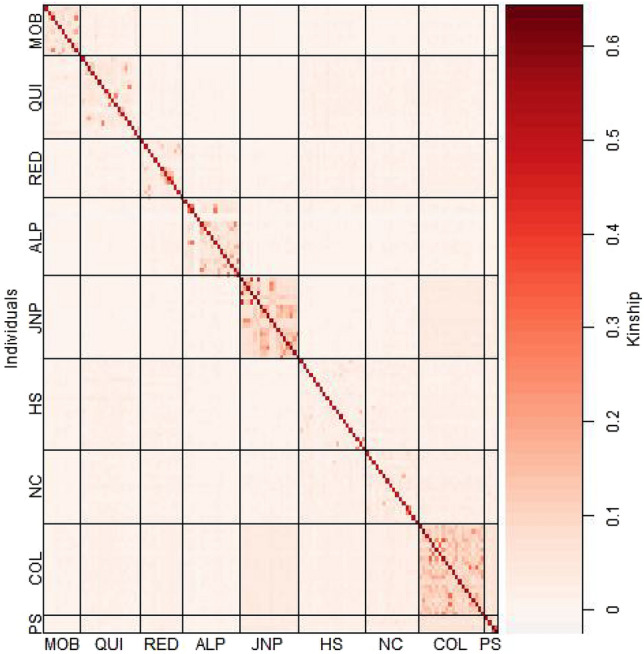
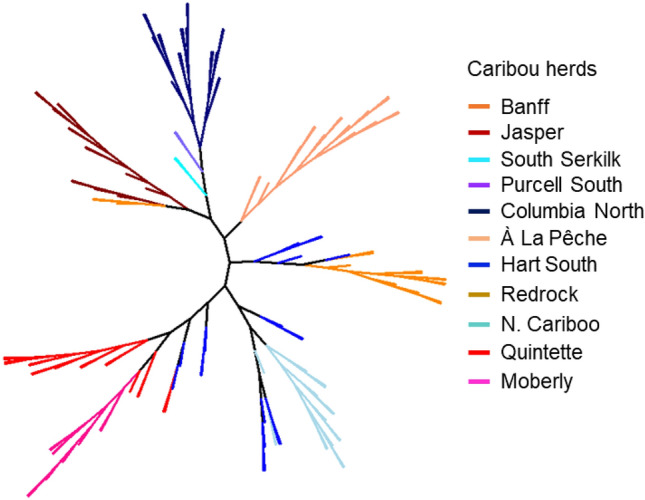
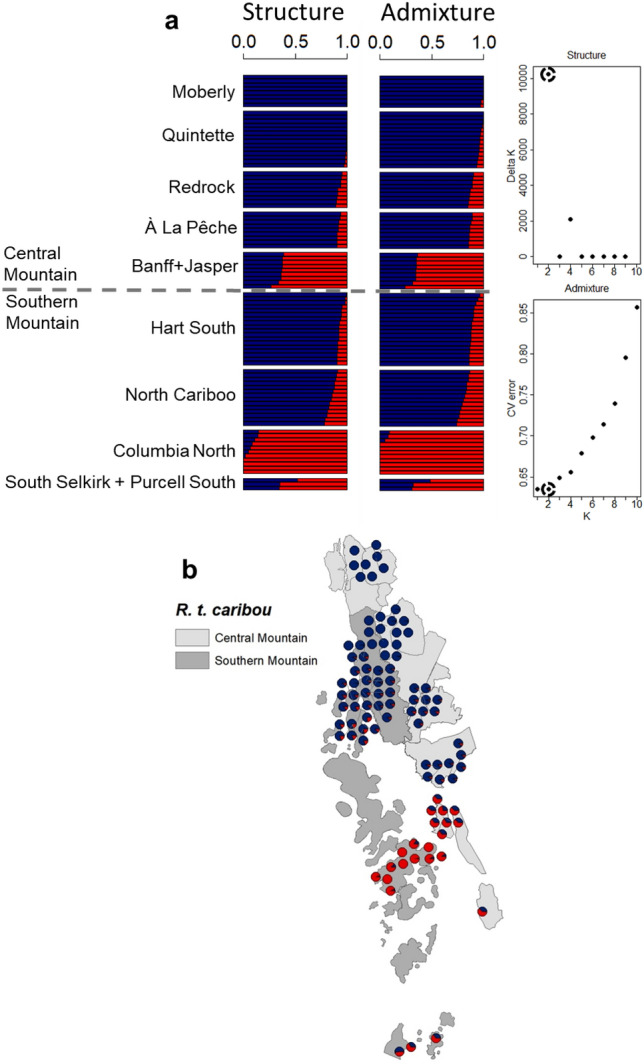
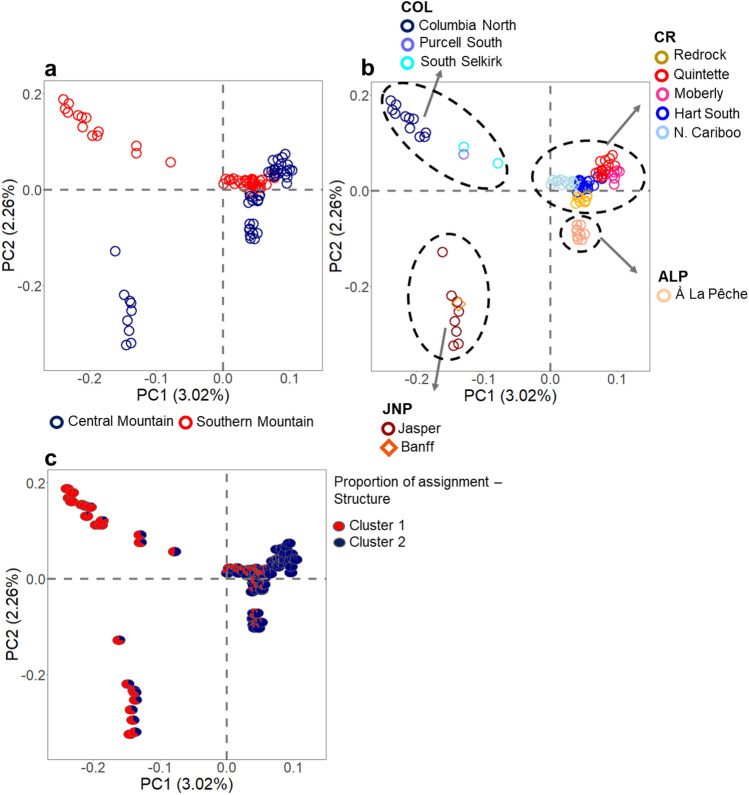
Conservation breeding programs are increasingly used as recovery actions for wild animals; bringing founders into captivity to rear captive populations for future reintroduction into the wild. The International Union for the Conservation of Nature recommends that founders should come from genetically close populations and should have sufficient genetic diversity to avoid mating among relatives. Genomic data are highly informative for evaluating founders due to their high resolution and ability to capture adaptive divergence, yet, their application in that context remains limited. Woodland caribou are federally listed as a Species at Risk in Canada, with several populations facing extirpation, such as those in the Rocky Mountains of Alberta and British Columbia (BC). To prevent local extirpation, Jasper National Park (JNP) is proposing a conservation breeding program. We examined single nucleotide polymorphisms for 144 caribou from 11 populations encompassing a 200,000 km area surrounding JNP to provide information useful for identifying appropriate founders for this program. We found that this area likely hosts a caribou metapopulation historically characterized by high levels of gene flow, which indicates that multiple sources of founders would be appropriate for initiating a breeding program. However, population structure and adaptive divergence analyses indicate that JNP caribou are closest to populations in the BC Columbia range, which also have suitable genetic diversity for conservation breeding. We suggest that collaboration among jurisdictions would be beneficial to implement the program to promote recovery of JNP caribou and possibly other caribou populations in the surrounding area, which is strategically at the periphery of the distribution of this endangered species.
The online version contains supplementary material available at 10.1007/s10592-023-01540-3.
保护繁育计划越来越多地被用作野生动物的恢复行动;将种群建立者圈养起来,以繁育圈养种群,供未来重新放归野外。国际自然保护联盟建议,种群建立者应来自基因关系密切的种群,并且应具有足够的遗传多样性,以避免近亲交配。基因组数据因其高分辨率和捕捉适应性分化的能力,对于评估种群建立者具有很高的参考价值,然而,其在这方面的应用仍然有限。林地驯鹿在加拿大被联邦列为濒危物种,有几个种群面临灭绝,比如艾伯塔省和不列颠哥伦比亚省(BC)落基山脉的种群。为防止当地灭绝,贾斯珀国家公园(JNP)提议实施一项保护繁育计划。我们研究了来自11个种群的144头驯鹿的单核苷酸多态性,这些种群分布在JNP周围20万平方公里的区域内,目的是为该计划确定合适的种群建立者提供有用信息。我们发现,该区域可能存在一个历史上以高水平基因流为特征的驯鹿复合种群,这表明多个种群建立者来源适合启动一个繁育计划。然而,种群结构和适应性分化分析表明,JNP驯鹿与BC省范围内的种群关系最为密切,这些种群也具有适合保护繁育的遗传多样性。我们建议,各司法管辖区之间的合作将有助于实施该计划,以促进JNP驯鹿以及可能周边地区其他驯鹿种群的恢复,该地区处于这种濒危物种分布的战略边缘位置。
在线版本包含可在10.1007/s10592-023-01540-3获取的补充材料。