Lin Junhao, Zeng Chunting, Zhang JiaKang, Song Zhenghui, Qi Na, Liu Xinhui, Zhang Ziyan, Li Aimin, Chen Fengsheng
Cancer Center, Integrated Hospital of Traditional Chinese Medicine, Southern Medical University, Guangzhou 510315, China.
Cancer Center, Southern Medical University, Guangzhou 510515, China.
Mol Ther Nucleic Acids. 2021 Jun 12;25:328-341. doi: 10.1016/j.omtn.2021.06.002. eCollection 2021 Sep 3.
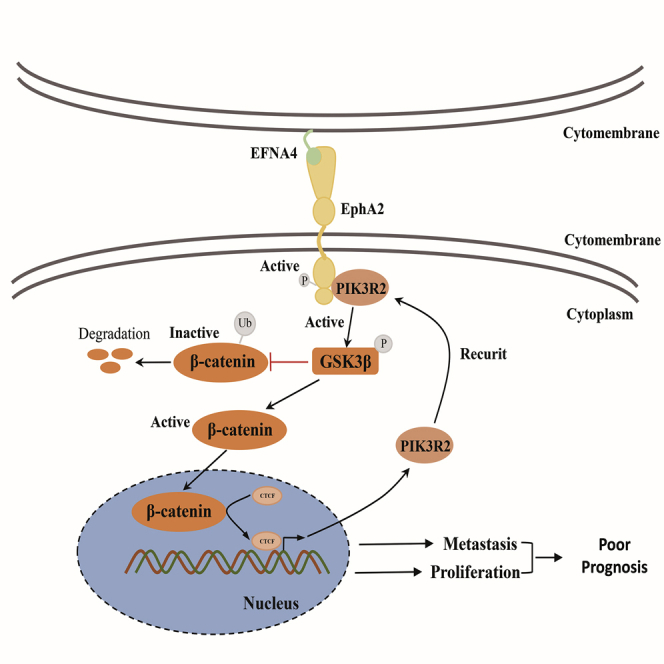
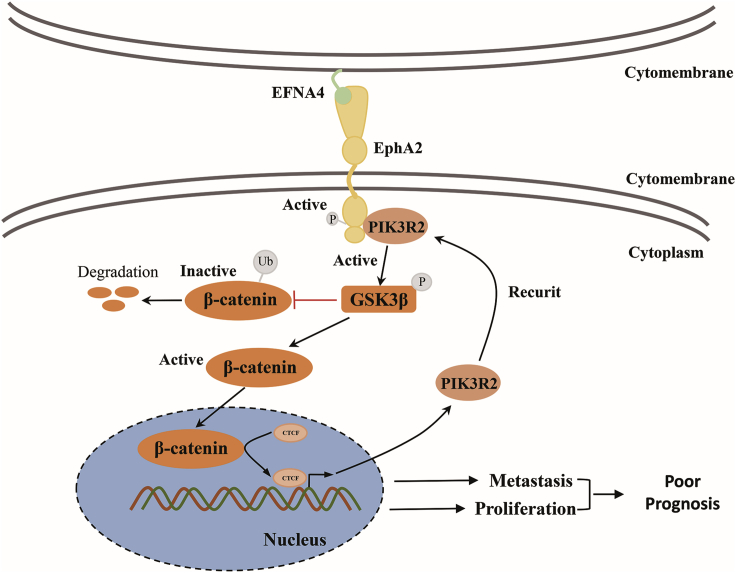
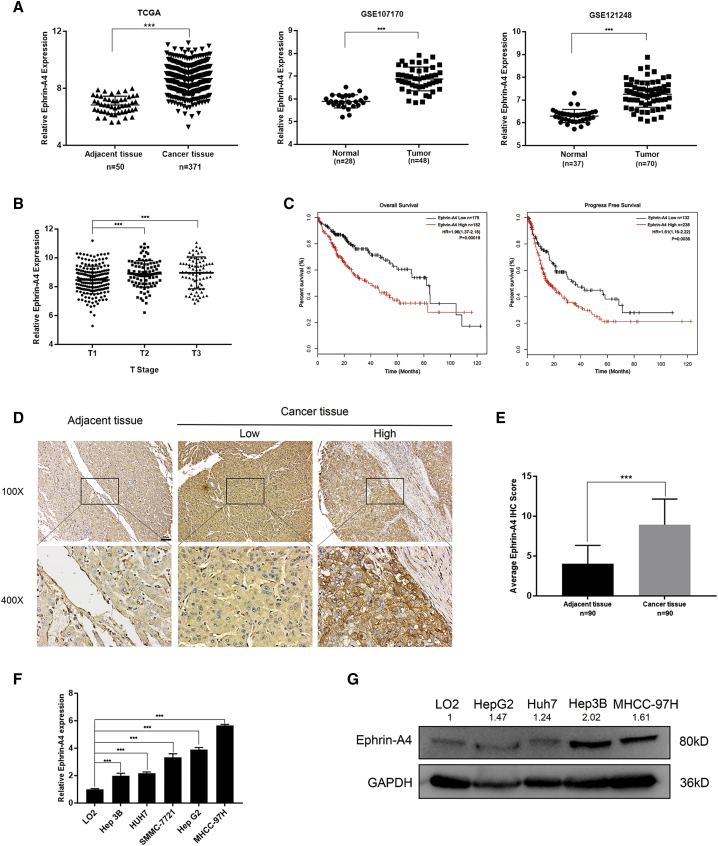
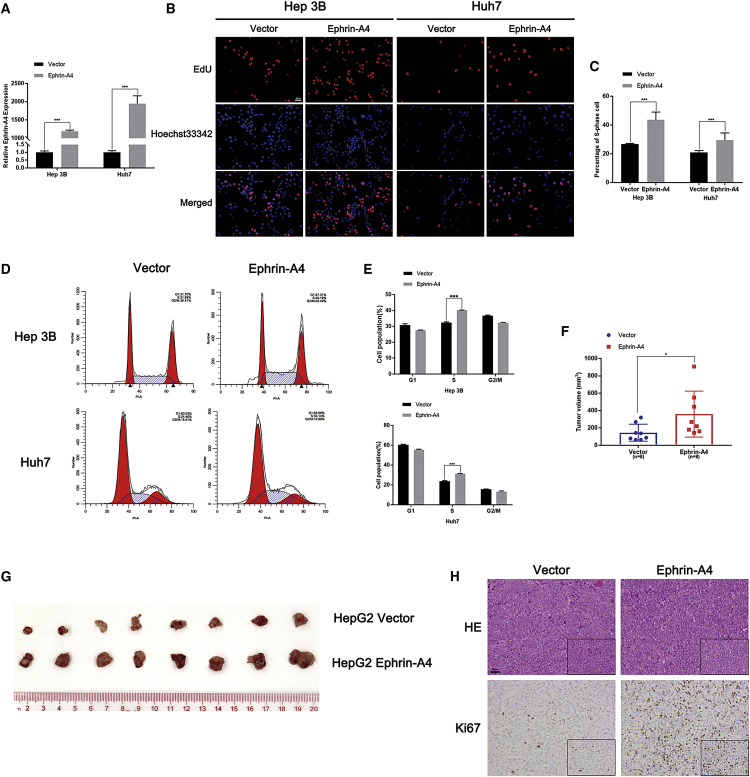
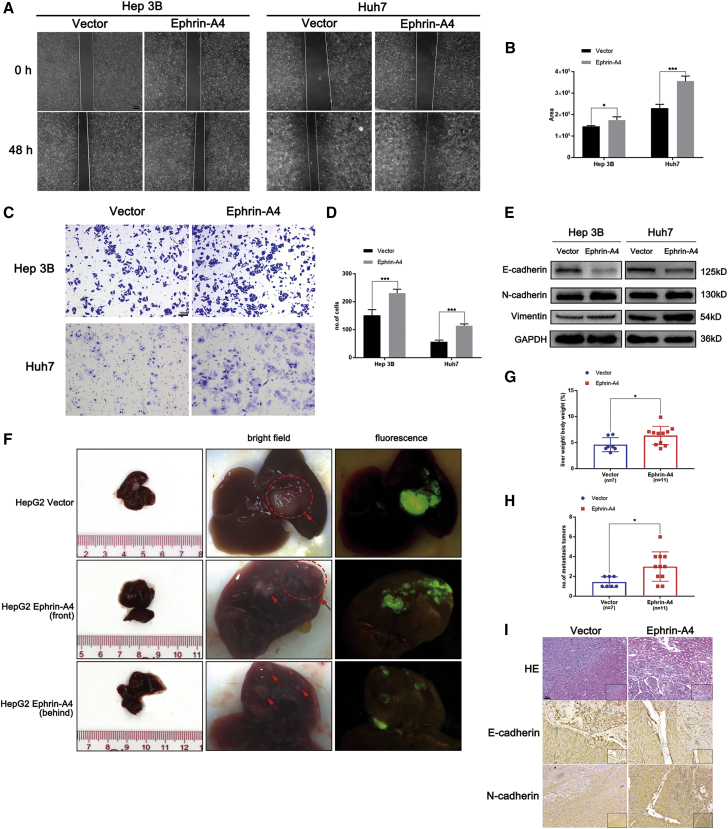
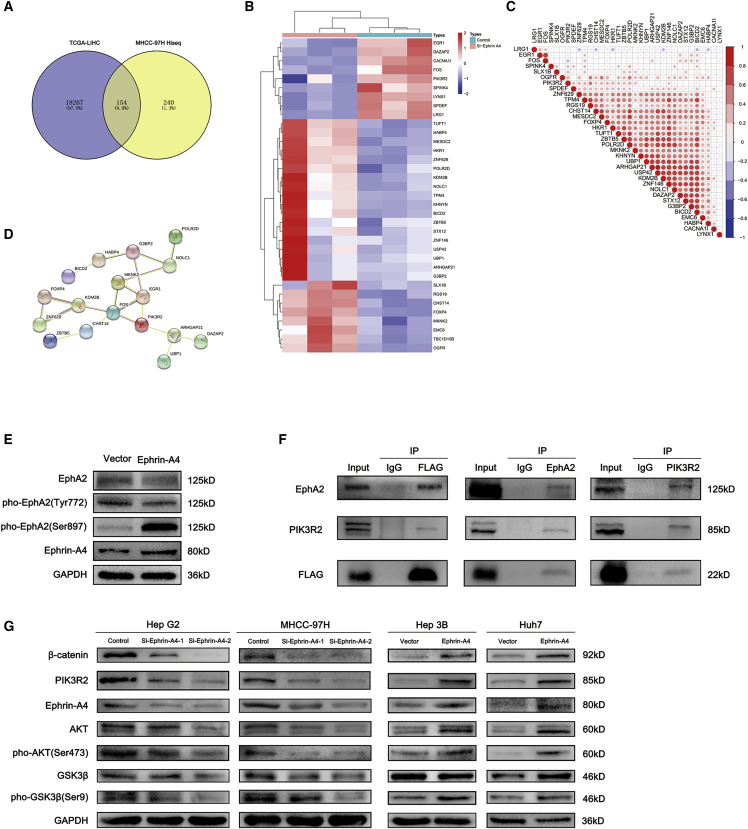
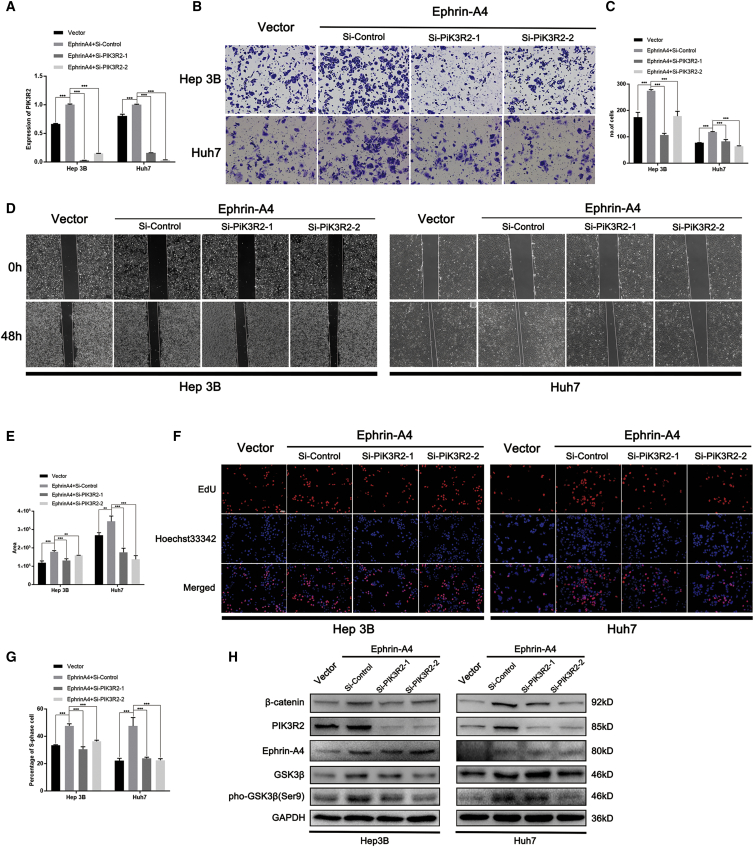
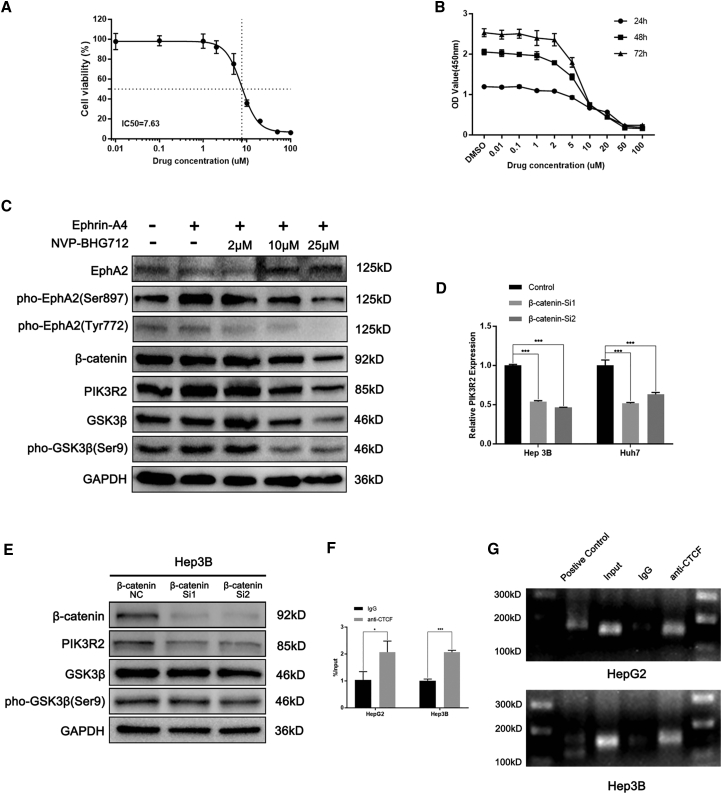
Rapid tumor progression, metastasis, and diagnosis in advanced stages of disease are the main reasons for the short survival time and high mortality rate of patients with hepatocellular carcinoma (HCC). Ephrin A4 (EFNA4), the ligand of the EPH family, participates in the development of blood vessels and epithelium by regulating cell migration and rejection. In our study, based on bioinformatics analyses, we found that EFNA4 was highly expressed and led to poor prognosis in patients with HCC. We demonstrated that overexpression of EFNA4 significantly promoted HCC cell proliferation and migration or . In addition, knockdown of EFNA4 inhibited the proliferation and migration of HCC cells. Furthermore, EFNA4 was found to directly interact with EPHA2 and promote its phosphorylation at Ser897, followed by recruitment of phosphoinositide-3-kinase regulatory subunit 2 (PIK3R2) and activation of the glycogen synthase kinase-3beta (GSK3β)/β-catenin signaling pathway. Moreover, overexpression of β-catenin further promoted the expression of PIK3R2, which formed a positive feedback loop. The results revealed that abnormal expression of EFNA4 is the main switch of the PIK3R2/GSK3β/β-catenin loop that influenced the proliferation and migration of HCC cells and suggest that EFNA4 is a potential prognostic marker and a prospective therapeutic target in patients with HCC.
肿瘤快速进展、转移以及疾病晚期才得以诊断是肝细胞癌(HCC)患者生存时间短和死亡率高的主要原因。Ephrin A4(EFNA4)是EPH家族的配体,通过调节细胞迁移和排斥参与血管和上皮的发育。在我们的研究中,基于生物信息学分析,我们发现EFNA4在HCC患者中高表达并导致预后不良。我们证明EFNA4的过表达显著促进HCC细胞增殖和迁移。此外,敲低EFNA4可抑制HCC细胞的增殖和迁移。此外,发现EFNA4直接与EPHA2相互作用并促进其在Ser897位点的磷酸化,随后募集磷酸肌醇-3-激酶调节亚基2(PIK3R2)并激活糖原合酶激酶-3β(GSK3β)/β-连环蛋白信号通路。此外,β-连环蛋白的过表达进一步促进PIK3R2的表达,形成正反馈环。结果表明,EFNA4的异常表达是影响HCC细胞增殖和迁移的PIK3R2/GSK3β/β-连环蛋白环的主要开关,并提示EFNA4是HCC患者潜在的预后标志物和前瞻性治疗靶点。