Huang Shenglan, Dong Cairong, Zhang Jian, Fu Shumin, Lv Yaqin, Wu Jianbing
Department of Oncology, The Second Affiliated Hospital of Nanchang University, Nanchang, Jiangxi, China.
Jiangxi Key Laboratory of Clinical and Translational Cancer Research, Nanchang, Jiangxi, China.
Front Mol Biosci. 2022 Aug 16;9:943384. doi: 10.3389/fmolb.2022.943384. eCollection 2022.
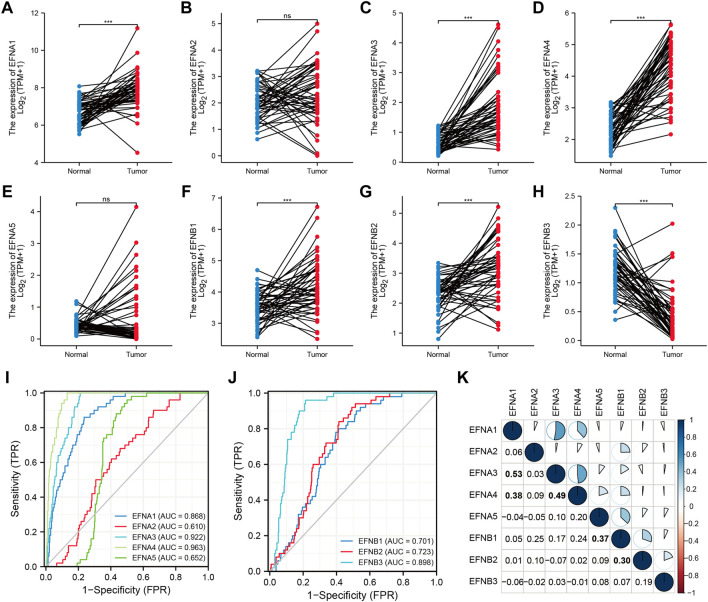
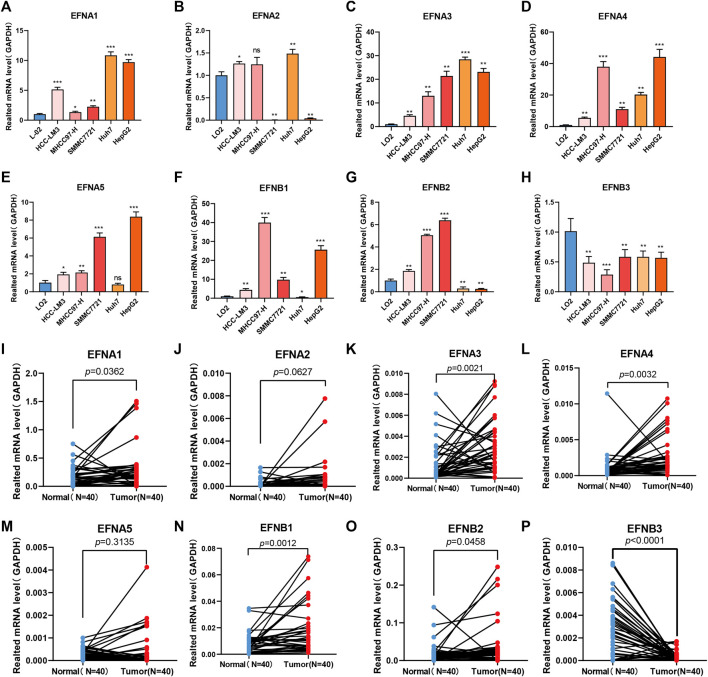
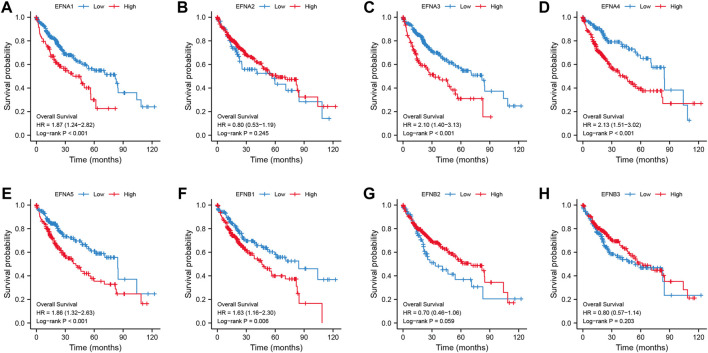
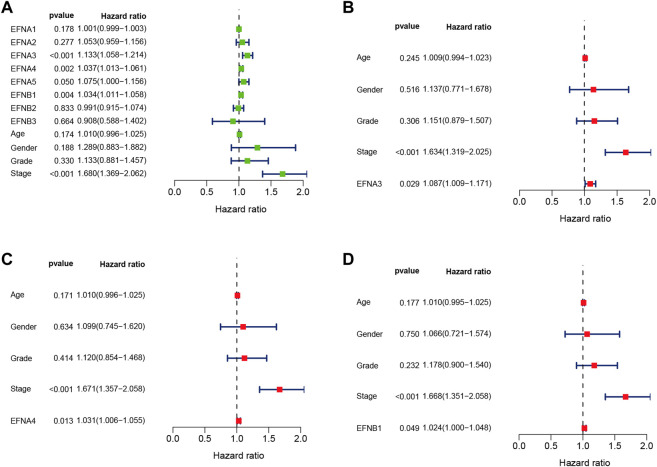
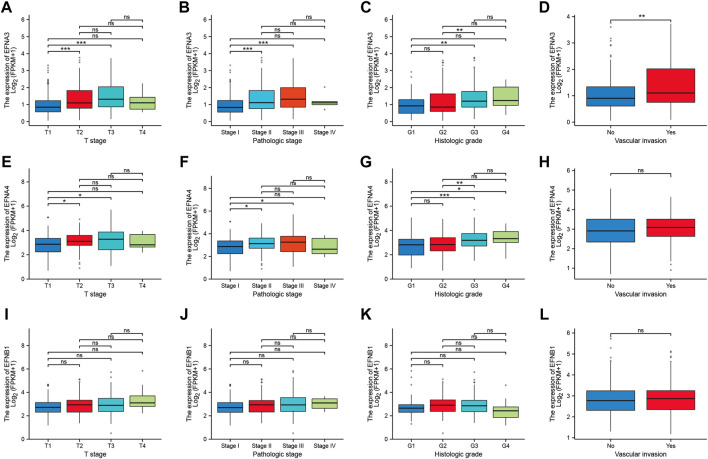
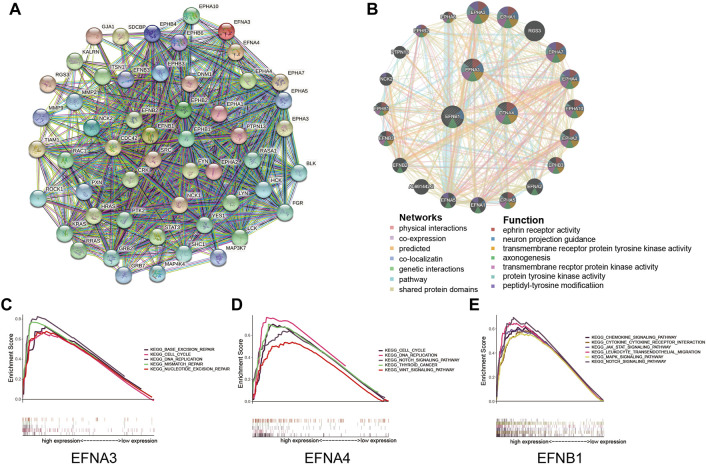
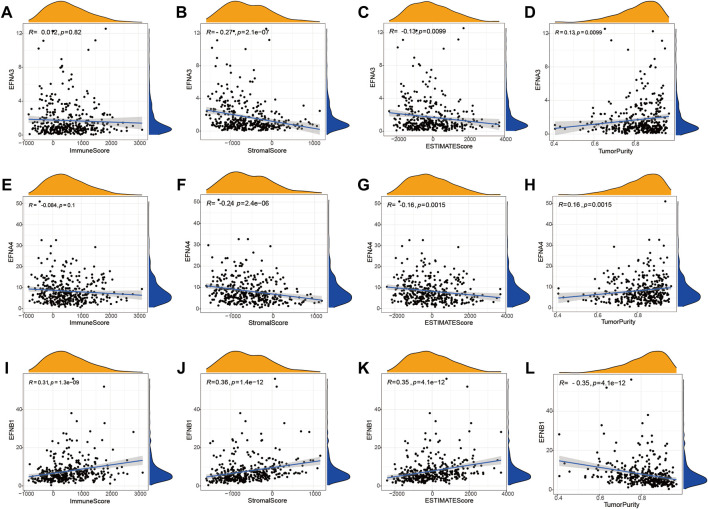
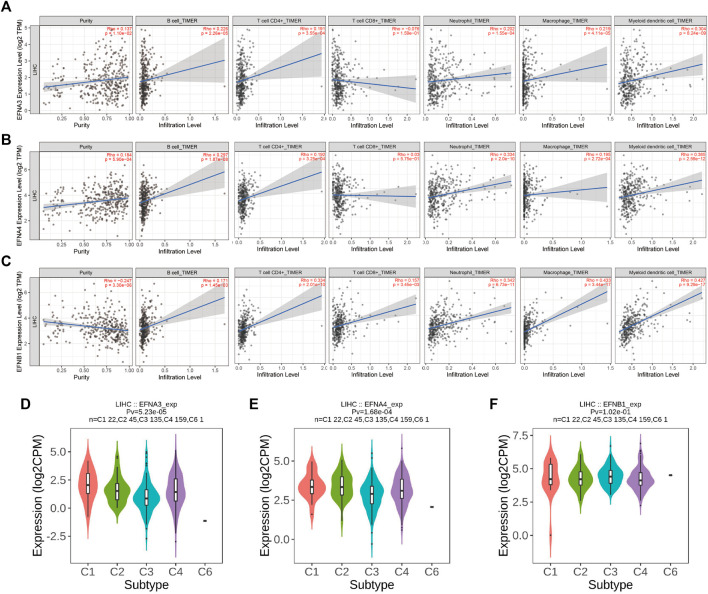
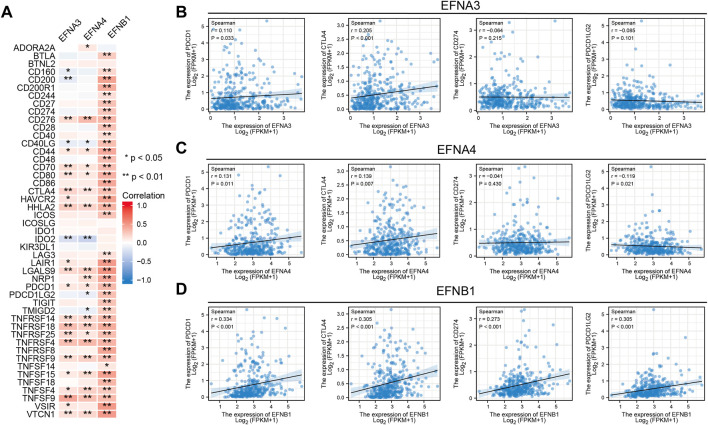
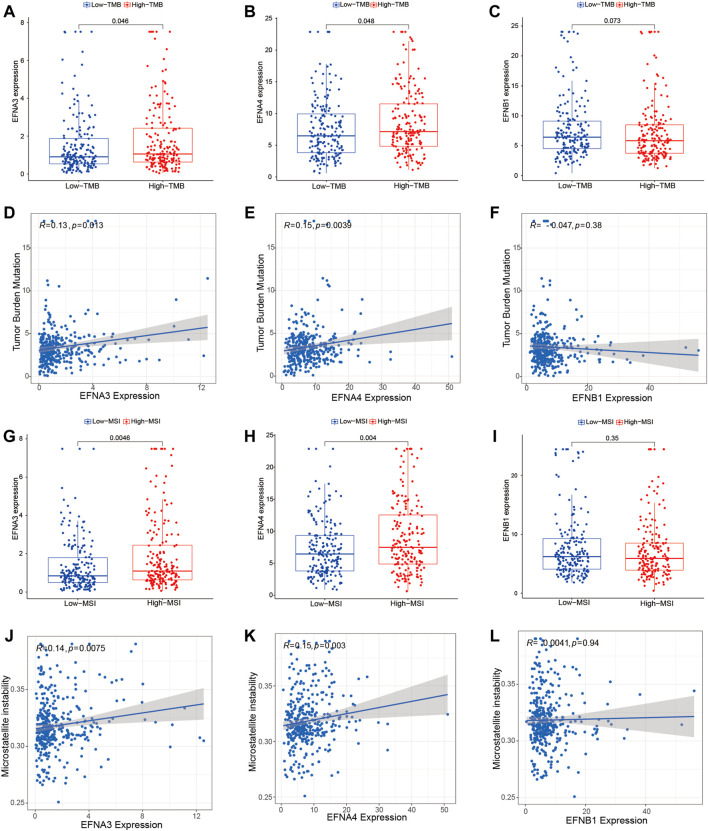
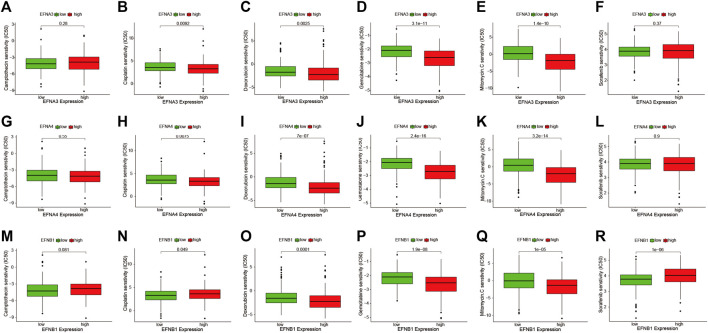
Ephrins, a series of Eph-associated receptor tyrosine kinase ligands, play an important role in the tumorigenesis and progression of various cancers. However, their contributions to hepatocellular carcinoma (HCC) remain unclear. Thus, we aimed to explore their prognostic value and immune implications in HCC. Multiple public databases, such as TCGA, GTEx, and UCSC XENA, were used to analyze the expression of ephrin genes across cancers. Kaplan-Meier analysis and Cox regression were used to explore the prognostic role of ephrin genes in HCC. A logistic regression model was utilized to evaluate the association between ephrin gene expression and clinical characteristics. Gene set enrichment analysis (GSEA) was conducted to elucidate their potential biological mechanisms. Various immune algorithms were utilized to investigate the correlation between ephrin genes and tumor immunity. We also analyzed their association with drug sensitivity, and gene mutations. Finally, RT-qPCR was performed to validate the expression of ephrin family genes in HCC cells and clinical tissues. The expression of EFNA1, EFNA2, EFNA3, EFNA4, EFNB1, and EFNB2 was upregulated in most cancer types, while EFNA5 and EFNB3 was downregulated in most cancers. In HCC, the expression levels of EFNA1, EFNA3, EFNA4, EFNB1, and EFNB2 were significantly higher in tumor tissues than in normal tissues. High expression of EFNA3, EFNA4, and EFNB1 was associated with tumor progression and worse prognosis in HCC patients. The expression of EFNA3 and EFNA4 was negatively associated with the stromal/ESTIMATE scores, while EFNB1 was positively correlated with the immune/stromal/ESTIMATE scores. Moreover, these ephrin genes were closely relevant to the infiltration of immune cells, such as B cells, CD4 T cells, CD8 T cells, neutrophil cells, macrophage cells, and dendritic cells. EFNB1 expression was positively associated with most immune-related genes, while EFNA3/EFNA4 was positively related to TMB and MSI. In addition, EFNA3, EFNA4, and EFNB1 were related to drug sensitivity and affected the mutation frequency of some genes in HCC. EFNA3, EFNA4, and EFNB1 are independent prognostic factors for HCC patients and are closely correlated with tumor immunity, which may provide a new direction for exploring novel therapeutic targets and biomarkers for immunotherapy.
Ephrin是一系列与Eph相关的受体酪氨酸激酶配体,在各种癌症的发生和发展中起着重要作用。然而,它们对肝细胞癌(HCC)的作用仍不清楚。因此,我们旨在探讨它们在HCC中的预后价值和免疫意义。使用多个公共数据库,如TCGA、GTEx和UCSC XENA,分析ephrin基因在各种癌症中的表达。采用Kaplan-Meier分析和Cox回归探讨ephrin基因在HCC中的预后作用。利用逻辑回归模型评估ephrin基因表达与临床特征之间的关联。进行基因集富集分析(GSEA)以阐明其潜在的生物学机制。采用各种免疫算法研究ephrin基因与肿瘤免疫之间的相关性。我们还分析了它们与药物敏感性和基因突变的关联。最后,进行RT-qPCR以验证ephrin家族基因在HCC细胞和临床组织中的表达。EFNA1、EFNA2、EFNA3、EFNA4、EFNB1和EFNB2在大多数癌症类型中表达上调,而EFNA5和EFNB3在大多数癌症中表达下调。在HCC中,肿瘤组织中EFNA1、EFNA3、EFNA4、EFNB1和EFNB2的表达水平明显高于正常组织。EFNA3、EFNA4和EFNB1的高表达与HCC患者的肿瘤进展和较差预后相关。EFNA3和EFNA4的表达与基质/ESTIMATE评分呈负相关,而EFNB1与免疫/基质/ESTIMATE评分呈正相关。此外,这些ephrin基因与免疫细胞的浸润密切相关,如B细胞、CD4 T细胞、CD8 T细胞、中性粒细胞、巨噬细胞和树突状细胞。EFNB1的表达与大多数免疫相关基因呈正相关,而EFNA3/EFNA4与肿瘤突变负荷(TMB)和微卫星不稳定性(MSI)呈正相关。此外,EFNA3、EFNA4和EFNB1与药物敏感性相关,并影响HCC中一些基因的突变频率。EFNA3、EFNA4和EFNB1是HCC患者的独立预后因素,与肿瘤免疫密切相关,这可能为探索免疫治疗的新型治疗靶点和生物标志物提供新的方向。