Department of Gastroenterology and Hepatology, University Medical Centre Groningen, University of Groningen, Groningen, The Netherlands.
Nutr Rev. 2022 Apr 8;80(5):1179-1193. doi: 10.1093/nutrit/nuab062.
Conflicting practice-based dietary recommendations are sometimes given to patients with inflammatory bowel disease (IBD); whereas intake of fiber should increase during remission, it should be avoided during relapse. Moreover, European countries set daily requirements of total fiber and do not specify any types.
This systematic review appraised data from randomized clinical trials (RCTs) of the types of fibers beneficial for patients in the treatment of IBD to guide dietary fiber advice.
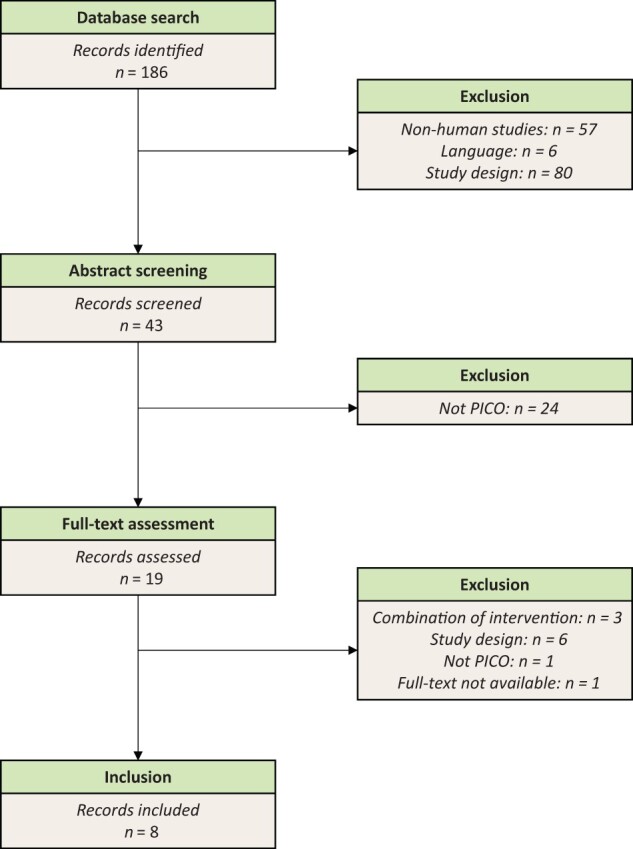
The PubMED database was searched following PRISMA guidelines.
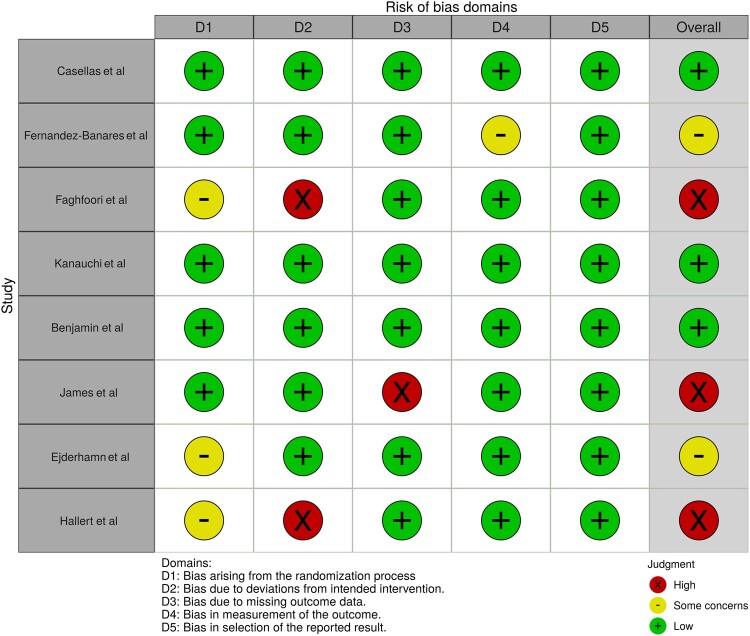
RCTs evaluating the effects of any type of fiber on clinical and physiological outcomes in patients with IBD were assessed. Quality assessment of the selected full-text articles was conducted using the Cochrane Risk of Bias Tool.
Eight studies were included reporting on 5 types of fibers. In 2 RCTs, germinated barley foodstuff (GBF) was shown to lower pro-inflammatory cytokines and clinical disease activity scores. Fructo-oligosaccharides (FOS) were demonstrated to lower IBD Questionnaire scores (lower well-being), in contrast to inulin, which decreased disease activity scores. An RCT could not find lower remission rates in the psyllium treatment group, while another RCT reported that administration led to less symptoms in patients. In RCTs, no concrete evidence was found that wheat bran improves disease course.
Although the evidence is sparse, GBF and inulin seem propitious and merit further exploration. Evidence on wheat bran and psyllium is still too limited. Adequately powered long-term human RCTs with objective outcomes are needed to improve dietary advice on types of fiber in IBD.
炎症性肠病(IBD)患者有时会得到相互矛盾的基于实践的饮食建议;尽管在缓解期应增加纤维摄入,但在复发期应避免摄入。此外,欧洲国家设定了总纤维的日需求量,但没有具体指定任何类型的纤维。
本系统评价评估了随机临床试验(RCT)中有益于 IBD 患者治疗的各种纤维类型的数据,以指导膳食纤维建议。
根据 PRISMA 指南在 PubMED 数据库中进行搜索。
评估任何类型的纤维对 IBD 患者临床和生理结局影响的 RCT 均被纳入评估。使用 Cochrane 偏倚风险工具对选定的全文文章进行质量评估。
纳入了 8 项研究,报道了 5 种纤维。在 2 项 RCT 中,发芽大麦食品(GBF)被证明可降低促炎细胞因子和临床疾病活动评分。与菊粉相反,低聚果糖(FOS)可降低 IBD 问卷评分(降低幸福感),而菊粉可降低疾病活动评分。一项 RCT 未发现车前子治疗组的缓解率降低,而另一项 RCT 报告称,该药物可减少患者的症状。在 RCT 中,没有具体证据表明麦麸可改善疾病进程。
尽管证据有限,但 GBF 和菊粉似乎有利,值得进一步探索。关于麦麸和车前子的证据仍然有限。需要进行具有客观结局的长期、高质量的人类 RCT,以改善 IBD 中纤维类型的饮食建议。