Human Nutrition, School of Medicine, Dentistry and Nursing, University of Glasgow, Glasgow Royal Infirmary, Glasgow, UK.
Civil Engineering, School of Engineering, University of Glasgow, Glasgow, UK.
Aliment Pharmacol Ther. 2020 May;51(10):935-947. doi: 10.1111/apt.15695. Epub 2020 Apr 6.
Exclusive enteral nutrition (EEN) is an effective treatment for Crohn's disease.
To investigate the hypothesis that ingredients of EEN formulas are unlikely to initiate a disease flare and that their dietary elimination is not essential for disease amelioration.
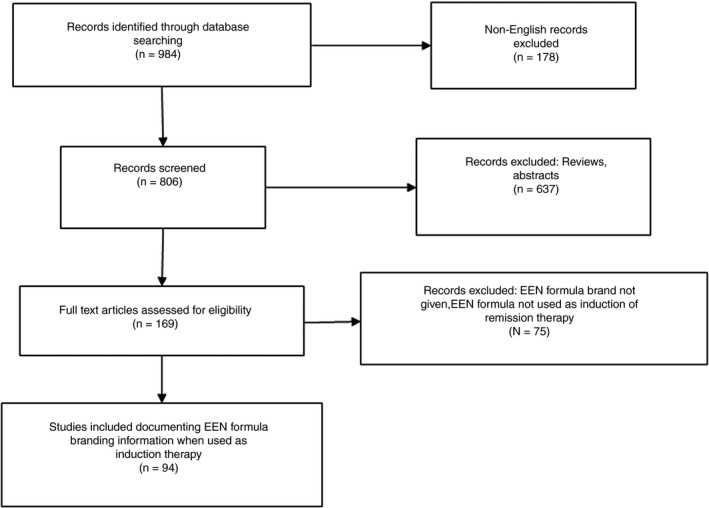
We performed compositional analysis of EEN formulas with evidence of efficacy in management of active Crohn's disease. Macronutrient content was compared against the dietary reference values (DRV), the UK National Diet and Nutrition Survey (NDNS) and intake of Crohn's disease children. Food additives were cross-referenced against the FAO/WHO database.
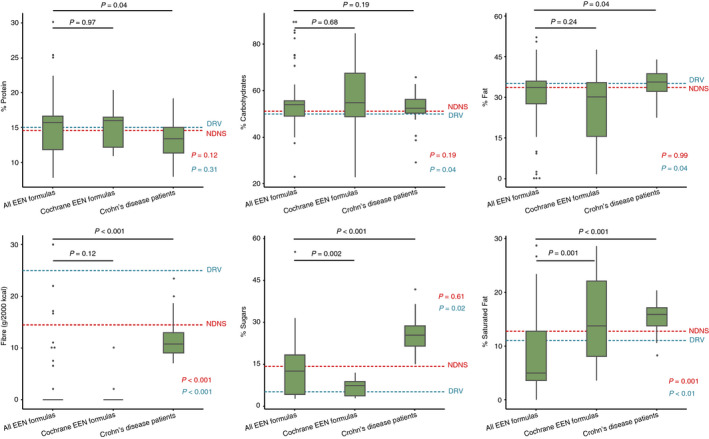
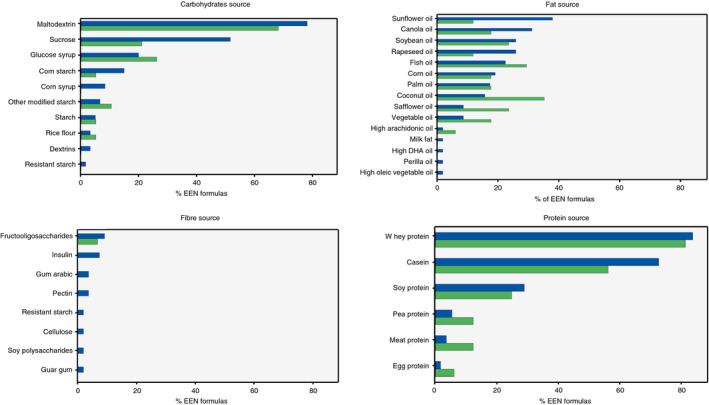
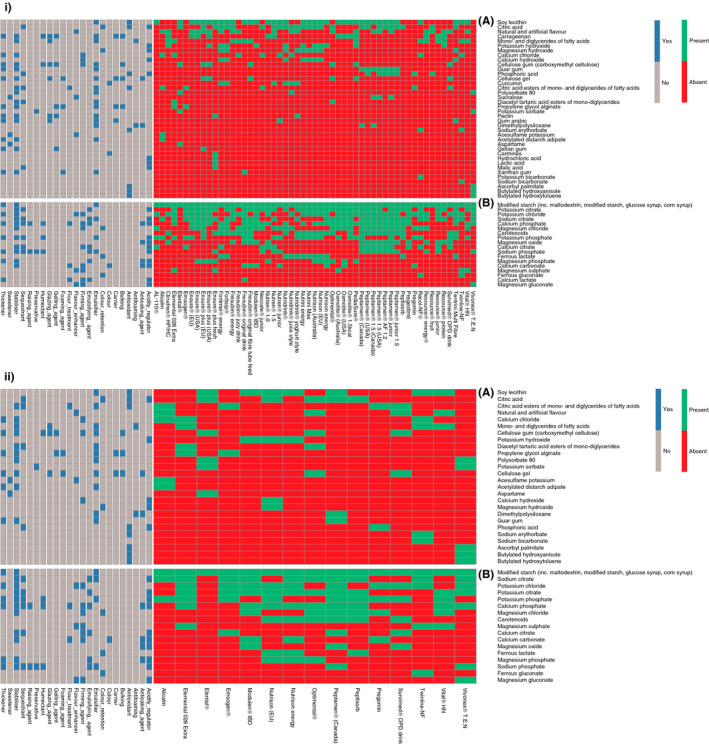
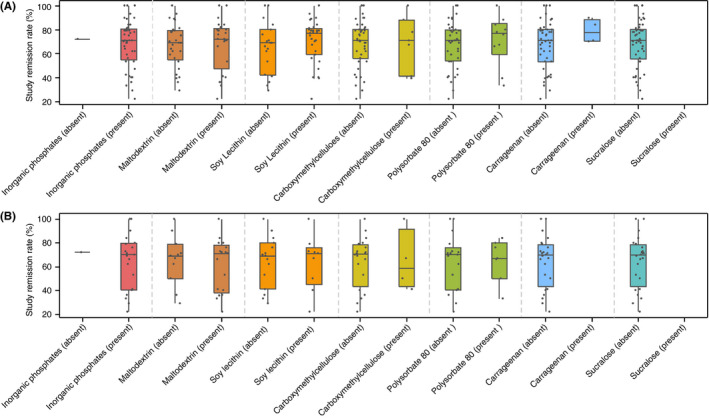
Sixty-one formulas were identified with variable composition (carbohydrates [22.8%-89.3%], protein [7.8%-30.1%], fat [0%-52.5%]). Maltodextrin, milk protein and vegetable/plant oils were the commonest macronutrient sources. Their n-6:n-3 fatty acid ratio varied from 0.25 to 46.5. 56 food additives were identified (median per formula: 11). All formulas were lactose-free, gluten-free, and 82% lacked fibre. The commonest food additives were emulsifiers, stabilisers, antioxidants, acidity regulators and thickeners. Food additives, implicated in Crohn's disease aetiology, were present in formulas (modified starches [100%], carrageenan [22%], carboxymethyl cellulose [13%] and polysorbate 80 [5%]). Remission rates did not differ between EEN formulas with and without those food additives. Analysis including only formulas from randomised controlled trials (RCTs) retained in the latest Cochrane meta-analysis produced similar findings. EEN formulas contained less energy from saturated fat than NDNS intake.
We have identified food ingredients which are present in EEN formulas that are effective in Crohn's disease and challenge perceptions that these ingredients might be harmful.
肠内营养(EEN)是治疗克罗恩病的有效方法。
研究假设即 EEN 配方的成分不太可能引发疾病发作,并且其饮食消除对疾病改善并非必不可少。
我们对在管理活动性克罗恩病方面具有疗效的 EEN 配方进行了成分分析。将宏量营养素含量与膳食参考值(DRV)、英国国家饮食和营养调查(NDNS)以及克罗恩病儿童的摄入量进行了比较。食品添加剂与粮农组织/世卫组织数据库进行了交叉参考。
确定了 61 种具有可变成分的配方(碳水化合物[22.8%-89.3%],蛋白质[7.8%-30.1%],脂肪[0%-52.5%])。麦芽糊精、乳蛋白和植物油/植物脂肪是最常见的宏量营养素来源。其 n-6:n-3 脂肪酸比例从 0.25 到 46.5 不等。共鉴定出 56 种食品添加剂(中位数/配方:11)。所有配方均不含乳糖、麸质,且 82%不含纤维。最常见的食品添加剂是乳化剂、稳定剂、抗氧化剂、酸度调节剂和增稠剂。配方中存在与克罗恩病病因有关的食品添加剂(改性淀粉[100%]、卡拉胶[22%]、羧甲基纤维素[13%]和聚山梨醇酯 80[5%])。含有这些食品添加剂的 EEN 配方与不含这些食品添加剂的 EEN 配方之间的缓解率没有差异。包括在最近的 Cochrane 荟萃分析中保留的随机对照试验(RCT)的配方进行的分析也得出了类似的发现。EEN 配方中的饱和脂肪所提供的能量少于 NDNS 的摄入量。
我们已经确定了存在于对克罗恩病有效的 EEN 配方中的食品成分,并挑战了这些成分可能有害的看法。