Bello-Corral Laura, Sánchez-Valdeón Leticia, Casado-Verdejo Inés, Seco-Calvo Jesús Ángel, Antonio Fernández-Fernández Jesús, Nélida Fernández-Martínez María
Department of Nursing and Physical Therapy, University of León, León, Spain.
Institute of Biomedicine, University of León, León, Spain.
Front Neurosci. 2021 Aug 20;15:677777. doi: 10.3389/fnins.2021.677777. eCollection 2021.
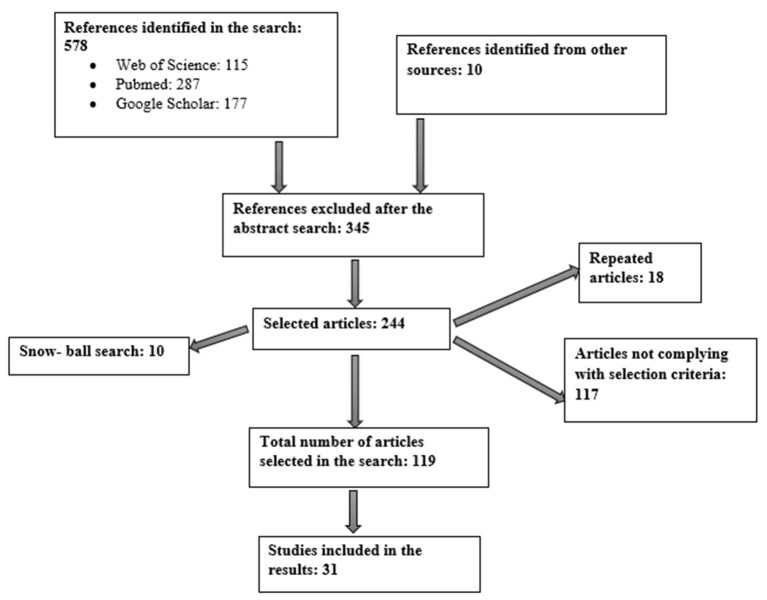
Alzheimer's disease (AD) is a primary, progressive, neurodegenerative disorder. Many risk factors for the development of AD have been investigated, including nutrition. Although it has been proven that nutrition plays a role in AD, the precise mechanisms through which nutrition exerts its influence remain undefined. The object of this study is to address this issue by elucidating some of the mechanisms through which nutrition interacts with AD. This work is a qualitative systematic bibliographic review of the current literature searchable on various available databases, including PubMed, Web of Science, and Google Scholar. Our evidence comprises 31 articles selected after a systematic search process. Patients suffering with AD present a characteristic microbiome that promotes changes in microglia generating a proinflammatory state. Many similarities exist between AD and prion diseases, both in terms of symptoms and in the molecular mechanisms of pathogenesis. Changes in the composition of the gut microbiome due to dietary habits could be one of the environmental factors affecting the development of AD; however, this is probably not the only factor. Similarly, the mechanism for self-propagation of beta-amyloid seen in AD is similar to that seen in prions.
阿尔茨海默病(AD)是一种原发性、进行性神经退行性疾病。人们已经对AD发病的许多风险因素进行了研究,包括营养因素。尽管已经证实营养在AD中起作用,但其发挥影响的确切机制仍不明确。本研究的目的是通过阐明营养与AD相互作用的一些机制来解决这一问题。这项工作是对当前可在各种可用数据库(包括PubMed、科学网和谷歌学术)上搜索到的文献进行的定性系统文献综述。我们的证据包括在系统检索过程后挑选出的31篇文章。患有AD的患者呈现出一种特征性的微生物群,这种微生物群会促进小胶质细胞的变化,从而产生促炎状态。AD与朊病毒疾病在症状和发病机制的分子机制方面都存在许多相似之处。饮食习惯导致的肠道微生物群组成变化可能是影响AD发病的环境因素之一;然而,这可能不是唯一的因素。同样,AD中所见的β-淀粉样蛋白自我传播机制与朊病毒中的类似。