Elkes Mario, Andonovski Martin, Vidal Daislyn, Farago Madison, Modafferi Ryan, Claypool Steven M, LeBlanc Paul J
Faculty of Applied Health Sciences, Center for Bone and Muscle Health, Brock University, St. Catharines, ON, Canada.
Department of Physiology, Johns Hopkins University School of Medicine, Baltimore, MD, United States.
Front Physiol. 2021 Aug 19;12:731961. doi: 10.3389/fphys.2021.731961. eCollection 2021.
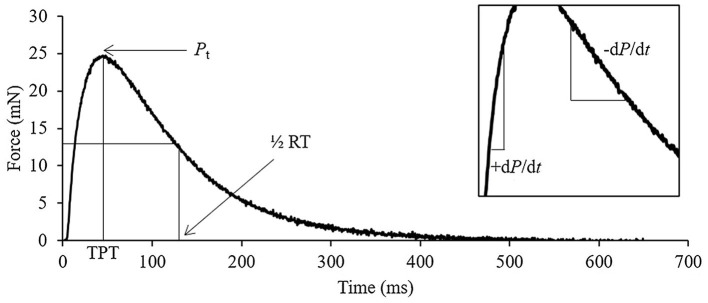
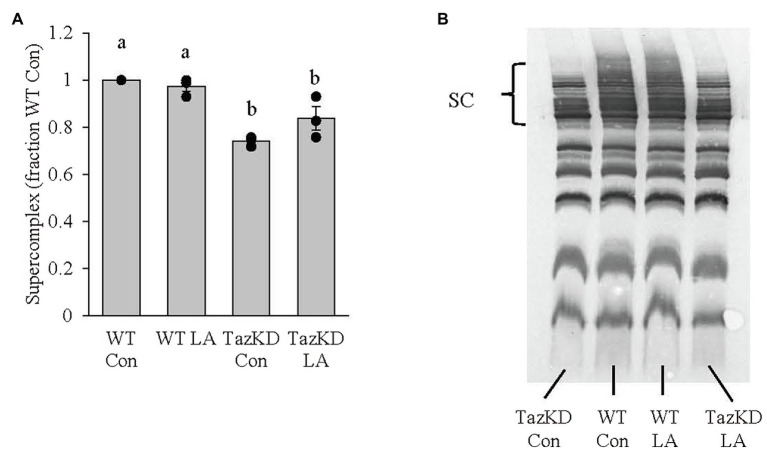
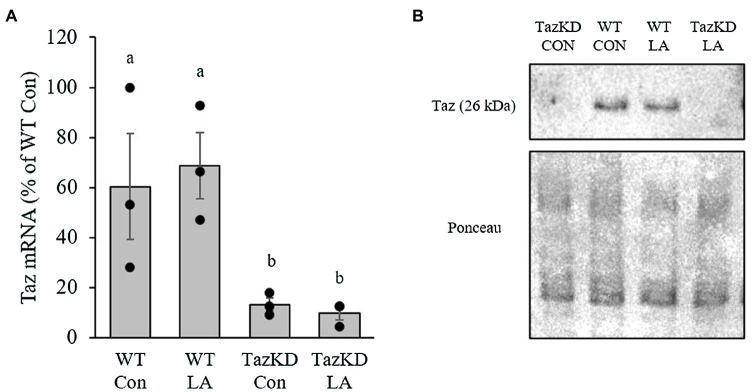
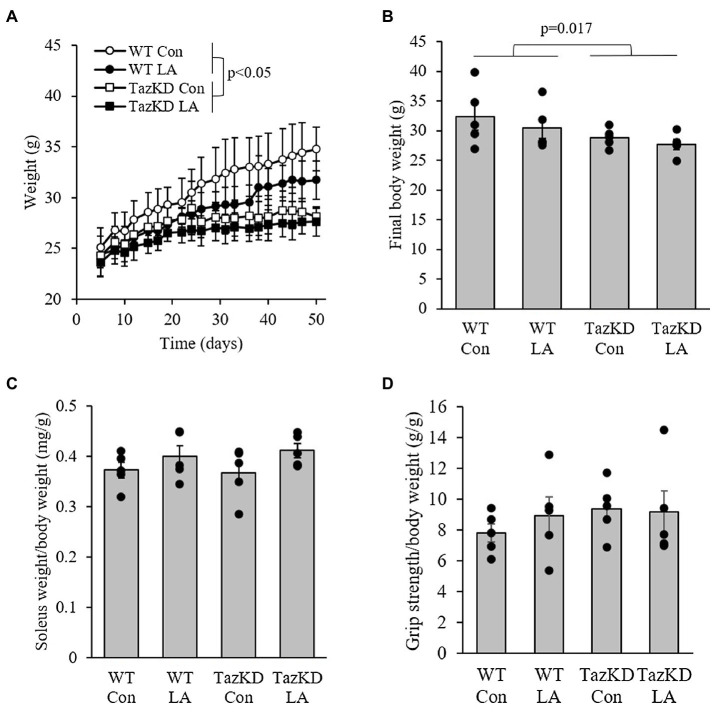
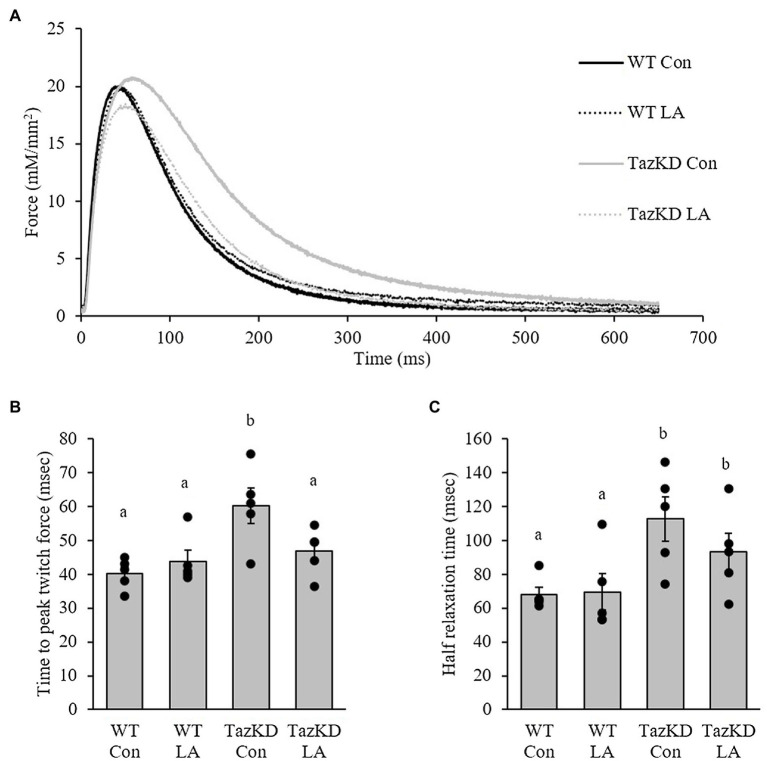
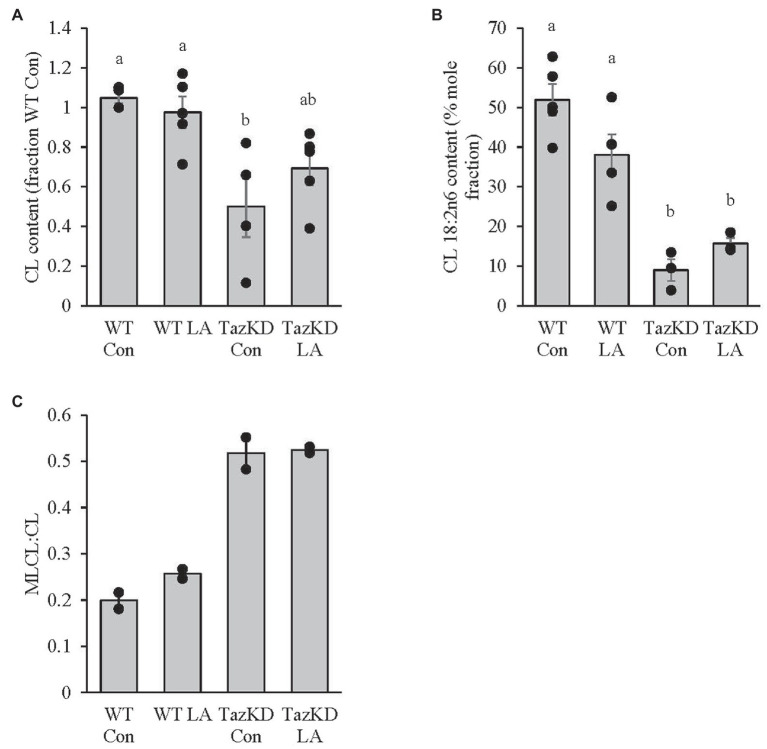
Barth syndrome is a rare and incurable X-linked (male-specific) genetic disease that affects the protein tafazzin (Taz). Taz is an important enzyme responsible for synthesizing biologically relevant cardiolipin (for heart and skeletal muscle, cardiolipin rich in linoleic acid), a critical phospholipid of mitochondrial form and function. Mutations to Taz cause dysfunctional mitochondria, resulting in exercise intolerance due to skeletal muscle weakness. To date, there has been limited research on improving skeletal muscle function, with interventions focused on endurance and resistance exercise. Previous cell culture research has shown therapeutic potential for the addition of exogenous linoleic acid in improving Taz-deficient mitochondrial function but has not been examined . The purpose of this study was to examine the influence of supplemental dietary linoleic acid on skeletal muscle function in a rodent model of Barth syndrome, the inducible Taz knockdown (TazKD) mouse. One of the main findings was that TazKD soleus demonstrated an impaired contractile phenotype (slower force development and rates of relaxation) compared to their WT littermates. Interestingly, this impaired contractile phenotype seen did not translate to altered muscle function at the whole-body level. Also, supplemental linoleic acid attenuated, to some degree, impaired contractile phenotype in TazKD soleus, and these findings appear to be partially mediated by improvements in cardiolipin content and resulting mitochondrial supercomplex formation. Future research will further examine alternative mechanisms of dietary supplemental LA on improving skeletal muscle contractile dysfunction in TazKD mice.
巴特综合征是一种罕见且无法治愈的X连锁(男性特有)遗传病,它会影响tafazzin(Taz)蛋白。Taz是一种重要的酶,负责合成具有生物学相关性的心磷脂(对于心脏和骨骼肌而言,富含亚油酸的心磷脂),这是线粒体形态和功能的关键磷脂。Taz的突变会导致线粒体功能障碍,进而因骨骼肌无力而导致运动不耐受。迄今为止,关于改善骨骼肌功能的研究有限,干预措施主要集中在耐力和抗阻运动上。先前的细胞培养研究表明,添加外源性亚油酸在改善Taz缺陷型线粒体功能方面具有治疗潜力,但尚未进行过相关研究。本研究的目的是在巴特综合征的啮齿动物模型——可诱导Taz基因敲低(TazKD)小鼠中,研究补充膳食亚油酸对骨骼肌功能的影响。主要发现之一是,与野生型同窝小鼠相比,TazKD比目鱼肌表现出收缩表型受损(力量发展和松弛速度较慢)。有趣的是,这种观察到的收缩表型受损并未转化为全身水平的肌肉功能改变。此外,补充亚油酸在一定程度上减轻了TazKD比目鱼肌受损的收缩表型,这些发现似乎部分是由心磷脂含量的改善以及由此导致的线粒体超复合物形成所介导的。未来的研究将进一步探讨膳食补充亚油酸改善TazKD小鼠骨骼肌收缩功能障碍的其他机制。