Hu Xuewu, Wang Jianlei, Lv Ying, Liu Xingyu, Zhong Juan, Cui Xinglan, Zhang Mingjiang, Ma Daozhi, Yan Xiao, Zhu Xuezhe
National Engineering Laboratory of Biohydrometallurgy, GRINM Group Co., Ltd., Beijing, China.
School of Metallurgical and Ecological Engineering, University of Science and Technology Beijing, Beijing, China.
Front Microbiol. 2021 Aug 19;12:707786. doi: 10.3389/fmicb.2021.707786. eCollection 2021.
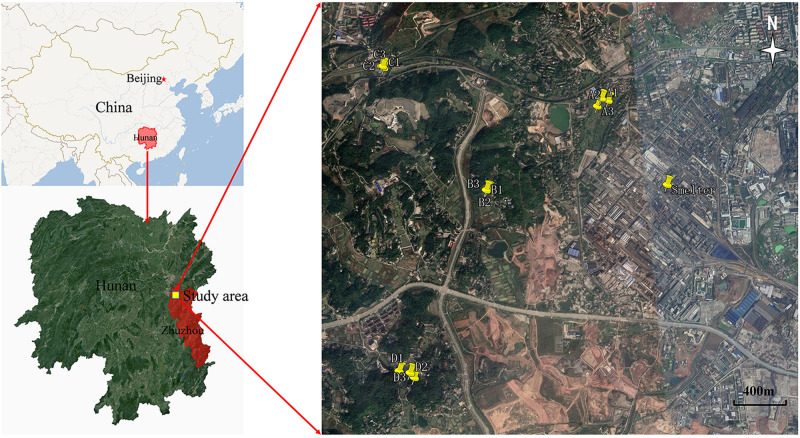
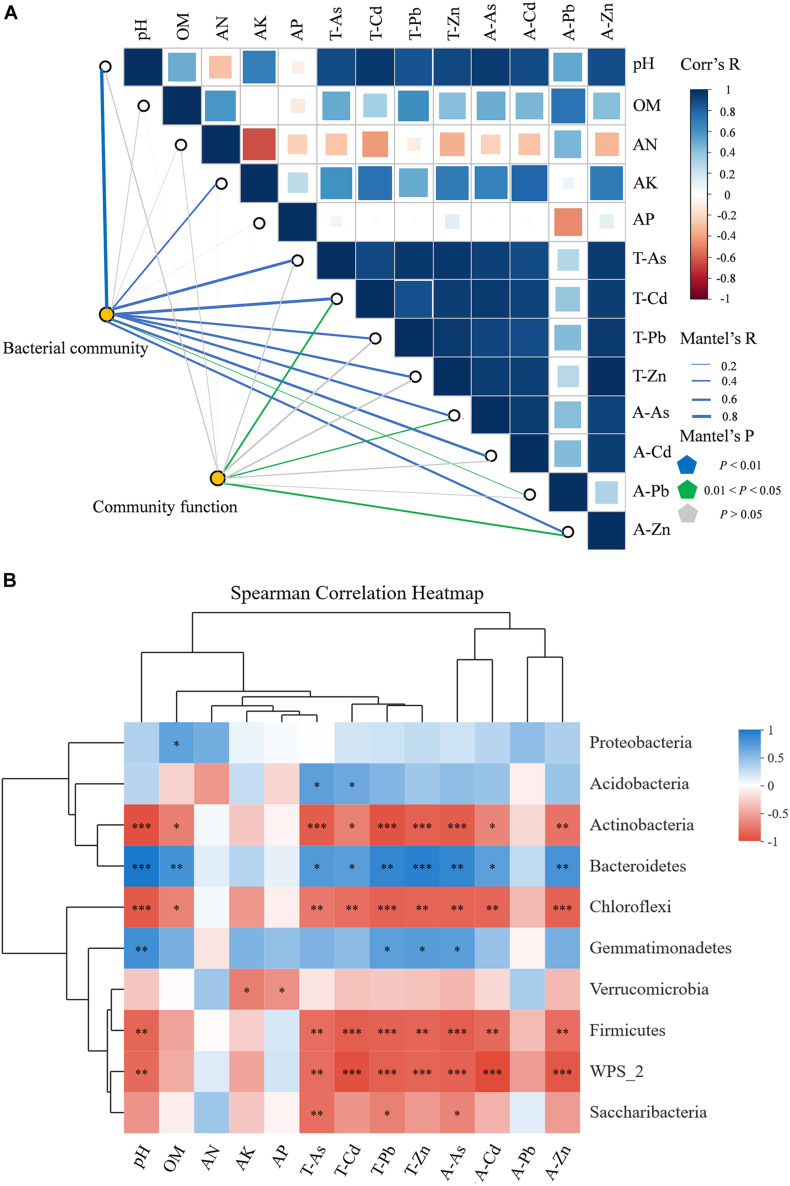
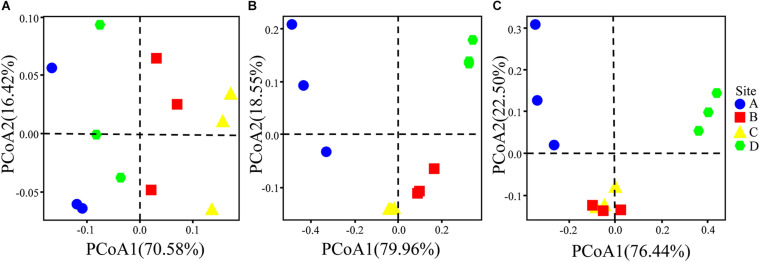
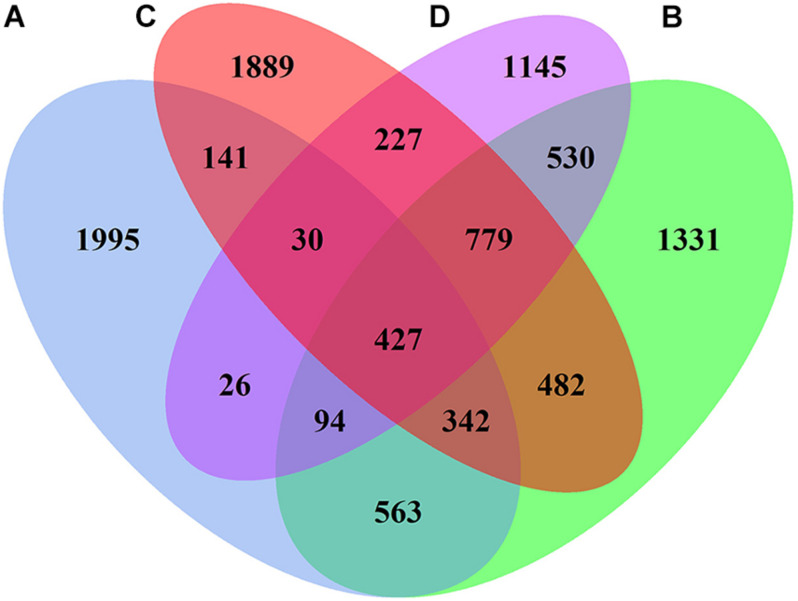
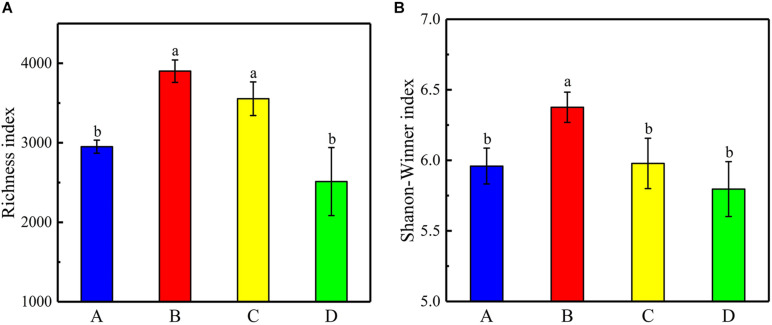
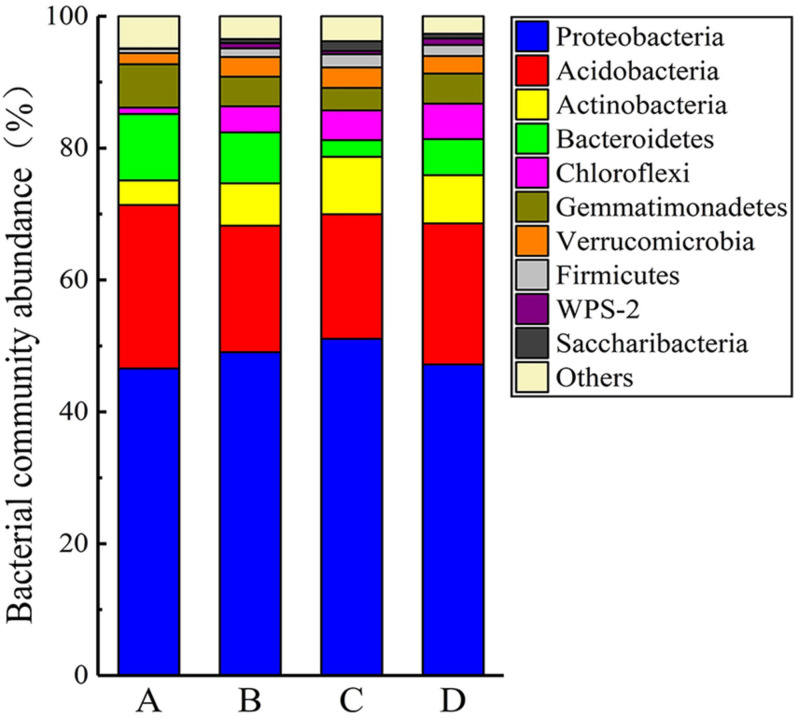
Microorganisms play a fundamental role in biogeochemical cycling and are highly sensitive to environmental factors, including the physiochemical properties of the soils and the concentrations of heavy metals/metalloids. In this study, high-throughput sequencing of the 16S rRNA gene was used to study the microbial communities of farmland soils in farmland in the vicinity of a lead-zinc smelter. Proteobacteria, Acidobacteria, Actinobacteria, Bacteroidetes, and Gemmatimonadetes were the predominant phyla in the sites of interest. , , , , and were heavy metal-/metalloid-tolerant microbial groups with potential for bioremediation of the heavy metal/metalloid contaminated soils. However, the bacterial diversity was different for the different sites. The contents of heavy metal/metalloid species and the soil properties were studied to evaluate the effect on the soil bacterial communities. The Mantel test revealed that soil pH, total cadmium (T-Cd), and available arsenic played a vital role in determining the structure of the microbial communities. Further, we analyzed statistically the heavy metals/metalloids and the soil properties, and the results revealed that the microbial richness and diversity were regulated mainly by the soil properties, which correlated positively with organic matter and available nitrogen, while available phosphorus and available potassium were negatively correlated. The functional annotation of the prokaryotic taxa (FAPROTAX) method was used to predict the function of the microbial communities. Chemoheterotrophy and airborne chemoheterotrophy of the main microbial community functions were inhibited by soil pH and the heavy metals/metalloids, except in the case of available lead. Mantel tests revealed that T-Cd and available zinc were the dominant factors affecting the functions of the microbial communities. Overall, the research indicated that in contaminated soils, the presence of multiple heavy metals/metalloids, and the soil properties synergistically shaped the structure and function of the microbial communities.
微生物在生物地球化学循环中发挥着重要作用,并且对环境因素高度敏感,这些环境因素包括土壤的物理化学性质以及重金属/类金属的浓度。在本研究中,利用16S rRNA基因的高通量测序来研究铅锌冶炼厂附近农田土壤中的微生物群落。变形菌门、酸杆菌门、放线菌门、拟杆菌门和芽单胞菌门是研究地点中的主要菌门。 、 、 、 和 是耐重金属/类金属的微生物类群,具有对重金属/类金属污染土壤进行生物修复的潜力。然而,不同地点的细菌多样性有所不同。研究了重金属/类金属物种的含量和土壤性质,以评估其对土壤细菌群落的影响。Mantel检验表明,土壤pH值、总镉(T-Cd)和有效砷在决定微生物群落结构方面起着至关重要的作用。此外,我们对重金属/类金属和土壤性质进行了统计分析,结果表明,微生物的丰富度和多样性主要受土壤性质的调节,土壤性质与有机质和有效氮呈正相关,而与有效磷和有效钾呈负相关。利用原核生物分类单元功能注释(FAPROTAX)方法预测微生物群落的功能。除有效铅外,土壤pH值和重金属/类金属抑制了主要微生物群落功能的化学异养和空气化学异养。Mantel检验表明,T-Cd和有效锌是影响微生物群落功能的主要因素。总体而言,该研究表明,在污染土壤中,多种重金属/类金属的存在以及土壤性质协同塑造了微生物群落的结构和功能。