Kürekci Cemil, Sakin Fatih, Epping Lennard, Knüver Marie-Theres, Semmler Torsten, Stingl Kerstin
Department of Food Hygiene and Technology, Faculty of Veterinary Medicine, Hatay Mustafa Kemal University, Hatay, Turkey.
Department of Pharmacology and Toxicology, Faculty of Veterinary Medicine, Hatay Mustafa Kemal University, Hatay, Turkey.
Front Microbiol. 2021 Aug 18;12:712106. doi: 10.3389/fmicb.2021.712106. eCollection 2021.
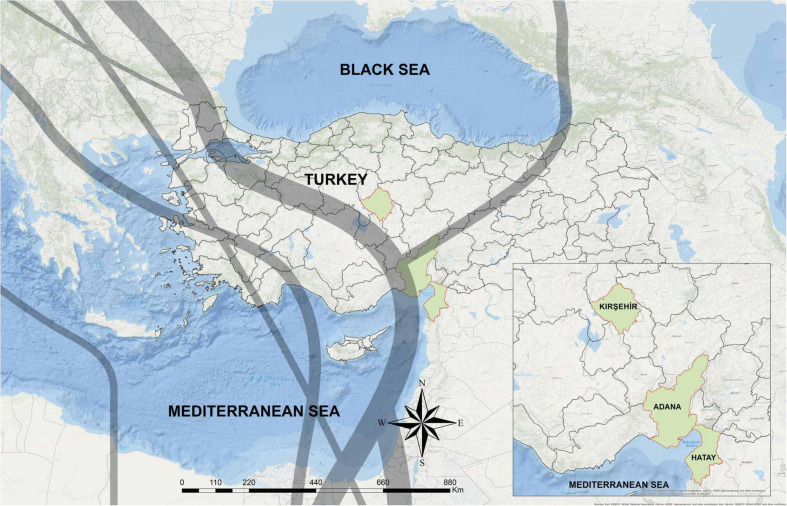
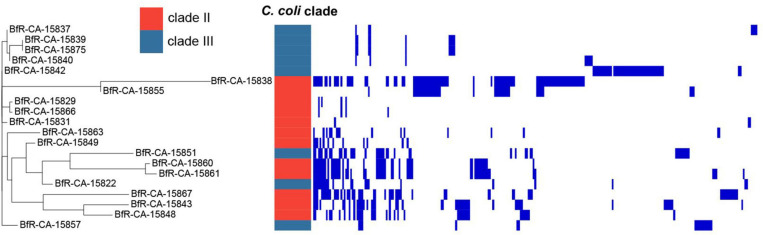
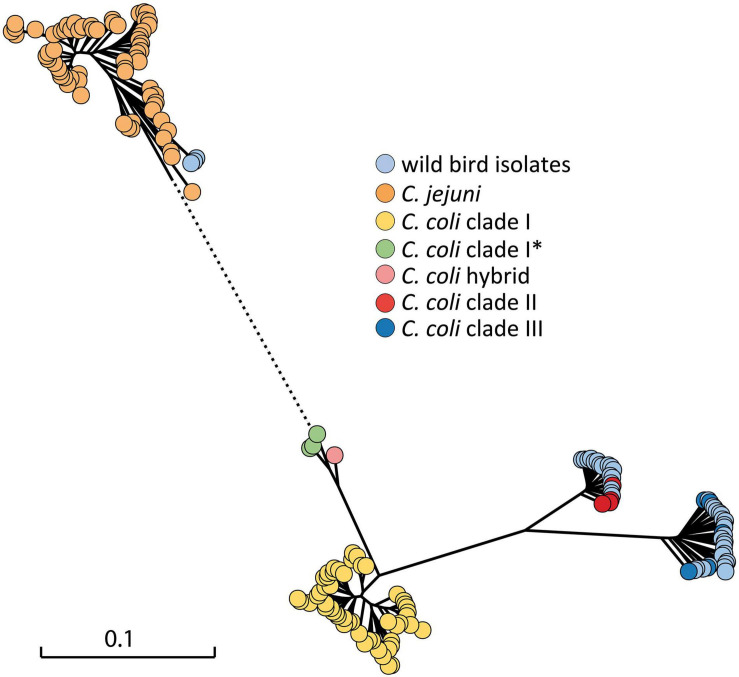
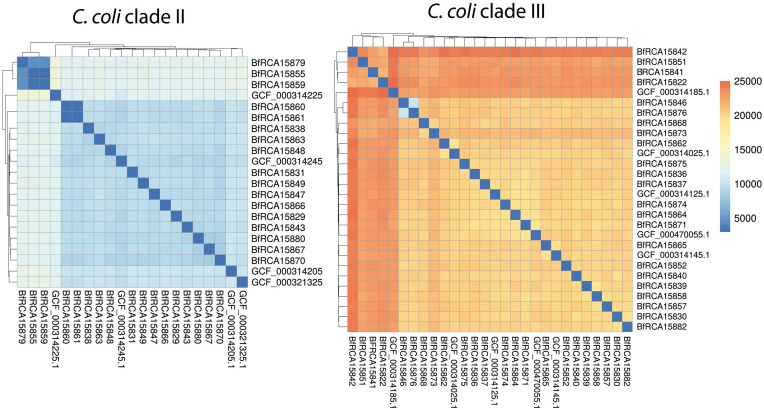
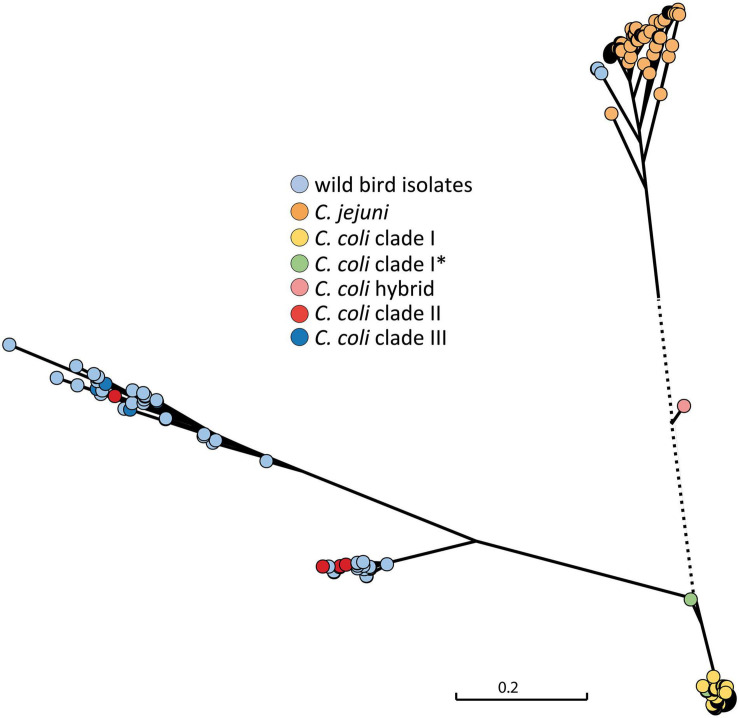
Turkey is an important stopover site for many migrating birds between Europe, Asia and Africa. spp. are frequently found in wildlife, in particular waterfowl, and distinct strains are disseminated within this reservoir. In this study, 183 wild birds of hunting areas in Turkey were collected and thermophilic spp. from cloacal swabs were isolated at a prevalence of 5.2% from song thrushes (6/116) and 93% from Eurasian coots (41/44). After PCR species differentiation and restriction profiles determination, and strains were further investigated by whole genome sequencing. PCR target amplification of the gene, commonly used for species-identification was inefficient and even hampered in one isolate. A close look on the sequence revealed that various mismatches in the oligo annealing sites caused less efficient diagnostic detection. All isolates belonged to the environmental clade II and clade III, for which thirty-six novel MLST types were identified. Further single nucleotide polymorphism (SNP) analysis showed a high genomic divergence between the isolates. High variability was also implicated for putative plasmid-located genes detected in 51% of the isolates. Distinct gene variants in clades II and III were identified by a analysis. After substracting in common with clade I database, 11 and 35 distinct genes were identified in clades II and III isolates, mainly involved in surface structures and modifications as well as signal transduction, suggesting niche adaptation of strains in wild birds. All strains were susceptible against (fluoro-)quinolones, erythromycin, tetracycline, gentamicin and only one isolate was resistant against streptomycin, suggesting that the sensitive phenotype was due to absence of selective pressure and niche separation in wild birds in Turkey. We conclude that spp. isolates from wildlife and environmental sources are still scarce in the databases and that there is a need for more studies on thermophilic spp. from different places all over the world in order to complement our understanding on dissemination and adaptation to distinct niches of this global food-borne pathogen.
土耳其是许多候鸟在欧洲、亚洲和非洲之间迁徙的重要中途停留地。[具体物种名称]在野生动物中很常见,尤其是水禽,并且不同菌株在这个宿主群体中传播。在本研究中,收集了土耳其狩猎区的183只野生鸟类,从泄殖腔拭子中分离出嗜热[具体物种名称],歌鸫(6/116)中的分离率为5.2%,白骨顶(41/44)中的分离率为93%。经过PCR物种鉴别和限制性图谱测定后,[具体物种名称]菌株通过全基因组测序进一步研究。常用于[具体物种名称]物种鉴定的基因的PCR靶标扩增效率低下,甚至在一个分离株中受到阻碍。仔细观察该基因序列发现,寡核苷酸退火位点的各种错配导致诊断检测效率降低。所有[具体物种名称]分离株都属于环境进化枝II和进化枝III,为此鉴定出36种新的多位点序列分型(MLST)类型。进一步的单核苷酸多态性(SNP)分析表明,[具体物种名称]分离株之间存在高度的基因组差异。在51%的[具体物种名称]分离株中检测到的假定质粒定位基因也存在高度变异性。通过[具体分析方法名称]分析在进化枝II和III中鉴定出不同的基因变体。在减去与进化枝I数据库共有的[具体内容]后,在进化枝II和III分离株中分别鉴定出11个和35个不同的基因,主要涉及表面结构和修饰以及信号转导,这表明[具体物种名称]菌株在野生鸟类中具有生态位适应性。所有菌株对(氟)喹诺酮类、红霉素、四环素、庆大霉素敏感,只有一个分离株对链霉素耐药,这表明敏感表型是由于土耳其野生鸟类中缺乏选择压力和生态位分离。我们得出结论,数据库中来自野生动物和环境来源的[具体物种名称]分离株仍然很少,并且需要对来自世界各地不同地方的嗜热[具体物种名称]进行更多研究,以补充我们对这种全球食源性病原体传播和适应不同生态位的理解。