Mitsuda Junichi, Tsujikawa Takahiro, Yoshimura Kanako, Saburi Sumiyo, Suetsugu Masaho, Kitamoto Kayo, Takenaka Mari, Ohmura Gaku, Arai Akihito, Ogi Hiroshi, Itoh Kyoko, Hirano Shigeru
Department of Otolaryngology-Head and Neck Surgery, Kyoto Prefectural University of Medicine, Kyoto, Japan.
Department of Cell, Developmental & Cancer Biology, Oregon Health and Science University, Portland, OR, United States.
Front Oncol. 2021 Aug 19;11:713561. doi: 10.3389/fonc.2021.713561. eCollection 2021.
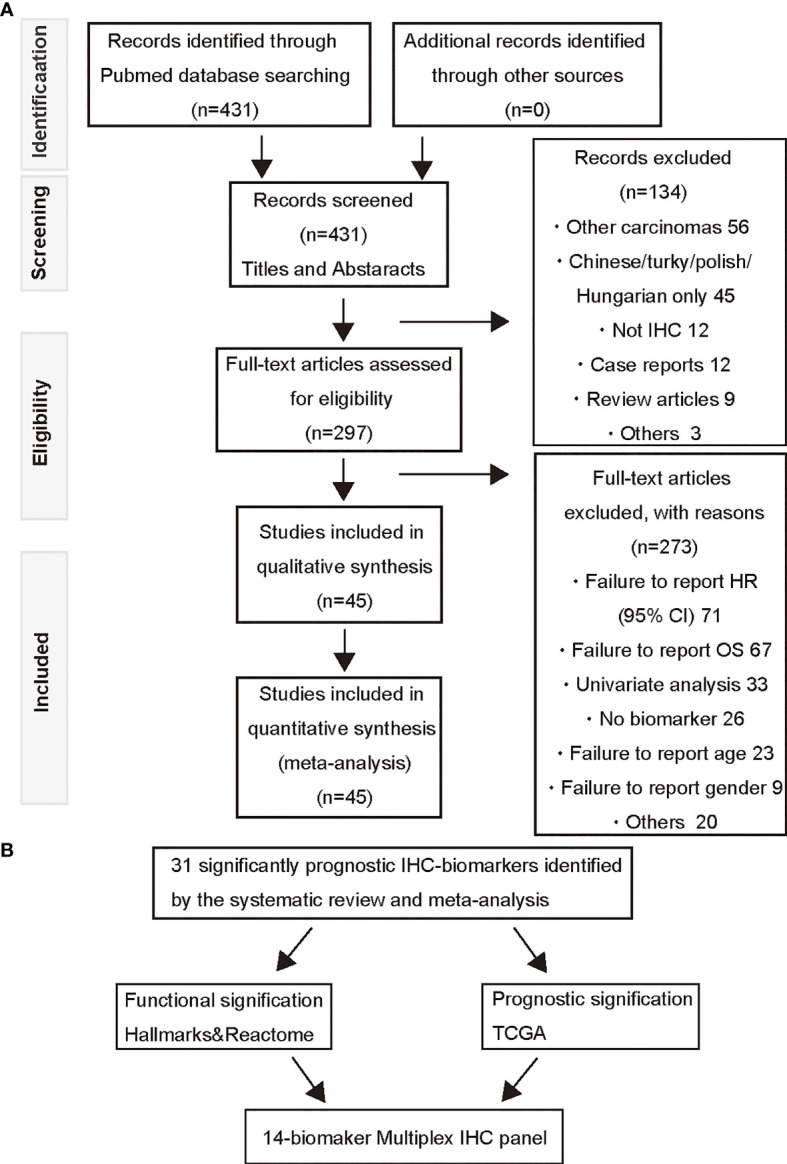
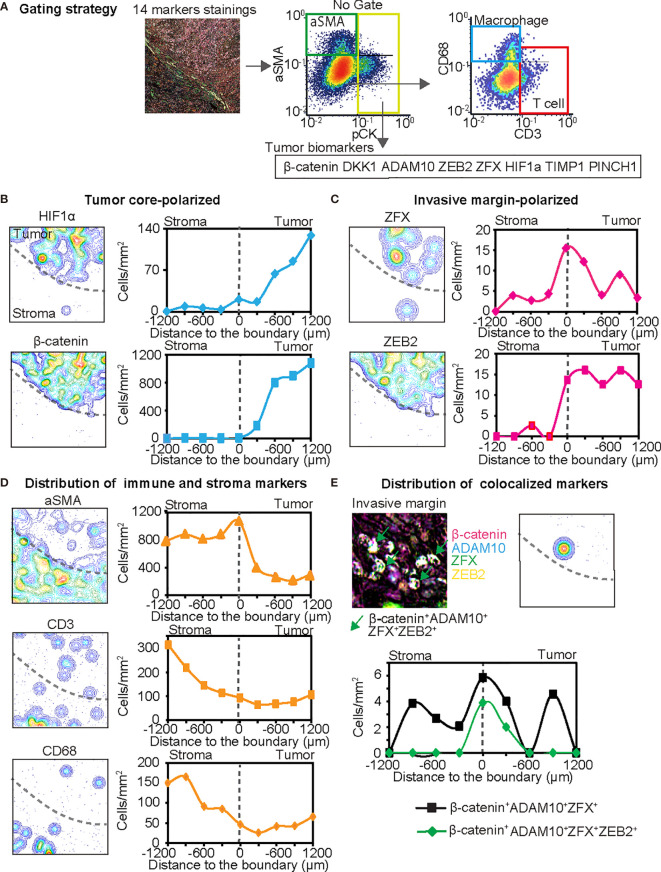
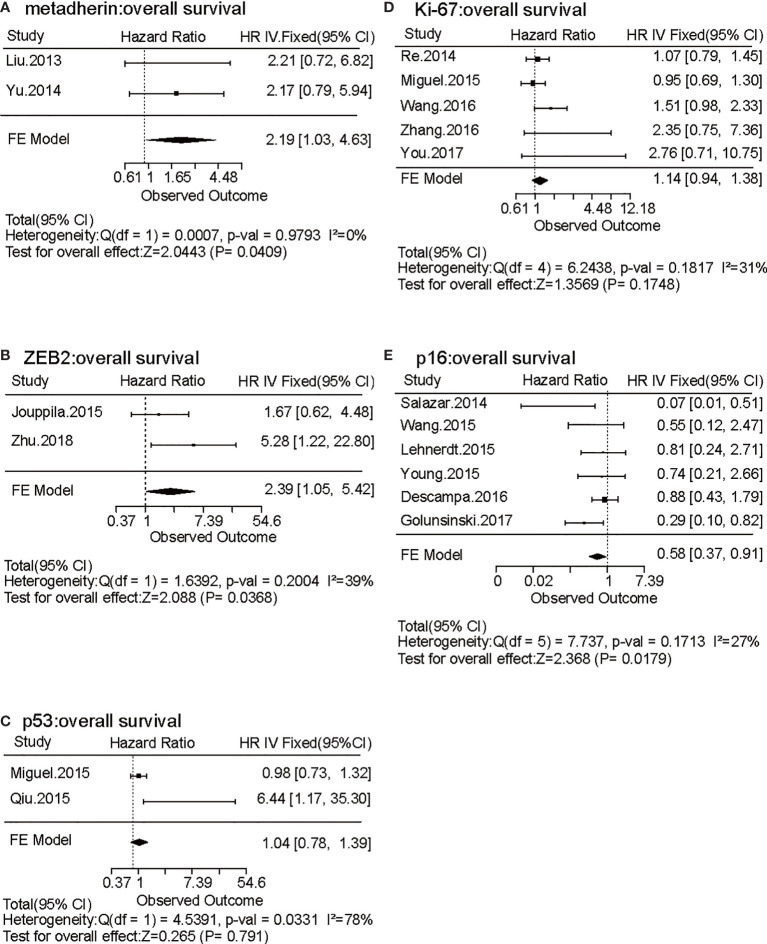
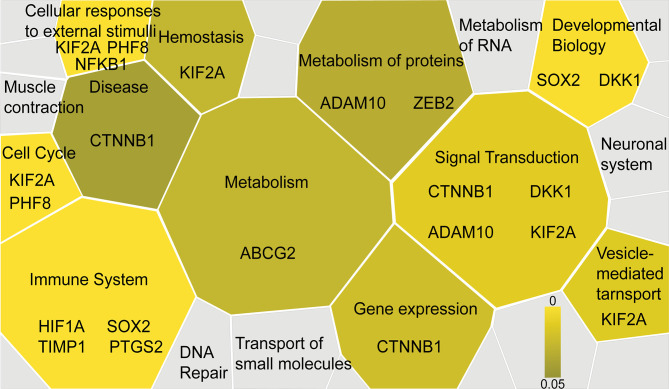
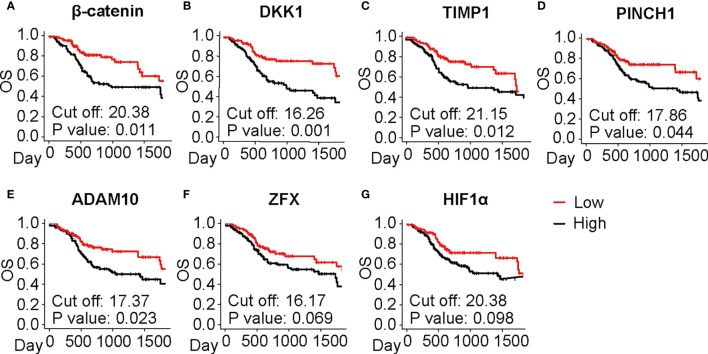
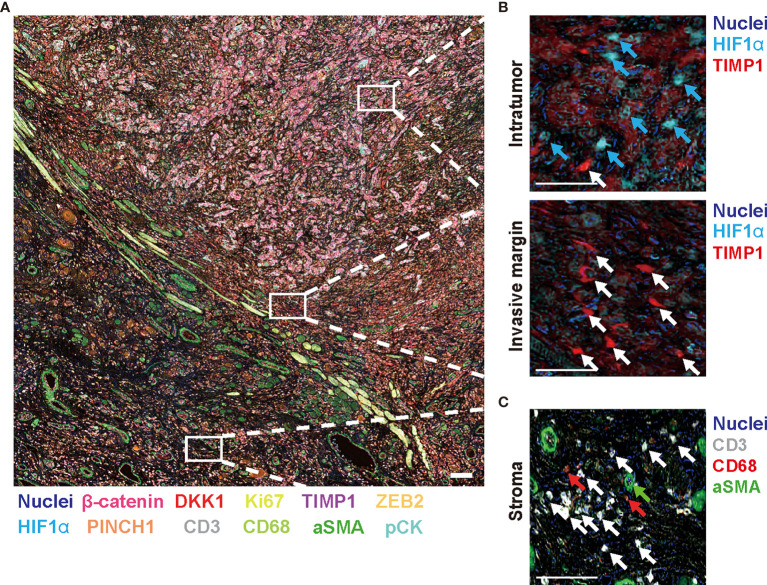
Recent advances made in treatment for head and neck squamous cell carcinoma (HNSCC) highlight the need for new prediction tools to guide therapeutic strategies. In this study, we aimed to develop a HNSCC-targeting multiplex immunohistochemical (IHC) panel that can evaluate prognostic factors and the intratumor heterogeneity of HNSCC. To identify IHC-based tissue biomarkers that constitute new multiplex IHC panel, a systematic review and meta-analysis were performed to analyze reported IHC biomarkers in laryngeal and pharyngeal SCC in the period of 2008-2018. The Cancer Genome Atlas (TCGA) and Reactome pathway databases were used to validate the prognostic and functional significance of the identified biomarkers. A 14-marker chromogenic multiplex IHC panel including identified biomarkers was used to analyze untreated HNSCC tissue. Forty-five high-quality studies and thirty-one candidate tissue biomarkers were identified (N = 7062). Prognostic validation in TCGA laryngeal and pharyngeal SCC cohort (N = 205) showed that β-catenin, DKK1, PINCH1, ADAM10, and TIMP1 were significantly associated with poor prognosis, which were related to functional categories such as immune system, cellular response, cell cycle, and developmental systems. Selected biomarkers were assembled to build a 14-marker panel, evaluating heterogeneity and polarized expression of tumor biomarkers in the tissue structures, which was particularly related to activation of Wnt/β-catenin pathway. Integrated IHC analysis based on a systemic review and meta-analysis provides an proteomics tool to assess the aggressiveness and intratumor heterogeneity of HNSCC.
头颈部鳞状细胞癌(HNSCC)治疗方面的最新进展凸显了对新型预测工具以指导治疗策略的需求。在本研究中,我们旨在开发一种针对HNSCC的多重免疫组织化学(IHC)检测板,其能够评估预后因素以及HNSCC的肿瘤内异质性。为了确定构成新型多重IHC检测板的基于IHC的组织生物标志物,我们进行了一项系统评价和荟萃分析,以分析2008年至2018年期间喉和咽鳞状细胞癌中报道的IHC生物标志物。癌症基因组图谱(TCGA)和Reactome通路数据库被用于验证所鉴定生物标志物的预后和功能意义。一个包含所鉴定生物标志物的14标记显色多重IHC检测板被用于分析未经治疗的HNSCC组织。我们确定了45项高质量研究和31种候选组织生物标志物(N = 7062)。在TCGA喉和咽鳞状细胞癌队列(N = 205)中的预后验证表明,β-连环蛋白、DKK1、PINCH1、ADAM10和TIMP1与不良预后显著相关,它们与免疫系统、细胞反应、细胞周期和发育系统等功能类别相关。选择的生物标志物被组合构建一个14标记检测板,评估组织结构中肿瘤生物标志物的异质性和极化表达,这尤其与Wnt/β-连环蛋白通路的激活有关。基于系统评价和荟萃分析的综合IHC分析提供了一种蛋白质组学工具,以评估HNSCC的侵袭性和肿瘤内异质性。