Sánchez-Trasviña Calef, Flores-Gatica Miguel, Enriquez-Ochoa Daniela, Rito-Palomares Marco, Mayolo-Deloisa Karla
Tecnologico de Monterrey, Escuela de Ingeniería y Ciencias, Centro de Biotecnología-FEMSA, Monterrey, Mexico.
Tecnologico de Monterrey, Escuela de Medicina y Ciencias de la Salud, Monterrey, Mexico.
Front Bioeng Biotechnol. 2021 Aug 20;9:717326. doi: 10.3389/fbioe.2021.717326. eCollection 2021.
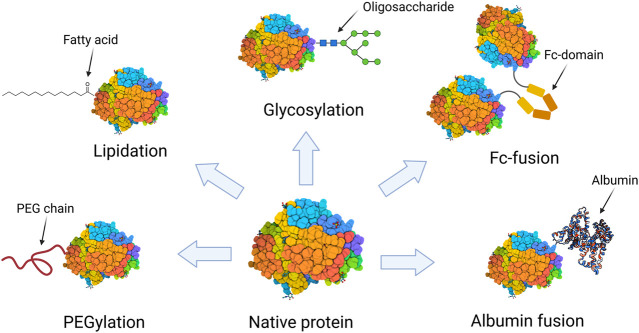
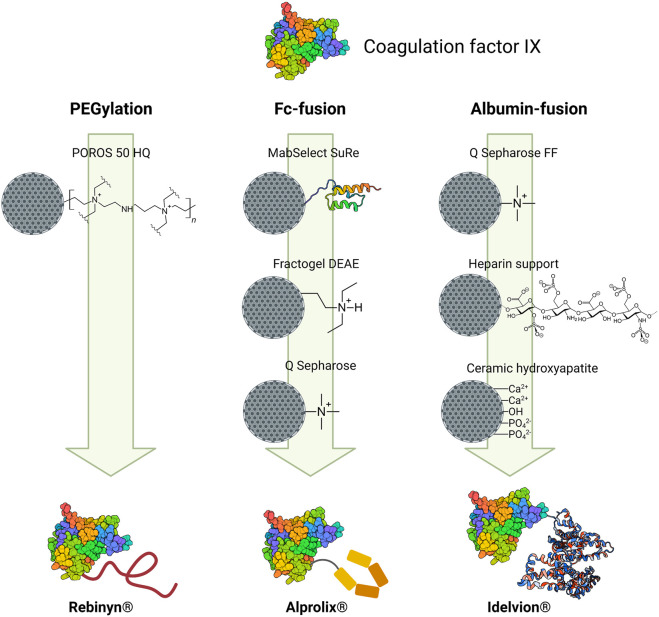
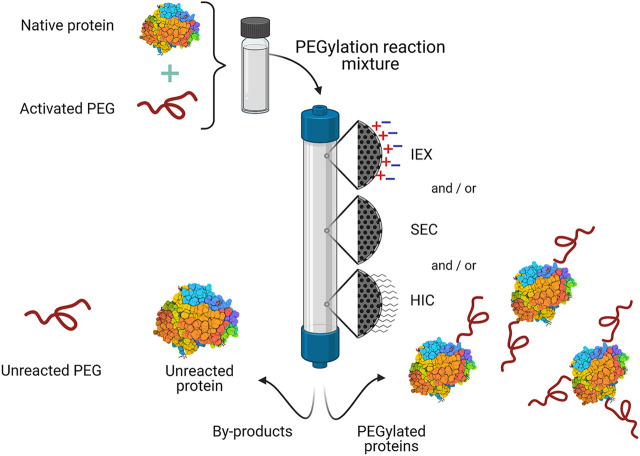
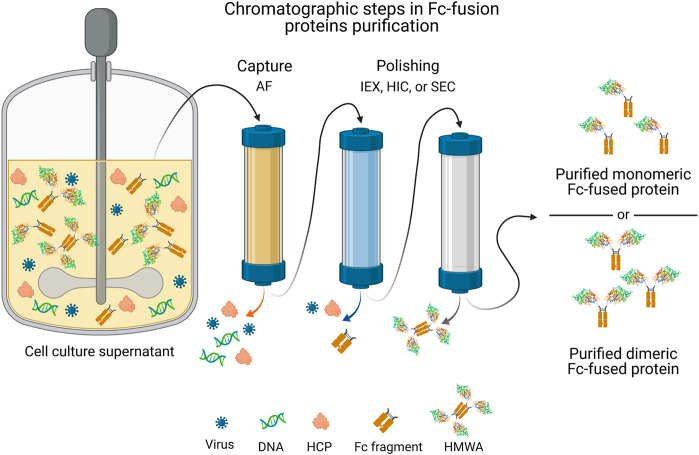
Proteins, which have inherent biorecognition properties, have long been used as therapeutic agents for the treatment of a wide variety of clinical indications. Protein modification through covalent attachment to different moieties improves the therapeutic's pharmacokinetic properties, affinity, stability, confers protection against proteolytic degradation, and increases circulation half-life. Nowadays, several modified therapeutic proteins, including PEGylated, Fc-fused, lipidated, albumin-fused, and glycosylated proteins have obtained regulatory approval for commercialization. During its manufacturing, the purification steps of the therapeutic agent are decisive to ensure the quality, effectiveness, potency, and safety of the final product. Due to the robustness, selectivity, and high resolution of chromatographic methods, these are recognized as the gold standard in the downstream processing of therapeutic proteins. Moreover, depending on the modification strategy, the protein will suffer different physicochemical changes, which must be considered to define a purification approach. This review aims to deeply analyze the purification methods employed for modified therapeutic proteins that are currently available on the market, to understand why the selected strategies were successful. Emphasis is placed on chromatographic methods since they govern the purification processes within the pharmaceutical industry. Furthermore, to discuss how the modification type strongly influences the purification strategy, the purification processes of three different modified versions of coagulation factor IX are contrasted.
蛋白质具有固有的生物识别特性,长期以来一直被用作治疗多种临床病症的治疗剂。通过与不同部分共价连接对蛋白质进行修饰,可以改善治疗剂的药代动力学性质、亲和力、稳定性,赋予其抗蛋白水解降解的能力,并延长循环半衰期。如今,几种修饰的治疗性蛋白质,包括聚乙二醇化、Fc融合、脂化、白蛋白融合和糖基化蛋白质,已获得监管部门的商业化批准。在其生产过程中,治疗剂的纯化步骤对于确保最终产品的质量、有效性、效力和安全性至关重要。由于色谱方法的稳健性、选择性和高分辨率,这些方法被公认为治疗性蛋白质下游加工的金标准。此外,根据修饰策略的不同,蛋白质会发生不同的物理化学变化,在确定纯化方法时必须考虑这些变化。本综述旨在深入分析目前市场上可用的修饰治疗性蛋白质所采用的纯化方法,以了解所选策略成功的原因。重点放在色谱方法上,因为它们主导着制药行业内的纯化过程。此外,为了讨论修饰类型如何强烈影响纯化策略,对比了凝血因子IX三种不同修饰形式的纯化过程。