Giordan Enrico, Billeci Domenico, Del Verme Jacopo, Varrassi Giustino, Coluzzi Flaminia
Department of Neurosurgery, Aulss 2 Marca Trevigiana, Via Piazzale 1, 31100, Treviso, Veneto, Italy.
Fondazione Paolo Procacci, Rome, Italy.
Pain Ther. 2021 Dec;10(2):1481-1495. doi: 10.1007/s40122-021-00309-1. Epub 2021 Sep 6.
Spinal endoscopic techniques have recently been applied to complex degenerative conditions or failed back surgery syndrome. We performed a systematic review and meta-analysis to assess transforaminal endoscopic lumbar foraminotomy (TELF) outcomes and adverse event rates. We also analyzed the effectiveness of the technique for chronic pain after arthrodesis or previous spinal surgery.
Multiple databases were searched for studies published in the English language, involving patients > 18 years old who underwent endoscopic foraminotomy. Outcomes included the rate of patients who showed "excellent" and "good" postoperative improvement, decreased leg pain, and improved Oswestry Disability Index (ODI) scores. Adverse events considered in the analysis included nerve root damage and intraoperative dural tear, the proportion of patients requiring revision surgery or recurrences, and infections.
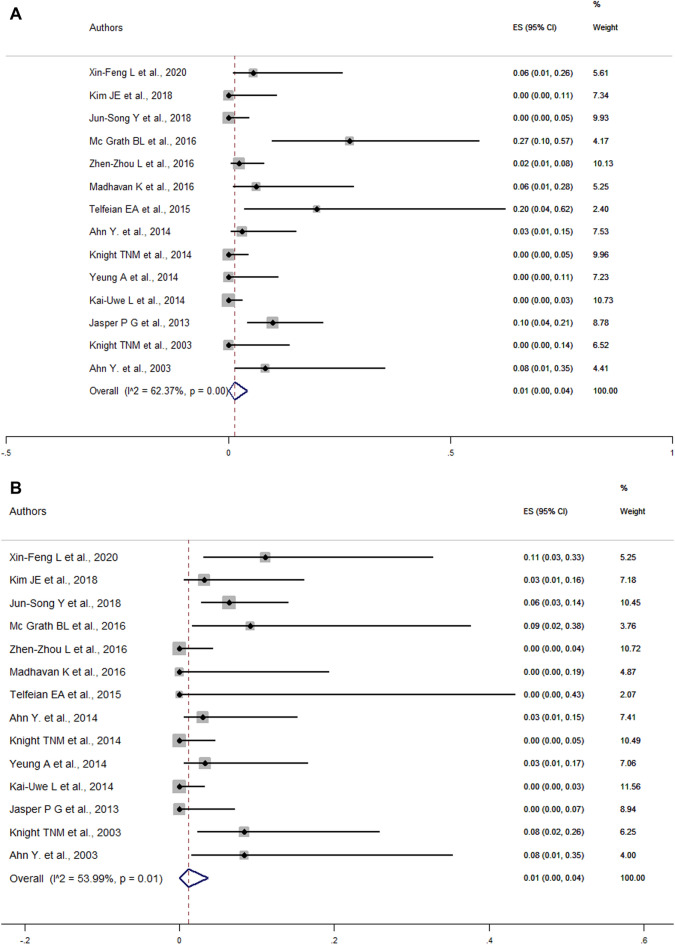
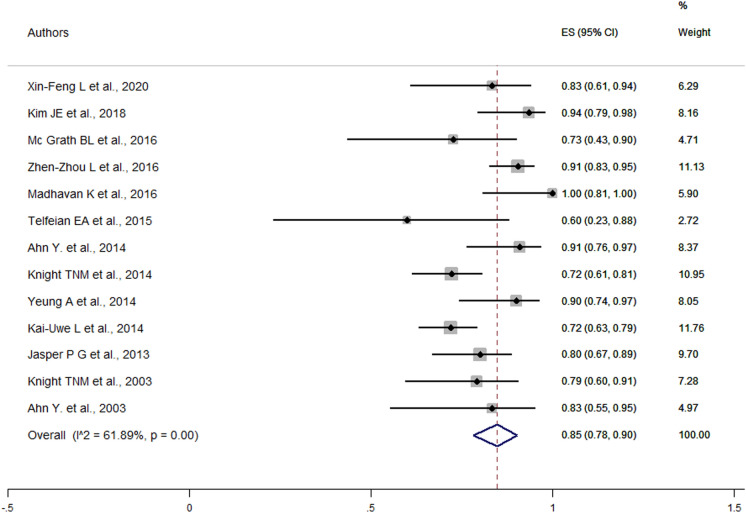
A total of 14 studies, encompassing 600 patients, were identified. Approximately 85% of patients improved significantly after TELF, without significant differences among different groups (85% vs. 78%, respectively). Mean leg pain decreased an average of 5.2 points, and ODI scores improved by 41.2%. Patients with previous spine surgery or failed back surgery syndrome had higher postoperative leg dysesthesia rates after TELF (14% vs. 1%, respectively).
TELF is a useful and safe method to achieve decompression in foraminal stenosis. This technique is indicated in the elderly or patients with comorbidities. Preoperative planning is paramount in determining the foraminal size and endoscope trajectory. A diamond burr is recommended because it has an advantage over the regular endoscopic shaver in bleeding control and complication avoidance.
脊柱内镜技术最近已应用于复杂的退行性疾病或腰椎手术失败综合征。我们进行了一项系统评价和荟萃分析,以评估经椎间孔内镜下腰椎椎间孔切开术(TELF)的疗效和不良事件发生率。我们还分析了该技术对融合术后或既往脊柱手术后慢性疼痛的有效性。
检索多个数据库,查找以英文发表的研究,纳入年龄大于18岁且接受内镜下椎间孔切开术的患者。结局指标包括术后显示“优”和“良”改善的患者比例、腿痛减轻情况以及奥斯维斯特里功能障碍指数(ODI)评分改善情况。分析中考虑的不良事件包括神经根损伤和术中硬脊膜撕裂、需要翻修手术或复发的患者比例以及感染。
共纳入14项研究,涵盖600例患者。TELF术后约85%的患者有显著改善,不同组间无显著差异(分别为85%和78%)。平均腿痛减轻5.2分,ODI评分改善41.2%。既往有脊柱手术史或腰椎手术失败综合征的患者TELF术后腿部感觉异常发生率较高(分别为14%和1%)。
TELF是实现椎间孔狭窄减压的一种有用且安全的方法。该技术适用于老年人或合并症患者。术前规划对于确定椎间孔大小和内镜路径至关重要。推荐使用菱形磨钻,因为它在控制出血和避免并发症方面比常规内镜刨刀更具优势。