Wei Lifan, Xia Feng, Wang Jia, Ran Shujun, Liang Yakun, Zhou Wei, Huang Zhengwei, Liang Jingping
Department of Endodontics and Operative Dentistry, Ninth People's Hospital, College of Stomatology, Shanghai Jiao Tong University School of Medicine, Shanghai, China.
National Clinical Research Center for Oral Diseases, Shanghai, China.
mSystems. 2021 Oct 26;6(5):e0043421. doi: 10.1128/mSystems.00434-21. Epub 2021 Sep 7.
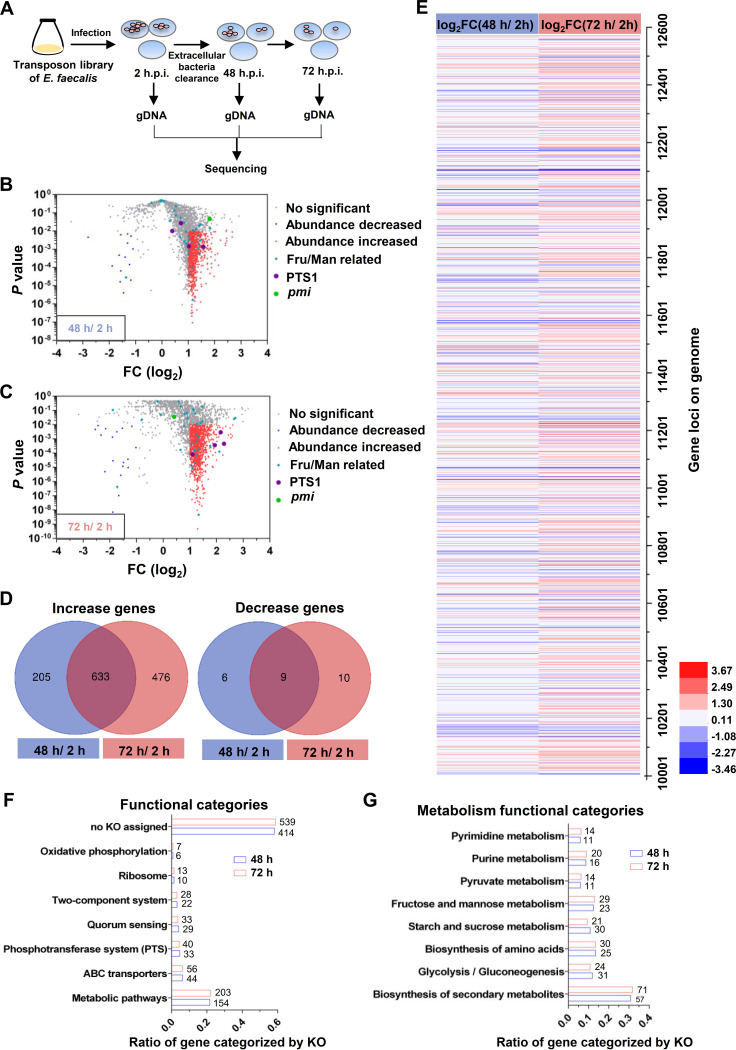
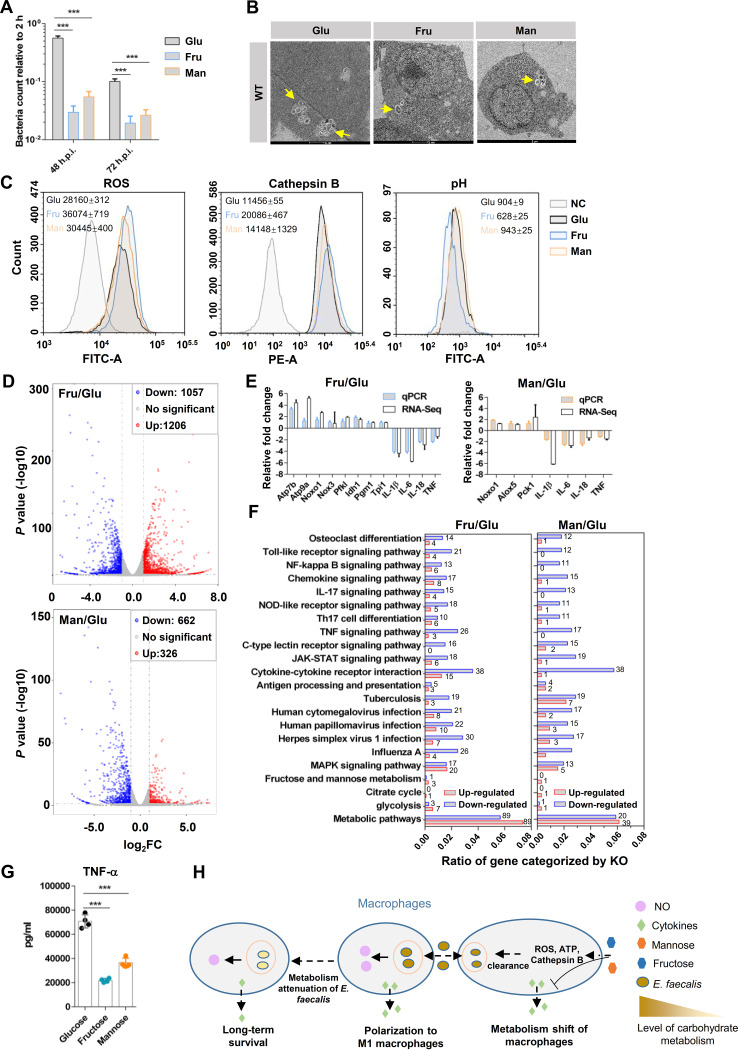
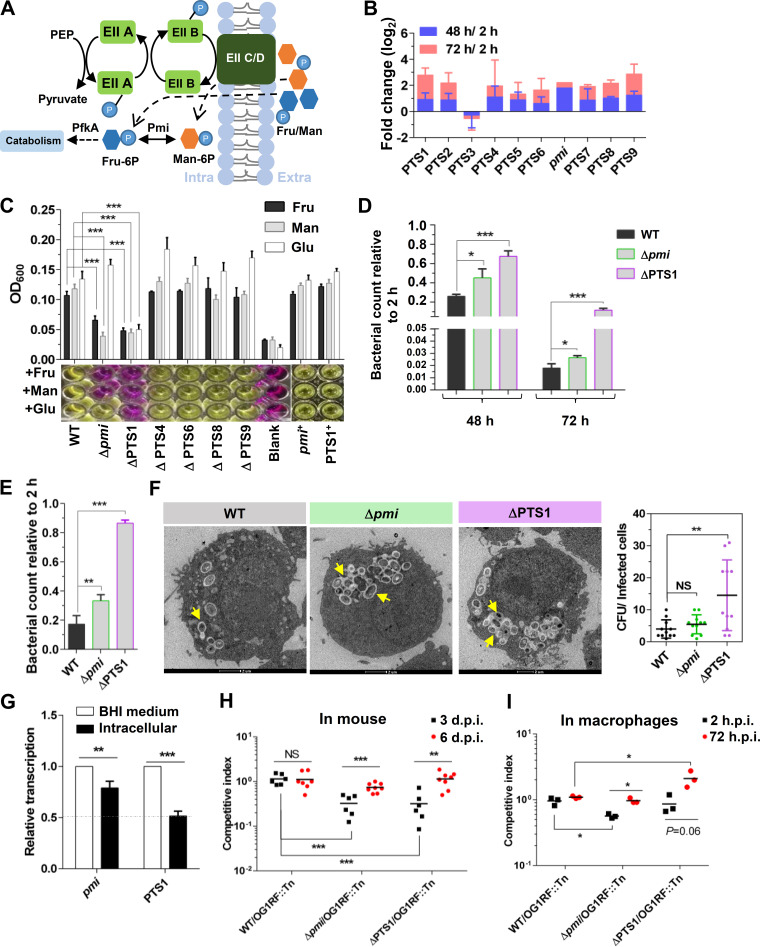
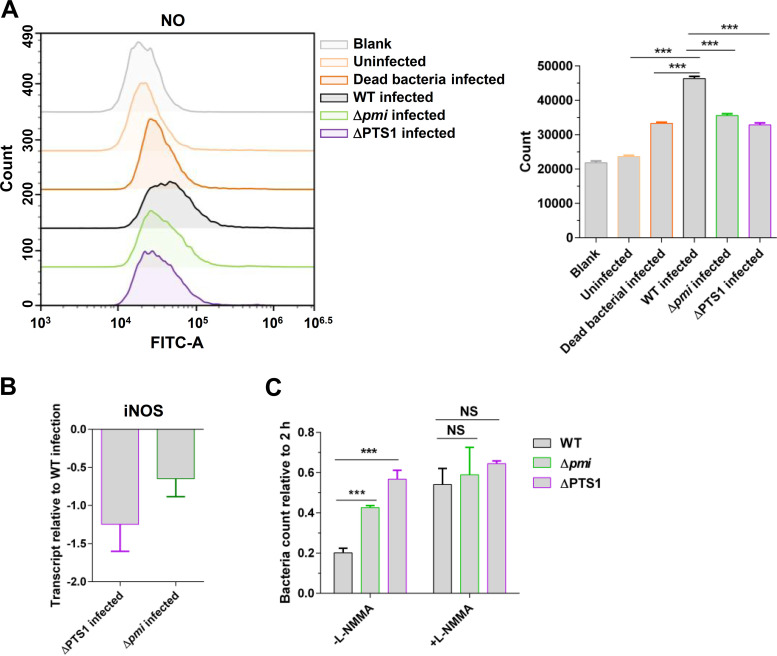
Enterococcus faecalis, an opportunistic pathogen that causes severe community-acquired and nosocomial infections, has been reported to resist phagocyte-mediated killing, which enables its long-term survival in the host. Metabolism, especially carbohydrate metabolism, plays a key role in the battle between pathogens and hosts. However, the function of carbohydrate metabolism in the long-term survival of E. faecalis in phagocytes has rarely been reported. In this study, we utilized transposon insertion sequencing (TIS) to investigate the function of carbohydrate metabolism during the survival of E. faecalis in RAW264.7 cells. The TIS results showed that the fitness of carbohydrate metabolism-related mutants, especially those associated with fructose and mannose metabolism, were significantly enhanced, suggesting that the attenuation of carbohydrate metabolism promotes the survival of E. faecalis in macrophages. The results of our investigation indicated that macrophages responded to carbohydrate metabolism of E. faecalis and polarized to M1 macrophages to increase nitric oxide (NO) production, leading to the enhancement of macrophage-mediated killing to E. faecalis. Meanwhile, E. faecalis automatically decreased carbohydrate metabolism to escape from the immune clearance of macrophages during intracellular survival. The shift of primary carbon resources for macrophages affected the ability to clear intracellular E. faecalis. In summary, the results of the present study demonstrated that carbohydrate metabolism affects the macrophage-mediated killing of E. faecalis. E. faecalis has become a major pathogen leading to a variety of infections around the world. The metabolic interaction between E. faecalis and its host is important during infection but is rarely investigated. We used transposon insertion sequencing coupled with transcriptome sequencing to explore the metabolic interaction between E. faecalis and macrophages and uncovered that the shift of carbohydrate metabolism dramatically affected the inflammatory response of macrophages. In addition, E. faecalis attenuated carbohydrate metabolism to avoid the activation of the immune response of macrophages. This study provides new insights for the reason why E. faecalis is capable of long-term survival in macrophages and may facilitate the development of novel strategies to treat infectious diseases.
粪肠球菌是一种可引发严重社区获得性感染和医院感染的机会致病菌,据报道它能抵抗吞噬细胞介导的杀伤作用,从而使其能在宿主体内长期存活。新陈代谢,尤其是碳水化合物代谢,在病原体与宿主的斗争中起着关键作用。然而,碳水化合物代谢在粪肠球菌于吞噬细胞中长期存活方面的作用鲜有报道。在本研究中,我们利用转座子插入测序(TIS)来探究粪肠球菌在RAW264.7细胞内存活期间碳水化合物代谢的功能。TIS结果表明,与碳水化合物代谢相关的突变体,尤其是那些与果糖和甘露糖代谢相关的突变体,其适应性显著增强,这表明碳水化合物代谢的减弱促进了粪肠球菌在巨噬细胞中的存活。我们的研究结果表明,巨噬细胞会对粪肠球菌的碳水化合物代谢做出反应,并极化为M1巨噬细胞以增加一氧化氮(NO)的产生,从而增强巨噬细胞介导的对粪肠球菌的杀伤作用。与此同时,粪肠球菌在细胞内存活期间会自动降低碳水化合物代谢,以逃避巨噬细胞的免疫清除。巨噬细胞主要碳源的转变影响了清除细胞内粪肠球菌的能力。总之,本研究结果表明碳水化合物代谢会影响巨噬细胞介导的对粪肠球菌的杀伤作用。粪肠球菌已成为导致全球多种感染的主要病原体。粪肠球菌与其宿主之间的代谢相互作用在感染过程中很重要,但很少被研究。我们使用转座子插入测序结合转录组测序来探索粪肠球菌与巨噬细胞之间的代谢相互作用,发现碳水化合物代谢的转变显著影响了巨噬细胞的炎症反应。此外,粪肠球菌减弱碳水化合物代谢以避免巨噬细胞免疫反应的激活。本研究为粪肠球菌能够在巨噬细胞中长期存活的原因提供了新的见解,并可能有助于开发治疗传染病的新策略。