Department of Radiology, Medical College of Wisconsin, 8701 Watertown Plank Road, Milwaukee, WI 53226, United States.
Department of Electrical Engineering and Computer Science, Vanderbilt University, Nashville, TN, United States.
Neuroimage. 2021 Nov;243:118555. doi: 10.1016/j.neuroimage.2021.118555. Epub 2021 Sep 4.
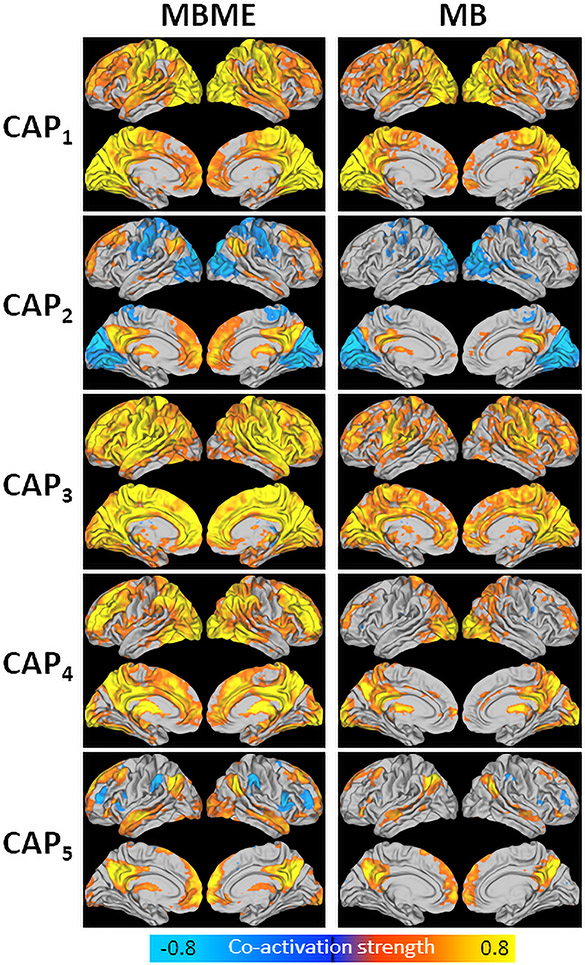
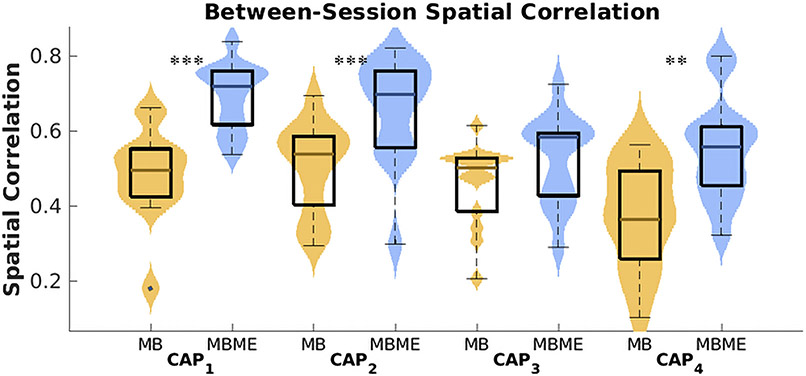
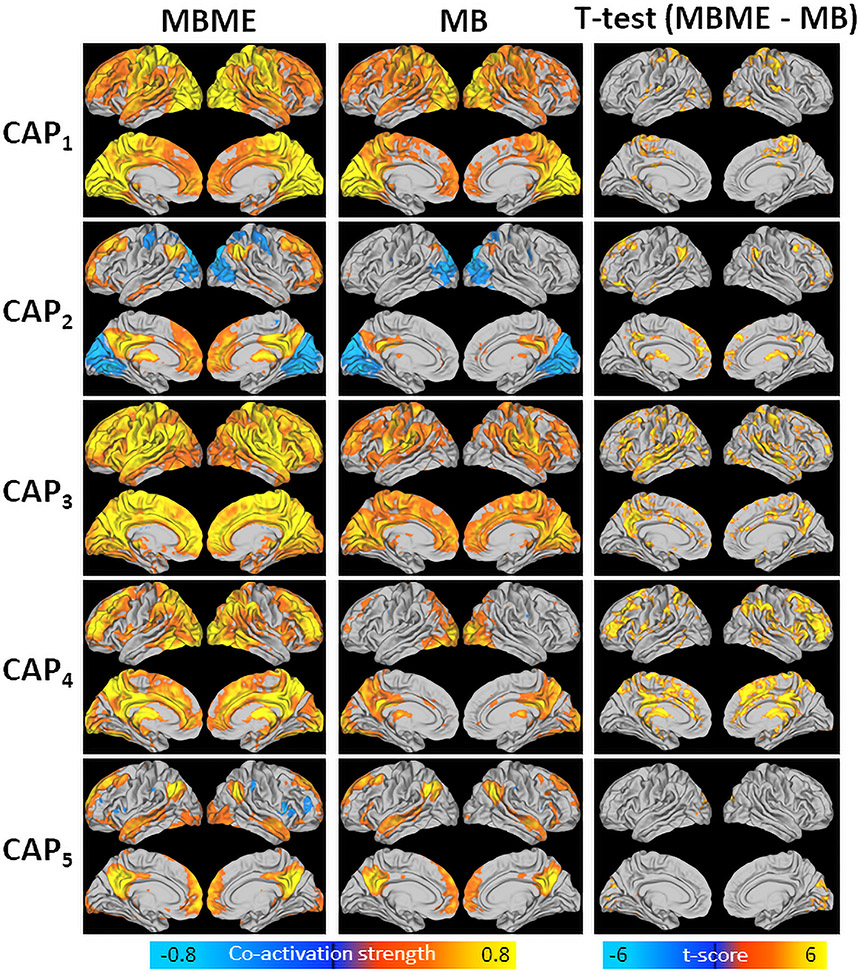
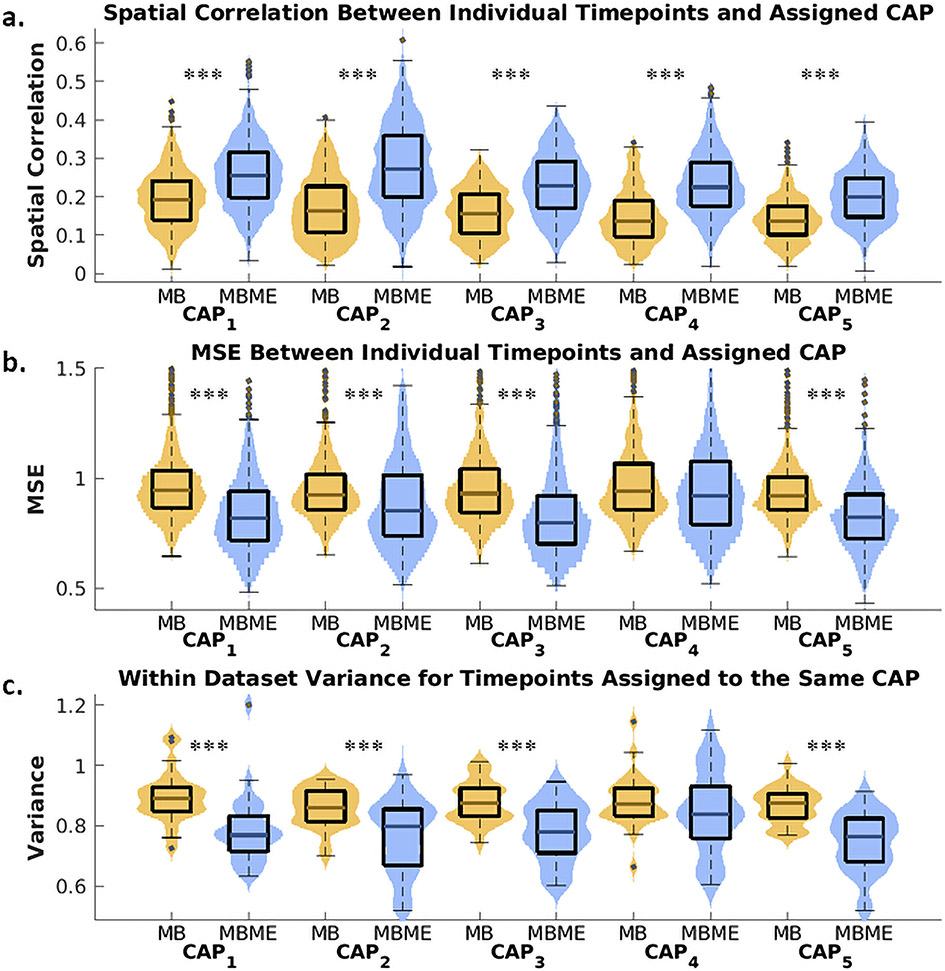
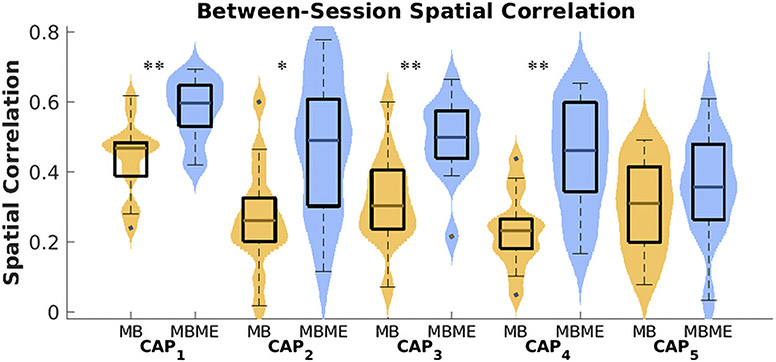
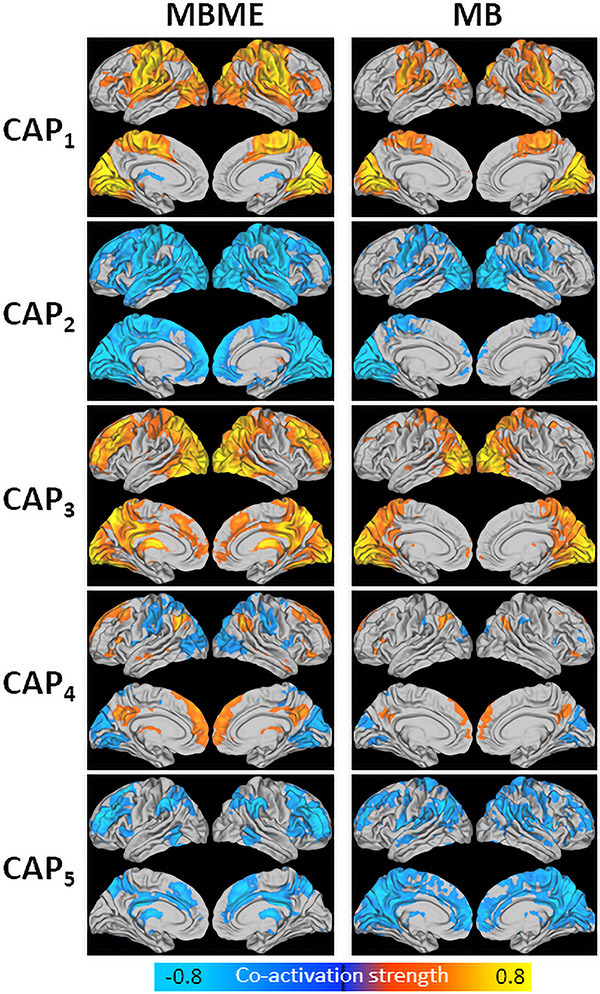
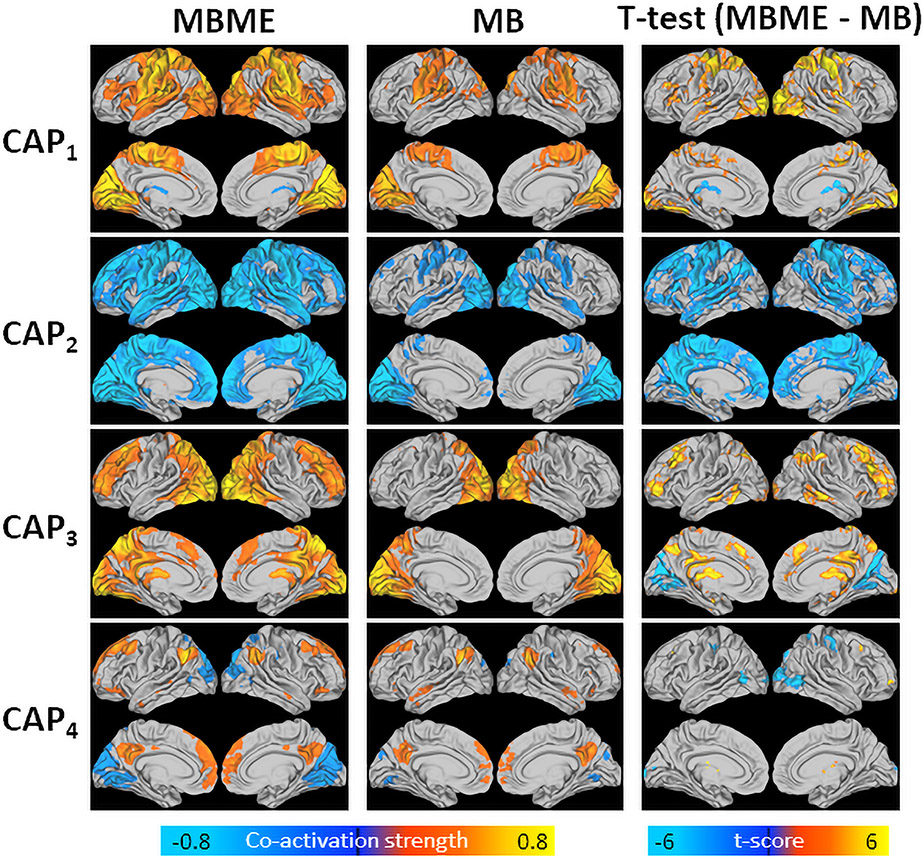
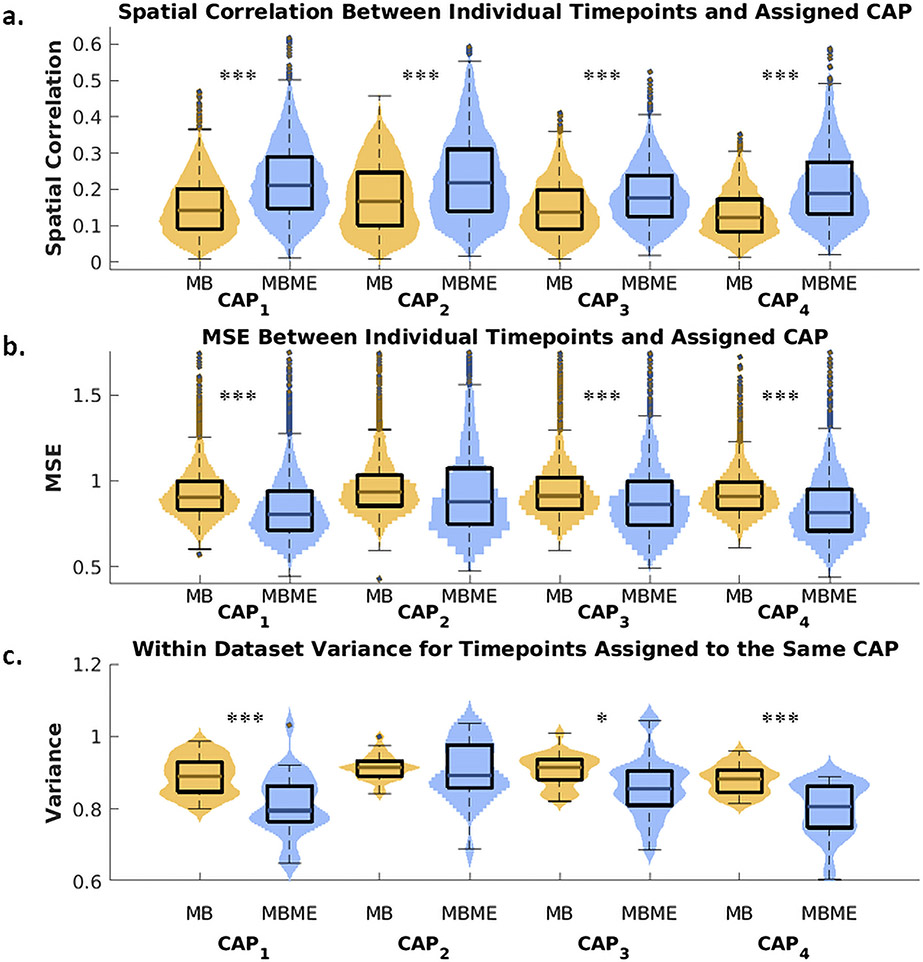
Emerging evidence has shown that functional connectivity is dynamic and changes over the course of a scan. Furthermore, connectivity patterns can arise from short periods of co-activation on the order of seconds. Recently, a dynamic co-activation patterns (CAPs) analysis was introduced to examine the co-activation of voxels resulting from individual timepoints. The goal of this study was to apply CAPs analysis on resting state fMRI data collected using an advanced multiband multi-echo (MBME) sequence, in comparison with a multiband (MB) sequence with a single echo. Data from 28 healthy control subjects were examined. Subjects underwent two resting state scans, one MBME and one MB, and 19 subjects returned within two weeks for a repeat scan session. Data preprocessing included advanced denoising namely multi-echo independent component analysis (ME-ICA) for the MBME data and an ICA-based strategy for Automatic Removal of Motion Artifacts (ICA-AROMA) for the MB data. The CAPs analysis was conducted using the newly published TbCAPs toolbox. CAPs were extracted using both seed-based and seed-free approaches. Timepoints were clustered using k-means clustering. The following metrics were compared between MBME and MB datasets: mean activation in each CAP, the spatial correlation and mean squared error (MSE) between each timepoint and the centroid CAP it was assigned to, within-dataset variance across timepoints assigned to the same CAP, and the between-session spatial correlation of each CAP. Co-activation was heightened for MBME data for the majority of CAPs. Spatial correlation and MSE between each timepoint and its assigned centroid CAP were higher and lower respectively for MBME data. The within-dataset variance was also lower for MBME data. Finally, the between-session spatial correlation was higher for MBME data. Overall, our findings suggest that the advanced MBME sequence is a promising avenue for the measurement of dynamic co-activation patterns by increasing the robustness and reproducibility of the CAPs.
新兴证据表明,功能连接是动态的,并在扫描过程中发生变化。此外,连接模式可以在几秒钟的短时间内产生。最近,引入了动态共激活模式 (CAPs) 分析来检查单个时间点产生的体素的共激活。本研究的目的是使用先进的多频带多回波 (MBME) 序列采集的静息态 fMRI 数据上应用 CAPs 分析,与具有单个回波的多频带 (MB) 序列进行比较。检查了 28 名健康对照受试者的数据。受试者接受了两次静息状态扫描,一次是 MBME,一次是 MB,其中 19 名受试者在两周内返回进行重复扫描。数据预处理包括先进的去噪,即 MBME 数据的多回波独立成分分析 (ME-ICA) 和 MB 数据的基于 ICA 的自动去除运动伪影 (ICA-AROMA) 策略。使用新发布的 TbCAPs 工具箱进行 CAPs 分析。使用基于种子和无种子的方法提取 CAPs。使用 k-means 聚类对时间点进行聚类。在 MBME 和 MB 数据集之间比较了以下指标:每个 CAP 的平均激活、每个时间点与分配给它的质心 CAP 之间的空间相关性和均方误差 (MSE)、分配给相同 CAP 的时间点的数据集内方差、以及每个 CAP 的两次会话之间的空间相关性。对于大多数 CAPs,MBME 数据的共激活增加。对于 MBME 数据,每个时间点与其分配的质心 CAP 之间的空间相关性和 MSE 分别更高和更低。数据集内方差也更低。最后,MBME 数据的两次会话之间的空间相关性更高。总体而言,我们的研究结果表明,先进的 MBME 序列是通过提高 CAPs 的稳健性和可重复性来测量动态共激活模式的有前途的途径。