Department of Internal Medicine, University of Kansas Medical Center, University of Kansas, Kansas City, Kansas, USA.
Department of Dietetics and Nutrition, University of Kansas Medical Center, University of Kansas, Kansas City, Kansas, USA.
Obesity (Silver Spring). 2021 Jan;29(1):62-70. doi: 10.1002/oby.23022.
This study aimed to evaluate the effectiveness of three levels of exercise on weight regain subsequent to clinically meaningful weight loss (WL).
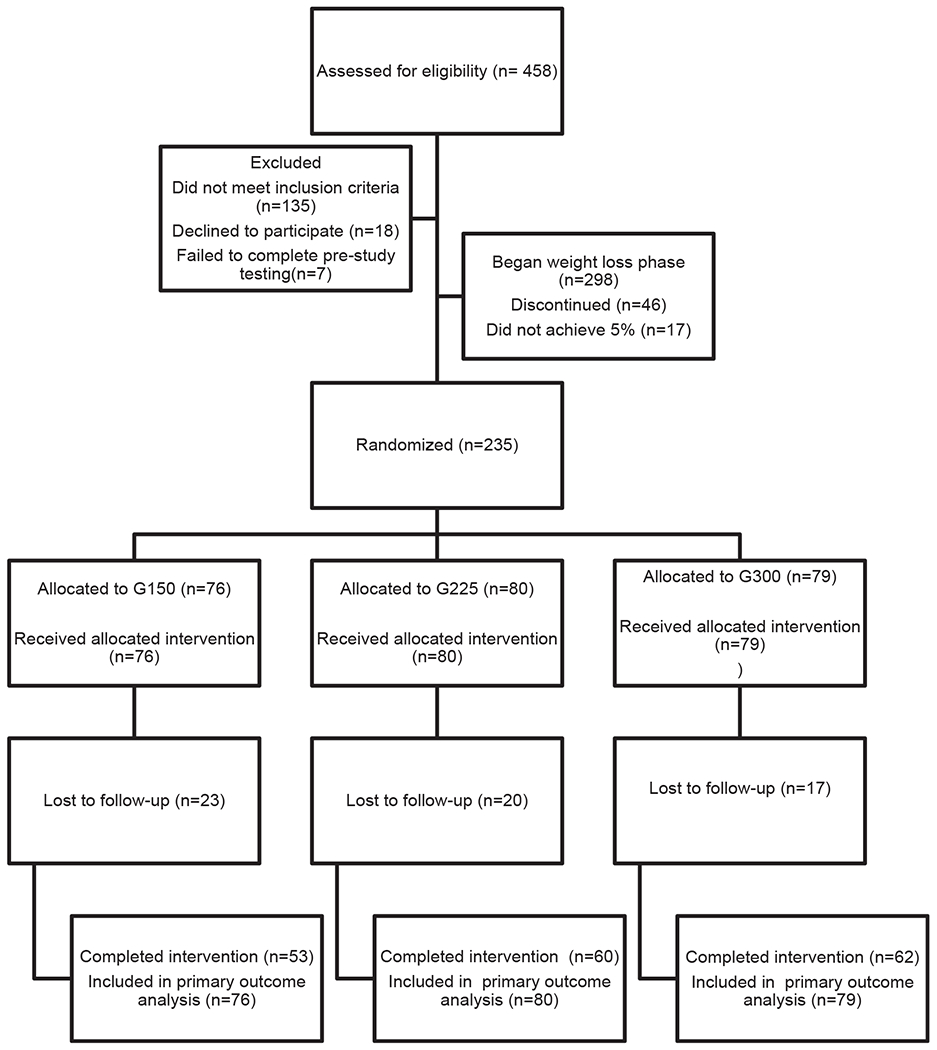
Adults with overweight or obesity (n = 298) initiated a 3-month behavioral WL intervention, which included reduced energy intake, increased exercise, and weekly behavioral counseling. Participants achieving ≥5% WL (n = 235) began a 12-month behavioral WL maintenance intervention and were randomized to 150 min/wk (n = 76), 225 min/wk (n = 80), or 300 min/wk (n = 79) of partially supervised moderate-to-vigorous-intensity exercise.
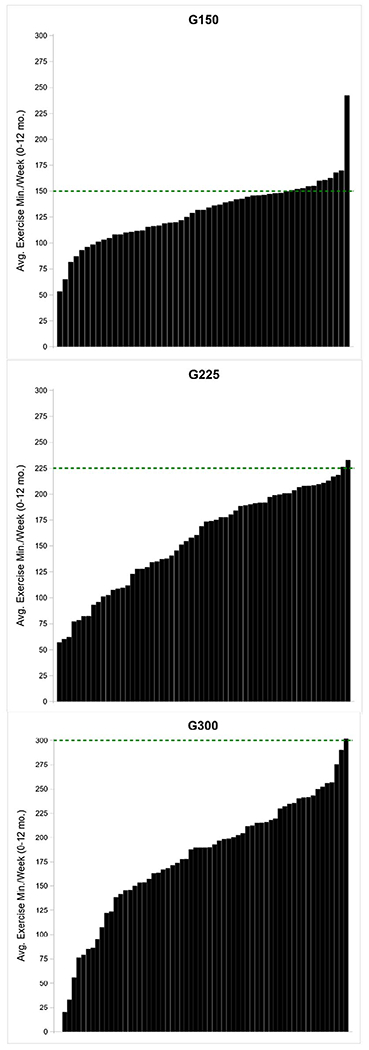
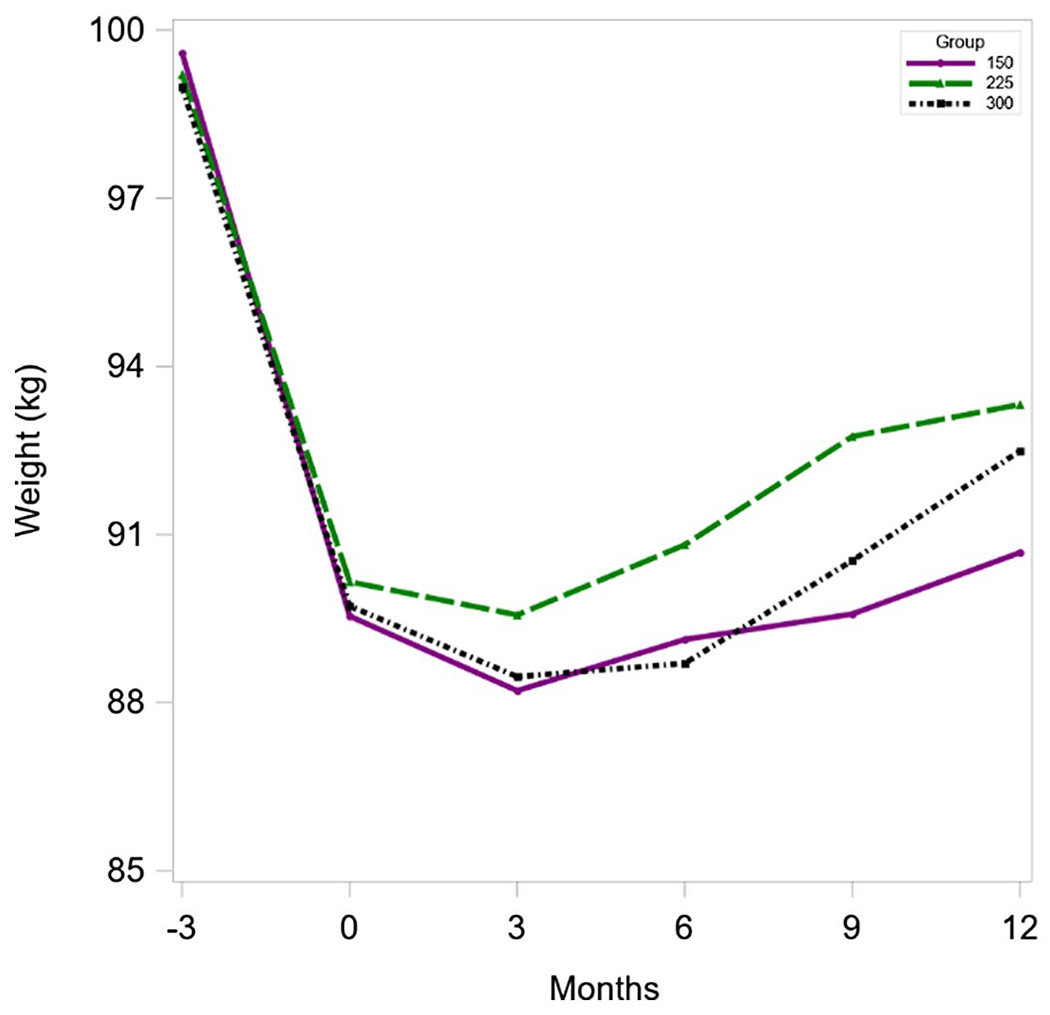
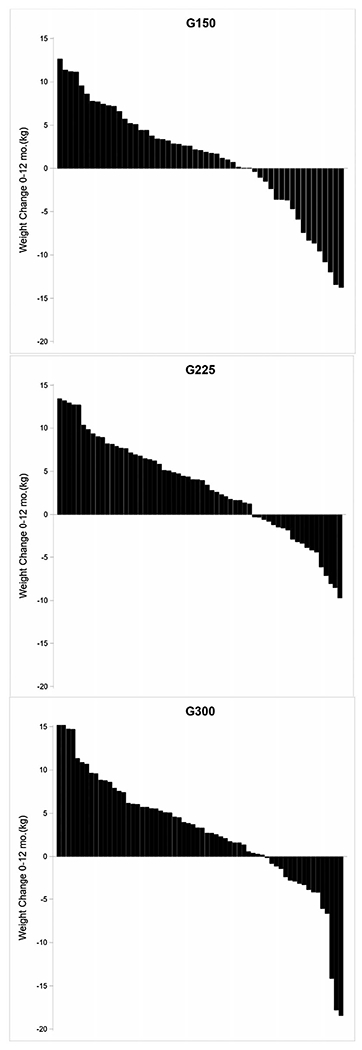
Participants randomized to 150, 225, and 300 minutes of exercise completed 129 ± 30, 153 ± 49 and 179 ± 62 min/wk of exercise (supervised + unsupervised), respectively. Mean WL at 3 months (9.5 ± 3.1 kg) was similar across randomized groups (P = 0.68). Weight change across 12 months was 1.1 ± 6.5 kg, 3.2 ± 5.7 kg, and 2.8 ± 6.9 kg in the 150, 225, and 300 min/wk groups, respectively. Intent-to-treat analysis revealed no significant overall trend across the three treatment groups (P = 0.09), effects for group (P = 0.08), or sex (P = 0.21).
This study found no evidence for an association between the volume of moderate-to-vigorous-intensity exercise and weight regain across 12 months following clinically relevant WL. Further, results suggest that exercise volumes lower than those currently recommended for WL maintenance, when completed in conjunction with a behavioral weight-maintenance intervention, may minimize weight regain over 12 months.
本研究旨在评估三种运动水平对临床显著体重减轻(WL)后体重反弹的效果。
超重或肥胖成年人(n=298)开始进行为期 3 个月的行为 WL 干预,包括减少能量摄入、增加运动和每周行为咨询。达到≥5%WL(n=235)的参与者开始进行为期 12 个月的行为 WL 维持干预,并随机分为 150 分钟/周(n=76)、225 分钟/周(n=80)或 300 分钟/周(n=79)部分监督的中等到剧烈强度运动。
随机分配到 150、225 和 300 分钟运动的参与者分别完成了 129±30、153±49 和 179±62 分钟/周的运动(监督+非监督)。3 个月时的平均 WL(9.5±3.1 kg)在随机组之间相似(P=0.68)。12 个月时的体重变化分别为 1.1±6.5 kg、3.2±5.7 kg 和 2.8±6.9 kg,分别在 150、225 和 300 分钟/周组中。意向治疗分析显示,三个治疗组之间没有明显的总体趋势(P=0.09),组间(P=0.08)或性别(P=0.21)也没有显著差异。
本研究没有发现中等至剧烈强度运动的量与临床相关 WL 后 12 个月体重反弹之间存在关联的证据。此外,结果表明,当与行为体重维持干预相结合时,低于目前推荐的用于 WL 维持的运动量可能会在 12 个月内最大限度地减少体重反弹。