School of Environmental Studies, China University of Geosciencesgrid.162107.3, Wuhan, China.
State Key Laboratory of Biogeology and Environmental Geology, China University of Geosciencesgrid.162107.3, Wuhan, China.
Microbiol Spectr. 2021 Oct 31;9(2):e0115221. doi: 10.1128/Spectrum.01152-21. Epub 2021 Sep 8.
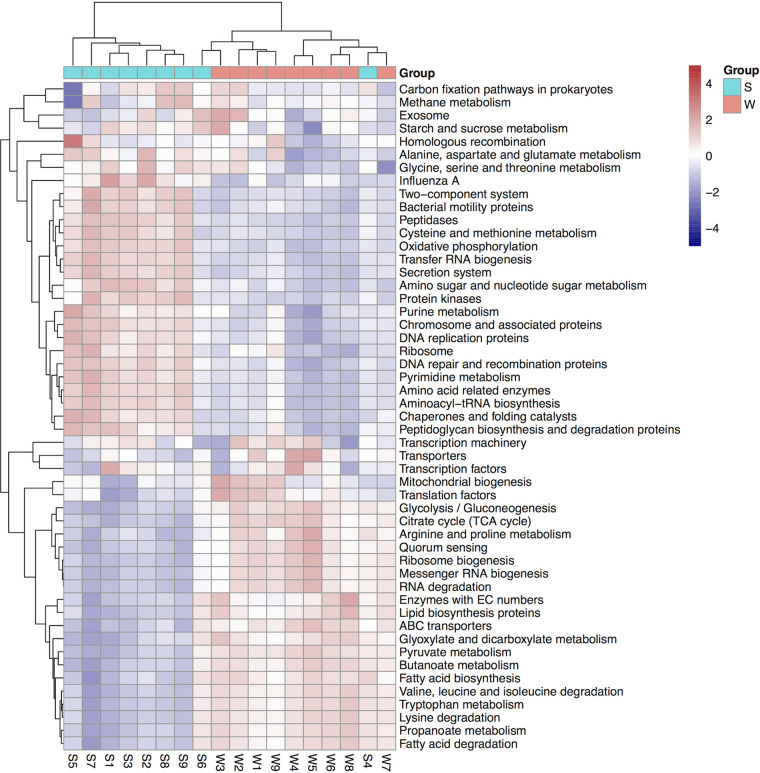
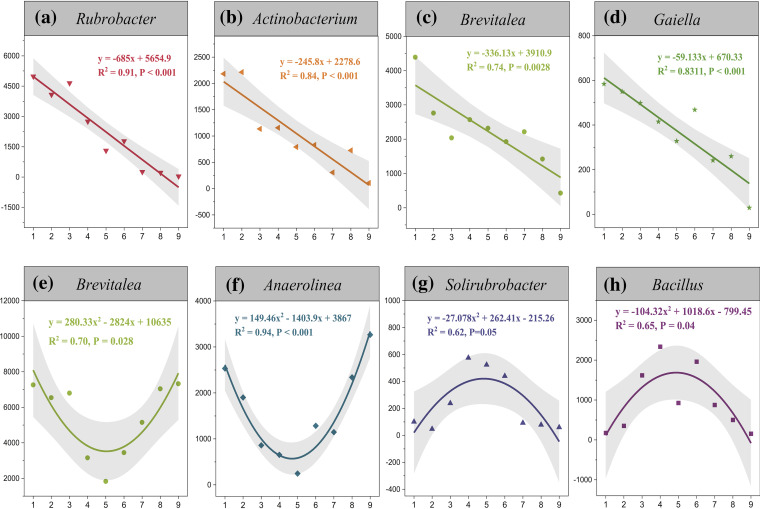
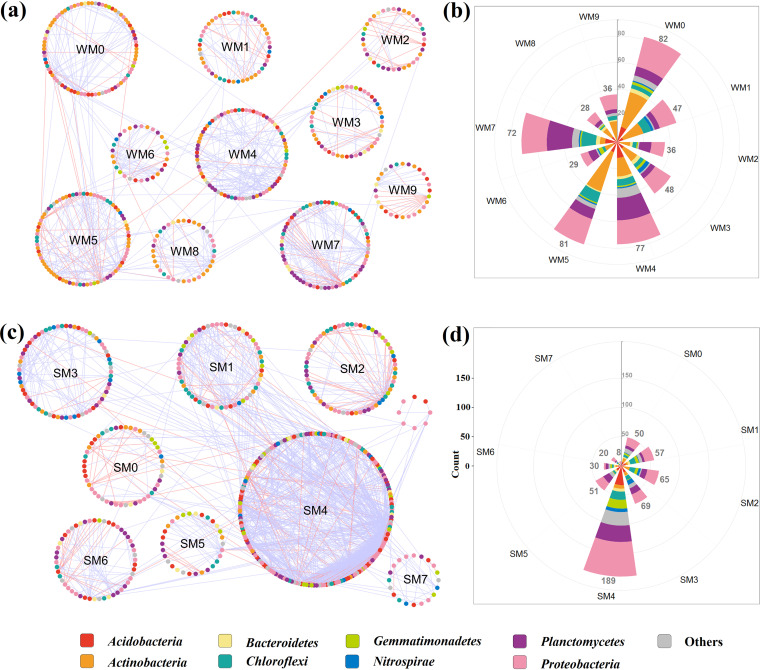
The geological role of microorganisms has been widely studied in the karst cave ecosystem. However, microbial interactions and ecological functions in such a dark, humid, and oligotrophic habitat have received far less attention, which is crucial to understanding cave biogeochemistry. Herein, microorganisms from weathered rock and sediment along the Heshang Cave depth were analyzed by random matrix theory-based network and Tax4Fun functional prediction. The results showed that although the cave microbial communities have spatial heterogeneity, differential habitats drove the community structure and diversity. were predominant in weathered rock, whereas dominated the sediment. The sediment communities presented significantly higher alpha diversities due to the relatively abundant nutrition from the outside by the intermittent stream. Consistently, microbial interactions in sediment were more complex, as visualized by more nodes and links. The abundant taxa presented more positive correlations with other community members in both of the two networks, indicating that they relied on promotion effects to adapt to the extreme environment. The keystones in weathered rock were mainly involved in the biodegradation of organic compounds, whereas the keystone in sediment contributed to carbon/nitrogen fixation. Collectively, these findings suggest that microbial interactions may lead to distinct taxonomic and functional communities in weathered rock and sediment in the subsurface Heshang Cave. In general, the constant physicochemical conditions and limited nutrient sources over long periods in the subsurface support a stable ecosystem in karst cave. Previous studies on cave microbial ecology were mostly focused on community composition, diversity, and the relationship with local environmental factors. There are still many unknowns about the microbial interactions and functions in such a dark environment with little human interference. Two representative habitats, including weathered rock and sediment in Heshang Cave, were selected to give an integrated insight into microbial interactions and potential functions. The cooccurrence network, especially the subnetwork, was used to characterize the cave microbial interactions in detail. We demonstrated that abundant taxa primarily relied on promotion effects rather than inhibition effects to survive in Heshang Cave. Keystone species may play important metabolic roles in sustaining ecological functions. Our study provides improved understanding of microbial interaction patterns and community ecological functions in the karst cave ecosystem.
微生物在喀斯特洞穴生态系统中的地质作用已得到广泛研究。然而,对于这种黑暗、潮湿、贫营养的生境中的微生物相互作用和生态功能,人们的关注要少得多,而这对于理解洞穴生物地球化学至关重要。在此,我们通过基于随机矩阵理论的网络和 Tax4Fun 功能预测,分析了河上洞深度沿线风化岩石和沉积物中的微生物。结果表明,尽管洞穴微生物群落具有空间异质性,但不同的栖息地驱动了群落结构和多样性。在风化岩石中, 占主导地位,而 在沉积物中占主导地位。由于间歇性溪流带来的外部相对丰富的营养,沉积物中的群落具有显著更高的α多样性。一致地,沉积物中的微生物相互作用更加复杂,表现在网络中有更多的节点和链接。在这两个网络中,丰富的类群与其他群落成员之间呈现出更多的正相关关系,这表明它们依赖于促进作用来适应极端环境。在风化岩石中的关键种主要参与有机化合物的生物降解,而在沉积物中的关键种则有助于碳/氮固定。总的来说,这些发现表明,微生物相互作用可能导致地下河上洞穴中风化岩石和沉积物中的分类和功能群落存在显著差异。一般来说,在地下长期的恒定理化条件和有限的营养源支持了喀斯特洞穴稳定的生态系统。先前对洞穴微生物生态学的研究主要集中在群落组成、多样性以及与当地环境因素的关系上。对于这种受人类干扰较小的黑暗环境中的微生物相互作用和功能,仍有许多未知之处。本研究选择了河上洞的两个代表性生境,包括风化岩石和沉积物,以综合了解微生物相互作用和潜在功能。共生网络,特别是子网络,用于详细描述洞穴微生物相互作用。我们证明了丰富的类群主要依赖于促进作用而不是抑制作用在河上洞穴中生存。关键种可能在维持生态功能方面发挥重要的代谢作用。我们的研究提高了对喀斯特洞穴生态系统中微生物相互作用模式和群落生态功能的理解。