Orthopaedic and Traumatology Department, Assiut University Hospital, Assiut, Egypt.
Orthopaedic Department, Qena Faculty of Medicine and University Hospital, South Valley University, Qena, Egypt.
J Orthop Surg Res. 2021 Sep 8;16(1):552. doi: 10.1186/s13018-021-02708-8.
Knee anthropometric characteristics were evaluated for different ethnicities; however, data from North African populations are deficient. The primary aim was to investigate the Egyptian knees' anthropometric characteristics as a representative of North African populations. Secondary aims are as follows: (1) to study the anthropometric gender difference, (2) to compare results with other ethnic groups, and (3) to study the mismatch in comparison to geometric characteristics of modern TKA implant designs.
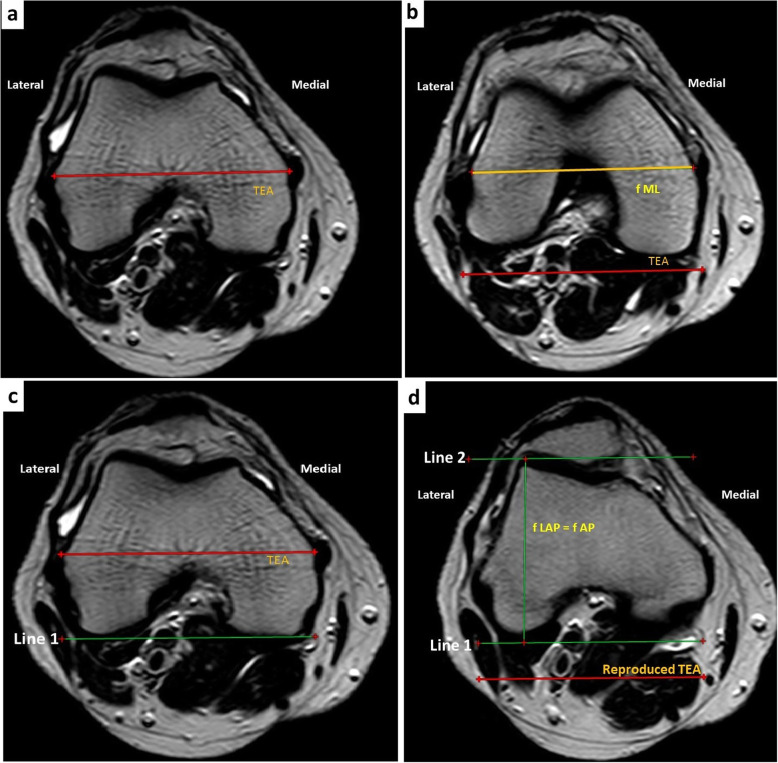
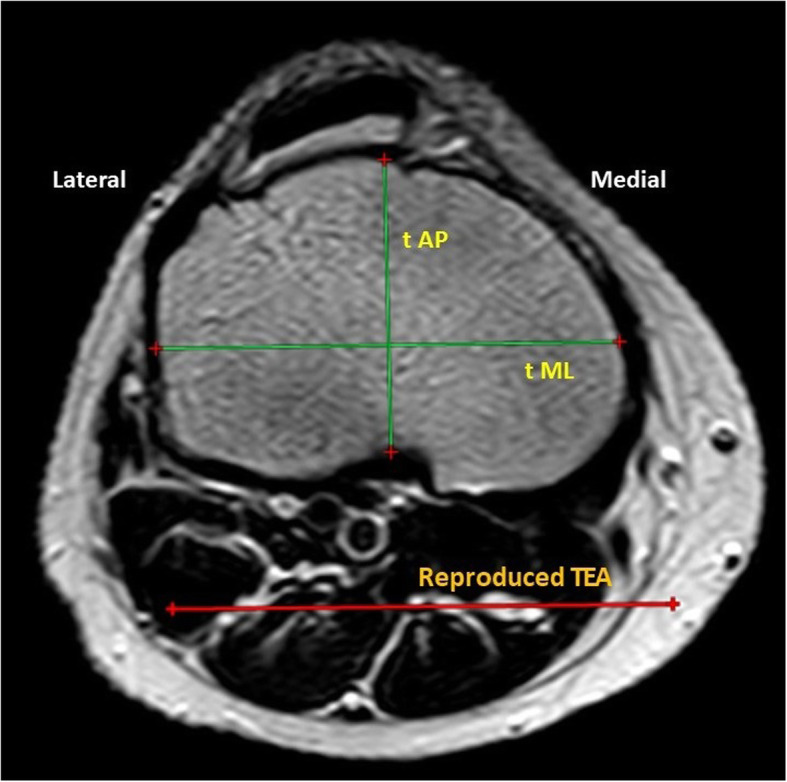
Two hundred normal knee MRI scans (100 females and 100 males, aging from 18 to 60) were obtained for analysis. Linear measurements (anteroposterior (AP), mediolateral (ML), and aspect ratio (AR)) of the planned cut surface of the distal femur (f) and the proximal tibia (t) were evaluated.
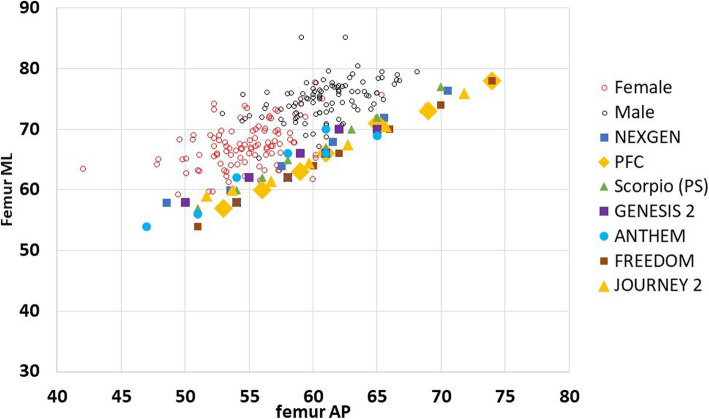
A significant difference between both sexes was found, males had larger measurements in anteroposterior [fAP: 60.97 ± 3.1 vs 54.78 ± 3.3 (P < 0.001), tAP: 46.89 ± 3.0 vs 41.35 ± 2.9 (P < 0.001)] and mediolateral [fML: 74.89 ± 3.2 vs 67.29 ± 3.7 (P < 0.001), tML: 76.01 ± 3.0 vs 67.26 ± 3.2 (P < 0.001)], the mean femoral and tibial AP and ML measurements were different from other ethnic groups. None of the seven studied TKA systems matched the largest ML or the smallest AP dimensions of the distal femur in the current study population.
A significant difference was found between males' and females' knee anthropometric characteristics. Some of the commonly used TKA implants in our area could not provide a perfect fit and coverage.
ClinicalTrials.gov identifier: NCT03622034 , registered on July 28, 2018.
人们已经对不同种族的膝关节人体测量学特征进行了评估,但北非人群的数据仍存在不足。本研究的主要目的是调查埃及人的膝关节人体测量学特征,以代表北非人群。次要目的如下:(1)研究人体测量学的性别差异,(2)与其他种族群体进行比较,(3)研究与现代 TKA 植入物设计的几何特征不匹配的情况。
共获取了 200 例膝关节 MRI 扫描图像(100 名女性和 100 名男性,年龄在 18 岁至 60 岁之间)用于分析。评估了计划的股骨远端(f)和胫骨近端(t)的横切面的线性测量值(前后向(AP)、内外侧向(ML)和纵横比(AR))。
发现男女之间存在显著差异,男性的前后向(fAP:60.97 ± 3.1 vs 54.78 ± 3.3,P < 0.001)和内外侧向(fML:74.89 ± 3.2 vs 67.29 ± 3.7,P < 0.001)的测量值更大,而 tAP:46.89 ± 3.0 vs 41.35 ± 2.9(P < 0.001)和 tML:76.01 ± 3.0 vs 67.26 ± 3.2(P < 0.001))也更大。股骨和胫骨的平均 AP 和 ML 测量值与其他种族群体不同。在本研究人群中,七种研究的 TKA 系统中没有一种与股骨远端的最大 ML 或最小 AP 尺寸相匹配。
男性和女性的膝关节人体测量学特征存在显著差异。在我们地区常用的一些 TKA 植入物不能提供完美的适配和覆盖。
ClinicalTrials.gov 标识符:NCT03622034,于 2018 年 7 月 28 日注册。