Department of Clinical and Experimental Medicine, University of Pisa, Pisa, Italy.
Department of Agriculture, Food and Environment, University of Pisa, Pisa, Italy.
Acta Diabetol. 2022 Jan;59(1):113-126. doi: 10.1007/s00592-021-01793-9. Epub 2021 Sep 9.
Stevia rebaudiana Bertoni leaf extracts have gained increasing attention for their potential protection against type 2 diabetes. In this study, we have evaluated the possible beneficial effects of Stevia rebaudiana leaf extracts on beta-cells exposed to lipotoxicity and explored some of the possible mechanisms involved.
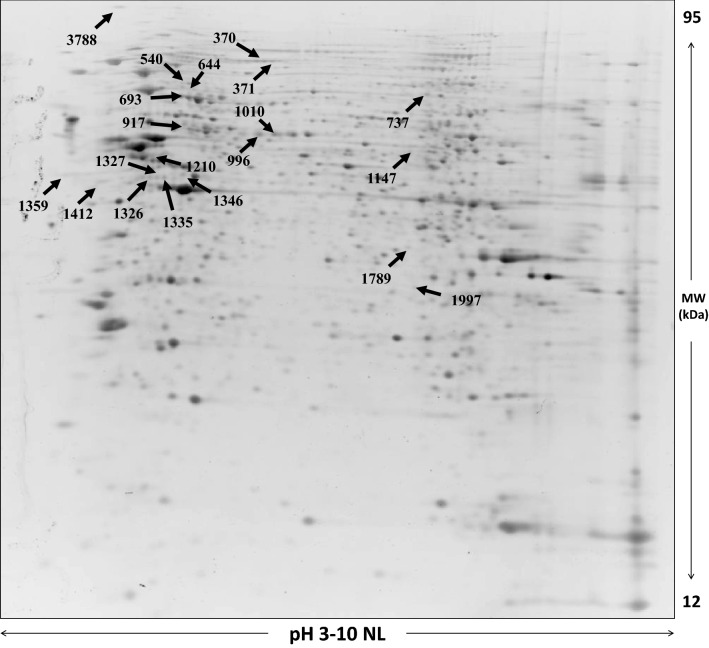
Extracts, deriving from six different chemotypes (ST1 to ST6), were characterized in terms of steviol glycosides, total phenols, flavonoids, and antioxidant activity. INS-1E beta cells and human pancreatic islets were incubated 24 h with 0.5 mM palmitate with or without varying concentrations of extracts. Beta-cell/islet cell features were analyzed by MTT assay, activated caspase 3/7 measurement, and/or nucleosome quantification. In addition, the proteome of INS-1E cells was assessed by bi-dimensional electrophoresis (2-DE).
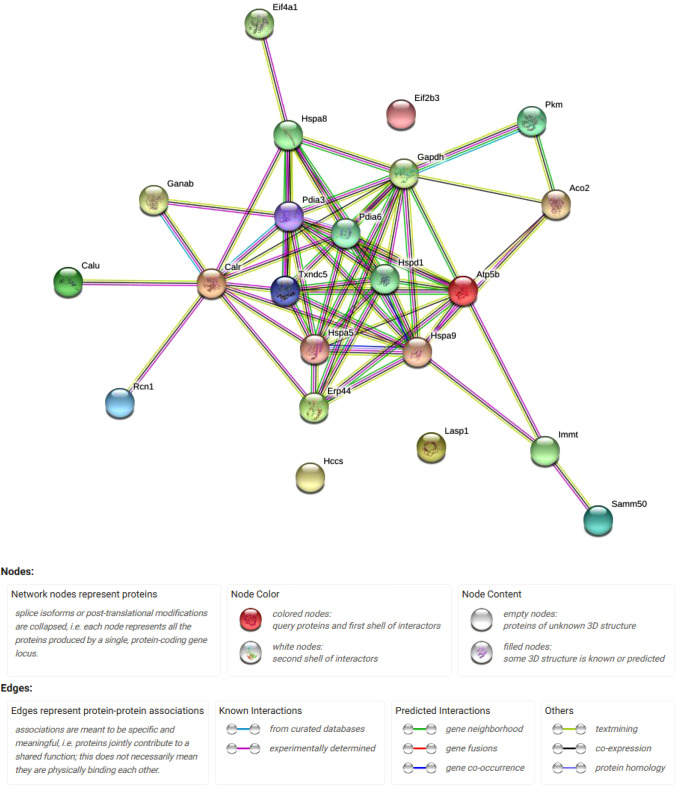
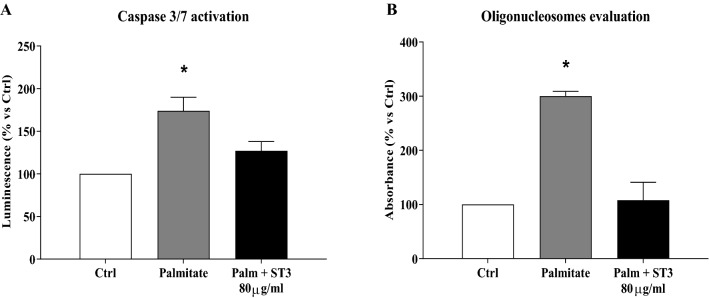
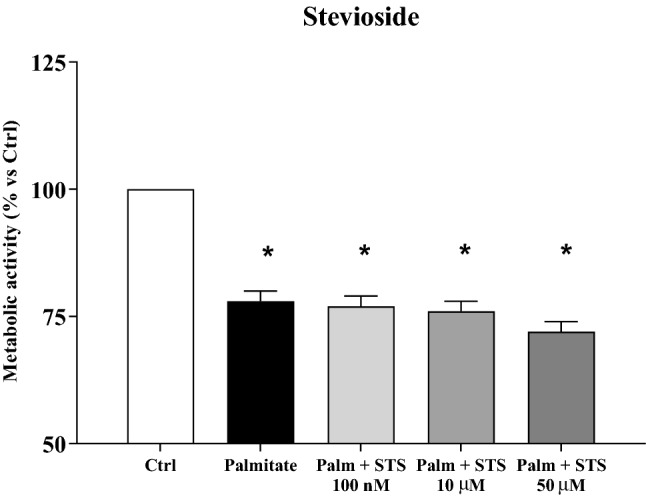
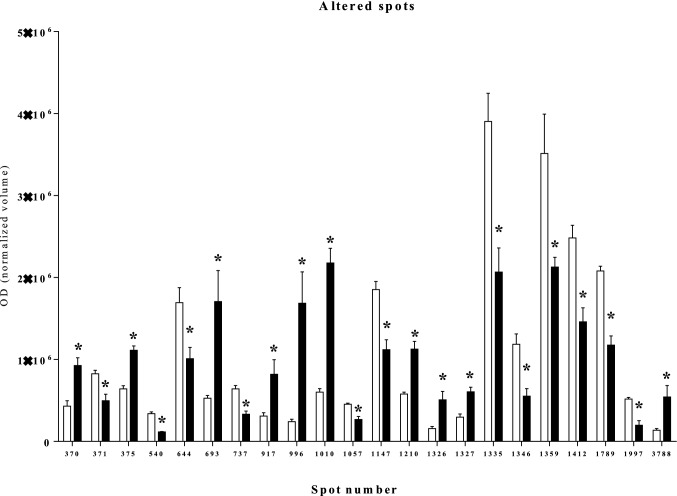
The extracts differed in terms of antioxidant activity and stevioside content. As expected, 24 h exposure to palmitate resulted in a significant decrease of INS-1E cell metabolic activity, which was counteracted by all the Stevia extracts at 200 μg/ml. However, varying stevioside only concentrations were not able to protect palmitate-exposed cells. ST3 extract was also tested with human islets, showing an anti-apoptotic effect. Proteome analysis showed several changes in INS-1E beta-cells exposed to ST3, mainly at the endoplasmic reticulum and mitochondrial levels.
Stevia rebaudiana leaf extracts have beneficial effects on beta cells exposed to lipotoxicity; this effect does not seem to be mediated by stevioside alone (suggesting a major role of the leaf phytocomplex as a whole) and might be due to actions on the endoplasmic reticulum and the mitochondrion.
甜菊叶提取物因其对 2 型糖尿病的潜在保护作用而受到越来越多的关注。在这项研究中,我们评估了甜菊叶提取物对脂毒性暴露的β细胞的可能有益作用,并探讨了其中涉及的一些可能机制。
从六种不同化学型(ST1 至 ST6)中提取提取物,根据甜菊糖苷、总酚、类黄酮和抗氧化活性进行特征描述。用 0.5mM 棕榈酸孵育 INS-1E 胰岛β细胞和人胰岛 24 小时,同时加入不同浓度的提取物。通过 MTT 测定、活性半胱天冬酶 3/7 测定和/或核小体定量分析来分析β细胞/胰岛细胞的特征。此外,通过二维电泳(2-DE)评估 INS-1E 细胞的蛋白质组。
提取物在抗氧化活性和甜菊糖苷含量方面存在差异。正如预期的那样,24 小时暴露于棕榈酸会导致 INS-1E 细胞代谢活性显著下降,而所有甜菊提取物在 200μg/ml 时均能拮抗这种作用。然而,不同的甜菊糖苷浓度并不能保护棕榈酸暴露的细胞。ST3 提取物也在人胰岛中进行了测试,显示出抗凋亡作用。蛋白质组分析显示,暴露于 ST3 的 INS-1E 胰岛β细胞发生了多种变化,主要在内质网和线粒体水平。
甜菊叶提取物对脂毒性暴露的β细胞具有有益作用;这种作用似乎不是由甜菊糖苷单独介导的(表明整个叶片植物复合物起着主要作用),可能是由于对内质网和线粒体的作用。