Lupșe Irina, Pall Emoke, Barbu Tudoran Lucian, Bulboacă Adriana Elena, Ciurea Andreea, Micu Iulia Cristina, Roman Alexandra, Delean Ada Gabriela, Muntean Alexandrina, Soancă Andrada
Department of Paediatric Dentistry, Faculty of Dental Medicine, Iuliu Hațieganu University of Medicine and Pharmacy, Avram Iancu St., No. 31, 400083 Cluj-Napoca, Romania.
Department of Infectious Disease, Faculty of Veterinary Medicine, University of Agricultural Sciences and Veterinary Medicine, 3-5 Mănăștur St., 400372 Cluj-Napoca, Romania.
Materials (Basel). 2021 Sep 3;14(17):5049. doi: 10.3390/ma14175049.
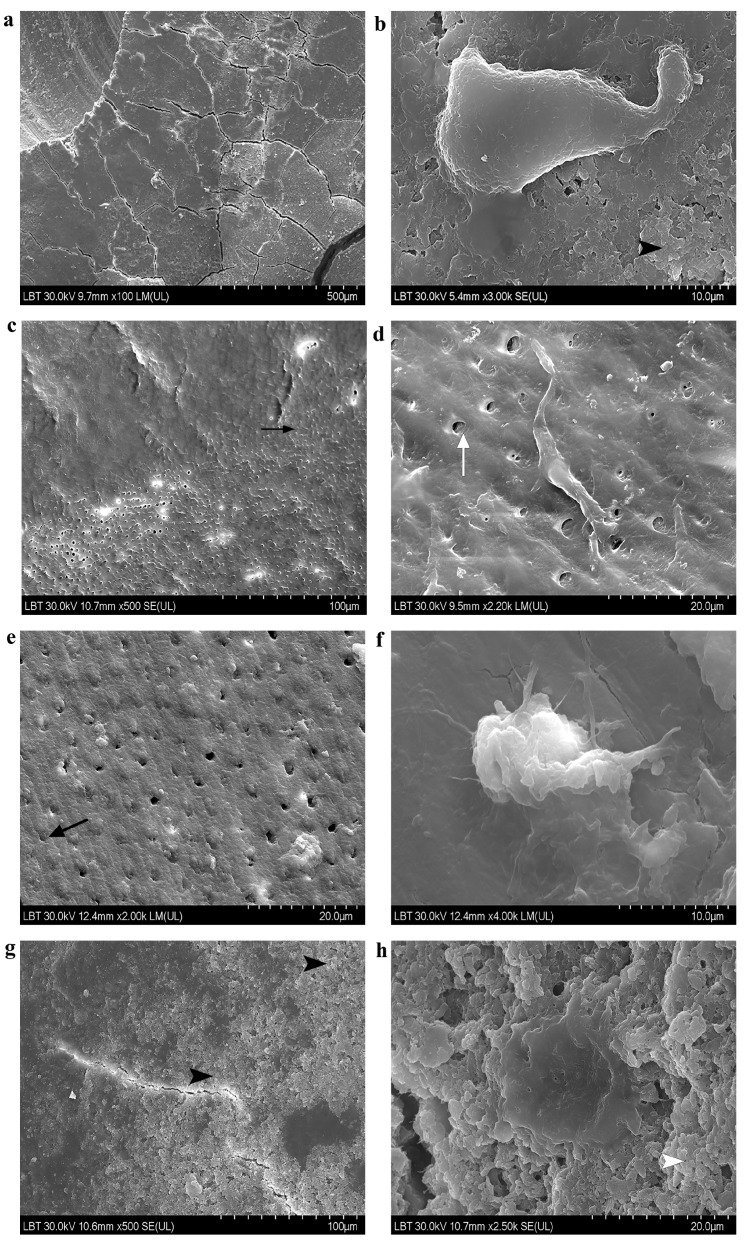
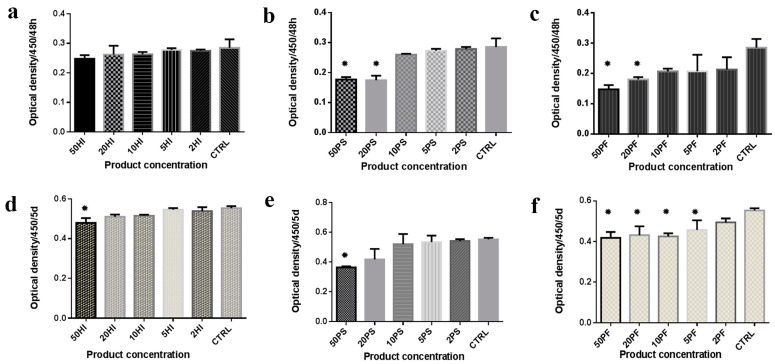
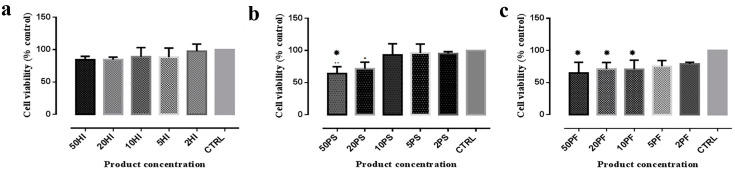
(1) Background: this study aims to test the cytotoxicity of three antimicrobial products used in periodontitis treatment on gingival mesenchymal stem cells (gMSCs) and their influence on root surfaces and gMSC adhesion. We tested the null hypothesis that the effects of the antimicrobials did not differ. (2) Methods: the commercial products based on sulphonic/sulphuric acids, sodium hypochlorite and silver nanoparticles, in five different concentrations, were added to culture medium for growing gMSCs. Cell proliferation capacity was tested using the Cell Counting Kit-8 (CCK8) and their viability was determined by succinate dehydrogenase activity (MTT) assay. Scanning electron microscopy evaluated the adhesion of gMSCs on root samples treated mechanically and with commercial products. (3) Results: the products induced a dose-dependent cytotoxicity in terms of reduced proliferation and viability of gMSCs, as well as cell shape modifications. Significant differences in CCK8 values between the different commercial products were observed. Based on proliferation tests, the null hypothesis was rejected. When MTT values of the three products were compared with each other, no significant differences were observed for any of the five concentrations ( = 0.065, = 0.067, = 0.172, = 0.256, = 0.060). (4) Conclusions: the three antimicrobials had a certain degree of cytotoxicity on gMSCs. gMSCs repopulated treated root surfaces.
(1) 背景:本研究旨在测试三种用于牙周炎治疗的抗菌产品对牙龈间充质干细胞(gMSCs)的细胞毒性及其对牙根表面和gMSC黏附的影响。我们检验了抗菌剂效果无差异的零假设。(2) 方法:将基于磺酸/硫酸、次氯酸钠和银纳米颗粒的五种不同浓度的商业产品添加到用于培养gMSCs的培养基中。使用细胞计数试剂盒-8(CCK8)测试细胞增殖能力,并通过琥珀酸脱氢酶活性(MTT)测定法确定其活力。扫描电子显微镜评估了gMSCs在经机械处理和使用商业产品处理的牙根样本上的黏附情况。(3) 结果:这些产品在降低gMSCs的增殖和活力以及细胞形态改变方面诱导了剂量依赖性细胞毒性。观察到不同商业产品之间CCK8值存在显著差异。基于增殖测试,零假设被拒绝。当比较这三种产品的MTT值时,在五种浓度中的任何一种浓度下均未观察到显著差异(= 0.065,= 0.067,= 0.172,= 0.256,= 0.060)。(4) 结论:这三种抗菌剂对gMSCs具有一定程度的细胞毒性。gMSCs重新定殖于经处理的牙根表面。