School of Distance Education, Universiti Sains Malaysia, Gelugor 11800, Malaysia.
UniKL MICET Lot 1988, Kawasan Perindustrian Bandar Vendor, Taboh Naning, Alor Gajah 78000, Malaysia.
Int J Environ Res Public Health. 2021 Sep 4;18(17):9361. doi: 10.3390/ijerph18179361.
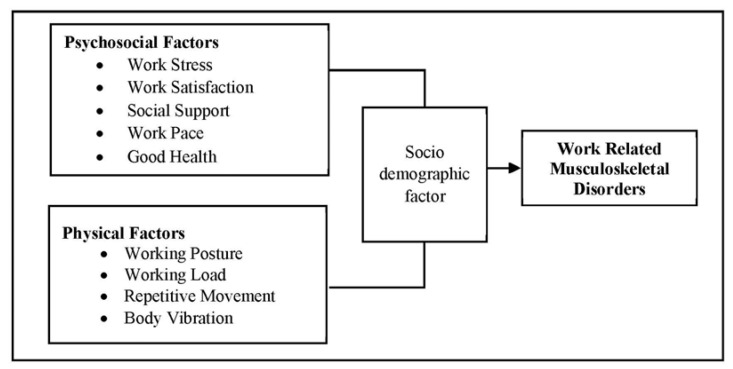
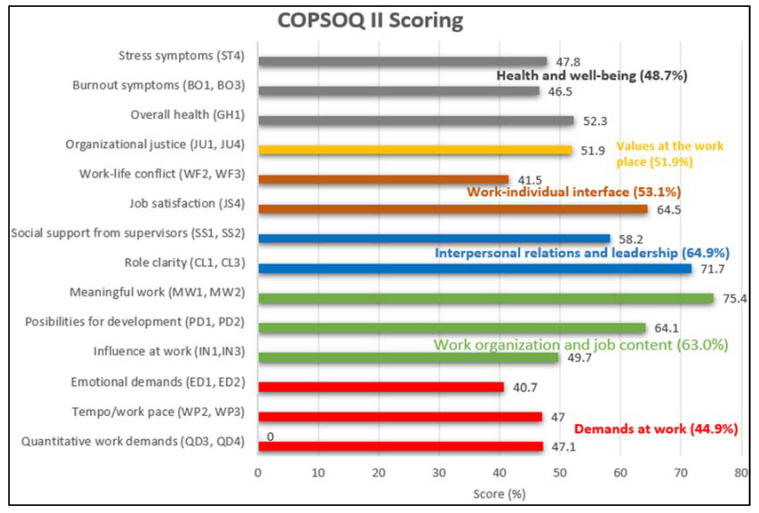
Purpose-This study aimed to estimate the prevalence and risk factors of MSD pain in various anatomical regions among nurses. Method-A cross-sectional study involving a self-administered questionnaire by registered nurses with clinical experience. Data was collected using convenience sampling after obtaining informed consent. The results were drawn from a total of 300 nurses. Results-The nurses presented with occasional mental exhaustion (44.3%) and often physical exhaustion (44.0%). Almost all (97.3%) the nurses complained of having work-related pain during the last 12 months. Body parts with the most pain were the lower back (86.7%), ankles (86.7%), neck (86.0%), shoulders (85.0%), lower legs (84.7%) and upper back (84.3%). The pain frequency was rated as occasional pain for the neck and upper back, pain was often felt for the rest of the parts. Nurses complained of severe pain in the lower back (19.7%), right shoulder (29.7%) and left shoulder (30.3%). The frequency of having musculoskeletal symptoms in any body region was increased with age, lower education level, female gender, high BMI, job tenure and lifestyle. Conclusions-Nurses' WRMSD complaints should be taken seriously to curb further risk and musculoskeletal hazards.
目的-本研究旨在评估不同解剖部位护士的肌肉骨骼系统疾病(MSD)疼痛的患病率和危险因素。方法-一项横断面研究,涉及具有临床经验的注册护士的自我管理问卷调查。在获得知情同意后,通过便利抽样收集数据。结果来自总共 300 名护士。结果-护士偶尔会出现精神疲惫(44.3%),经常会出现身体疲惫(44.0%)。几乎所有(97.3%)的护士都在过去 12 个月内抱怨有与工作相关的疼痛。疼痛最严重的部位是下背部(86.7%)、脚踝(86.7%)、颈部(86.0%)、肩部(85.0%)、小腿(84.7%)和上背部(84.3%)。疼痛频率评定为颈部和上背部偶尔疼痛,其余部位经常感到疼痛。护士抱怨下背部(19.7%)、右肩(29.7%)和左肩(30.3%)疼痛剧烈。任何身体部位出现肌肉骨骼症状的频率随年龄增长、教育程度较低、女性、高体重指数、工作年限和生活方式而增加。结论-应认真对待护士的工作相关肌肉骨骼系统疾病(WRMSD)投诉,以遏制进一步的风险和肌肉骨骼危害。