Department of Materials Science and Engineering, K. N. Toosi University of Technology, Tehran P.O. Box 19919-43344, Iran.
Department of Orthopedics, University Medical Center Utrecht, 3584 CX Utrecht, The Netherlands.
Int J Mol Sci. 2021 Aug 26;22(17):9214. doi: 10.3390/ijms22179214.
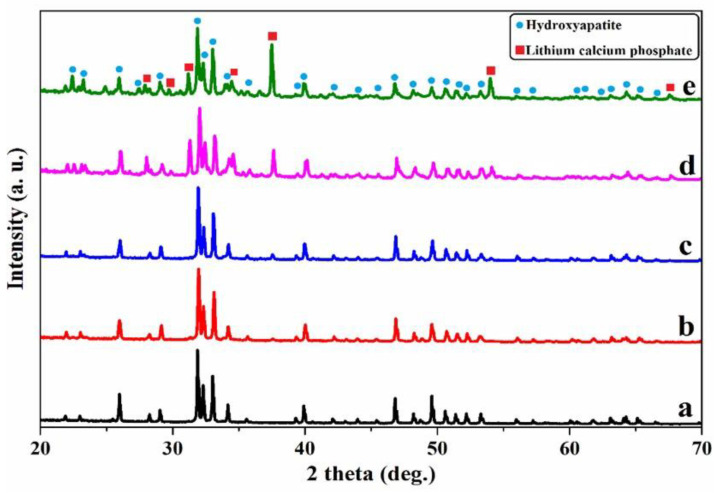
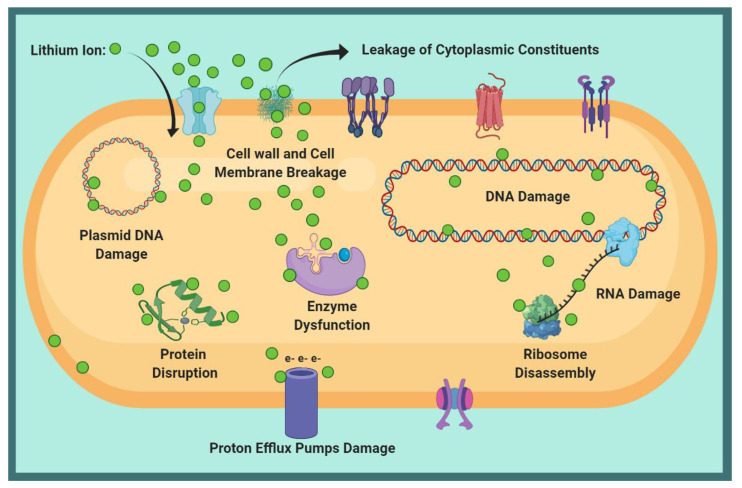
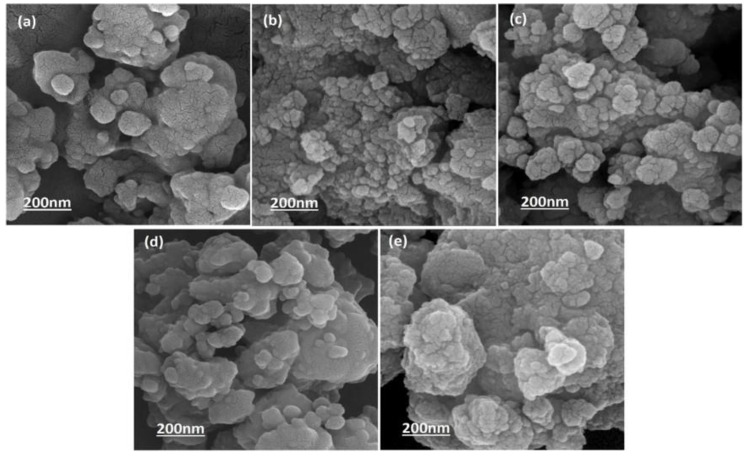
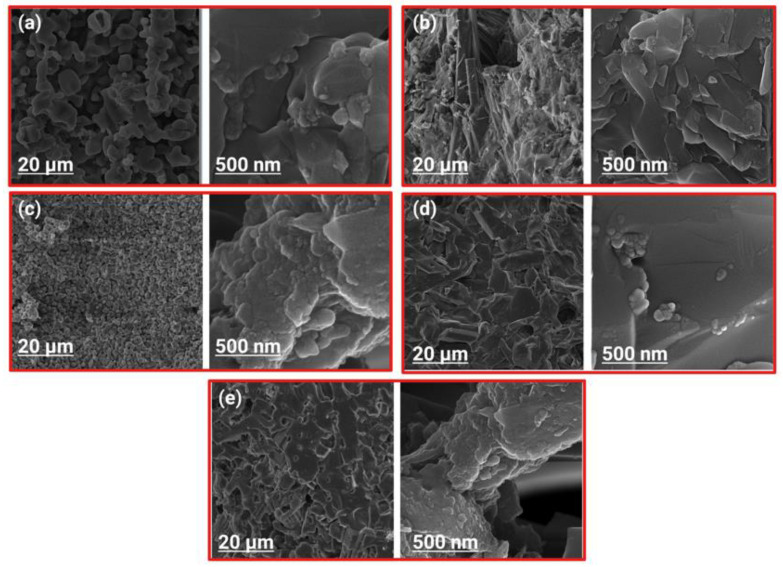
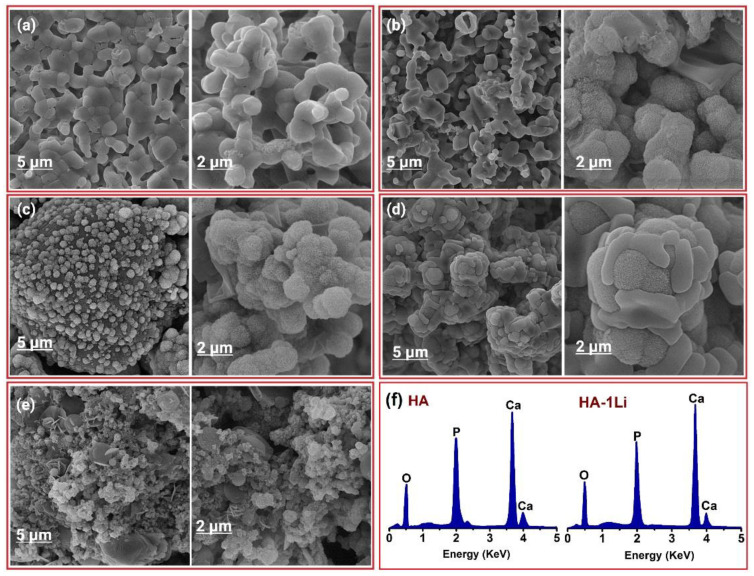
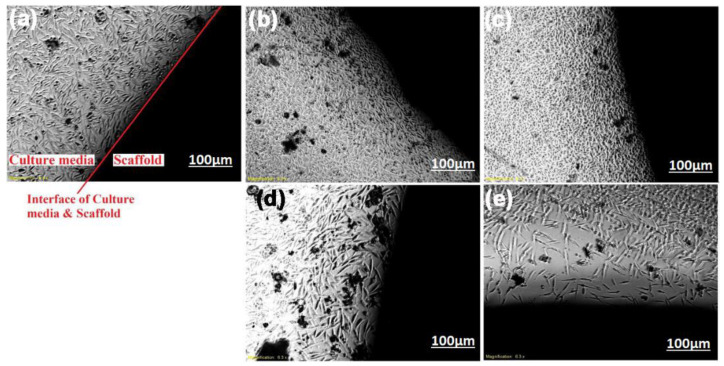
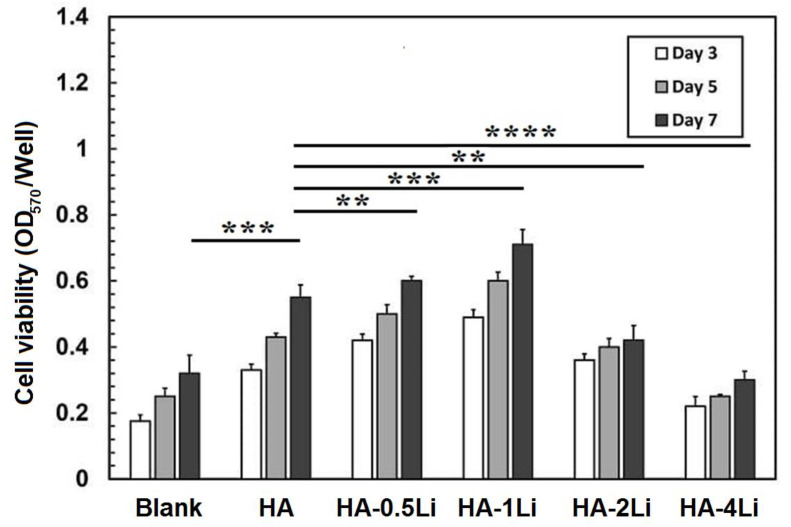
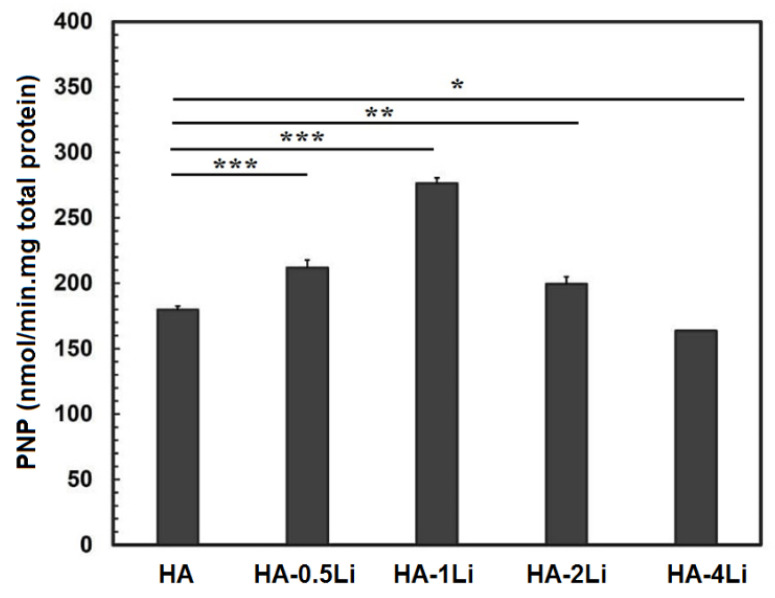
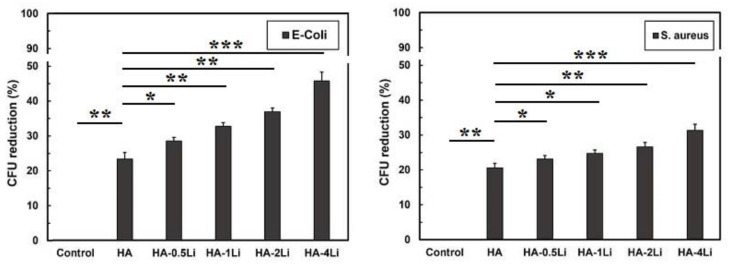
The material for bone scaffold replacement should be biocompatible and antibacterial to prevent scaffold-associated infection. We biofunctionalized the hydroxyapatite (HA) properties by doping it with lithium (Li). The HA and 4 Li-doped HA (0.5, 1.0, 2.0, 4.0 wt.%) samples were investigated to find the most suitable Li content for both aspects. The synthesized nanoparticles, by the mechanical alloying method, were cold-pressed uniaxially and then sintered for 2 h at 1250 °C. Characterization using field-emission scanning electron microscopy (FE-SEM) revealed particle sizes in the range of 60 to 120 nm. The XRD analysis proved the formation of HA and Li-doped HA nanoparticles with crystal sizes ranging from 59 to 89 nm. The bioactivity of samples was investigated in simulated body fluid (SBF), and the growth of apatite formed on surfaces was evaluated using SEM and EDS. Cellular behavior was estimated by MG63 osteoblast-like cells. The results of apatite growth and cell analysis showed that 1.0 wt.% Li doping was optimal to maximize the bioactivity of HA. Antibacterial characteristics against Escherichia coli () and Staphylococcus aureus () were performed by colony-forming unit (CFU) tests. The results showed that Li in the structure of HA increases its antibacterial properties. HA biofunctionalized by Li doping can be considered a suitable option for the fabrication of bone scaffolds due to its antibacterial and unique bioactivity properties.
用于骨支架替代的材料应该具有生物相容性和抗菌性,以防止支架相关感染。我们通过掺杂锂(Li)来生物功能化羟基磷灰石(HA)的性质。研究了 HA 和 4Li 掺杂的 HA(0.5、1.0、2.0、4.0wt.%)样品,以找到这两个方面最适合的 Li 含量。通过机械合金化方法合成的纳米粒子,经过冷压单轴压制,然后在 1250°C 下烧结 2 小时。场发射扫描电子显微镜(FE-SEM)的表征显示粒径在 60 至 120nm 范围内。XRD 分析证明了 HA 和 Li 掺杂的 HA 纳米粒子的形成,其晶体尺寸范围为 59 至 89nm。通过模拟体液(SBF)研究了样品的生物活性,并通过 SEM 和 EDS 评估了在表面形成的磷灰石的生长。通过 MG63 成骨样细胞评估细胞行为。磷灰石生长和细胞分析的结果表明,1.0wt.%Li 掺杂是最大限度提高 HA 生物活性的最佳选择。通过集落形成单位(CFU)试验对大肠杆菌(Escherichia coli)和金黄色葡萄球菌(Staphylococcus aureus)的抗菌特性进行了测试。结果表明,HA 结构中的 Li 提高了其抗菌性能。Li 掺杂的 HA 生物功能化由于其抗菌和独特的生物活性特性,可被认为是制造骨支架的合适选择。