Department of Cardiology, The First Affiliated Hospital of USTC, Division of Life Sciences and Medicine, University of Science and Technology of China, 230001, Anhui, China.
Institute of Experimental Cardiology, Internal Medicine VIII, Heidelberg University, Heidelberg, Germany.
J Transl Med. 2021 Sep 9;19(1):386. doi: 10.1186/s12967-021-03022-x.
Little is known regarding the functional role of microRNA-193-3p (miR-193-3p) in sepsis. Hence, the aim of the present study was to investigate the effect of miR-193-3p on myocardial injury in mice with sepsis and its mechanism through the regulation of signal transducers and activators of transcription 3 (STAT3).
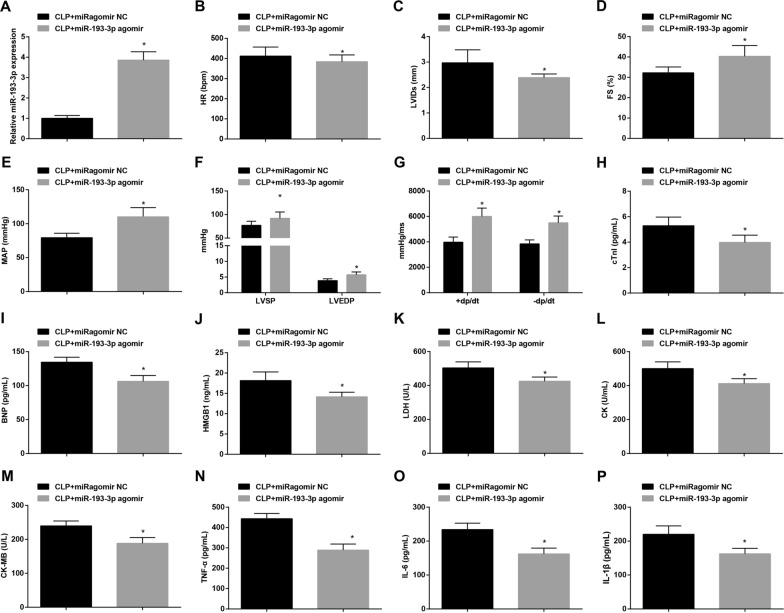
The mice model of sepsis was established by cecal ligation and puncture (CLP), septic mice were injected with miR-193-3p agomir, miR-193-3p antagomir or siRNA-STAT3. The expression of miR-193-3p, STAT3 and HMGB1 in the myocardial tissue of septic mice were detected. Cardiac ultrasound, hemodynamics, myocardial injury markers, inflammatory factors and cardiomyocyte apoptosis in septic mice were measured.
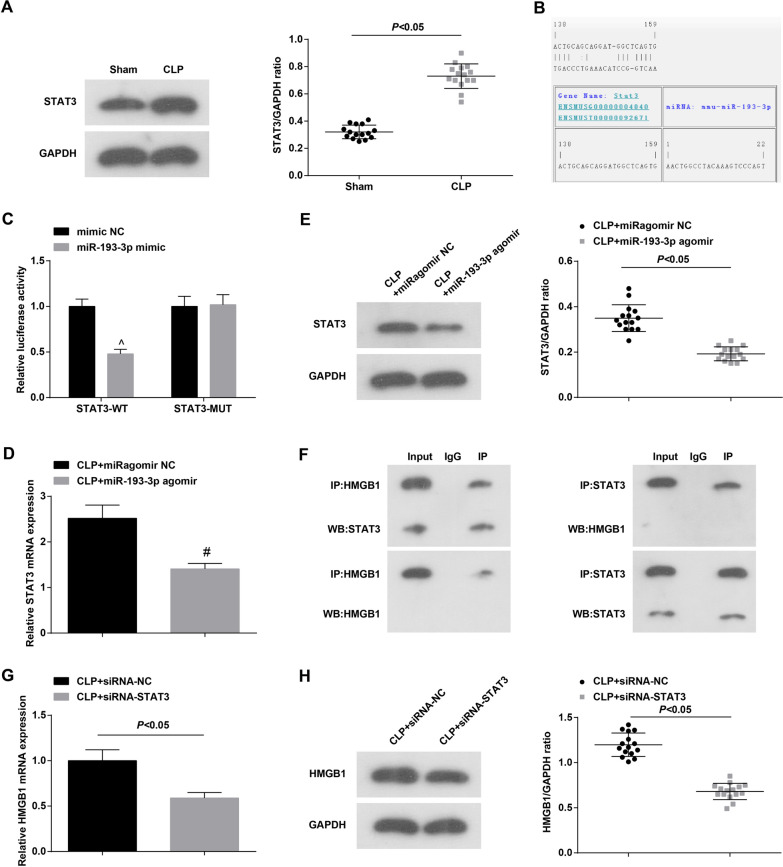
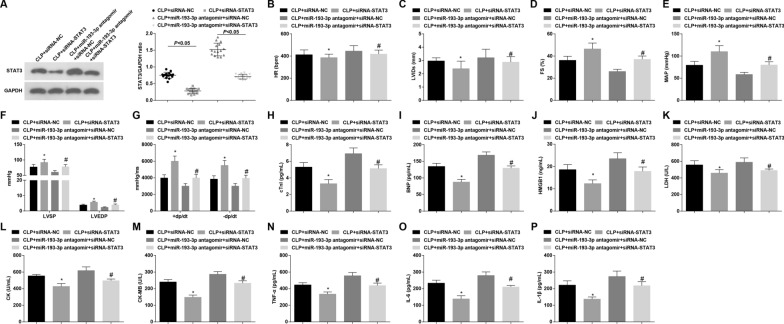
MiR-193-3p expression was reduced while STAT3 expression was increased in septic mice. Down-regulated STAT3 or up-regulated miR-193-3p improved cardiac function, attenuated myocardial injury, inflammation and cardiomyocyte apoptosis in septic mice. Knockdown STAT3 reversed the role of inhibited miR-193-3p for mice with sepsis. miR-193-3p targeted STAT3, thereby inhibiting HMGB1 expression.
This study provides evidence that miR-193-3p targets STAT3 expression to reduce HMGB1 expression, thereby reducing septic myocardial damage. MiR-193-3p might be a potential candidate marker and therapeutic target for sepsis.
miR-193-3p(miR-193-3p)在脓毒症中的功能作用知之甚少。因此,本研究旨在通过调节信号转导子和转录激活子 3(STAT3)来研究 miR-193-3p 对脓毒症小鼠心肌损伤的影响及其机制。
通过盲肠结扎穿孔(CLP)建立脓毒症小鼠模型,给脓毒症小鼠注射 miR-193-3p 激动剂、miR-193-3p 拮抗剂或 siRNA-STAT3。检测脓毒症小鼠心肌组织中 miR-193-3p、STAT3 和高迁移率族蛋白 1(HMGB1)的表达。测量脓毒症小鼠的心脏超声、血流动力学、心肌损伤标志物、炎症因子和心肌细胞凋亡。
脓毒症小鼠中 miR-193-3p 的表达降低,STAT3 的表达增加。下调 STAT3 或上调 miR-193-3p 可改善脓毒症小鼠的心功能,减轻心肌损伤、炎症和心肌细胞凋亡。敲低 STAT3 逆转了抑制 miR-193-3p 对脓毒症小鼠的作用。miR-193-3p 靶向 STAT3,从而抑制 HMGB1 的表达。
本研究提供的证据表明,miR-193-3p 通过抑制 STAT3 的表达来减少 HMGB1 的表达,从而减轻脓毒症性心肌损伤。miR-193-3p 可能是脓毒症的潜在候选标志物和治疗靶点。