Pediatric Immunopathology and Allergology Unit, Policlinico Tor Vergata, University of Rome Tor Vergata, Viale Oxford 81, 00133,, Rome, Italy.
PhD program in Immunology, Molecular Medicine and Applied Biotechnology, University of Rome Tor Vergata, Rome, Italy.
Ital J Pediatr. 2021 Sep 9;47(1):183. doi: 10.1186/s13052-021-01090-9.
Physicians play a key role in driving vaccine acceptance and their recommendations are crucial to address vaccine hesitancy. The aim of the study was to assess knowledge, awareness and attitude of Italian Pediatric Health Care Professionals (pHCPs) on vaccinations.
An anonymous on-line questionnaire was developed within the Vaccine Committee of Italian Society of Pediatric Allergy and Immunology (SIAIP) and spontaneously completed by 231 Pediatricians and Pediatric Nurses (PN).
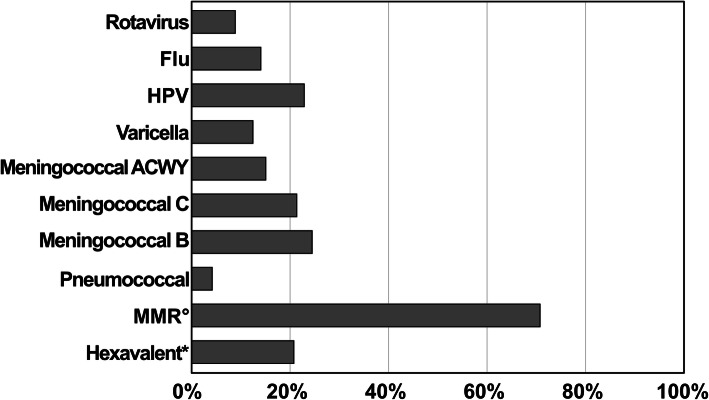
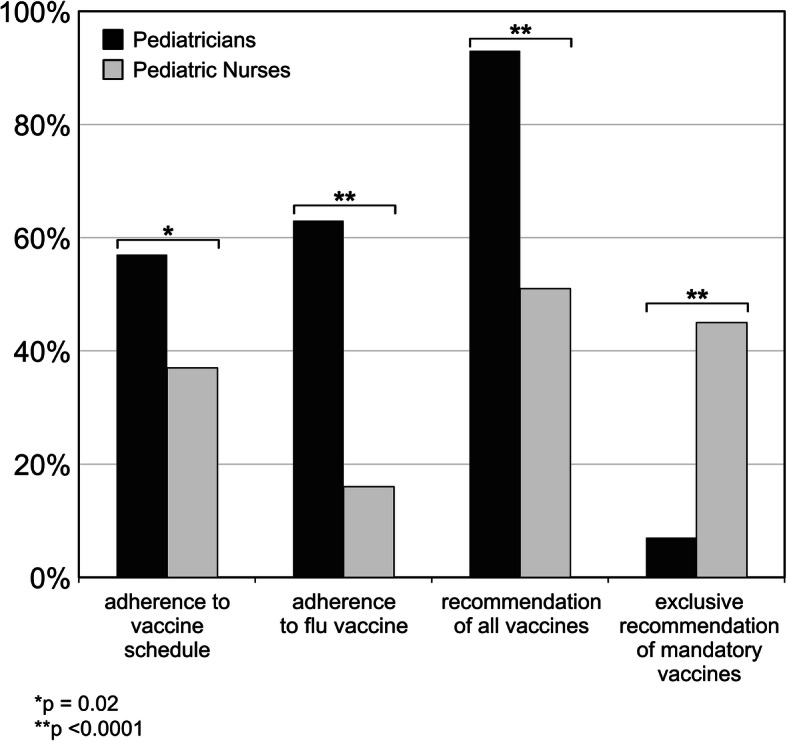
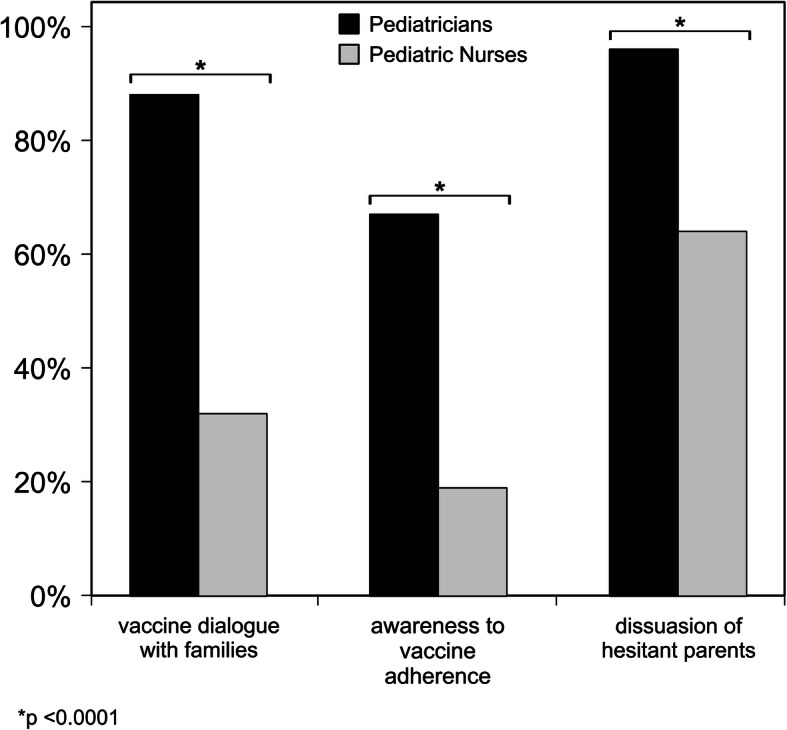
An accurate vaccine education was reported by 70% of pediatricians and 13% of PN but 11% of pediatricians versus 26% of PN consult social media instead of scientific sources for their vaccine update. The investigation on the pHCPs attitudes to vaccination in a personal and family setting highlights poor adherence to vaccinations. Only 63% of pediatricians versus 16% of PN (p < 0.0001) annually received the Flu vaccine. In their family setting 93% of pediatricians versus 51% of PN recommended all vaccinations (p < 0.0001). Anti-flu, anti-rotavirus, anti-zoster and anti-pneumococcal vaccines were not regularly recommended by all pHCPs due to doubts of uselessness (55% of pediatricians versus 40% of PN) and preference for "natural immunity" (44% of pediatricians versus 40% of PN).
Our results indicate that pHCPs' attitude and confidence in regards to vaccines remain suboptimal. Current COVID-19 pandemic and the rapid development of vaccines could increase vaccine hesitancy. Due to the documented pHCPs' influence in the parental decision, educational interventions are needed to improve their level of knowledge and counselling skills in order to address parental vaccine hesitancy and to maintain continuity of immunization services.
医生在推动疫苗接种方面发挥着关键作用,他们的建议对于解决疫苗犹豫至关重要。本研究旨在评估意大利儿科保健专业人员(pHCP)对疫苗接种的知识、意识和态度。
意大利儿科学会过敏与免疫学分会(SIAIP)疫苗委员会开发了一份匿名在线问卷,并由 231 名儿科医生和儿科护士(PN)自愿填写。
70%的儿科医生和 13%的 PN 报告接受了准确的疫苗教育,但 11%的儿科医生会查阅社交媒体而不是科学来源来更新疫苗知识,而这一比例在 PN 中为 26%。在个人和家庭环境中,pHCP 对疫苗接种的态度调查显示,疫苗接种的依从性较差。只有 63%的儿科医生和 16%的 PN(p<0.0001)每年接种流感疫苗。在他们的家庭环境中,93%的儿科医生和 51%的 PN(p<0.0001)建议接种所有疫苗。由于对疫苗无效性的怀疑(55%的儿科医生和 40%的 PN)和对“自然免疫力”的偏好(44%的儿科医生和 40%的 PN),并非所有 pHCP 都定期推荐抗流感、抗轮状病毒、抗带状疱疹和抗肺炎球菌疫苗。
我们的研究结果表明,pHCP 对疫苗的态度和信心仍然不够理想。当前的 COVID-19 大流行和疫苗的快速发展可能会增加疫苗犹豫。由于 pHCP 在父母决策方面的影响力有案可查,因此需要开展教育干预措施,提高他们的知识水平和咨询技能,以解决父母的疫苗犹豫问题,并维持免疫服务的连续性。