School of Animal and Veterinary Sciences, The University of Adelaide, Roseworthy, SA, 5371, Australia.
Sci Rep. 2021 Sep 9;11(1):18026. doi: 10.1038/s41598-021-97135-4.
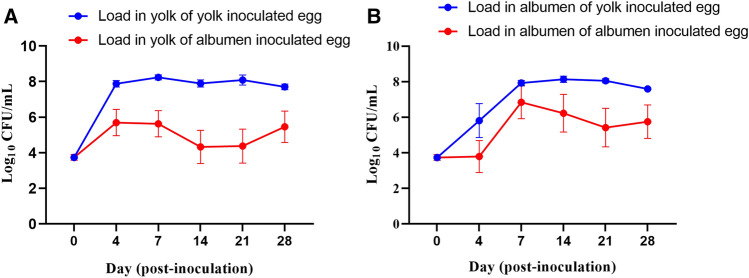
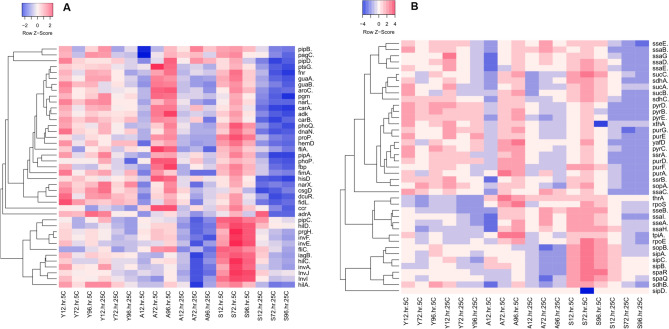
Salmonella Typhimurium is a human pathogen associated with eggs and egg-derived products. In Australia, it is recommended that eggs should be refrigerated to prevent condensation that can enhance bacterial penetration across the eggshell. Except for the United States, the guidelines on egg refrigeration are not prescriptive. In the current study, in-vitro and in-vivo experiments were conducted to understand the role of egg storage temperatures (refrigerated vs ambient) on bacterial load and the virulence genes expression of Salmonella Typhimurium. The in-vitro egg study showed that the load of Salmonella Typhimurium significantly increased in yolk and albumen stored at 25 °C. The gene expression study showed that ompR, misL, pefA, spvA, shdA, bapA, and csgB were significantly up-regulated in the egg yolk stored at 5 °C and 25 °C for 96 h; however, an in-vivo study revealed that mice infected with egg yolk stored at 25 °C, developed salmonellosis from day 3 post-infection (p.i.). Mice fed with inoculated egg yolk, albumen, or eggshell wash stored at refrigerated temperature did not show signs of salmonellosis during the period of the experiment. Data obtained in this study highlighted the importance of egg refrigeration in terms of improving product safety.
肠炎沙门氏菌是一种与鸡蛋和蛋制品有关的人类病原体。在澳大利亚,建议将鸡蛋冷藏以防止冷凝,冷凝会增强细菌穿透蛋壳。除美国外,其他国家的鸡蛋冷藏指南不具有强制性。在本研究中,进行了体外和体内实验,以了解鸡蛋储存温度(冷藏与环境温度)对肠炎沙门氏菌细菌负荷和毒力基因表达的影响。体外鸡蛋研究表明,在 25°C 下储存的蛋黄和蛋白中,肠炎沙门氏菌的负荷显著增加。基因表达研究表明,ompR、misL、pefA、spvA、shdA、bapA 和 csgB 在 5°C 和 25°C 下储存 96 小时后在蛋黄中显著上调;然而,体内研究表明,感染了在 25°C 下储存的蛋黄的小鼠从感染后第 3 天开始发生沙门氏菌病。在实验期间,喂食接种蛋黄、蛋白或蛋壳清洗液并冷藏的小鼠没有出现沙门氏菌病的迹象。本研究获得的数据强调了冷藏鸡蛋在提高产品安全性方面的重要性。