Chemical & Biochemical Engineering Department, Rutgers, Piscataway, USA.
Biomedical Engineering Department, Rutgers, Piscataway, USA.
Sci Rep. 2021 Sep 9;11(1):17929. doi: 10.1038/s41598-021-97019-7.
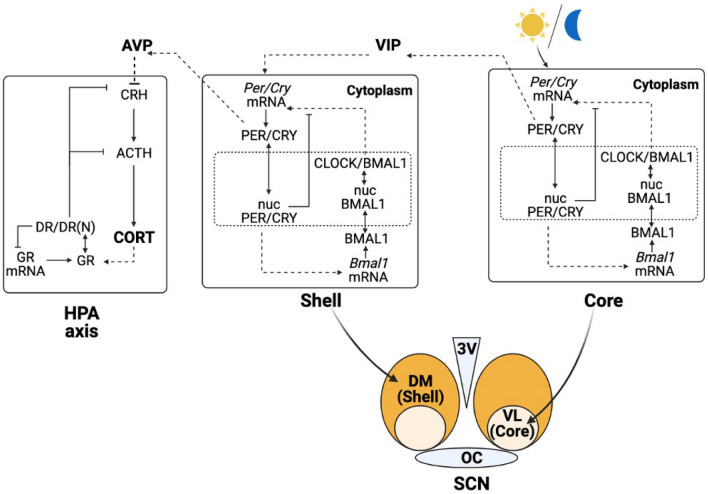
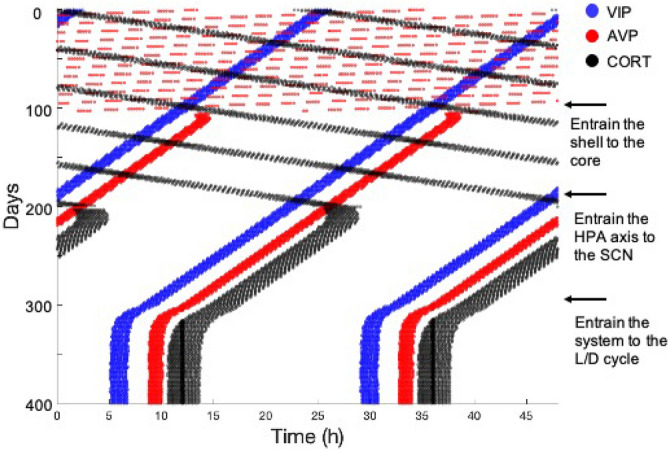
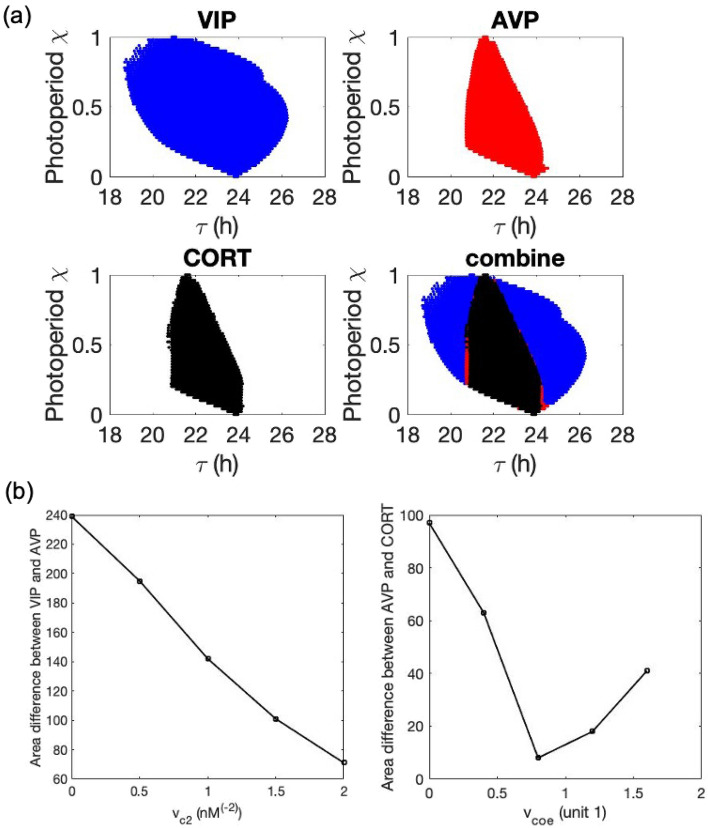
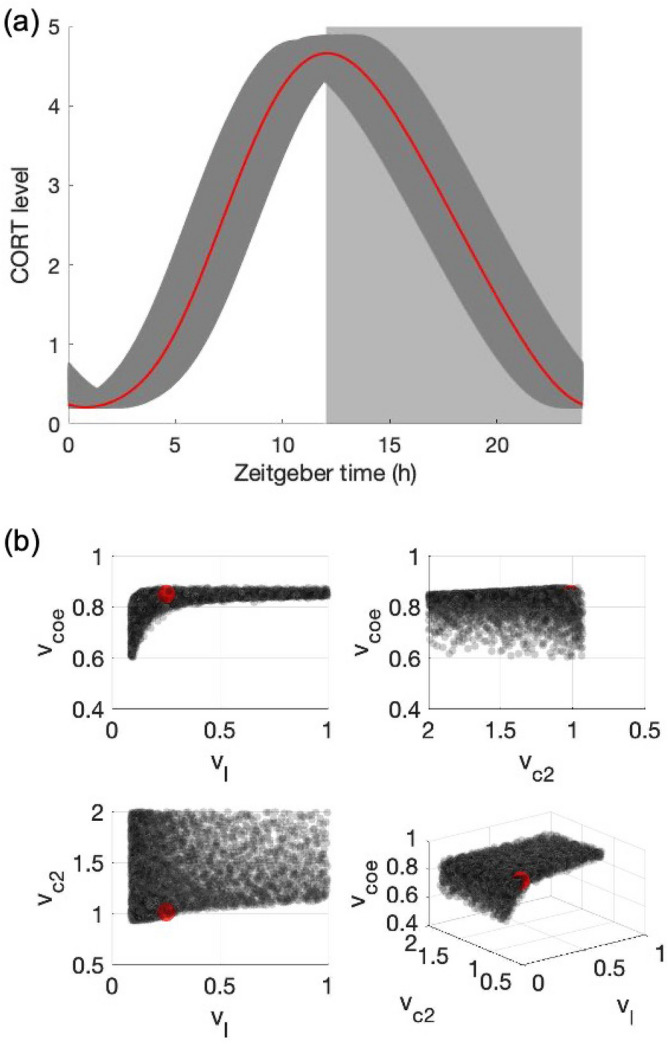
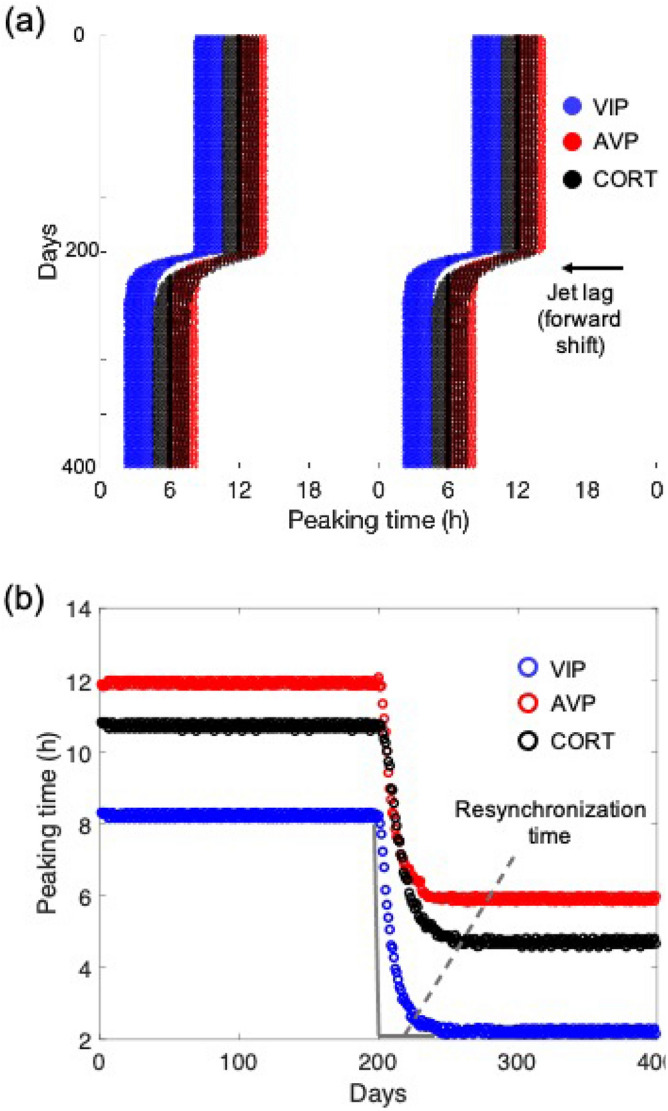
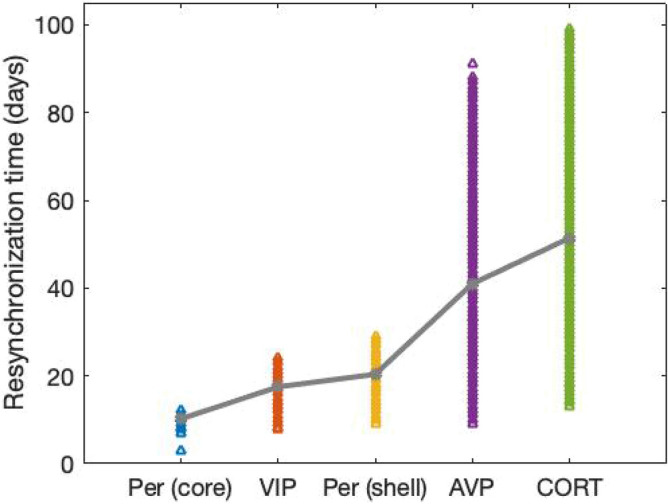
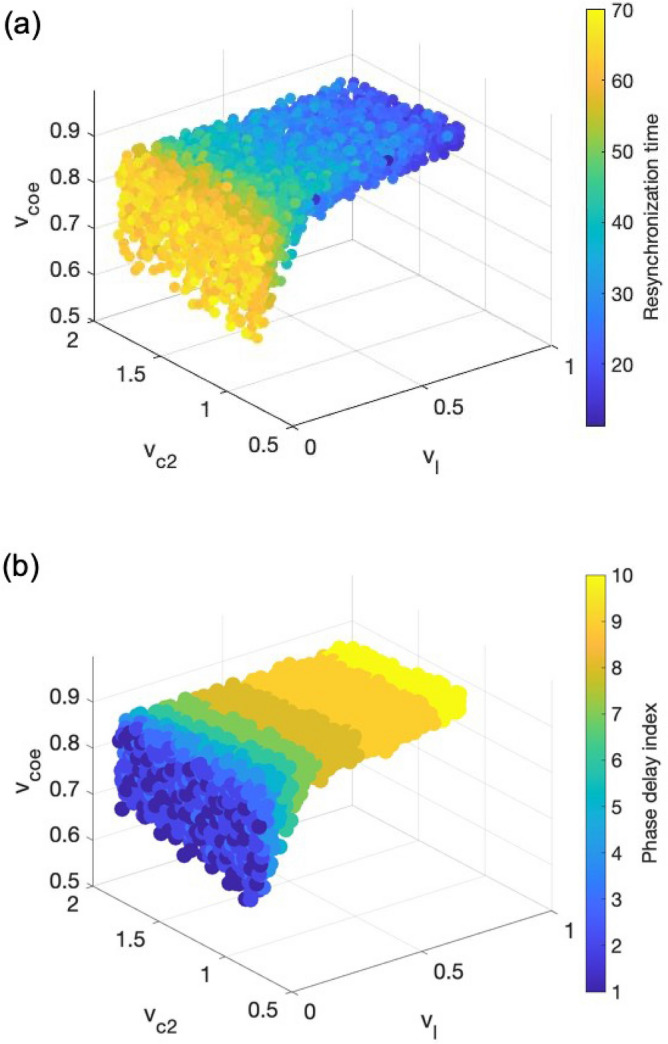
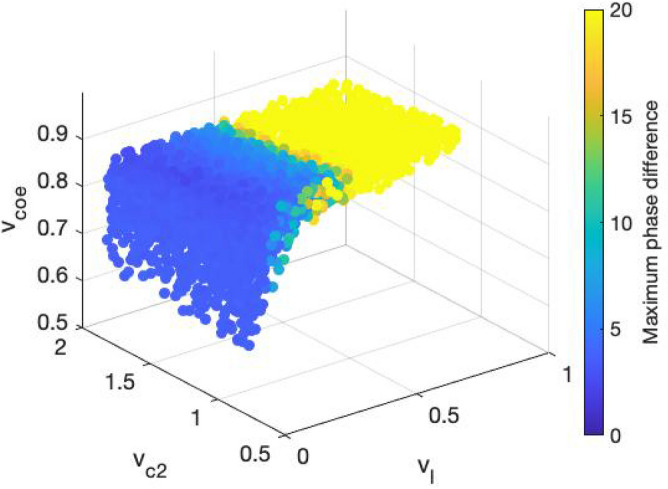
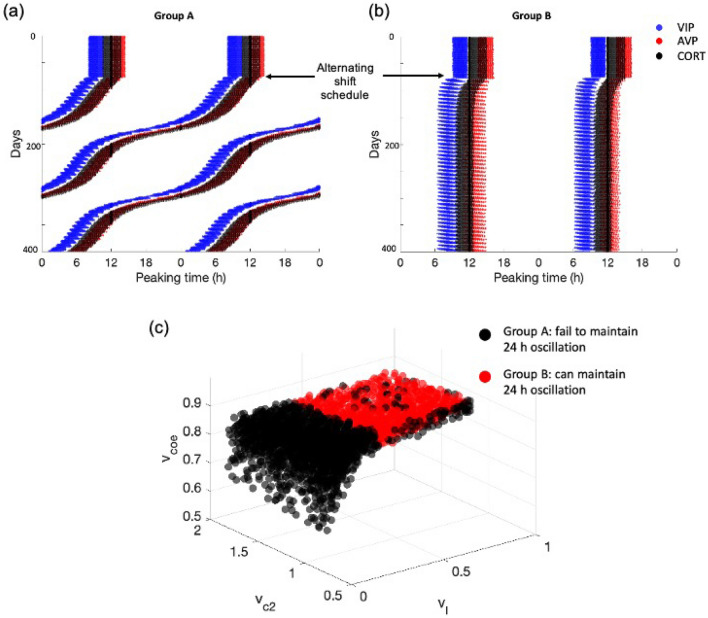
The suprachiasmatic nucleus (SCN) functions as the central pacemaker aligning physiological and behavioral oscillations to day/night (activity/inactivity) transitions. The light signal entrains the molecular clock of the photo-sensitive ventrolateral (VL) core of the SCN which in turn entrains the dorsomedial (DM) shell via the neurotransmitter vasoactive intestinal polypeptide (VIP). The shell converts the VIP rhythmic signals to circadian oscillations of arginine vasopressin (AVP), which eventually act as a neurotransmitter signal entraining the hypothalamic-pituitary-adrenal (HPA) axis, leading to robust circadian secretion of glucocorticoids. In this work, we discuss a semi-mechanistic mathematical model that reflects the essential hierarchical structure of the photic signal transduction from the SCN to the HPA axis. By incorporating the interactions across the core, the shell, and the HPA axis, we investigate how these coupled systems synchronize leading to robust circadian oscillations. Our model predicts the existence of personalized synchronization strategies that enable the maintenance of homeostatic rhythms while allowing for differential responses to transient and permanent light schedule changes. We simulated different behavioral situations leading to perturbed rhythmicity, performed a detailed computational analysis of the dynamic response of the system under varying light schedules, and determined that (1) significant interindividual diversity and flexibility characterize adaptation to varying light schedules; (2) an individual's tolerances to jet lag and alternating shift work are positively correlated, while the tolerances to jet lag and transient shift work are negatively correlated, which indicates trade-offs in an individual's ability to maintain physiological rhythmicity; (3) weak light sensitivity leads to the reduction of circadian flexibility, implying that light therapy can be a potential approach to address shift work and jet lag related disorders. Finally, we developed a map of the impact of the synchronization within the SCN and between the SCN and the HPA axis as it relates to the emergence of circadian flexibility.
视交叉上核(SCN)作为中央起搏器,使生理和行为节律与昼夜(活动/不活动)转换同步。光信号使光敏感的腹外侧(VL)核心的分子钟同步,进而通过神经递质血管活性肠肽(VIP)使背内侧(DM)壳同步。壳将 VIP 节律信号转换为精氨酸加压素(AVP)的昼夜节律振荡,最终作为神经递质信号使下丘脑-垂体-肾上腺(HPA)轴同步,导致糖皮质激素的强大昼夜分泌。在这项工作中,我们讨论了一个半机械论的数学模型,该模型反映了 SCN 到 HPA 轴的光信号转导的基本层次结构。通过结合核心、壳和 HPA 轴之间的相互作用,我们研究了这些耦合系统如何同步以产生强大的昼夜节律振荡。我们的模型预测存在个性化的同步策略,这些策略既能维持体内平衡的节律,又能对短暂和永久的光照时间表变化做出不同的反应。我们模拟了导致节律紊乱的不同行为情况,对系统在不同光照时间表下的动态响应进行了详细的计算分析,并确定:(1)显著的个体间多样性和灵活性是适应不同光照时间表的特征;(2)个体对时差和交替轮班工作的容忍度呈正相关,而对时差和短暂轮班工作的容忍度呈负相关,这表明个体维持生理节律的能力存在权衡;(3)弱光敏感性导致昼夜节律灵活性降低,这表明光疗可能是解决轮班工作和时差相关障碍的一种潜在方法。最后,我们开发了一个 SCN 内和 SCN 与 HPA 轴之间同步影响的图谱,这与昼夜节律灵活性的出现有关。