Lammers Alexander, Zweers Hans, Sandfeld Tobias, Bilde Trine, Garbeva Paolina, Schramm Andreas, Lalk Michael
Department of Cellular Biochemistry and Metabolomics, University of Greifswald, Greifswald, Germany.
Department of Microbial Ecology, Netherlands Institute of Ecology (NIOO-KNAW), Wageningen, Netherlands.
Front Microbiol. 2021 Aug 24;12:700693. doi: 10.3389/fmicb.2021.700693. eCollection 2021.
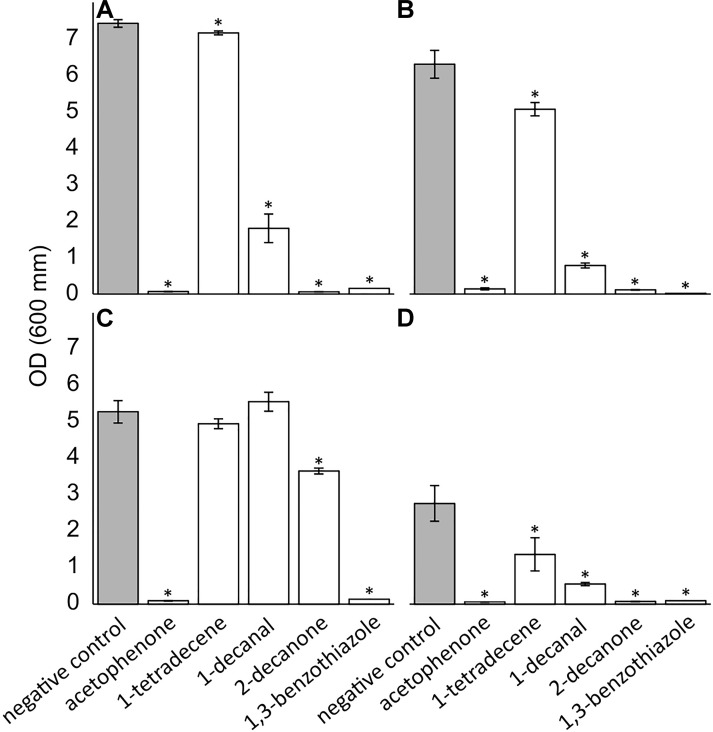
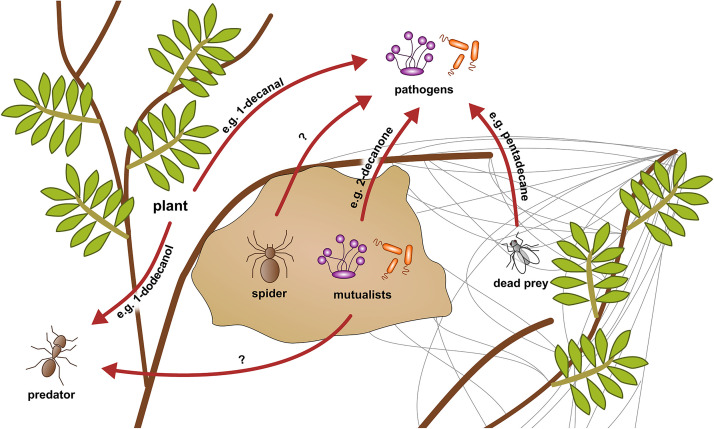
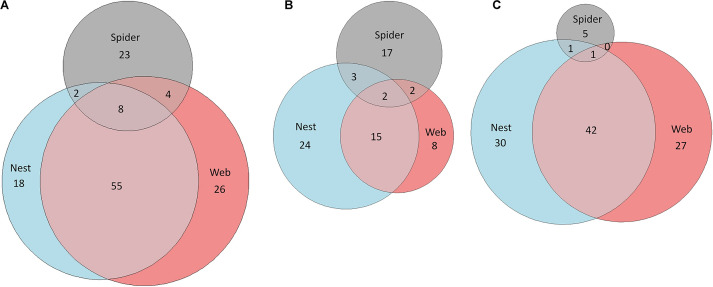
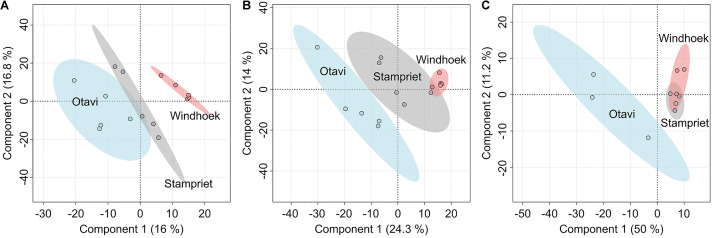
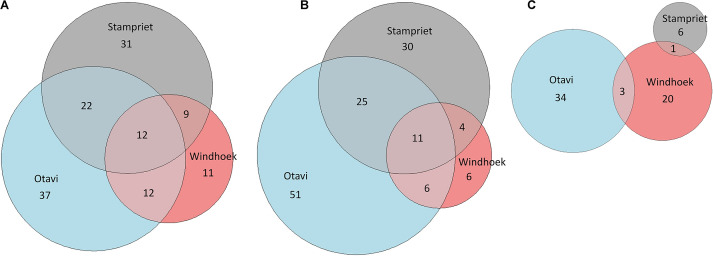
Social arthropods such as termites, ants, and bees are among others the most successful animal groups on earth. However, social arthropods face an elevated risk of infections due to the dense colony structure, which facilitates pathogen transmission. An interesting hypothesis is that social arthropods are protected by chemical compounds produced by the arthropods themselves, microbial symbionts, or plants they associate with. is an African social spider species, inhabiting communal silk nests. Because of the complex three-dimensional structure of the spider nest antimicrobial volatile organic compounds (VOCs) are a promising protection against pathogens, because of their ability to diffuse through air-filled pores. We analyzed the volatilomes of , their nests, and capture webs in three locations in Namibia and assessed their antimicrobial potential. Volatilomes were collected using polydimethylsiloxane (PDMS) tubes and analyzed using GC/Q-TOF. We showed the presence of 199 VOCs and tentatively identified 53 VOCs. More than 40% of the tentatively identified VOCs are known for their antimicrobial activity. Here, six VOCs were confirmed by analyzing pure compounds namely acetophenone, 1,3-benzothiazole, 1-decanal, 2-decanone, 1-tetradecene, and docosane and for five of these compounds the antimicrobial activity were proven. The nest and web volatilomes had many VOCs in common, whereas the spider volatilomes were more differentiated. Clear differences were identified between the volatilomes from the different sampling sites which is likely justified by differences in the microbiomes of the spiders and nests, the plants, and the different climatic conditions. The results indicate the potential relevance of the volatilomes for the ecological success of .
白蚁、蚂蚁和蜜蜂等群居节肢动物是地球上最成功的动物群体之一。然而,由于群体结构密集,群居节肢动物面临着更高的感染风险,这有利于病原体传播。一个有趣的假设是,群居节肢动物受到节肢动物自身、微生物共生体或它们所关联的植物产生的化合物的保护。是一种非洲群居蜘蛛物种,栖息在公共丝巢中。由于蜘蛛巢具有复杂的三维结构,抗菌挥发性有机化合物(VOCs)因其能够通过充满空气的孔隙扩散,是抵御病原体的一种有前景的保护方式。我们分析了纳米比亚三个地点的蜘蛛、它们的巢穴和捕获网的挥发物组,并评估了它们的抗菌潜力。使用聚二甲基硅氧烷(PDMS)管收集挥发物组,并使用气相色谱/四极杆飞行时间质谱(GC/Q-TOF)进行分析。我们发现了199种挥发性有机化合物的存在,并初步鉴定了53种挥发性有机化合物。初步鉴定的挥发性有机化合物中超过40%因其抗菌活性而闻名。在这里,通过分析纯化合物确定了六种挥发性有机化合物,即苯乙酮(acetophenone)、1,3-苯并噻唑(1,3-benzothiazole)、1-癸醛(1-decanal)、2-癸酮(2-decanone)、1-十四碳烯(1-tetradecene)和二十二烷(docosane),并且证明了其中五种化合物具有抗菌活性。巢穴和网的挥发物组有许多共同的挥发性有机化合物,而蜘蛛的挥发物组则更具差异性。在不同采样地点的挥发物组之间发现了明显差异,这可能是由于蜘蛛和巢穴、植物的微生物群落以及不同气候条件的差异造成的。结果表明挥发物组对于蜘蛛的生态成功具有潜在的相关性。