School of Immunity and Infection, University of Birmingham, Birmingham, United Kingdom.
Department of Chemistry, University of Virginia, Charlottesville, VA, United States.
Front Immunol. 2021 Aug 24;12:723566. doi: 10.3389/fimmu.2021.723566. eCollection 2021.
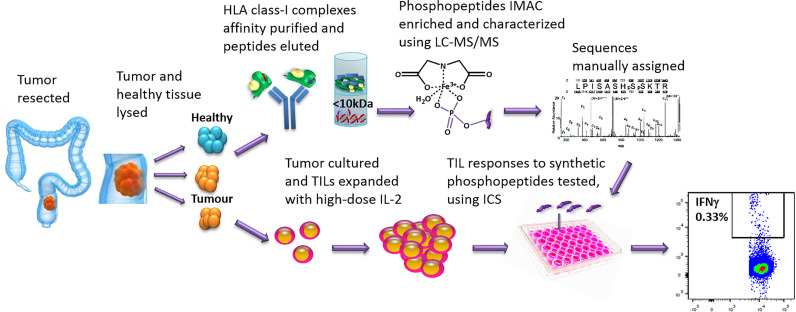
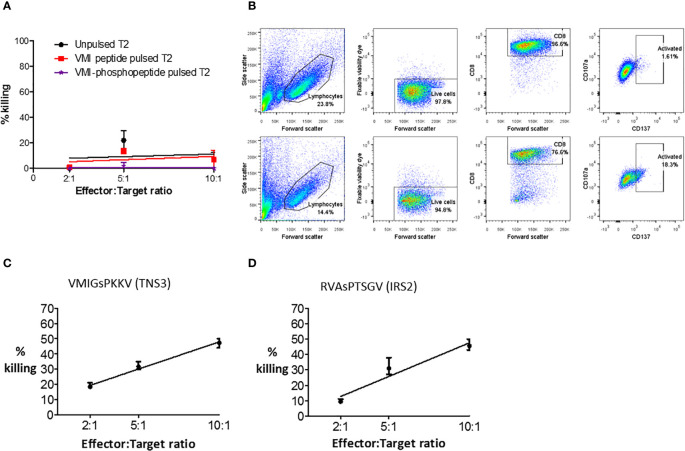
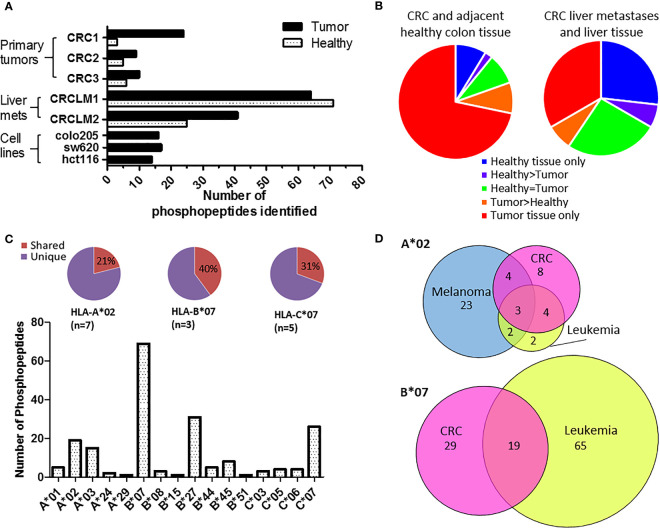
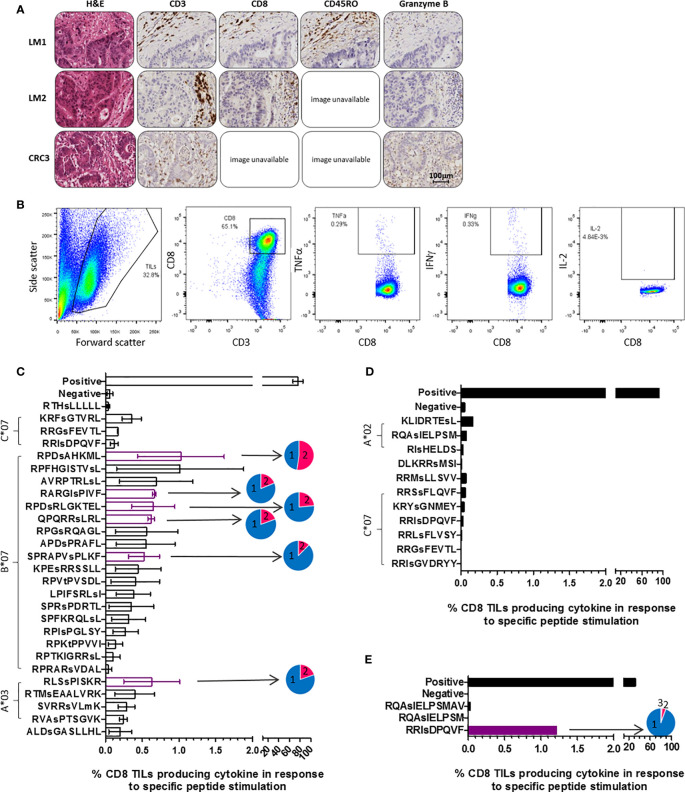
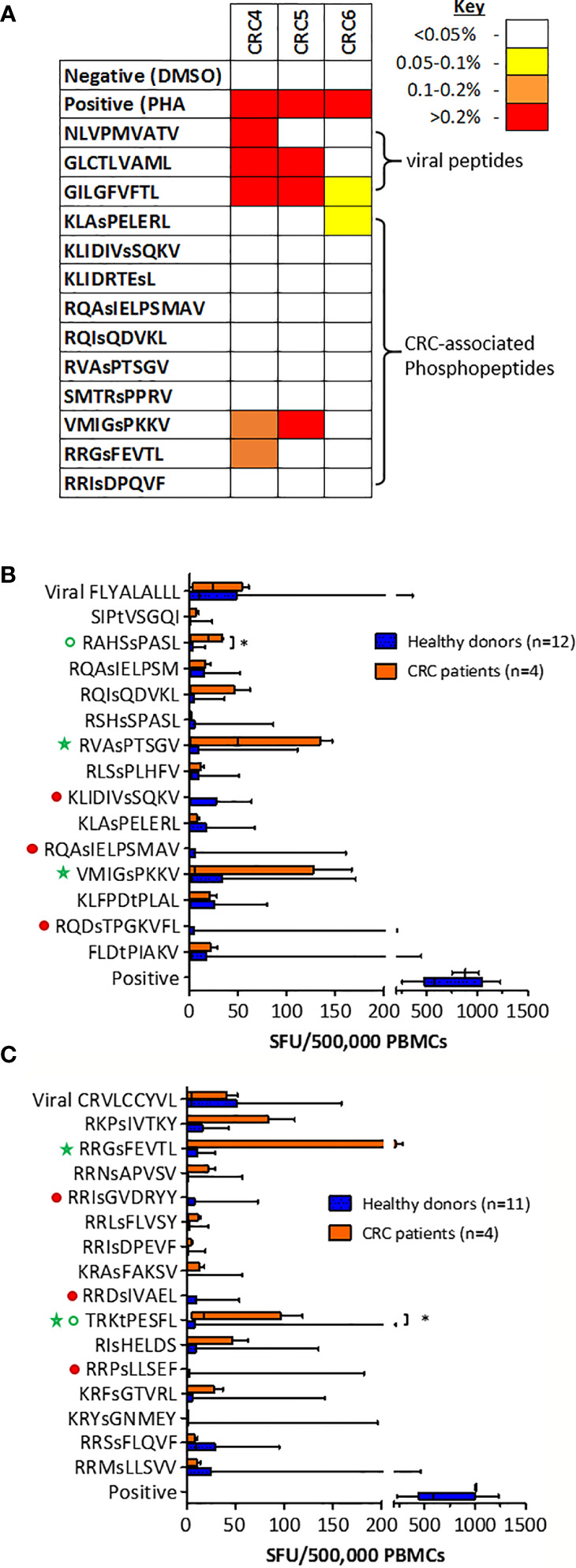
There is a pressing need for novel immunotherapeutic targets in colorectal cancer (CRC). Cytotoxic T cell infiltration is well established as a key prognostic indicator in CRC, and it is known that these tumor infiltrating lymphocytes (TILs) target and kill tumor cells. However, the specific antigens that drive these CD8+ T cell responses have not been well characterized. Recently, phosphopeptides have emerged as strong candidates for tumor-specific antigens, as dysregulated signaling in cancer leads to increased and aberrant protein phosphorylation. Here, we identify 120 HLA-I phosphopeptides from primary CRC tumors, CRC liver metastases and CRC cell lines using mass spectrometry and assess the tumor-resident immunity against these posttranslationally modified tumor antigens. Several CRC tumor-specific phosphopeptides were presented by multiple patients' tumors in our cohort (21% to 40%), and many have previously been identified on other malignancies (58% of HLA-A*02 CRC phosphopeptides). These shared antigens derived from mitogenic signaling pathways, including p53, Wnt and MAPK, and are therefore markers of malignancy. The identification of public tumor antigens will allow for the development of broadly applicable targeted therapeutics. Through analysis of TIL cytokine responses to these phosphopeptides, we have established that they are already playing a key role in tumor-resident immunity. Multifunctional CD8+ TILs from primary and metastatic tumors recognized the HLA-I phosphopeptides presented by their originating tumor. Furthermore, TILs taken from other CRC patients' tumors targeted two of these phosphopeptides. In another cohort of CRC patients, the same HLA-I phosphopeptides induced higher peripheral T cell responses than they did in healthy donors, suggesting that these immune responses are specifically activated in CRC patients. Collectively, these results establish HLA-I phosphopeptides as targets of the tumor-resident immunity in CRC, and highlight their potential as candidates for future immunotherapeutic strategies.
结直肠癌(CRC)迫切需要新的免疫治疗靶点。细胞毒性 T 细胞浸润已被确立为 CRC 的一个关键预后指标,已知这些肿瘤浸润淋巴细胞(TIL)靶向并杀死肿瘤细胞。然而,驱动这些 CD8+T 细胞反应的特定抗原尚未得到很好的描述。最近,磷酸肽已成为肿瘤特异性抗原的有力候选物,因为癌症中的失调信号导致蛋白质磷酸化增加和异常。在这里,我们使用质谱法从原发性 CRC 肿瘤、CRC 肝转移和 CRC 细胞系中鉴定出 120 种 HLA-I 磷酸肽,并评估这些翻译后修饰的肿瘤抗原对肿瘤驻留免疫的反应。我们的队列中有多个患者的肿瘤呈递了几种 CRC 肿瘤特异性磷酸肽(21%至 40%),其中许多在其他恶性肿瘤中已有发现(58%的 HLA-A*02 CRC 磷酸肽)。这些源自有丝分裂信号通路的共享抗原,包括 p53、Wnt 和 MAPK,因此是恶性肿瘤的标志物。公共肿瘤抗原的鉴定将允许开发广泛适用的靶向治疗方法。通过分析 TIL 对这些磷酸肽的细胞因子反应,我们已经确定它们已经在肿瘤驻留免疫中发挥关键作用。来自原发性和转移性肿瘤的多功能 CD8+TIL 识别其起源肿瘤呈递的 HLA-I 磷酸肽。此外,来自其他 CRC 患者肿瘤的 TIL 靶向其中两种磷酸肽。在另一批 CRC 患者中,相同的 HLA-I 磷酸肽诱导的外周 T 细胞反应高于健康供体,这表明这些免疫反应在 CRC 患者中特异性激活。总之,这些结果确立了 HLA-I 磷酸肽作为 CRC 中肿瘤驻留免疫的靶点,并强调了它们作为未来免疫治疗策略候选物的潜力。