Wu Bin, Hu Chunyang, Kong Lianbao
Department of General Surgery, Sir Run Run Hospital Nanjing Medical University, Nanjing, Jiangsu 211166, P.R. China.
Department of Hepatological Surgery, The First Affiliated Hospital of Nanjing Medical University, Nanjing, Jiangsu 210029, P.R. China.
Exp Ther Med. 2021 Oct;22(4):1154. doi: 10.3892/etm.2021.10588. Epub 2021 Aug 10.
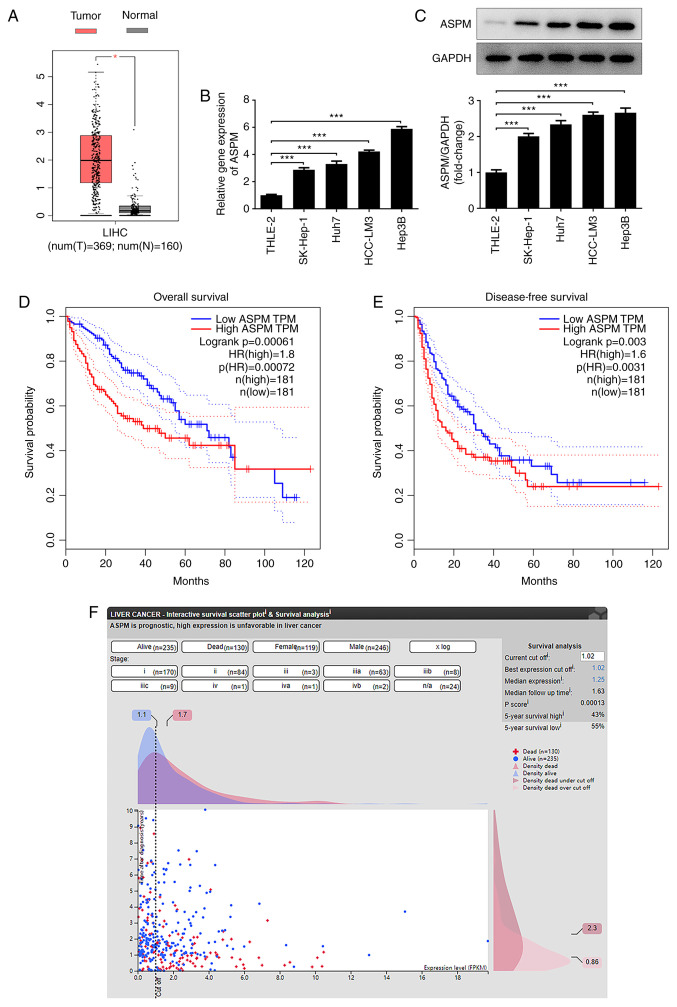
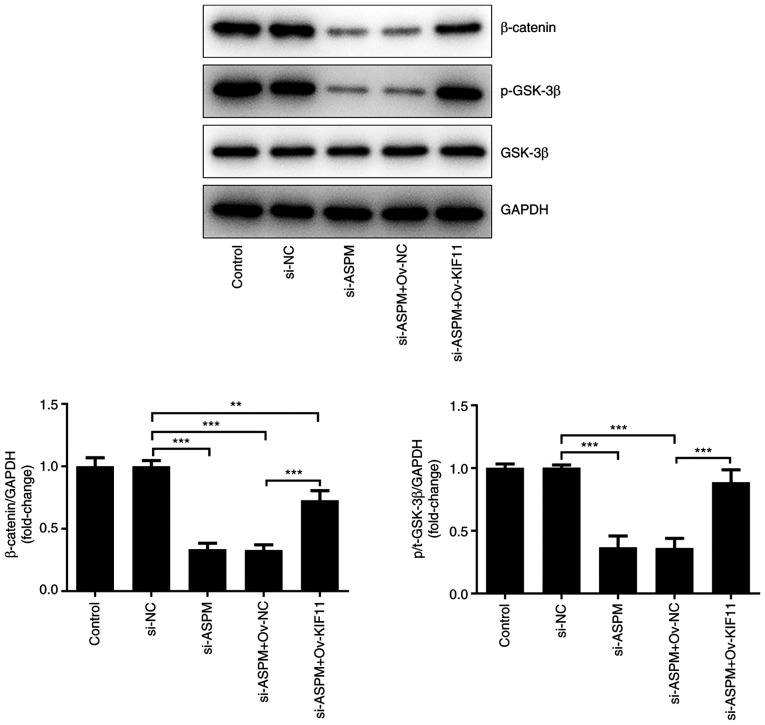
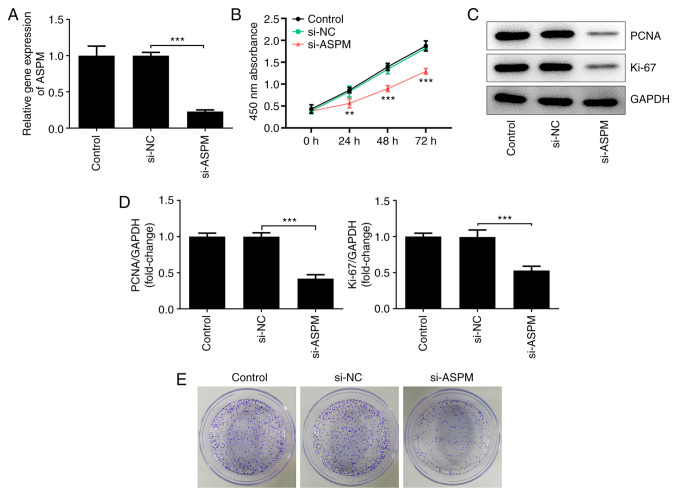
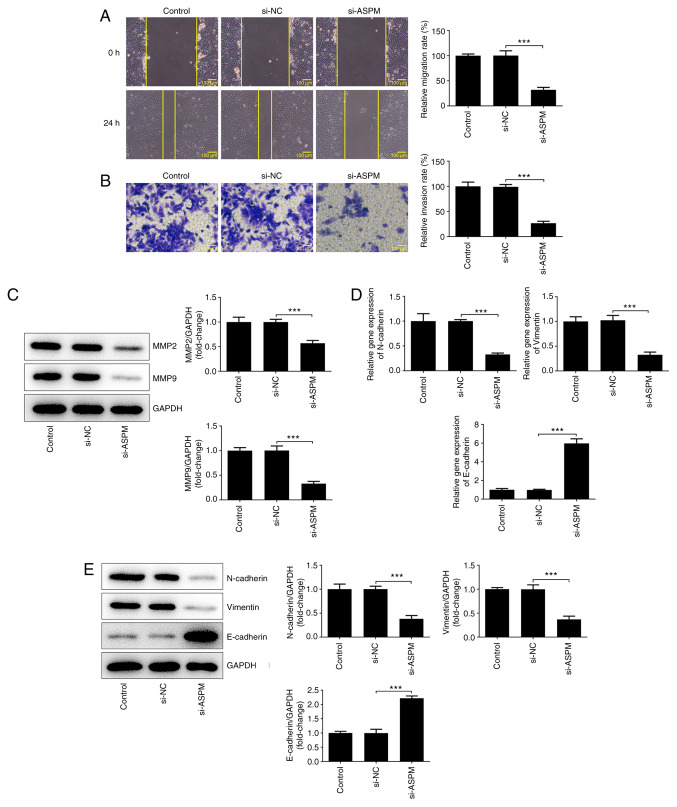
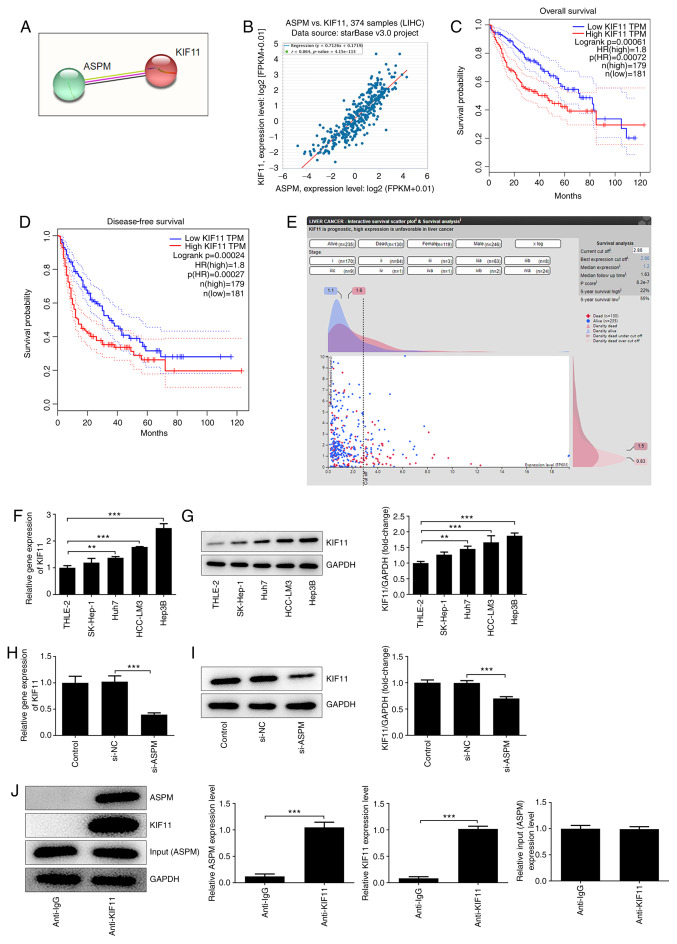
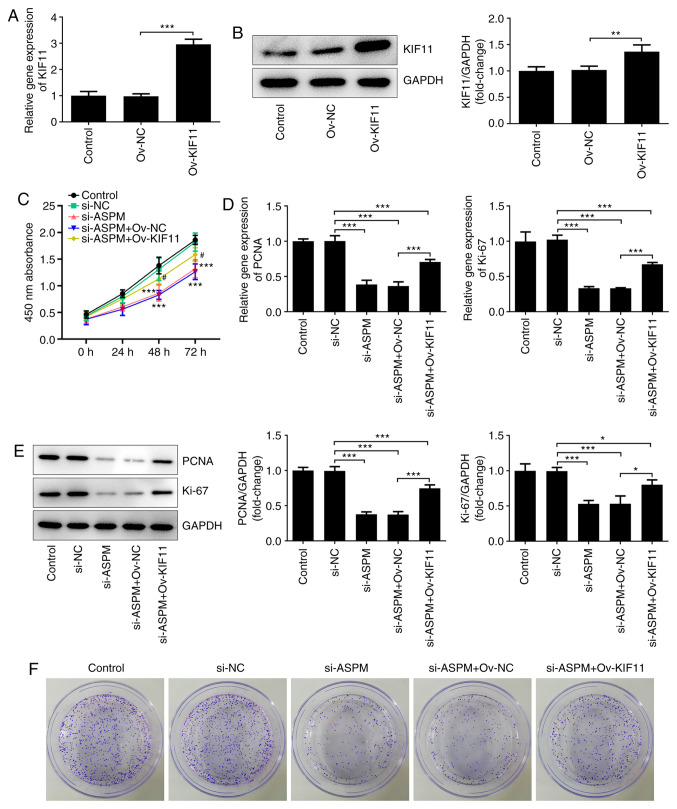
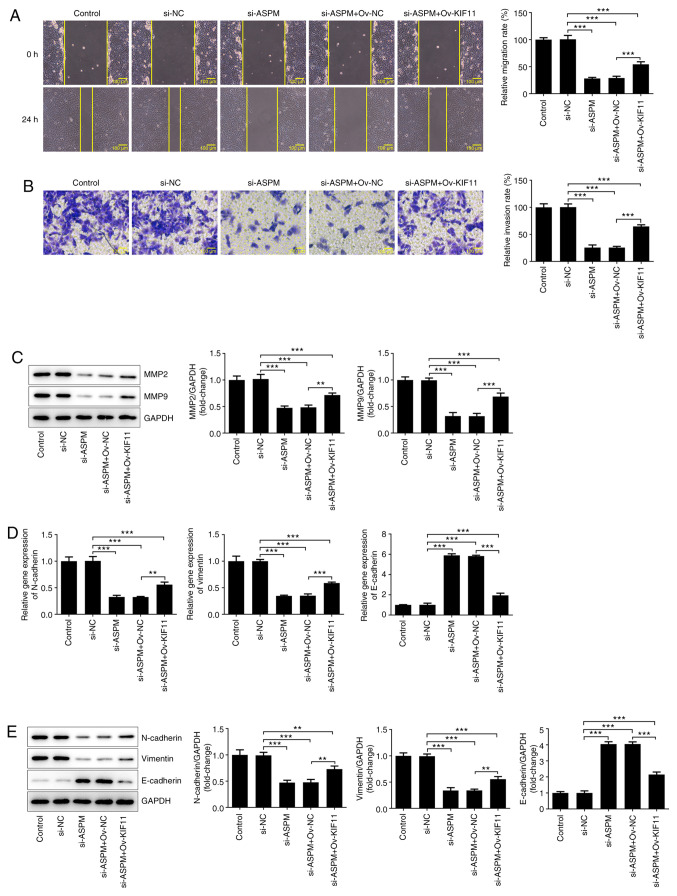
To investigate the molecular mechanism of assembly factor for spindle microtubules (ASPM) in the regulation of the malignant progression of hepatocellular carcinoma (HCC), bioinformatics analysis was utilized to analyze the role of ASPM in the malignant progression of HCC and its potential interaction with the kinesin family member 11 (KIF11) gene. The expression levels of ASPM and KIF11 were detected by reverse transcription-quantitative PCR and western blotting. Following knockdown of ASPM expression, Cell Counting Kit-8/colony formation assays were performed to detect cell viability and proliferation. Wound healing and Transwell assays were employed to detect cell migration and invasion. Additionally, a co-immunoprecipitation (CO-IP) assay was used to detect whether there was an interaction between ASPM and KIF11. KIF11 overexpression was performed to verify if ASPM exerted its effects via KIF11. ASPM was highly expressed in HCC tissues and cells, and was closely associated with a poor prognosis of patients with HCC. Interference with ASPM expression markedly inhibited the viability, proliferation, invasion and migration of HCC cells. Using a CO-IP assay, it was revealed that there was an interaction between ASPM and KIF11. Rescue experiments subsequently revealed the regulatory effects of ASPM on the activity, proliferation, invasion and migration of HCC cells via KIF11. Finally, western blot analysis demonstrated that ASPM in combination with KIF11 promoted the malignant progression of HCC by regulating the activity of the Wnt/β-catenin signaling pathway. Therefore, the present study demonstrated that ASPM may interact with KIF11 in HCC cells to promote the malignant progression of HCC via the Wnt/β-catenin signaling pathway.
为了探究纺锤体微管组装因子(ASPM)在肝细胞癌(HCC)恶性进展调控中的分子机制,利用生物信息学分析来分析ASPM在HCC恶性进展中的作用及其与驱动蛋白家族成员11(KIF11)基因的潜在相互作用。通过逆转录定量PCR和蛋白质印迹法检测ASPM和KIF11的表达水平。在敲低ASPM表达后,进行细胞计数试剂盒-8/集落形成试验以检测细胞活力和增殖。采用伤口愈合试验和Transwell试验检测细胞迁移和侵袭能力。此外,使用免疫共沉淀(CO-IP)试验检测ASPM与KIF11之间是否存在相互作用。进行KIF11过表达以验证ASPM是否通过KIF11发挥其作用。ASPM在HCC组织和细胞中高表达,且与HCC患者的不良预后密切相关。干扰ASPM表达可显著抑制HCC细胞的活力、增殖、侵袭和迁移。通过CO-IP试验发现ASPM与KIF11之间存在相互作用。随后的拯救实验揭示了ASPM通过KIF11对HCC细胞的活性、增殖、侵袭和迁移的调控作用。最后,蛋白质印迹分析表明,ASPM与KIF11共同作用通过调节Wnt/β-连环蛋白信号通路的活性促进HCC的恶性进展。因此,本研究表明,ASPM可能在HCC细胞中与KIF11相互作用,通过Wnt/β-连环蛋白信号通路促进HCC的恶性进展。