Laboratory for Molecular and Developmental Biology, Institute for Protein Research, Osaka University, Osaka 565-0871, Japan.
Department of Psychology, Faculty of Human Sciences, Senshu University, Kawasaki 214-8580, Japan.
Hum Mol Genet. 2022 Feb 21;31(4):535-547. doi: 10.1093/hmg/ddab268.
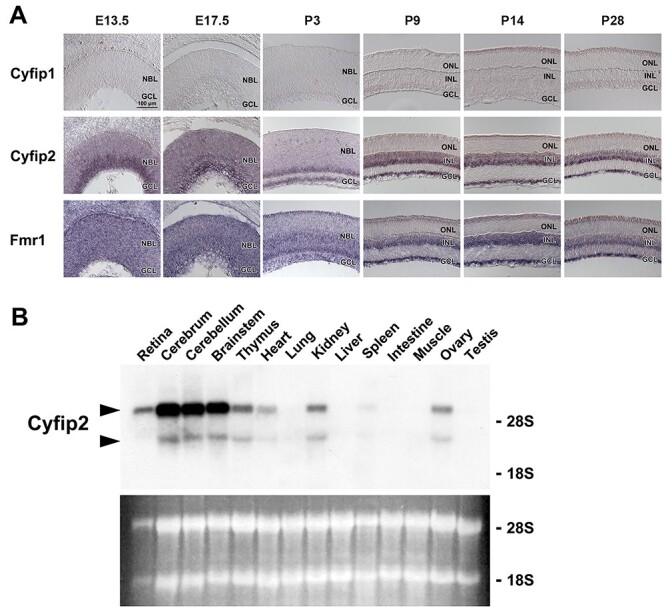
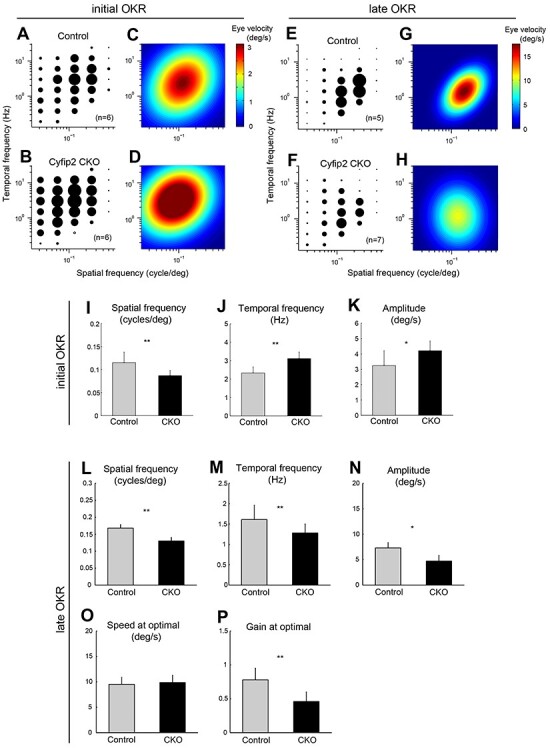
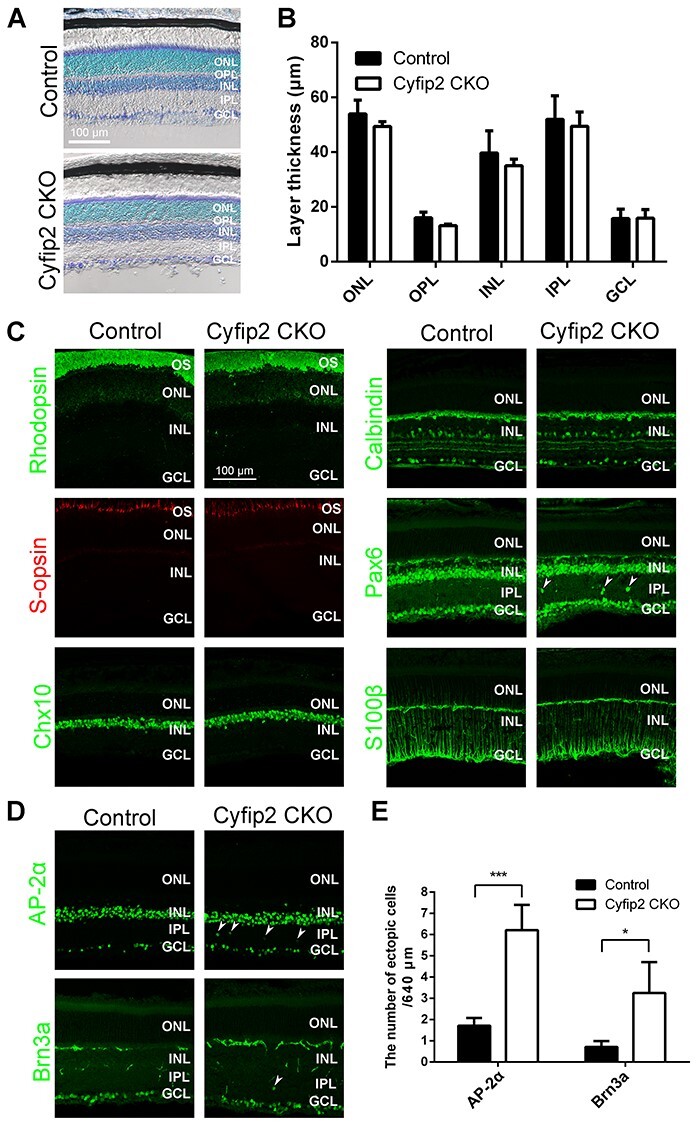
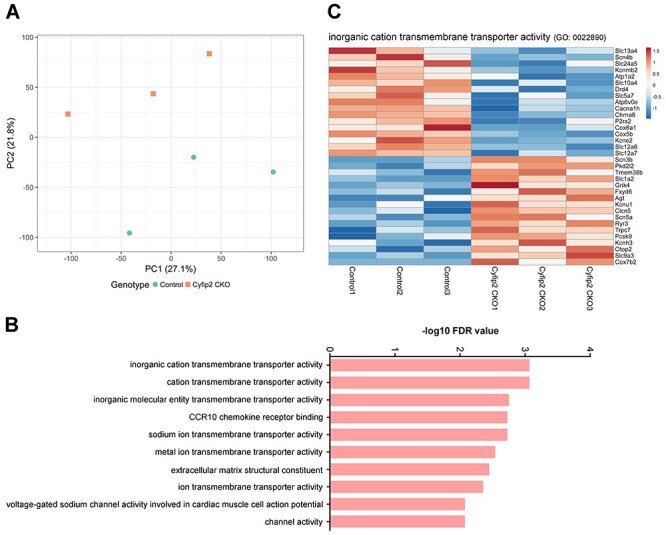
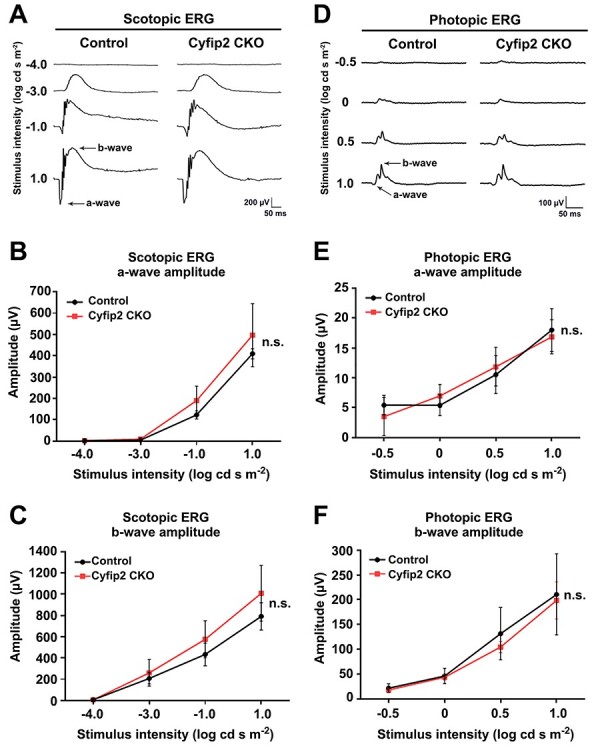
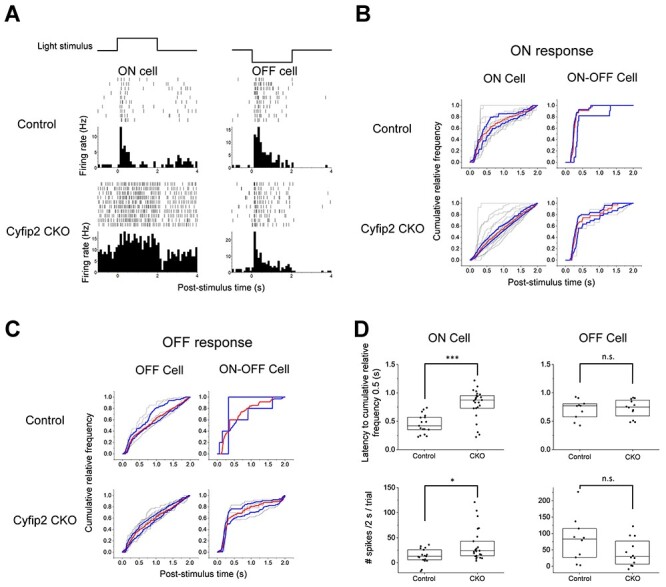
Intellectual disability (ID) is a neurodevelopmental disorder affecting approximately 0.5-3% of the population in the developed world. Individuals with ID exhibit deficits in intelligence, impaired adaptive behavior and often visual impairments. Cytoplasmic fragile X mental retardation 1 (FMR1)-interacting protein 2 (CYFIP2) is an interacting partner of the FMR protein, whose loss results in fragile X syndrome, the most common inherited cause of ID. Recently, CYFIP2 variants have been found in patients with early-onset epileptic encephalopathy, developmental delay and ID. Such individuals often exhibit visual impairments; however, the underlying mechanism is poorly understood. In the present study, we investigated the role of Cyfip2 in retinal and visual functions by generating and analyzing Cyfip2 conditional knockout (CKO) mice. While we found no major differences in the layer structures and cell compositions between the control and Cyfip2 CKO retinas, a subset of genes associated with the transporter and channel activities was differentially expressed in Cyfip2 CKO retinas than in the controls. Multi-electrode array recordings showed more sustained and stronger responses to positive flashes of the ON ganglion cells in the Cyfip2 CKO retina than in the controls, although electroretinogram analysis revealed that Cyfip2 deficiency unaffected the photoreceptor and ON bipolar cell functions. Furthermore, analysis of initial and late phase optokinetic responses demonstrated that Cyfip2 deficiency impaired the visual function at the organismal level. Together, our results shed light on the molecular mechanism underlying the visual impairments observed in individuals with CYFIP2 variants and, more generally, in patients with neurodevelopmental disorders, including ID.
智力障碍(ID)是一种影响发达国家约 0.5-3%人口的神经发育障碍。患有 ID 的个体表现出智力缺陷、适应行为障碍,并且常伴有视力障碍。细胞质脆性 X 智力低下蛋白 1(FMR1)相互作用蛋白 2(CYFIP2)是 FMR 蛋白的相互作用伙伴,其缺失会导致脆性 X 综合征,这是最常见的遗传性智力障碍原因。最近,在患有早发性癫痫性脑病、发育迟缓伴智力障碍的患者中发现了 CYFIP2 变体。这些患者通常伴有视力障碍,但潜在机制尚不清楚。在本研究中,我们通过生成和分析 Cyfip2 条件性敲除(CKO)小鼠,研究了 Cyfip2 在视网膜和视觉功能中的作用。虽然我们未发现对照组和 Cyfip2 CKO 视网膜的层结构和细胞组成有明显差异,但与转运体和通道活性相关的一组基因在 Cyfip2 CKO 视网膜中的表达与对照组不同。多电极阵列记录显示,CKO 视网膜的 ON 神经节细胞对正闪光的反应更持久、更强,尽管视网膜电图分析表明 Cyfip2 缺失不影响光感受器和 ON 双极细胞的功能。此外,对初始和晚期视动反应的分析表明,Cyfip2 缺失损害了机体水平的视觉功能。总之,我们的研究结果阐明了在携带 CYFIP2 变体的个体以及更普遍的神经发育障碍患者(包括智力障碍)中观察到的视力障碍的分子机制。