Zhang Shutian, Yan Yufeng, Wang Yongze, Sun Zhaodong, Han Chengzhi, Qian Xinyi, Ren Xiaorong, Feng Yi, Cai Jian, Xia Chunmei
Department of Physiology and Pathophysiology, School of Basic Medical Sciences, Fudan University, Shanghai, 200032, People's Republic of China.
Department of Clinical Medicine, Shanghai Medical College, Fudan University, Shanghai, 200032, People's Republic of China.
J Inflamm Res. 2021 Sep 2;14:4329-4345. doi: 10.2147/JIR.S319023. eCollection 2021.
Glial activation and the disorders of cytokine secretion induced by endoplasmic reticulum stress (ERS) are crucial pathogenic processes in establishing ischemia/reperfusion (I/R) injury of the brain and spinal cord. This present study aimed to investigate the effects of mucous-associated lymphoid tissue lymphoma translocation protein 1 (MALT1) on spinal cord ischemia/reperfusion (SCI/R) injury via regulating glial ERS.
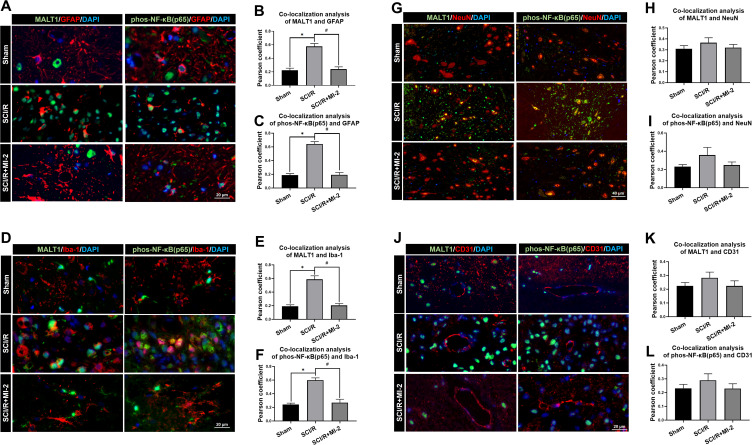
SCI/R was induced by thoracic aorta occlusion-reperfusion in rats. The MALT1-specific inhibitor MI-2 or human recombinant MALT1 protein (hrMALT1) was administrated for three consecutive days after the surgery. Immunofluorescent staining was used to detect the localization of MALT1 and ERS profiles in activated astrocyte and microglia of spinal cord. The ultrastructure of endoplasmic reticulum (ER) was examined by transmission electron microscopy. Blood-spinal cord barrier (BSCB) disruption and noninflammatory status were assessed. The neuron loss and demyelination in the spinal cord were monitored, and the hindlimb motor function was evaluated in SCI/R rats.
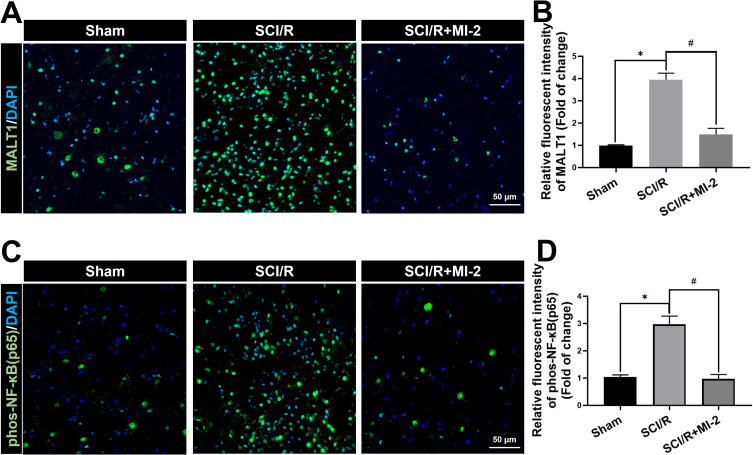
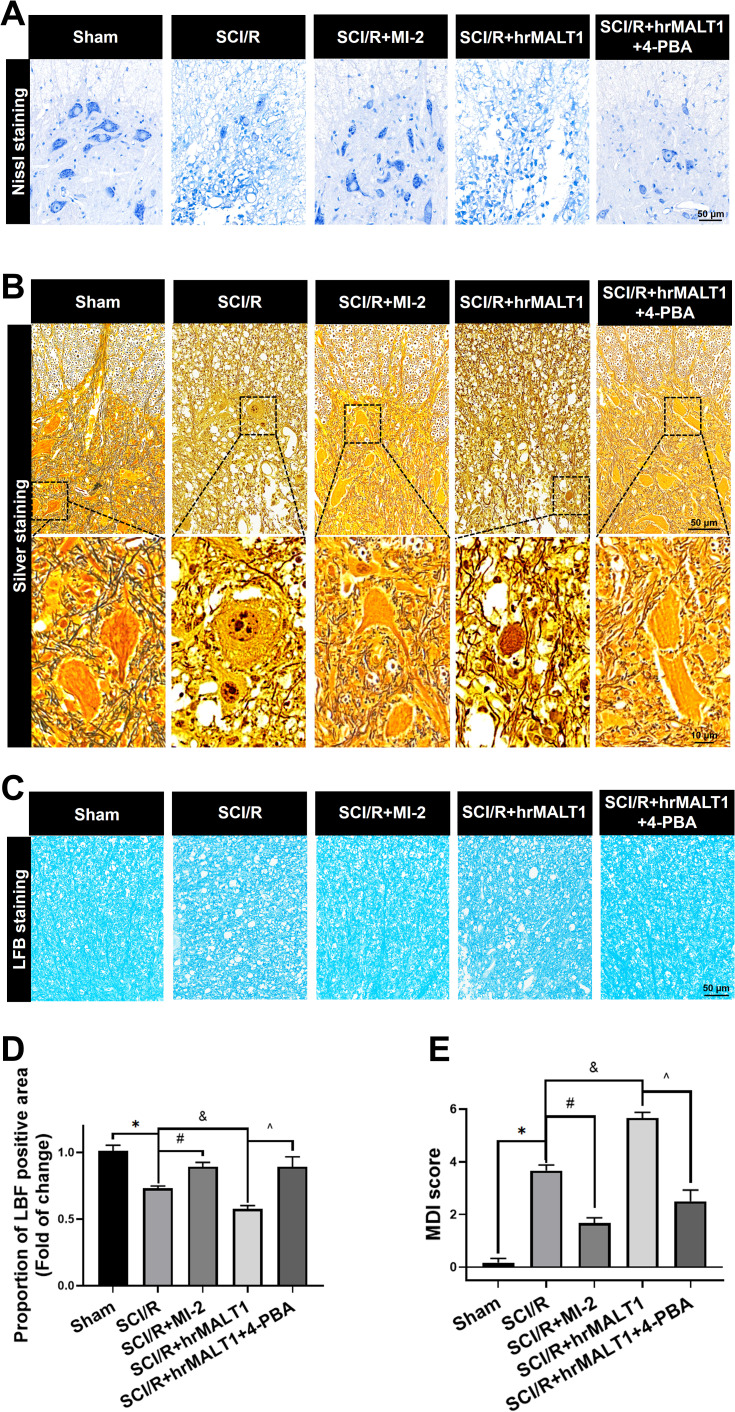
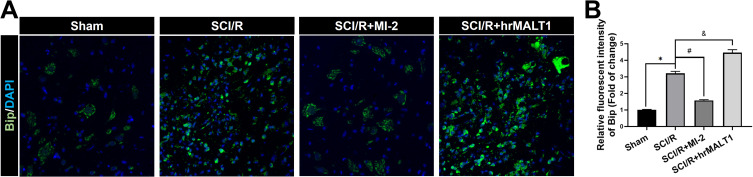
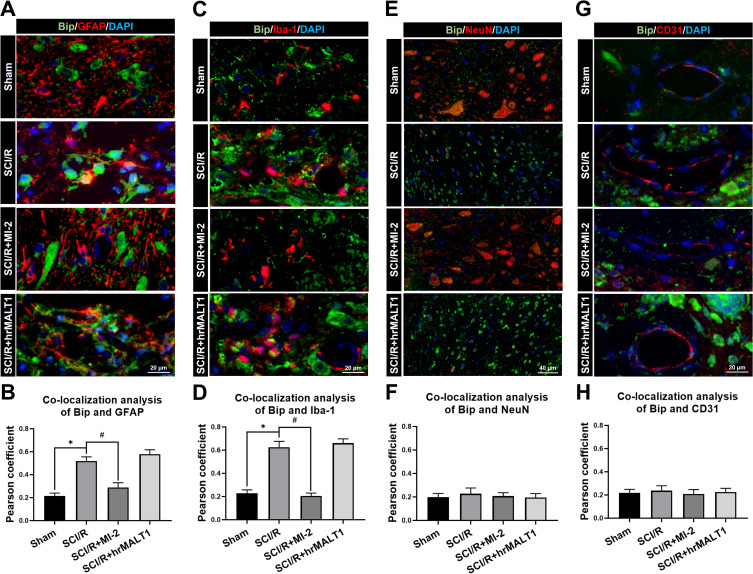
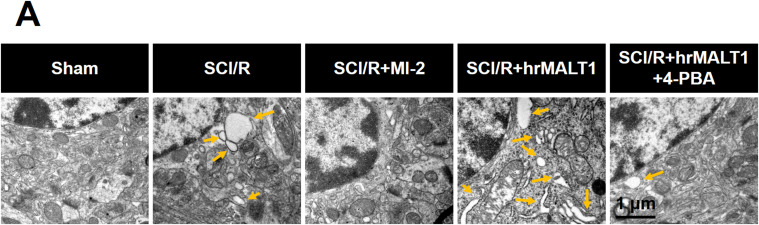
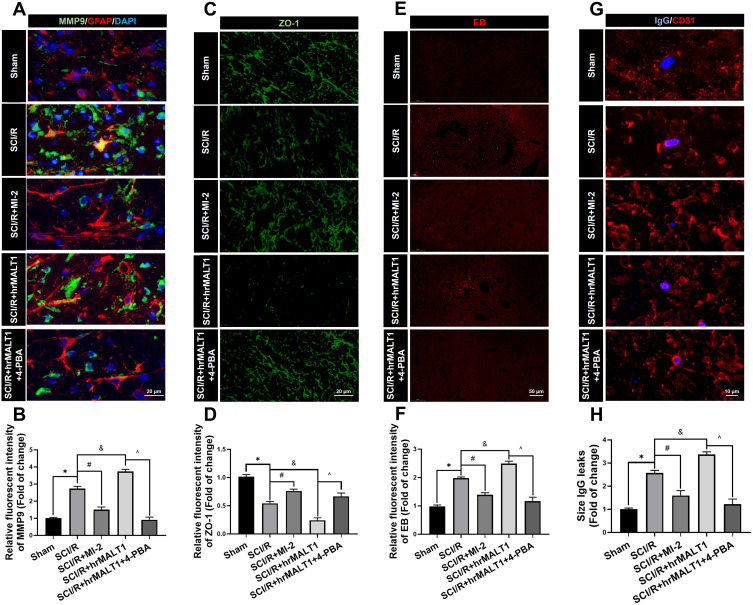
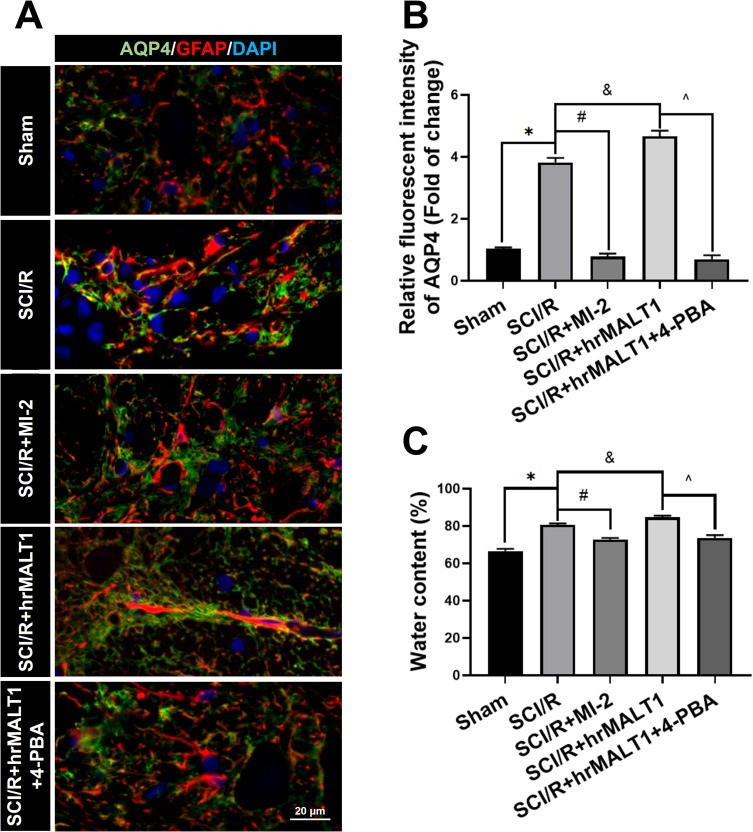
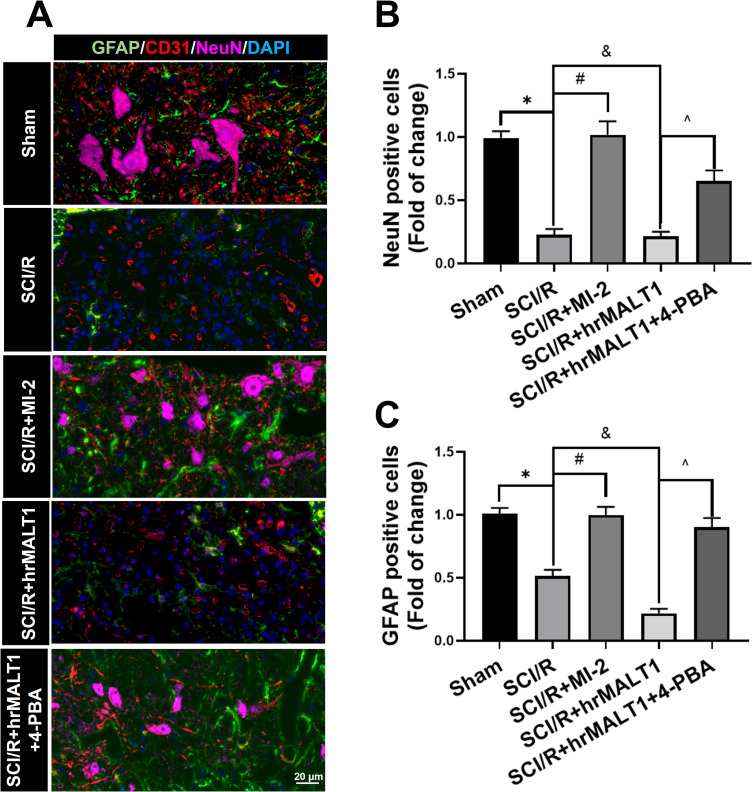
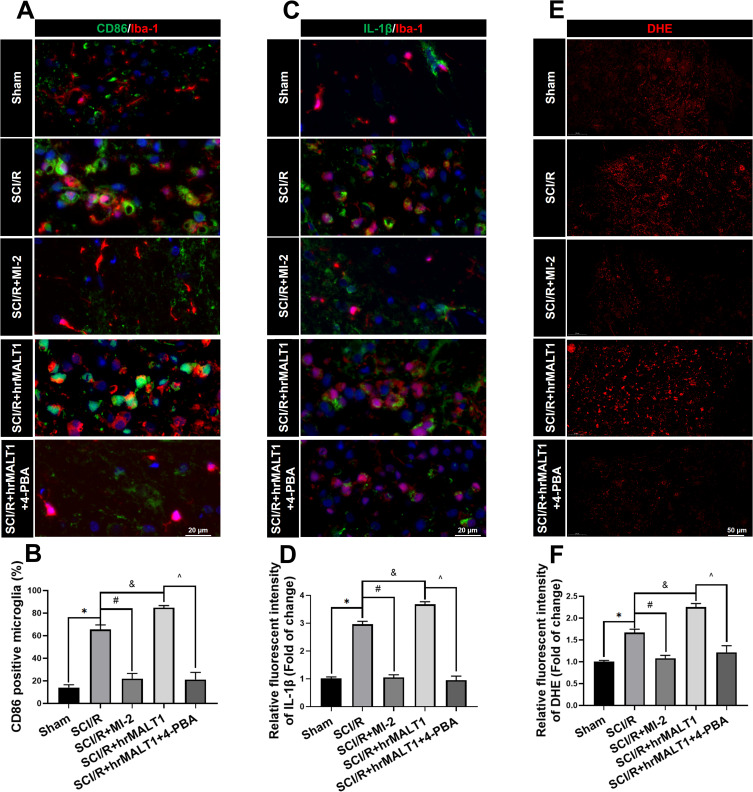
Intraperitoneally postoperative MI-2 treatment down-regulated phos-NF-κB (p65) and Bip (ERS marker protein) expression in the spinal cord after SCI/R in rats. Intraperitoneal injection MI-2 attenuated the swelling/dilation of ER of the glia in SCI/R rats. Furthermore, MI-2 attenuated I/R-induced Evans blue (EB) leakage and microglia M1 polarization in spinal cord, implying a role for MALT1 in the BSCB destruction and neuroinflammation after SCI/R in rats. Furthermore, intrathecal injection of hrMALT1 aggravated the fragmentation of neuron, loss of neurofibrils and demyelination caused by I/R, while 4-PBA, an ERS inhibitor, co-treatment with hrMALT1 reversed these effects in SCI/R rats. hrMALT1 administration aggravated the motor deficit index (MDI) scoring, while 4-PBA co-treatment improved SCI/R-induced motor deficits in rats.
Inhibition of MALT1 alleviates SCI/R injury-induced neuroinflammation by modulating glial endoplasmic reticulum stress in rats.
胶质细胞活化以及内质网应激(ERS)诱导的细胞因子分泌紊乱是脑和脊髓缺血/再灌注(I/R)损伤发生过程中的关键致病过程。本研究旨在探讨黏膜相关淋巴组织淋巴瘤易位蛋白1(MALT1)通过调节胶质细胞ERS对脊髓缺血/再灌注(SCI/R)损伤的影响。
通过大鼠胸主动脉阻断-再灌注诱导SCI/R。术后连续三天给予MALT1特异性抑制剂MI-2或人重组MALT1蛋白(hrMALT1)。采用免疫荧光染色检测脊髓中活化星形胶质细胞和小胶质细胞中MALT1的定位及ERS特征。通过透射电子显微镜检查内质网(ER)的超微结构。评估血脊髓屏障(BSCB)破坏和非炎症状态。监测脊髓中的神经元丢失和脱髓鞘情况,并评估SCI/R大鼠的后肢运动功能。
术后腹腔注射MI-2可下调大鼠SCI/R后脊髓中磷酸化核因子κB(p65)和Bip(ERS标记蛋白)的表达。腹腔注射MI-2可减轻SCI/R大鼠中胶质细胞ER的肿胀/扩张。此外,MI-2可减轻I/R诱导的脊髓中伊文思蓝(EB)渗漏和小胶质细胞M1极化,这意味着MALT1在大鼠SCI/R后的BSCB破坏和神经炎症中起作用。此外,鞘内注射hrMALT1会加重I/R引起的神经元碎片化、神经原纤维丢失和脱髓鞘,而ERS抑制剂4-苯基丁酸(4-PBA)与hrMALT1联合处理可逆转SCI/R大鼠中的这些效应。给予hrMALT1会加重运动缺陷指数(MDI)评分,而4-PBA联合处理可改善SCI/R诱导的大鼠运动缺陷。
抑制MALT1可通过调节大鼠胶质细胞内质网应激减轻SCI/R损伤诱导的神经炎症。