Sanadhya Payal, Kumar Anil, Bucki Patricia, Fitoussi Nathalia, Carmeli-Weissberg Mira, Borenstein Menachem, Brown-Miyara Sigal
Department of Entomology, Nematology and Chemistry Units, Agricultural Research Organization, The Volcani Center, Bet Dagan, Israel.
Department of Plant Pathology and Microbiology, The Faculty of Agriculture, Food and Environment, The Hebrew University of Jerusalem, Rehovot, Israel.
Front Plant Sci. 2021 Aug 25;12:670772. doi: 10.3389/fpls.2021.670772. eCollection 2021.
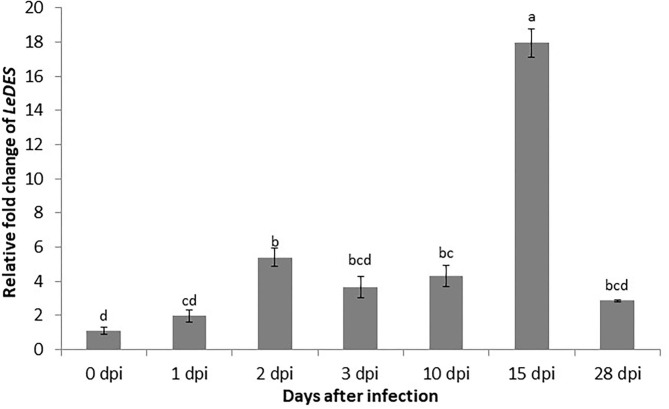
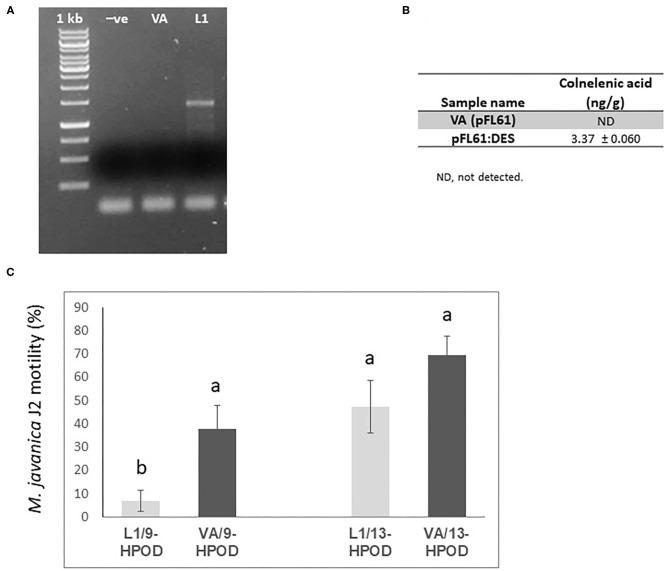
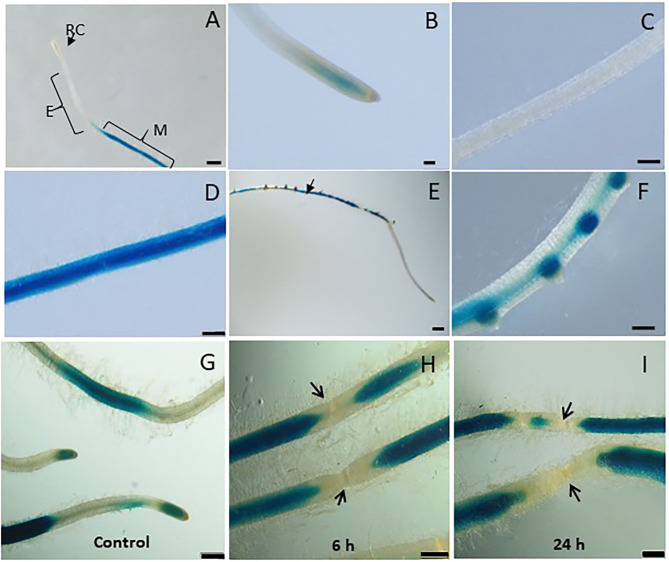
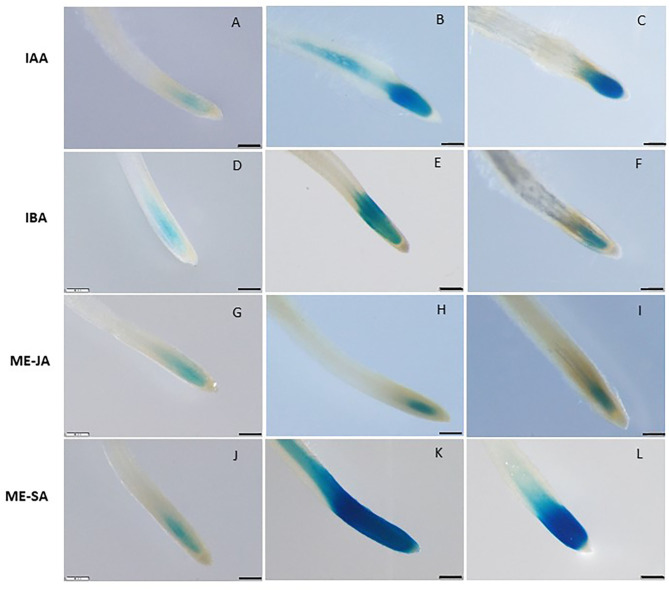
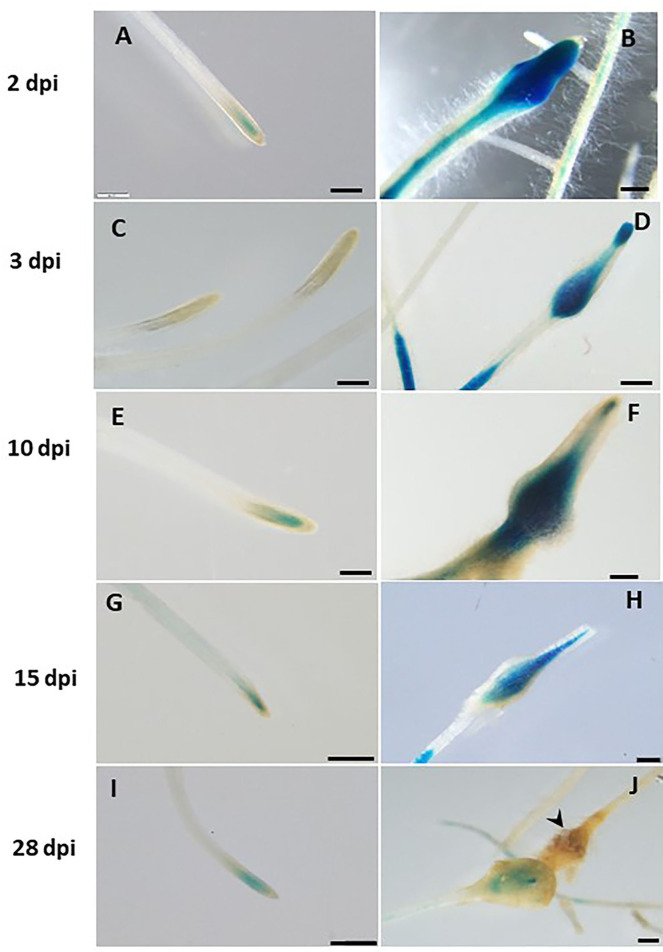
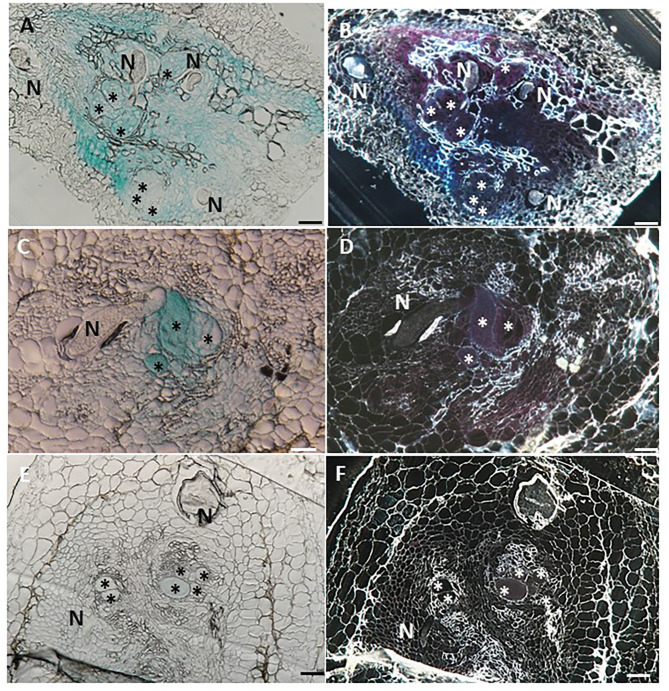
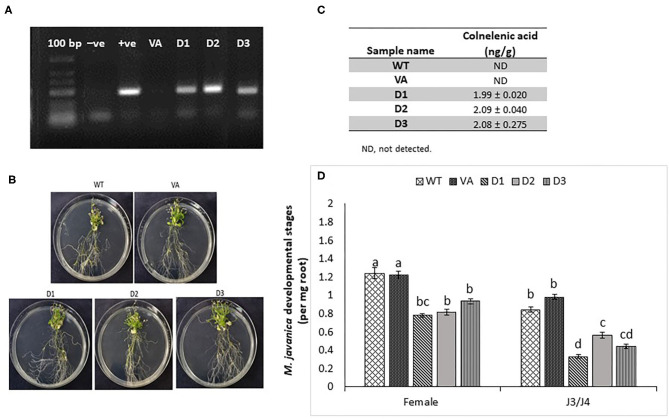
The role of the 9-lipoxygenase (9-LOX)-derived oxylipins in plant defense is mainly known in solanaceous plants. In this work, we identify the functional role of the tomato divinyl ether synthase (LeDES) branch, which exclusively converts 9-hydroperoxides to the 9-divinyl ethers (DVEs) colneleic acid (CA) and colnelenic acid (CnA), during infection by the root-knot nematode . Analysis of expression in roots indicated a concurrent response to nematode infection, demonstrating a sharp increase in expression during the molting of third/fourth-stage juveniles, 15 days after inoculation. Spatiotemporal expression analysis using an tomato line showed high GUS activity associated with the developing gall; however the GUS signal became more constricted as infection progressed to the mature nematode feeding sites, and eventually disappeared. Wounding did not activate the LeDES promoter, but auxins and methyl salicylate triggered expression, indicating a hormone-mediated function of DVEs. Heterologous expression of in rendered the plants more resistant to nematode infection and resulted in a significant reduction in third/fourth-stage juveniles and adult females as compared to a vector control and the wild type. To further evaluate the nematotoxic activity of the DVEs CA and CnA, recombinant yeast that catalyzes the formation of CA and CnA from 9-hydroperoxides was generated. Transgenic yeast accumulating CnA was tested for its impact on juveniles, indicating a decrease in second-stage juvenile motility. Taken together, our results suggest an important role for as a determinant in the defense response during parasitism, and indicate two functional modes: directly via DVE motility inhibition effect and through signal molecule-mediated defense reactions to nematodes that depend on methyl salicylate.
9-脂氧合酶(9-LOX)衍生的氧脂素在植物防御中的作用主要在茄科植物中为人所知。在这项研究中,我们确定了番茄二乙烯基醚合酶(LeDES)分支的功能作用,该分支专门将9-氢过氧化物转化为9-二乙烯基醚(DVE)科内列酸(CA)和科内列烯酸(CnA),在根结线虫感染期间发挥作用。对根中表达的分析表明,对线虫感染有同时响应,接种后15天,在第三/四阶段幼虫蜕皮期间表达急剧增加。使用转基因番茄品系进行的时空表达分析显示,与发育中的虫瘿相关的GUS活性较高;然而,随着感染进展到成熟的线虫取食部位,GUS信号变得更加局限,最终消失。创伤未激活LeDES启动子,但生长素和水杨酸甲酯触发了表达,表明DVE具有激素介导的功能。在烟草中异源表达LeDES使植物对线虫感染更具抗性,与载体对照和野生型相比,第三/四阶段幼虫和成年雌虫数量显著减少。为了进一步评估DVE CA和CnA的杀线虫活性,生成了催化从9-氢过氧化物形成CA和CnA的重组酵母。测试了积累CnA的转基因酵母对第二阶段幼虫的影响,表明其运动性降低。综上所述,我们的结果表明LeDES在根结线虫寄生期间的防御反应中作为一个决定因素起着重要作用,并表明有两种功能模式:直接通过DVE的运动抑制作用和通过依赖水杨酸甲酯的信号分子介导的对线虫的防御反应。