Sugawara Kotaro, Iwai Miwako, Ito Hirotaka, Tanaka Minoru, Seto Yasuyuki, Todo Tomoki
Division of Innovative Cancer Therapy, Advanced Clinical Research Center, Institute of Medical Science, The University of Tokyo, 4-6-1 Shirokanedai, Minato-ku, Tokyo 108-8639, Japan.
Department of Gastrointestinal Surgery, Graduate School of Medicine, The University of Tokyo, Tokyo, Japan.
Mol Ther Oncolytics. 2021 May 19;22:129-142. doi: 10.1016/j.omto.2021.05.004. eCollection 2021 Sep 24.
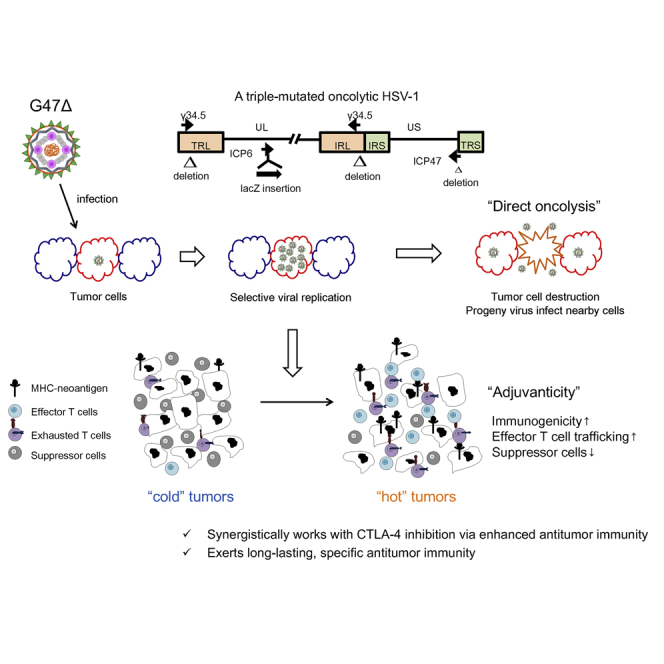
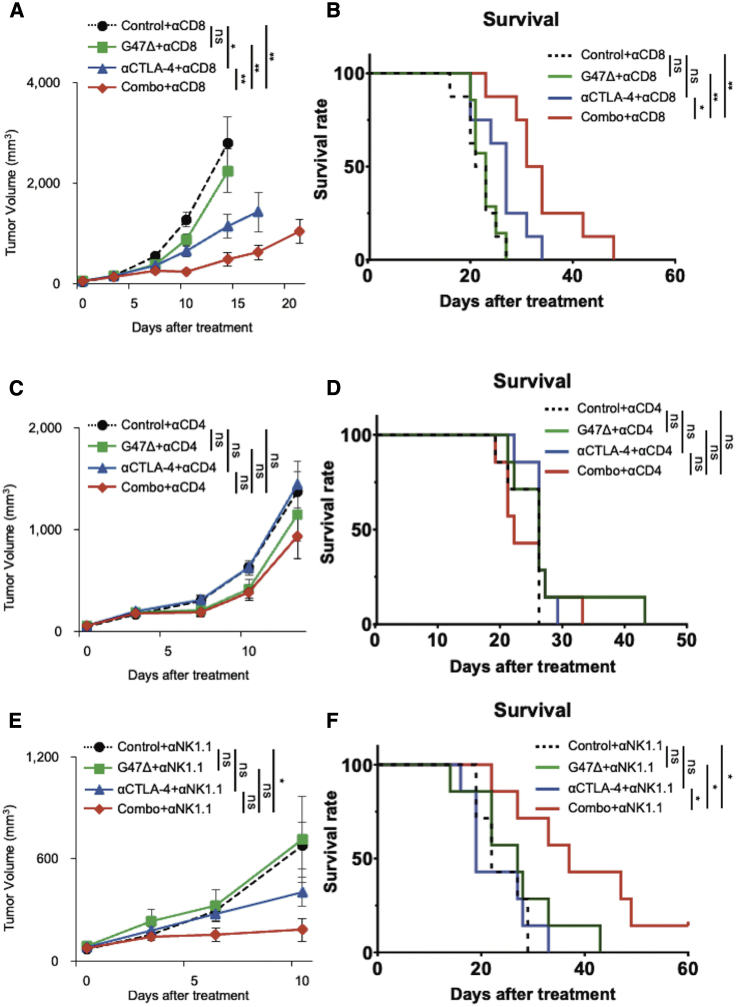
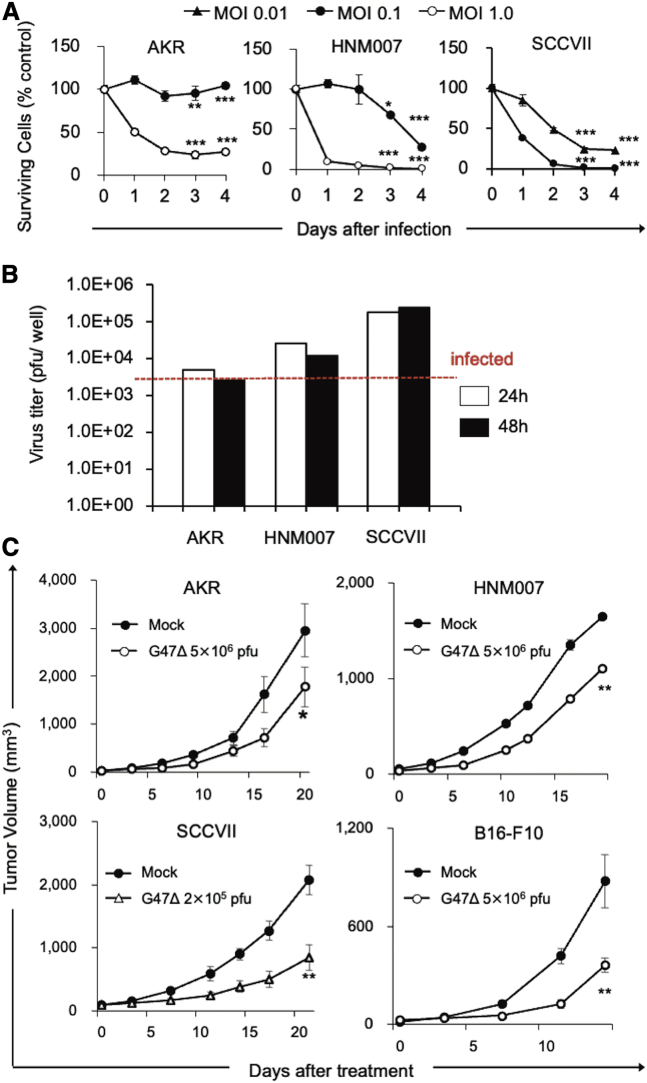
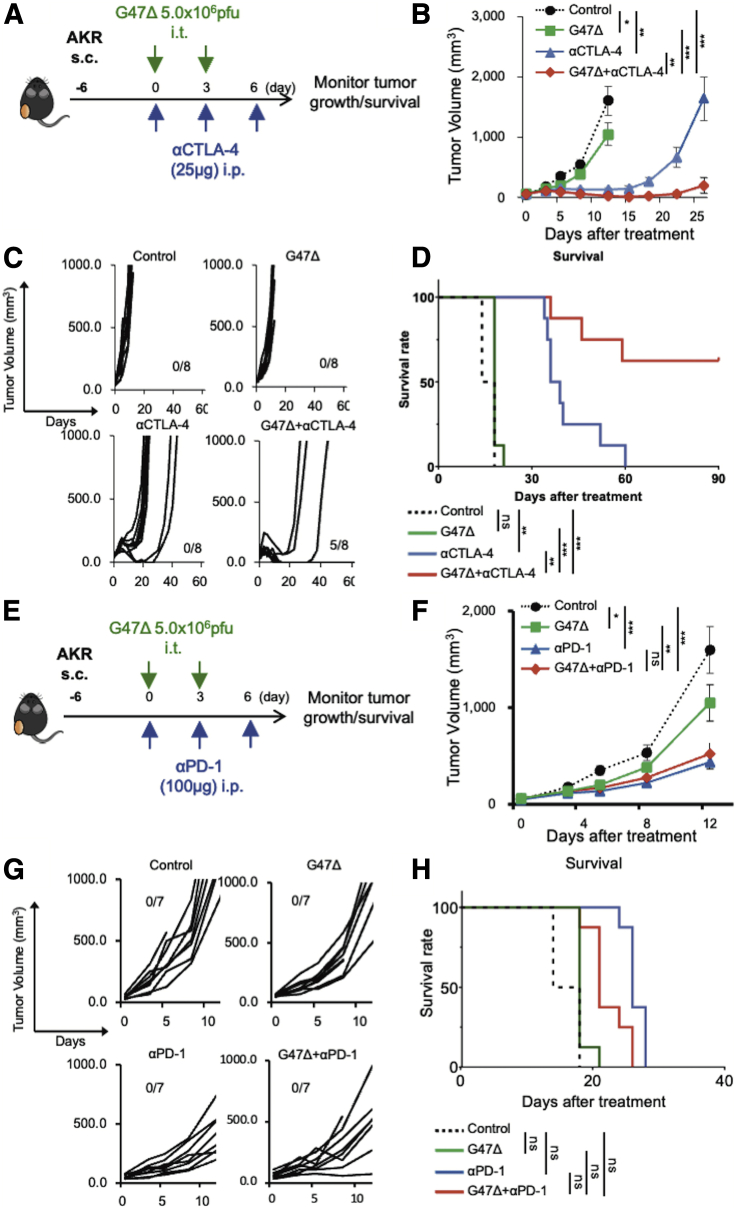
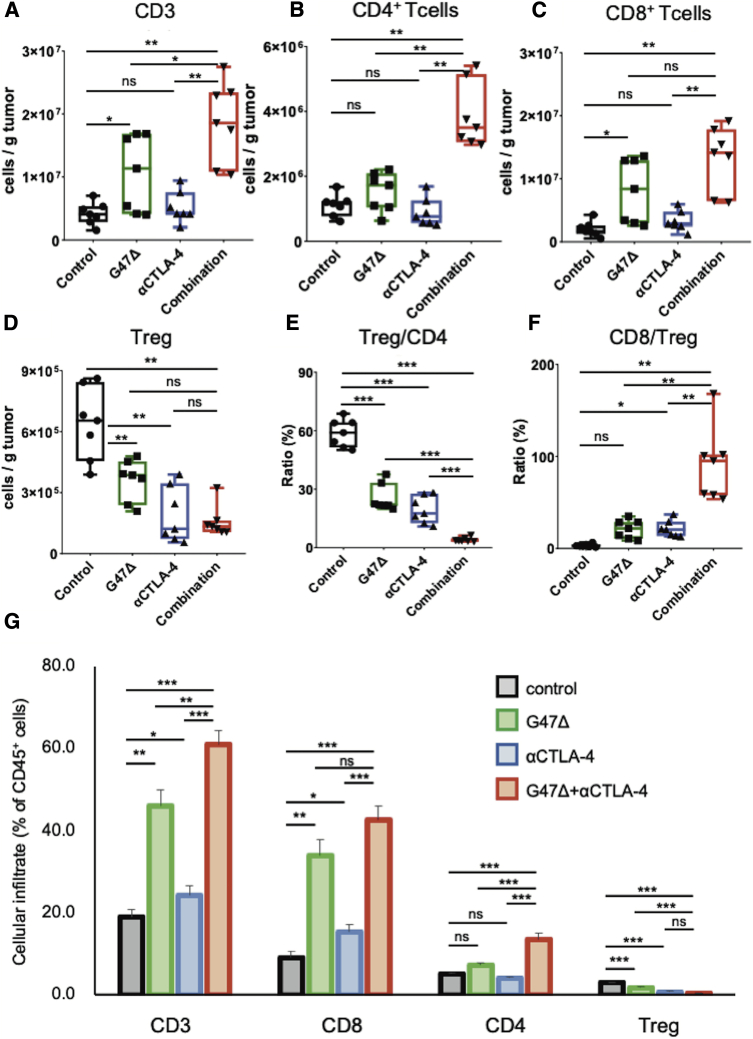
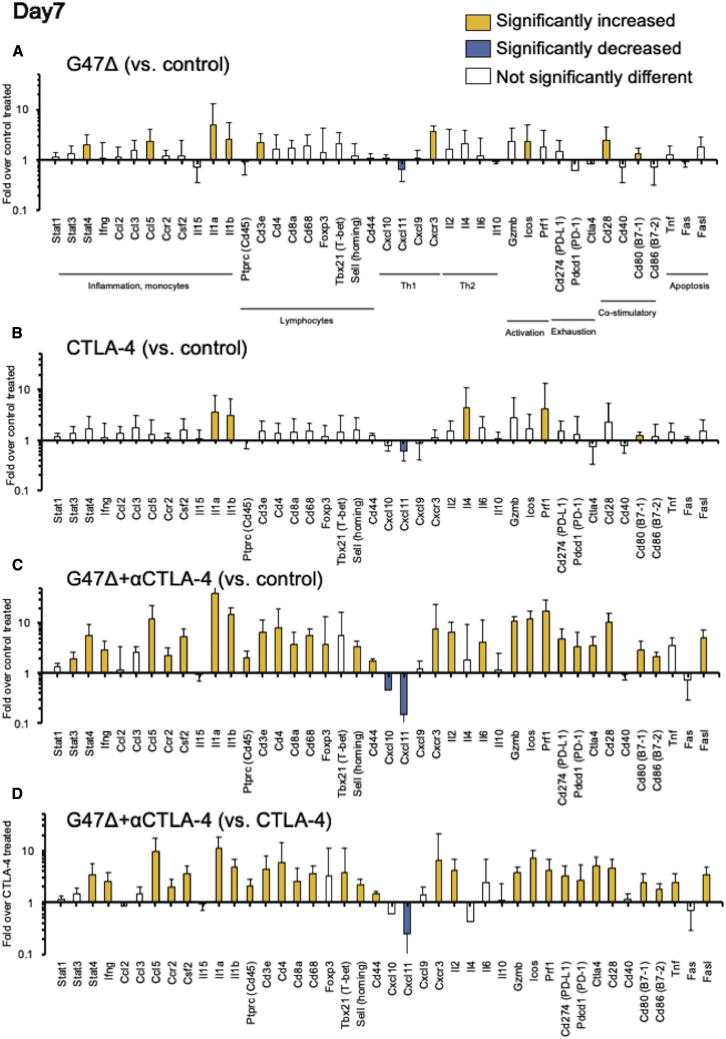
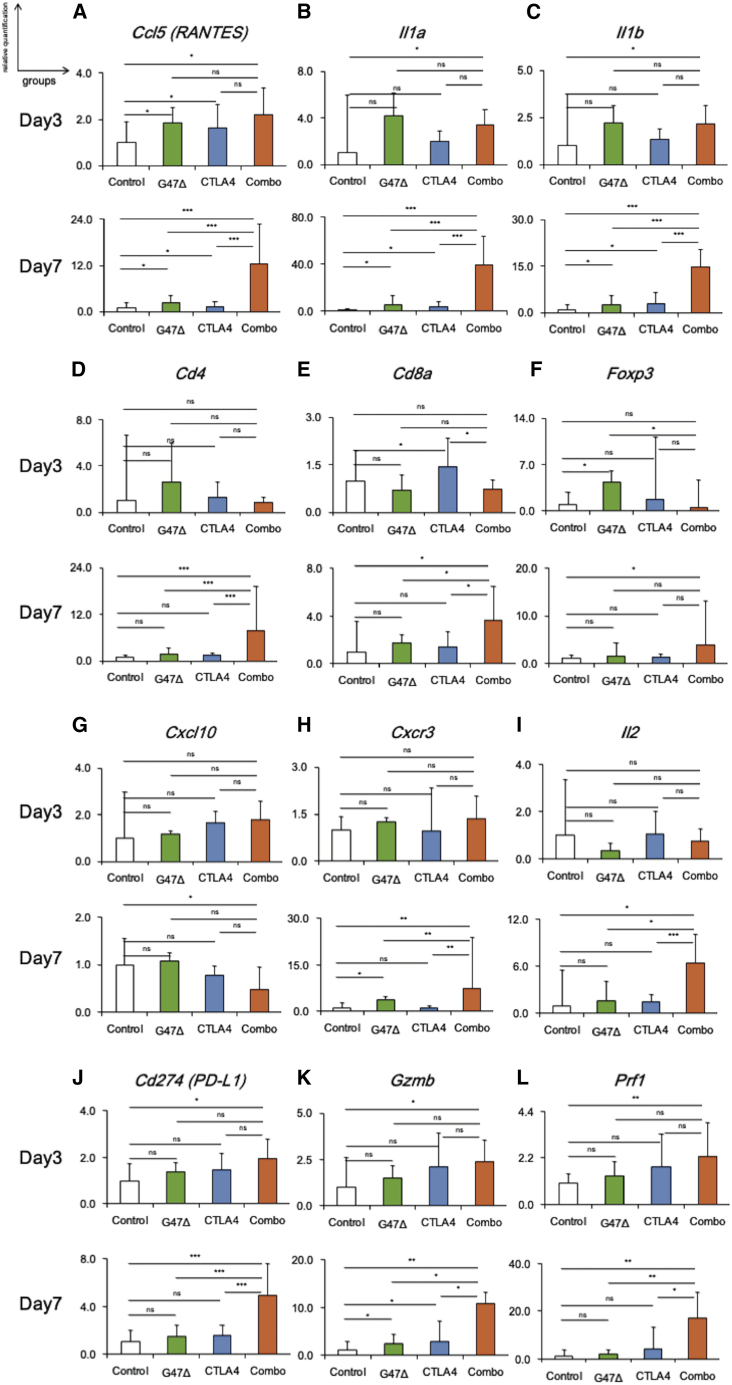
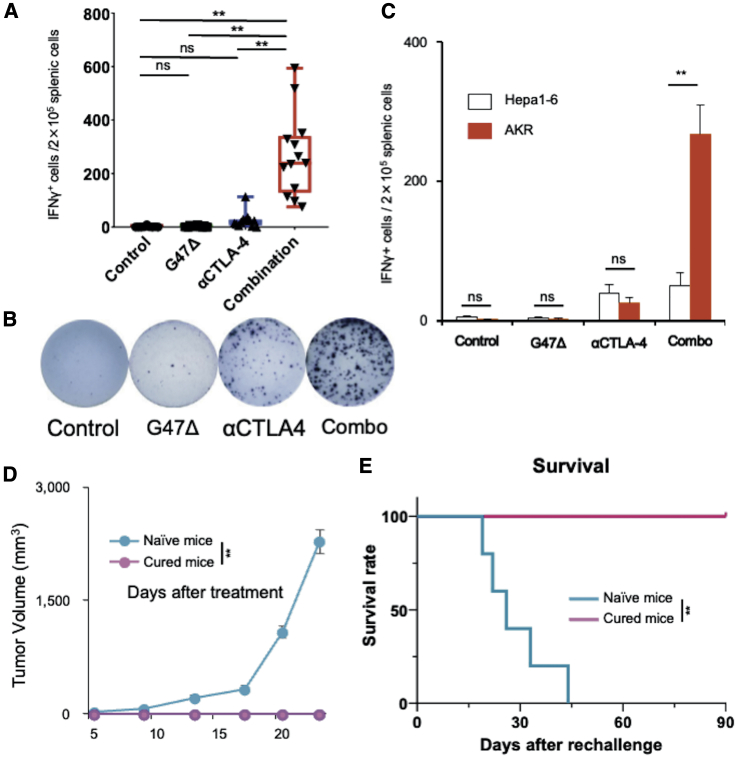
Oncolytic virus therapy can increase the immunogenicity of tumors and remodel the immunosuppressive tumor microenvironment, leading to an increased antitumor response to immune-checkpoint inhibitors. Here, we investigated the therapeutic potential of G47Δ, a third-generation oncolytic herpes simplex virus type 1, in combination with immune-checkpoint inhibitors using various syngeneic murine subcutaneous tumor models. Intratumoral inoculations with G47Δ and systemic anti-cytotoxic T-lymphocyte-associated protein 4 (CTLA-4) antibody administration caused an enhanced antitumor activity when combined and worked synergistically. Conversely, the efficacy of G47Δ in combination with anti-programmed cell death protein-1 (PD-1) antibody was equivalent to that of the anti-PD-1 antibody alone in all murine models examined. The combination of intratumoral G47Δ and systemic anti-CTLA-4 antibody was shown to recruit effector T cells into the tumor efficiently while decreasing regulatory T cells. Furthermore, a wide range of gene signatures related to inflammation, lymphoid lineage, and T cell activation was highly upregulated with the combination therapy, suggesting the conversion of immune-insusceptible tumors to immune susceptible. The therapeutic effect proved tumor specific and long lasting. Immune cell subset depletion studies demonstrated that CD4 T cells were required for synergistic curative activity. The results depict the dynamics of immune modulation of the tumor microenvironment and provide a clinical rationale for using G47Δ with immune checkpoint inhibitors.
溶瘤病毒疗法可增强肿瘤的免疫原性并重塑免疫抑制性肿瘤微环境,从而增强对免疫检查点抑制剂的抗肿瘤反应。在此,我们使用多种同基因小鼠皮下肿瘤模型,研究了第三代溶瘤单纯疱疹病毒1型G47Δ与免疫检查点抑制剂联合使用的治疗潜力。瘤内接种G47Δ并全身给予抗细胞毒性T淋巴细胞相关蛋白4(CTLA-4)抗体,联合使用时可增强抗肿瘤活性并产生协同作用。相反,在所有检测的小鼠模型中,G47Δ与抗程序性细胞死亡蛋白1(PD-1)抗体联合使用的疗效与单独使用抗PD-1抗体的疗效相当。瘤内注射G47Δ与全身给予抗CTLA-4抗体的联合治疗可有效将效应T细胞募集到肿瘤中,同时减少调节性T细胞。此外,联合治疗可使与炎症、淋巴谱系和T细胞活化相关的多种基因特征高度上调,表明免疫不敏感肿瘤转变为免疫敏感肿瘤。治疗效果证明具有肿瘤特异性且持久。免疫细胞亚群耗竭研究表明,协同治愈活性需要CD4 T细胞。这些结果描述了肿瘤微环境免疫调节的动态变化,并为将G47Δ与免疫检查点抑制剂联合使用提供了临床依据。