BMJ Glob Health. 2021 Sep;6(9). doi: 10.1136/bmjgh-2021-005688.
Preterm birth is the leading cause of child mortality. This study aimed to develop and validate programmatically feasible and accurate approaches to estimate newborn gestational age (GA) in low resource settings.
The WHO Alliance for Maternal and Newborn Health Improvement (AMANHI) study recruited pregnant women from population-based cohorts in five countries (Bangladesh, Ghana, Pakistan, Tanzania and Zambia). Women <20 weeks gestation by ultrasound-based dating were enrolled. Research staff assessed newborns for: (1) anthropometry, (2) neuromuscular/physical signs and (3) feeding maturity. Machine-learning techniques were used to construct ensemble models. Diagnostic accuracy was assessed by areas under the receiver operating curve (AUC) and Bland-Altman analysis.
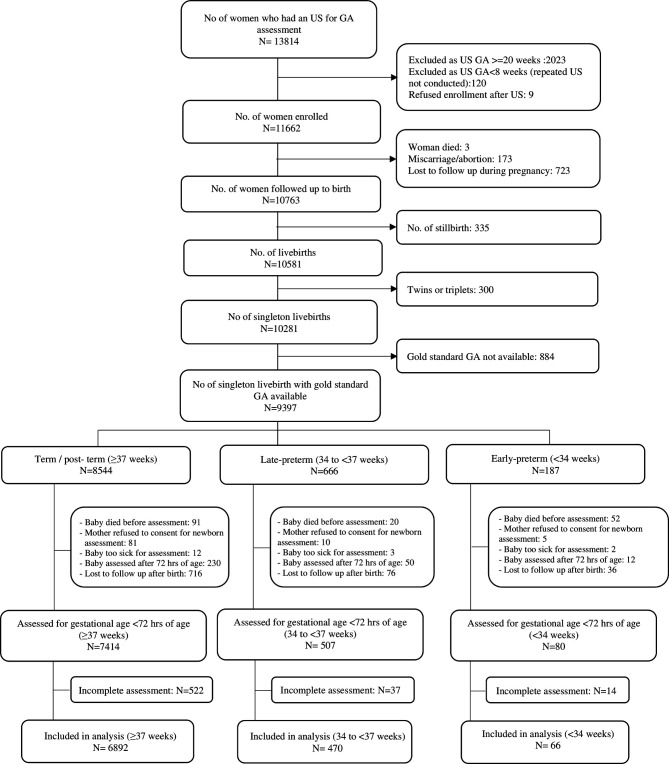
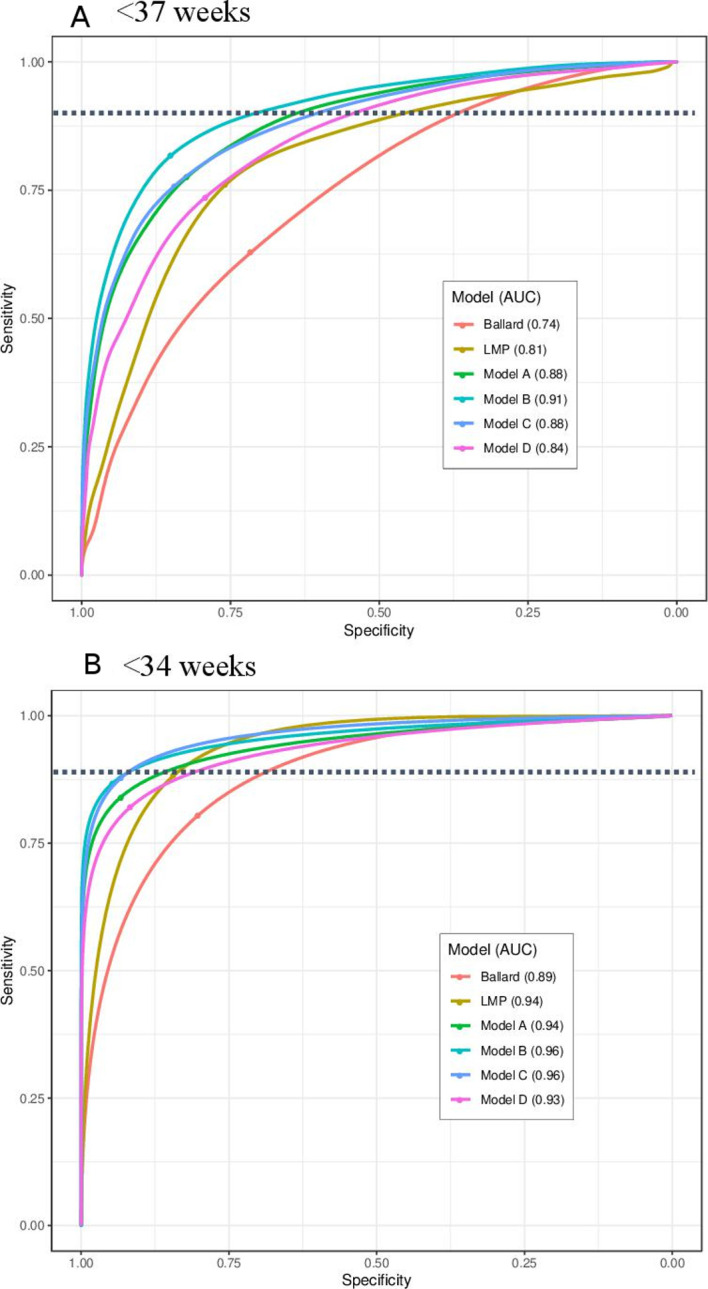
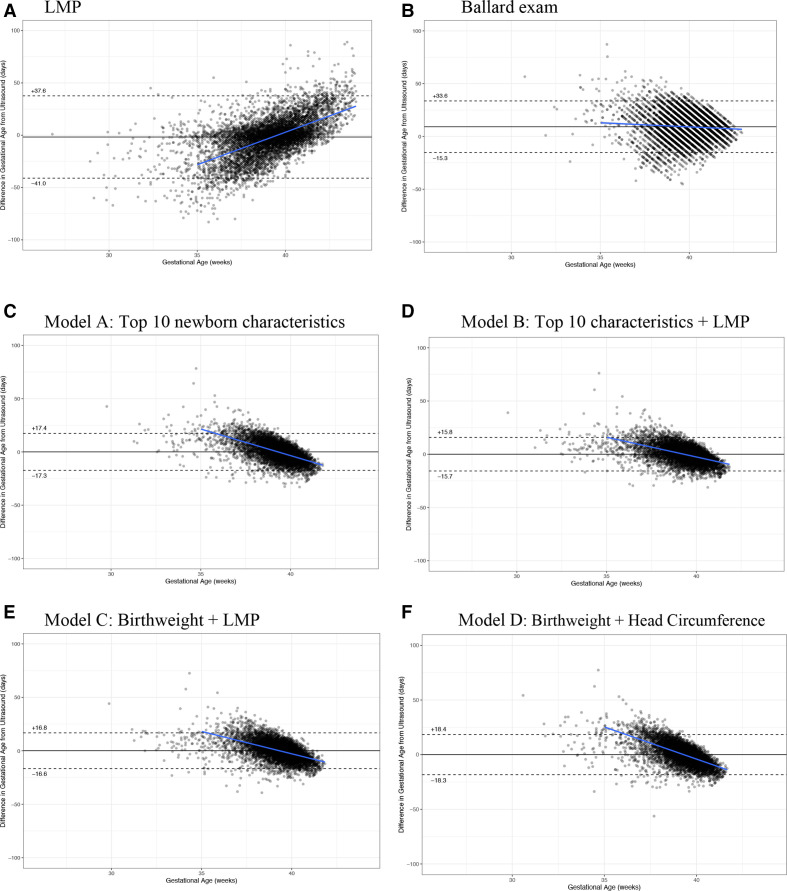
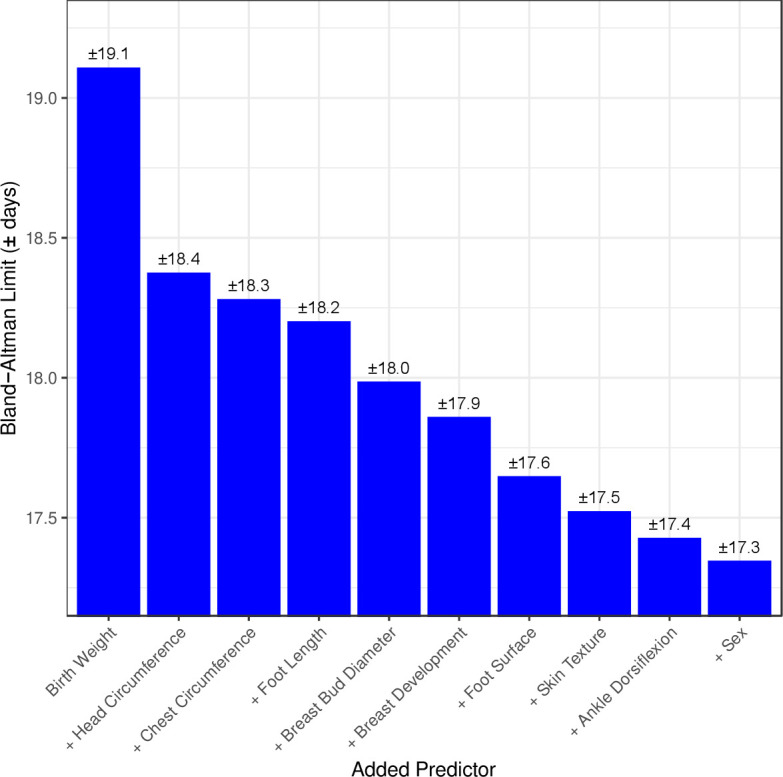
7428 liveborn infants were included (n=536 preterm, <37 weeks). The Ballard examination was biased compared with ultrasound dating (mean difference: +9 days) with 95% limits of agreement (LOA) -15.3 to 33.6 days (precision ±24.5 days). A model including 10 newborn characteristics (birth weight, head circumference, chest circumference, foot length, breast bud diameter, breast development, plantar creases, skin texture, ankle dorsiflexion and infant sex) estimated GA with no bias, 95% LOA ±17.3 days and an AUC=0.88 for classifying the preterm infant. A model that included last menstrual period (LMP) with the 10 characteristics had 95% LOA ±15.7 days and high diagnostic accuracy (AUC 0.91). An alternative simpler model including birth weight and LMP had 95% LOA of ±16.7 and an AUC of 0.88.
The best machine-learning model (10 neonatal characteristics and LMP) estimated GA within ±15.7 days of early ultrasound dating. Simpler models performed reasonably well with marginal increases in prediction error. These models hold promise for newborn GA estimation when ultrasound dating is unavailable.
早产是儿童死亡的主要原因。本研究旨在开发和验证在资源有限环境下,具有可操作性且准确的方法来估计新生儿胎龄(GA)。
世界卫生组织孕产妇和新生儿健康改善联盟(AMANHI)研究从五个国家(孟加拉国、加纳、巴基斯坦、坦桑尼亚和赞比亚)的基于人群的队列中招募了孕妇。对超声检测<20 周的孕妇进行入组。研究人员评估新生儿:(1)人体测量学,(2)神经肌肉/生理体征和(3)喂养成熟度。使用机器学习技术构建集成模型。通过接收者操作特征曲线(AUC)下面积和 Bland-Altman 分析评估诊断准确性。
共纳入 7428 例活产婴儿(536 例早产,<37 周)。与超声检测相比, Ballard 检查存在偏倚(平均差值:+9 天),95%的一致性区间(LOA)为-15.3 至 33.6 天(精度±24.5 天)。一个包含 10 个新生儿特征(出生体重、头围、胸围、脚长、乳芽直径、乳房发育、足底折痕、皮肤质地、踝关节背屈和婴儿性别)的模型估计 GA 没有偏差,95% LOA ±17.3 天,分类早产婴儿的 AUC=0.88。一个包含末次月经周期(LMP)和 10 个特征的模型具有 95% LOA ±15.7 天和高诊断准确性(AUC 0.91)。一个更简单的模型,包含出生体重和 LMP,95% LOA 为±16.7,AUC 为 0.88。
最好的机器学习模型(10 个新生儿特征和 LMP)在超声早期检测的 15.7 天内估计 GA。更简单的模型表现相当好,预测误差略有增加。这些模型在超声检测不可用时,有望用于估计新生儿 GA。