Guangxi Key Laboratory of Brain and Cognitive Neuroscience, Guilin Medical University, Guilin, 541199, Guangxi, China.
Department of Physiology, Hengyang Medical College, University of South China, Hengyang, 421001, Hunan, China.
Neurochem Res. 2022 Feb;47(2):205-217. doi: 10.1007/s11064-021-03448-1. Epub 2021 Sep 13.
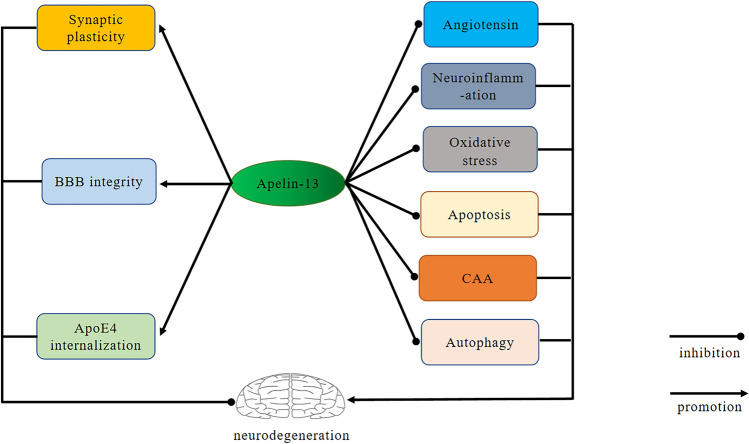
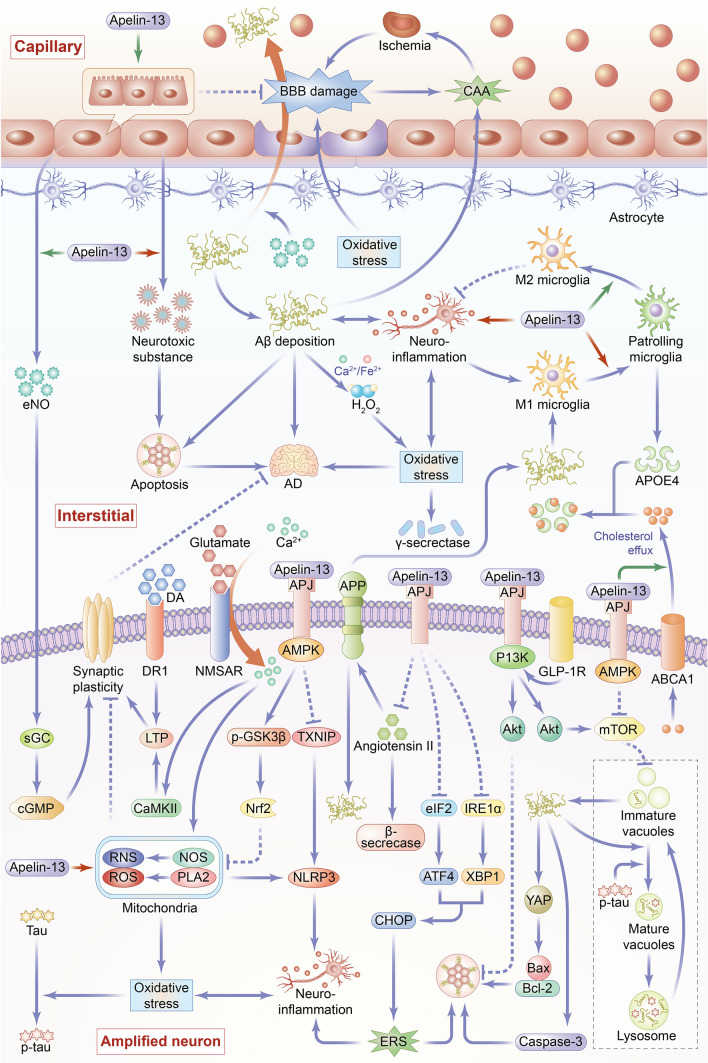
Alzheimer's disease (AD) is the most common type of dementia. Currently, more than 50 million people live with dementia worldwide, and this number is expected to increase. Some of the typical pathological changes of AD include amyloid plaque, hyperphosphorylation of tau protein, secretion of inflammatory mediators, and neuronal apoptosis. Apelin is a neuroprotective peptide that is widely expressed in the body. Among members of apelin family, apelin-13 is the most abundant with a high neuroprotective function. Apelin-13/angiotensin domain type 1 receptor-associated proteins (APJ) system regulates several physiological and pathophysiological cell activities, such as apoptosis, autophagy, synaptic plasticity, and neuroinflammation. It has also been shown to prevent AD development. This article reviews the research progress on the relationship between apelin-13 and AD to provide new ideas for prevention and treatment of AD.
阿尔茨海默病(AD)是最常见的痴呆类型。目前,全世界有超过 5000 万人患有痴呆症,而且这个数字预计还会增加。AD 的一些典型病理变化包括淀粉样斑块、tau 蛋白过度磷酸化、炎症介质的分泌和神经元凋亡。Apelin 是一种神经保护肽,在体内广泛表达。在 Apelin 家族成员中,Apelin-13 含量最丰富,具有很高的神经保护功能。Apelin-13/血管紧张素 1 型受体相关蛋白(APJ)系统调节多种生理和病理生理细胞活动,如细胞凋亡、自噬、突触可塑性和神经炎症。它还被证明可以预防 AD 的发展。本文综述了 Apelin-13 与 AD 之间关系的研究进展,为 AD 的预防和治疗提供了新思路。